Results by title
27 books match the query 'Inclusion'
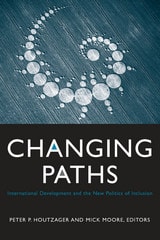
Changing Paths
International Development and the New Politics of InclusionPeter P. Houtzager and Mick Moore, Editors
University of Michigan Press, 2005
The contributors suggest there is little basis for the radical polycentrism that colors so much contemporary development thought. They focus on how the political capabilities of different societal and state actors develop over time and how their development is influenced by state action and a variety of institutional and other factors. The final chapter draws insightful conclusions about the political limitations and opportunities presented by current international discourse on poverty.
Peter P. Houtzager is a Fellow at the Institute of Development Studies, University of Sussex. He has been a visiting scholar at the Center for Latin American Studies, University of California, Berkeley, visiting lecturer at Stanford University, and lecturer at St. Mary's College. A political scientist with broad training in comparative politics and historical-institutional analysis, he has written extensively on the institutional roots of collective action.
Mick Moore is a Fellow at the Institute of Development Studies, University of Sussex, as well as Director of the Centre for the Future State. He has been a visiting professor at the Massachusetts Institute of Technology. His professional interests include political and institutional aspects of poverty reduction and of economic policy and performance, the politics and administration of development, and good government.
Collection Management for Youth
Equity, Inclusion, and LearningSandra Hughes-Hassell
American Library Association, 2020
With a renewed emphasis on facilitating learning, supporting multiple literacies, and advancing equity and inclusion, the thoroughly updated and revised second edition of this trusted text provides models and tools that will enable library staff who serve youth to create and maintain collections that provide equitable access to all youth. And as Hughes-Hassell demonstrates, the only way to do this is for collection managers to be learner-centered, confidently acting as information guides, change agents, and leaders. Based on the latest educational theory and research, this book
- presents the argument for why collection management decisions and practices should focus on equity, exploring systemic inequities, educational paradigm shifts, developments in the information environment, and other key factors;
- lays out the theoretical foundation for developing and managing a library collection that facilitates learning, supports the development of multiple literacies, and provides equitable access to an increasingly diverse group of young learners;
- touches upon current competencies and standards by AASL, YALSA, and ALSC;
- uses a learner-centered and equity perspective to cover core issues and criteria such as selection and removal of materials, budgeting, and cooperation among libraries;
- shows how a business viewpoint can assist the learner-centered collector in articulating the central significance of the collection to learning;
- discusses how library staff can work collaboratively to create policy and negotiate budgets; and
- includes customizable tools and templates, including a Stakeholder Contact/SWOT Analysis, Decision-Making Model for Selecting Resources and Access Points that Support Learning and Advance Equity, and Collection Development Analysis Worksheet.
This resource will be as useful to current school librarians and supervisors, youth librarians in public libraries, and educators as it will to LIS students.
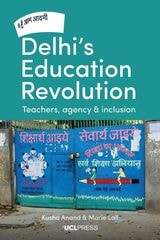
Delhi's Education Revolution
Teachers, Agency and InclusionKusha Anand and Marie Lall
University College London, 2022
In 2015, the Aam Aadmi Party (AAP) was elected to govern Delhi promising to improve public services, including education through government schools that would be equal to private-school provisions. Media reports, along with the party’s re-election in 2020, suggest strong public confidence that the AAP is delivering on that promise, but this success has little evidence in the schools themselves. Delhi’s Education Revolution offers a critical evaluation of the AAP’s education reforms by exploring policy and practice through the eyes of a key group: the government-school teachers tasked with making the AAP’s pledge a reality. Drawing on 110 interviews, this volume uses first-hand accounts from teachers to explain how reforms have changed their profession and practice, and whether education really has improved for children of all backgrounds. This study paints a more qualified picture of success than suggested elsewhere and makes a valuable contribution to the understanding of education reforms in India, especially in Delhi.
Diversity, Equity, and Inclusion in Action
Planning, Leadership, and ProgrammingChristine Bombaro
American Library Association, 2020
All too often, in a hurried attempt to “catch up,” diversity training can create division among staff or place undue burdens on a handful of employees. Instead, academic libraries need approaches to diversity, equity, and inclusion (DEI) that position these priorities as ongoing institutional and professional goals. This book’s model programs will help academic libraries do exactly that, sharing a variety of initiatives that possess clear goals, demonstrable outcomes, and reproducible strategies. Librarians, administrators, and directors will all benefit from the programs detailed inside, which include such topics as
- a university library’s community of practice for interactions and learning around DEI;
- cultural competency training to create more welcoming instruction spaces;
- student workshops on literature searches that mitigate bias;
- overcoming the historic tendency to marginalize LGBTQ+ representation in archives;
- a curriculum and design workshop that moved from discussing social values to embedding them in actions;
- the founding of a library-led LGBT club for students at a rural community college;
- a liberal arts college’s retention-boosting program for first-generation students;
- tailoring a collection and library services to the unique needs of student veterans; and
- a framework for moving from diversity to equity and inclusion, toward a goal of social justice.
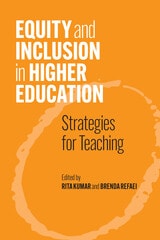
Equity and Inclusion in Higher Education
Strategies for TeachingEdited by Rita Kumar and Brenda Refaei
University of Minnesota Press, 2020
Americans’ perception of college students does not correlate with the reality of the rich diversity seen on university campuses. Over 60% of Americans believe the average age of a college student is 20 years old but, in fact, it’s 26.4 years old. Demographics in the classroom are shifting and instructors bear a responsibility to adjust their teaching style and curriculum to be inclusive for all students.
Equity and Inclusion for Higher Education Strategies for Teaching, edited by Rita Kumar and Brenda Refaei, details the necessity for an inclusive curriculum with examples of discipline-specific activities and modules. The intersectionality of race, age, socioeconomic status, and ability all embody the diversity college instructors encounter in their classrooms. Through the chapters in this book, the contributors make apparent the "hidden curriculum," which is taught implicitly instead of explicitly. The editors focus on learner-centered environments and accessibility of classroom materials for traditionally marginalized students; a critical part of the labor needed to create an inclusive curriculum.
This text provides instructors with resources to create equity-based learning environments. It challenges instructors to see beyond Eurocentric curriculums and expand their pedagogy to include intercultural competence. The contributors challenge the student/instructor dichotomy and embrace collaboration between the two to construct a curriculum that fits all students' needs. The resources and examples in this book demonstrate the importance of inclusion and equity in the classroom. A companion community page provides examples and tools from the editors and contributing authors, which allows for readers to add materials from their own classrooms. This book and collaborative toolkit allow instructors to begin intentional practice of an inclusive curriculum and implement changes to promote respect for diversity.
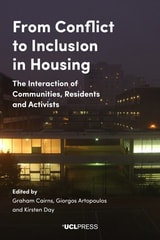
From Conflict to Inclusion in Housing
Interaction of Communities, Residents and ActivistsEdited by Graham Cairns, Giorgos Artopoulos, and Kirsten Day
University College London, 2017
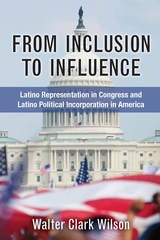
From Inclusion to Influence
Latino Representation in Congress and Latino Political Incorporation in AmericaWalter Clark Wilson
University of Michigan Press, 2017
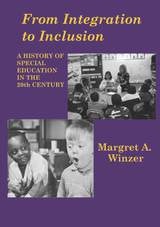
From Integration to Inclusion
A History of Special Education in the 20th CenturyMargret A. Winzer
Gallaudet University Press, 2009
Since Margret A. Winzer wrote her landmark work The History of Special Education, much has transpired in this field, which she again has captured in a remarkable display of scholarship. Winzer’s new study From Integration to Inclusion: A History of Special Education in the 20th Century focuses chiefly on the significant events of the twentieth and early twenty-first centuries in the United States and Canada. Its key dynamics consist of a retrospective overview of the paradigms that emerged from and shaped special education; a critical assessment of past progress and reform, including failures and disappointments; and an analysis of the theoretical diversity within the discipline.
In this stand-alone volume, Winzer juxtaposes the historical study of disability and of special schooling and service provision with reference to broader social systems, protocols, and practices. She documents how prevailing emotional and intellectual climates influence disability and schooling, and also takes into account the social, political, and ideological factors that affect educational theory and practice. Winzer recognizes that reform has been the Zeitgeist of the history of special education. Crucial problems such as defining exceptional conditions and separating them from one another were formulated in contexts organized along moral, theological, legislative, medical, and social dimensions. Many of these reforms failed for various reasons, which Winzer thoroughly explains in her study. Most of these reforms evolved from the long and honorable pedigree that the field of special education has possessed since its earliest antecedents, now admirably brought up to date by this outstanding work.
Implementing Excellence in Diversity, Equity, and Inclusion
A Handbook for Academic LibrariesCorliss Lee
American Library Association, 2022
—from the Foreword by Mark A. Puente
Academic library workers often make use of systemic, bureaucratic, political, collegial, and symbolic dimensions of organizational behavior to achieve their diversity, equity, and inclusion goals, but many are also doing the crucial work of pushing back at the structures surrounding them in ways small and large.
Implementing Excellence in Diversity, Equity, and Inclusion captures emerging practices that academic libraries and librarians can use to create more equitable and representative institutions. 19 chapters are divided into 6 sections:
- Recruitment, Retention and Promotion
- Professional Development
- Leveraging Collegial Networks
- Reinforcing the Message
- Organizational Change
- Assessment
Chapters cover topics including active diversity recruitment strategies; inclusive hiring; gendered ageism; librarians with disabilities; diversity and inclusion with student workers; residencies and retention; creating and implementing a diversity strategic plan; cultural competency training; libraries’ responses to Canadian Truth and Reconciliation Commission Calls to Action; and accountability and assessment. Authors provide practical guiding principles, effective practices, and sample programs and training.
Implementing Excellence in Diversity, Equity, and Inclusion explores how academic libraries have leveraged and deployed their institutions’ resources to effect DEI improvements while working toward implementing systemic solutions. It provides means and inspiration for continuing to try to hire, retain, and promote the change we want to see in the world regardless of existing structures and systems, and ways to improve those structures and systems for the future.

Inclusion in New Danish Cinema
Sexuality and Transnational BelongingMeryl Shriver-Rice
Intellect Books, 2015

Inclusion, Diversity and Innovation in Translation Education
Edited by Alejandro Bolaños García-Escribano and Mazal Oaknín
University College London, 2024
In Inclusion, Diversity and Innovation in Translation Education, editors Alejandro Bolaños, García-Escribano, and Mazal Oaknín, emphasize the latest developments in literary and audiovisual translation education and teaching foreign languages while exploring the relevance of equality, diversity, and inclusion. They propose best practices and pieces of training, inviting readers to incorporate social issues affecting marginalized groups in their language and translation teaching practices.
Inclusion
The Politics of Difference in Medical ResearchSteven Epstein
University of Chicago Press, 2007
With Inclusion, Steven Epstein argues that strategies to achieve diversity in medical research mask deeper problems, ones that might require a different approach and different solutions.
Formal concern with this issue, Epstein shows, is a fairly recent phenomenon. Until the mid-1980s, scientists often studied groups of white, middle-aged men—and assumed that conclusions drawn from studying them would apply to the rest of the population. But struggles involving advocacy groups, experts, and Congress led to reforms that forced researchers to diversify the population from which they drew for clinical research. While the prominence of these inclusive practices has offered hope to traditionally underserved groups, Epstein argues that it has drawn attention away from the tremendous inequalities in health that are rooted not in biology but in society.
“Epstein’s use of theory to demonstrate how public policies in the health profession are shaped makes this book relevant for many academic disciplines. . . . Highly recommended.”—Choice
“A masterful comprehensive overview of a wide terrain.”—Troy Duster, Biosocieties
Labor-Based Grading Contracts
Building Equity and Inclusion in the Compassionate ClassroomAsao B. Inoue
University Press of Colorado, 2023
Labor-Based Grading Contracts
Building Equity and Inclusion in the Compassionate Writing ClassroomAsao B. Inoue
University Press of Colorado, 2019
Learning to See Invisible Children
Inclusion of Children with Disabilities in Central AsiaKate Lapham
Central European University Press, 2013
New Work of Writing Across the Curriculum
Diversity and Inclusion, Collaborative Partnerships, and Faculty DevelopmentStaci M. Perryman-Clark
Utah State University Press, 2023
Many of these initiatives are created in isolation, reinforcing institutional silos that are not used strategically to gain the attention of senior administrators, particularly those working at state-supported public institutions who must manage shrinking institutional budgets. Yet teaching and learning centers and WAC programs gain tremendously from one another by building explicit partnerships on campus-wide diversity initiatives that emphasize cultural competence. In addition, both cultural competence and written proficiency enhance the transferable skills necessary for completing undergraduate education requirements, and this work can be leveraged to draw the attention of senior administrative leadership.
Faculty development and WAC need to make diversity and inclusion initiatives a priority for professional development. The New Work of Writing Across the Curriculum reviews initiatives that point to increased understanding of diversity and inclusion that will be of significance to administrators, WAC specialists, faculty developers, and diversity officers across the spectrum of institutions of higher learning.
Out Doing Science
LGBTQ STEM Professionals and Inclusion in Neoliberal TimesTom Waidzunas, Ethan Czuy Levine, and Brandon Fairchild
University of Massachusetts Press, 2025
Winner of the American Sociological Association’s Section on the Sociology of Sexualities Distinguished Book Award
Over the past 50 years, lesbian, gay, bisexual, transgender, and queer professionals have organized to achieve greater inclusion into the fields of science, technology, engineering, and mathematics (STEM). This inclusion, however, has come at a cost. In the 1970s, these professionals sought to radically transform STEM fields by confronting the homophobia and sexism embedded within them. Instead, these fields became more corporatized and privatized, and STEM institutions and workspaces—particularly in the spheres of government and business—became dominated by a focus on individualism, self-improvement/advancement, and meritocracy, which are hallmarks of neoliberalism. For many LGBTQ STEM professionals, inclusion now required becoming more apolitical, pro-capital, and focused on professional development.
In Out Doing Science, Tom Waidzunas, Ethan Czuy Levine, and Brandon Fairchild explore this transformation of LGBTQ STEM professionals from oppositional outsiders to assimilationist insiders. Drawing on historical archives, oral interviews, and participant observation of professional societies and workspaces, the authors interrogate the meanings of “inclusion” and why some LGBTQ STEM professionals have benefited from it more than others. They also advocate for a “queer STEM” that challenges and transforms the racism, classism, sexism, cisheterosexism, and imperialism of these fields, institutions, and workspaces. Written in an accessible and engaging style, Out Doing Science will appeal to readers interested in LGBTQ studies, and science and technology studies, as well as anyone who wants to create a more diverse and inclusive work environment.

Receiving the Gifts of Every Member
A Practical Ecclesiological Case Study on Inclusion and the ChurchKoos Tamminga
Central European University Press, 2026

Reconstructions of Canadian Identity
Towards Diversity and InclusionVander Tavares
University of Manitoba Press, 2024
Rights of Inclusion
Law and Identity in the Life Stories of Americans with DisabilitiesDavid M. Engel and Frank W. Munger
University of Chicago Press, 2003
Although all sixty interviewees had experienced discrimination, none had filed a formal protest or lawsuit. Nevertheless, civil rights played a crucial role in their lives. Rights improved their self-image, enhanced their career aspirations, and altered the perceptions and assumptions of their employers and coworkers-in effect producing more inclusive institutional arrangements. Focusing on these long-term life histories, Engel and Munger incisively show how rights and identity affect one another over time and how that interaction ultimately determines the success of laws such as the ADA.

States of Belonging
Immigration Policies, Attitudes, and InclusionTomas R. Jimenez
Russell Sage Foundation, 2021
Arizona and New Mexico are historically and demographically similar, but they differ in their immigration policies. Arizona has enacted unwelcoming policies towards immigrants, restricting the access of immigrants to state resources, social services, and public institutions. New Mexico is more welcoming, actively seeking to protect the rights of immigrants and extending access to state resources and institutions. The authors draw on an original survey and in-depth interviews of a cross-section of each state’s population to illustrate how these differing approaches affect the sense of belonging not only among immigrants, but among the U.S.-born as well.
Respondents in Arizona, regardless of whether they were foreign- or native-born or their ethno-racial background, agreed that the state is unwelcoming to immigrants, and they pointed to Arizona’s restrictive policies as the primary factor. The sense of rejection perceived by Latinos in Arizona, including the foreign-born and the U.S.-born, was profound. They felt the effects of administrative and symbolic exclusions of the state’s unwelcoming policies as they went about their daily lives.
New Mexico’s more welcoming approach had positive effects on the Latino immigrant population, and these policies contributed to an increased sense of belonging among U.S.-born Latinos and U.S.-born whites as well. The authors show that exposure to information about welcoming policies is associated with an improved sense of belonging across most population groups. They also find that the primary dividing line when it came to reactions to welcoming policies was political, not ethno-racial. Only self-identified Republicans, Latino as well as white, showed reduced feelings of belonging.
States of Belonging demonstrates that welcoming policies cultivate a greater sense of belonging for immigrants and other state citizens, suggesting that policies aimed at helping immigrants gain a social, economic, and political foothold in this country can pay a broad societal dividend.
The Cost of Inclusion
How Student Conformity Leads to Inequality on College CampusesBlake R. Silver
University of Chicago Press, 2020
Blake R. Silver spent a year immersed in student life at a large public university. He trained with the Cardio Club, hung out with the Learning Community, and hosted service events with the Volunteer Collective. Through these day-to-day interactions, he witnessed how students sought belonging and built their social worlds on campus. Over time, Silver realized that these students only achieved inclusion at significant cost. To fit in among new peers, they clung to or were pushed into raced and gendered cultural assumptions about behavior, becoming “the cool guy,” “the nice girl,” “the funny one,” “the leader,” “the intellectual,” or “the mom of the group.” Instead of developing dynamic identities, they crafted and adhered to a cookie-cutter self, one that was rigid and two-dimensional. Silver found that these students were ill-prepared for the challenges of a diverse college campus, and that they had little guidance from their university on how to navigate the trials of social engagement or the pressures to conform. While colleges are focused on increasing the diversity of their enrolled student body, Silver’s findings show that they need to take a hard look at how they are failing to support inclusion once students arrive on campus.
The Cost of Inclusion
How Student Conformity Leads to Inequality on College CampusesBlake R. Silver
University of Chicago Press, 2020
Young people are told that college is a place where they will “find themselves” by engaging with diversity and making friendships that will last a lifetime. This vision of an inclusive, diverse social experience is a fundamental part of the image colleges sell potential students. But what really happens when students arrive on campus and enter this new social world? The Cost of Inclusion delves into this rich moment to explore the ways students seek out a sense of belonging and the sacrifices they make to fit in.
Blake R. Silver spent a year immersed in student life at a large public university. He trained with the Cardio Club, hung out with the Learning Community, and hosted service events with the Volunteer Collective. Through these day-to-day interactions, he witnessed how students sought belonging and built their social worlds on campus. Over time, Silver realized that these students only achieved inclusion at significant cost. To fit in among new peers, they clung to or were pushed into raced and gendered cultural assumptions about behavior, becoming “the cool guy,” “the nice girl,” “the funny one,” “the leader,” “the intellectual,” or “the mom of the group.” Instead of developing dynamic identities, they crafted and adhered to a cookie-cutter self, one that was rigid and two-dimensional. Silver found that these students were ill-prepared for the challenges of a diverse college campus, and that they had little guidance from their university on how to navigate the trials of social engagement or the pressures to conform. While colleges are focused on increasing the diversity of their enrolled student body, Silver’s findings show that they need to take a hard look at how they are failing to support inclusion once students arrive on campus.
The History of Inclusion in the United States
Robert L. Osgood
Gallaudet University Press, 2005
As a significant term, inclusion came into use relatively recently in the long history of special education in the United States. Since the 1800s, when children with disabilities first were segregated for instruction in public schools, professionals and parents have called for more equitable, “normal” treatment of these students, and for closer contact with their nondisabled peers. Through the years, the central issues of the discussions between educators and parents have focused on who should be considered disabled and who should bear responsibility for planning and providing for their education. The History of Inclusion in the United States traces the antecedents of this ongoing debate to answer questions about what inclusion is, how it came to be, and where it might go.
In this comprehensive study, author Robert L. Osgood reveals how the idea of inclusion has evolved into broader realms of thought and practice. In its earliest manifestations, educators dwelled upon the classroom setting itself, wondering whether “disabled” children belonged there; if not, why not; and if so, how this could be accomplished? By the late 1960s, the scope of the discussion had shifted to assess the comprehensive structures of special education and its relationship with general education. The History of Inclusion seamlessly follows this progression into the present decade, in which current educational policy questions the need for any sort of separate “special education” in principle and structure.
The Illusion of Inclusion
The Untold Political Story of San AntonioBy Rodolfo Rosales
University of Texas Press, 2000
To many observers, the 1981 election of Henry Cisneros as mayor of San Antonio, Texas, represented the culminating victory in the Chicano community's decades-long struggle for inclusion in the city's political life. Yet, nearly twenty years later, inclusion is still largely an illusion for many working-class and poor Chicanas and Chicanos, since business interests continue to set the city's political and economic priorities.
In this book, Rodolfo Rosales offers the first in-depth history of the Chicano community's struggle for inclusion in the political life of San Antonio during the years 1951 to 1991, drawn from interviews with key participants as well as archival research. He focuses on the political and organizational activities of the Chicano middle class in the context of post-World War II municipal reform and how it led ultimately to independent political representation for the Chicano community. Of special interest is his extended discussion of the role of Chicana middle-class women as they gained greater political visibility in the 1980s.
Through the Archival Looking Glass
A Reader on Diversity and InclusionMary A. Caldera
Society of American Archivists, 2014

Through the Archival Looking Glass
A Reader on Diversity and InclusionMary Caldera
American Library Association, 2017