Results by title
8642 books match the query '20th Century' and 43 start with a non-letter
"A Good Man is Hard to Find"
Flannery O'ConnorAsals, Frederick
Rutgers University Press, 1993
"A Good Man Is Hard to Find" is Flannery O'Connor's most famous and most discussed story. O'Connor herself singled it out by making it the title piece of her first collection and the story she most often chose for readings or talks to students. It is an unforgettable tale, both riveting and comic, of the confrontation of a family with violence and sudden death. More than anything else O'Connor ever wrote, this story mixes the comedy, violence, and religious concerns that characterize her fiction.
This casebook for the story includes an introduction by the editor, a chronology of the author's life, the authoritative text of the story itself, comments and letters by O'Connor about the story, critical essays, and a bibliography. The critical essays span more than twenty years of commentary and suggest several approaches to the story--formalistic, thematic, deconstructionist-- all within the grasp of the undergraduate, while the introduction also points interested students toward still other resources. Useful for both beginning and advanced students, this casebook provides an in-depth introduction to one of America's most gifted modern writers.
"A Road to Peace and Freedom"
The International Workers Order and the Struggle for Economic Justice and Civil Rights, 1930-1954Robert M. Zecker
Temple University Press, 2017
Mining extensive primary sources, Robert Zecker gives voice to the workers in “A Road to Peace and Freedom.” He describes the group's economic goals, commitment to racial justice, and activism, from lobbying to end segregation and lynching in America to defeating fascism abroad. Zecker also illustrates the panoply of entertainment, sports, and educational activities designed to cultivate the minds and bodies of members.
However, the IWO was led by Communists, and the Order was targeted for red-baiting during the Cold War, subject to government surveillance, and ultimately "liquidated." Zecker explains how the dismantling of the IWO and the general suppression of left-wing dissenting views on economic egalitarianism and racial equality had deleterious effects for the entire country. Moreover, Zecker shows why the sobering lesson of the IWO remains prescient today.

"A Truthful Impression of the Country"
British and American Travel Writing in China, 1880-1949Nicholas R. Clifford
University of Michigan Press, 2001
Nicholas R. Clifford argues that, for a variety of reasons, travel accounts during this time claimed a particular kind of veracity that distinguished them from the work of other writers--scholars, journalists, diplomats, policymakers, or memoir-writing expatriates--who also sought to represent an unfamiliar China to the West. Yet even as the genre claims to be a "truthful impression," it contains an implicit warning that the traveler's own sensibility enters into the account and into the representation of the unfamiliar and the exotic.
"A Truthful Impression of the Country" will appeal not only to those interested in the broad phenomenon of imperialism but also to those interested in cultural studies and post-colonialism. It will likewise prove accessible to the general reader exploring Sino-Western interactions or in travel writing as a particular genre.
Nicholas R. Clifford is College Professor Emeritus, Middlebury College. He is also the author of the novel The House of Memory and of the monographs Shanghai, 1925: Urban Nationalism and the Defense of Foreign Privilege and Spoilt Children of Empire: Westerners in Shanghai and the Chinese Revolution of 1925--1927.
"After Mecca"
Women Poets and the Black Arts MovementClarke, Cheryl
Rutgers University Press, 2004
In "After Mecca," Cheryl Clarke explores the relationship between the Black Arts Movement and black women writers of the period. Poems by Gwendolyn Brooks, Ntozake Shange, Audre Lorde, Nikki Giovanni, Sonia Sanchez, Jayne Cortez, Alice Walker, and others chart the emergence of a new and distinct black poetry and its relationship to the black community's struggle for rights and liberation. Clarke also traces the contributions of these poets to the development of feminism and lesbian-feminism, and the legacy they left for others to build on.
She argues that whether black women poets of the time were writing from within the movement or writing against it, virtually all were responding to it. Using the trope of "Mecca," she explores the ways in which these writers were turning away from white, western society to create a new literacy of blackness.
"Beyond This Narrow Now"
Or, Delimitations, of W. E. B. Du BoisNadhum Dimitri Chandler
Duke University Press, 2022
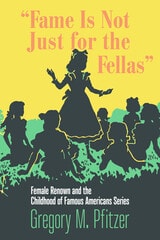
"Fame Is Not Just for the Fellas"
Female Renown and the Childhood of Famous Americans SeriesGregory M. Pfitzer
University of Massachusetts Press, 2022
Finalist of the 2023 SHARP History of the Book Prize
Between 1932 and 1958, thousands of children read volumes in the book series Childhood of Famous Americans. With colorful cover art and compelling—and often highly fictionalized—narrative storylines, these biographies celebrated the national virtues and achievements of famous women like Betsy Ross, Louisa May Alcott, and Amelia Earhart. Employing deep archival research, Gregory M. Pfitzer examines the editorial and production choices of the publisher and considers the influence of the series on readers and American culture more broadly.
In telling the story of how female subjects were chosen and what went into writing these histories for young female readers of the time, Pfitzer illustrates how these books shaped children’s thinking and historical imaginations around girlhood using tales from the past. Utilizing documented conversations and disagreements among authors, editors, readers, reviewers, and sales agents at Bobbs-Merrill, “Fame Is Not Just for the Fellas” places the series in the context of national debates around fame, gender, historical memory, and portrayals of children and childhood for a young reading public—charged debates that continue to this day.
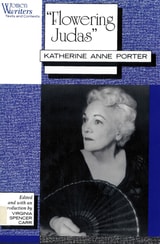
"Flowering Judas"
Katherine Anne PorterCarr, Virginia S
Rutgers University Press, 1993
Katherine Anne Porter often spoke of her story "Flowering Judas" as the tale she liked best of all her stories because it came the nearest to what she meant it to be. It is the story of Laura, an idealistic woman, who travels to Mexico from Arizona at the age of twenty-two to assist the Obreg-n Revolution.
This casebook on "Flowering Judas" addresses Porter's ambivalence surrounding her roles as woman and artist and also attests to the profound influence of Mexico upon her work. Readers of this early tale will not be surprised to learn that although Porter was a practicing feminist in her life and her work, she actually eschewed the feminist label.
Virginia Spencer Carr brings her own sharply focused biographer's eye to the introduction, further illuminating the story and the superb critical essays that it provokes. The casebook includes the authoritative text of the story itself, Porter's own statement regarding the genesis of this highly acclaimed work, an important interview, a collection of significant essays on "Flowering Judas" and the historical, cultural, and personal milieu from which the tale evolved, a bibliography, and a chronology of Porter's life and work.
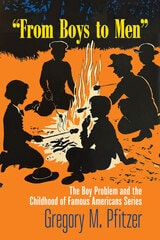
"From Boys to Men"
The Boy Problem and the Childhood of Famous Americans SeriesGregory M. Pfitzer
University of Massachusetts Press, 2024
While adult concern about gender in children’s books has made recent headlines, this discussion is far from new. As Gregory M. Pfitzer reveals, the writers and editors at Bobbs-Merrill, the publisher of the Childhood of Famous Americans book series published between 1932 and 1958, thought carefully about how their books would influence the development of their male readers. These books emphasized inspiring tales over historical accuracy and were written in simple language, with characters, dialogue, and stories that were intended to teach boys how to be successful men.
But this was a specific image of American manhood. Published in an era when sociologists, psychologists, and other experts worried about male delinquency, the men envisioned in these books were steeped in Cold War racial and gender stereotypes, and questions about citizenship and responsibility. Based on deep archival research into the publication history of the series, “From Boys to Men” sheds light on current controversies on children’s books and presentations of gender diversity.
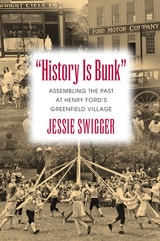
"History Is Bunk"
Assembling the Past at Henry Ford's Greenfield VillageJessie Swigger
University of Massachusetts Press, 2014
In 1916 a clearly agitated Henry Ford famously proclaimed that “history is more or less bunk.” Thirteen years later, however, he opened the outdoor history museum Greenfield Village in Dearborn, Michigan. It was written history's focus on politicians and military heroes that was bunk, he explained. Greenfield Village would correct this error by celebrating farmers and inventors.
The village eventually included a replica of Thomas Edison's Menlo Park, New Jersey, laboratory, the Wright brothers' cycle shop and home from Dayton, Ohio, and Ford's own Michigan birthplace. But not all of the structures were associated with famous men. Craft and artisan shops, a Cotswold cottage from England, and two brick slave cabins also populated the village landscape. Ford mixed replicas, preserved buildings, and whole-cloth constructions that together celebrated his personal worldview.
Greenfield Village was immediately popular. But that only ensured that the history it portrayed would be interpreted not only by Ford but also by throngs of visitors and the guides and publicity materials they encountered. After Ford's death in 1947, administrators altered the village in response to shifts in the museum profession at large, demographic changes in the Detroit metropolitan area, and the demands of their customers.
Jessie Swigger analyzes the dialogue between museum administrators and their audiences by considering the many contexts that have shaped Greenfield Village. The result is a book that simultaneously provides the most complete extant history of the site and an intimate look at how the past is assembled and constructed at history museums.
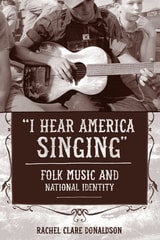
"I Hear America Singing"
Folk Music and National IdentityRachel Clare Donaldson
Temple University Press, 2014
In "I Hear America Singing," Rachel Donaldson traces the vibrant history of the twentieth-century folk music revival from its origins in the 1930s through its end in the late 1960s. She investigates the relationship between the revival and concepts of nationalism, showing how key figures in the revival--including Pete Seeger , Alan Lomax, Moses Asch, and Ralph Rinzler--used songs to influence the ways in which Americans understood the values, the culture, and the people of their own nation.
As Donaldson chronicles how cultural norms were shaped over the course of the mid-twentieth century, she underscores how various groups within the revival and their views shifted over time. "I Hear America Singing" provides a stirring account of how and why the revivalists sustained their culturally pluralist and politically democratic Americanism over this tumultuous period in American history.
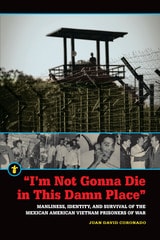
"I'm Not Gonna Die in This Damn Place"
Manliness, Identity, and Survival of the Mexican American Vietnam Prisoners of WarJuan David Coronado
Michigan State University Press, 2018
"Ich Kuss Die Hand"
The Letters of H. L. Mencken To Gretchen HoodH. L. Mencken
University of Alabama Press, 1986
“Ich Kuss Die Hand”: The Letters of H. L. Mencken to Gretchen Hood relates an episode in Mencken's life that has received only passing mention from his biographers. Gretchen Hood's acquaintance with the journalistic life of Washington formed a bond with Mencken, who thought of himself, first and foremost, as an inveterate newspaperman (they playfully entertained the idea of starting their own Washington newspaper), and she had a ready appreciation for his performances as a connoisseur of the Washington political spectacle. Mencken, the amateur musician and music buff, respected her talent and professional background.
His letters indicate that he found in her an intelligent, witty, and charming respondent to his characteristic traits of personality and style. She both flattered his ego and challenged him to exhibit his celebrated manner at its best. On her part, Hood was not simply awestruck by Mencken's attentions but met them with her independent verve. “Nothing scared me,” she later said of her attitude; “ready to take on all comers.” Mencken liked to refer to her as “a licensed outlaw,” a designation that captures his impression of her and describes as well the fashionable unconventionality, which fueled the Mencken vogue.
Mencken wrote Hood over two hundred letters, and she must have written him about the same number. For much of the time they corresponded, they exchanged several letters every month, sometimes as many as four or five a week. As their communications blossomed into a four-year friendship, personal meetings soon supplemented the flow of letters.
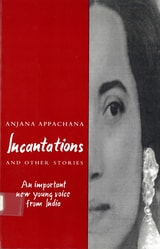
"Incantations" and Other Stories
An Important New Young Voice From IndiaAppachana, Anjana
Rutgers University Press, 1992
All life seems to be prescribed; these characters bravely or cautiously confront the rules and regulations or finally give in to them resignedly—any small triumphs they achieve are never clear-cut. One of the most unusual aspects of many of the stories is the way in which they are informed by but never ruled by the author's feminism. She never lectures her readers but lets us see for ourselves: a bride caught in a hopeless marriage where she has given up all rights to any life of her own, a hapless college student who is confined to campus for minor infractions just at the time when she had an appointment for an abortion, a young girl who keeps the dark secret of her sister's rape, a woman executive and a digruntled male clerk both trapped in the intricate bureaucracy of their business firm and the roles they must play to survive there. By turns warm, gullible, arrogant and bigoted, all of these characters live their lives amid contradictions and double standards, superstitions and impossible dreams. Appachana's vision is unique, her writing superb. Readers will thank her for allowing them to enter territory that is at once distant and exotic but also familiar and recognizable.

"Mr. Taxpayer versus Mr. Tax Spender"
Taxpayers' Associations, Pocketbook Politics, and the Law during the Great DepressionLinda Upham-Bornstein
Temple University Press, 2023
“Mr. Taxpayer versus Mr. Tax Spender” presents a comprehensive overview of these grassroots taxpayers’ leagues beginning in the 1860s and shows how they evolved during their heyday in the 1930s. Linda Upham-Bornstein chronicles the ways these taxpayers associations organized as well as the tools they used—constructive economy, political efforts, tax strikes, and tax revolt through litigation—to achieve their objectives.
Taxpayer activity was a direct consequence of—and a response to—the economic crisis of the Great Depression and the expansion of the size and scope of government. “Mr. Taxpayer versus Mr. Tax Spender” connects collective tax resistance in the 1930s to the populist tradition in American politics and to other broad impulses in American political and legal history.
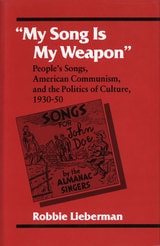
"My Song Is My Weapon"
People's Songs, American Communism, and the Politics of Culture, 1930-50Robbie Lieberman
University of Illinois Press, 1989

"Other Sheep I Have" The Autobiography of Father Paul M. Washington
Paul Washington
Temple University Press, 1994
Father Paul M. Washington rose to local and nation prominence as an unflagging supporter of civil and women's rights. One of a handful of black priests in a traditionally white church, he fought for understanding among all people, eventually serving twenty-five years as the Rector of the Episcopal Church of the Advocate in an inner-city Philadelphia neighborhood. Though his ideas about equality often went against the views of the Episcopal church leadership, he rejected threats of withdrawn funding or retaliation to follow his heart and his theology.
Father Washington's story is a window of insight into the struggles for justice and dignity in the latter half of the twentieth century. In the tumultuous 1960s he supported the Black Power movement, the Black Panther Party, and many other groups working for peace and justice, providing meeting places and guidance. He often found himself in the midst of racial disturbances—the riots on Susquehanna Avenue in 1963 and on Columbia Avenue in 1964, in front of the Board of Education where high school students protested the Eurocentric curriculum, and outside the walls of Girard College where citizens and civic leaders demonstrated against the school's exclusion of black children. In the 1980s, he helped Philadelphia city officials negotiate with MOVE members and was a vocal supporter of Ramona Africa, fighting for her release from prison. It was in his church on the corner of 18th and Diamond Streets that women were first ordained a priests in the Episcopal church. And it was one of his congregation, Barbara Harris, who became the first female Episcopal bishop.
In his evocative voice, Father Washington describes the pivotal events of his life and how each impacted upon his evolving ideas of the relationship between religion and justice. Spanning seven decades, his account is at once an insightful and unique historical account of political action, of the reformation of the church, of the changing urban landscape, and of a life graced by leadership and spiritual enlightenment.

"Rights, Not Roses"
Unions and the Rise of Working-Class Feminism, 1945-80Dennis A. Deslippe
University of Illinois Press, 2000
Educated, white collar professional women carried the most visible banners of feminism. But working class women were a powerful force in the campaign for gender equality. Dennis A. Deslippe explores how unionized wage-earning women led the struggle to place women's employment rights on the national agenda, decisively influencing both the contemporary labor movement and second-wave feminism.
Deslippe's account unravels a complex history of how labor leaders accommodated and resisted working women's demands for change. Through case studies of unions representing packinghouse and electrical workers, Deslippe explains why gender equality emerged as an issue in the 1960s and how the activities of wage-earning women in and outside of their unions shaped the content of the debate. He also traces the fault lines separating working-class women--who sought gender equality within the parameters of unionist principles such as seniority--from middle-class women--who sought an equal rights amendment that would guarantee an abstract equality for all women.
Thoughtful and detailed, "Rights, Not Roses" offers a new look at the complexities of working-class feminism.
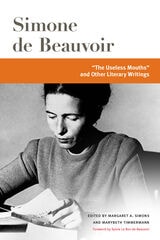
"The Useless Mouths" and Other Literary Writings
Simone de Beauvoir; Edited by Margaret A. Simons and Marybeth Timmermann; Foreword by Sylvie Le Bon de Beauvoir
University of Illinois Press, 2021
The volume begins with a new translation of the 1945 play The Useless Mouths, written in Paris during the Nazi occupation. Other pieces were discovered after Beauvoir's death in 1986, such as the 1965 short novel "Misunderstanding in Moscow," involving an elderly French couple who confront their fears of aging. Two additional previously unknown texts include the fragmentary "Notes for a Novel," which contains the seed of what she later would call "the problem of the Other," and a lecture on postwar French theater titled Existentialist Theater. The collection notably includes the eagerly awaited translation of Beauvoir's contribution to a 1965 debate among Jean-Paul Sartre and other French writers and intellectuals, "What Can Literature Do?"
Prefaces to well-known works such as Bluebeard and Other Fairy Tales,La Bâtarde, and James Joyce in Paris: His Final Years are also available in English for the first time, alongside essays and other short articles. A landmark contribution to Beauvoir studies and French literary studies, the volume includes informative and engaging introductory essays by prominent and rising scholars.
Contributors are Meryl Altman, Elizabeth Fallaize, Alison S. Fell, Sarah Gendron, Dennis A. Gilbert, Laura Hengehold, Eleanore Holveck, Terry Keefe, J. Debbie Mann, Frederick M. Morrison, Catherine Naji, Justine Sarrot, Liz Stanley, Ursula Tidd, and Veronique Zaytzeff.
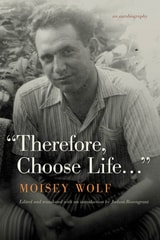
"Therefore, Choose Life..."
An AutobiographyMoisey Wolf
Oregon State University Press, 2014
Wolf describes his Jewish childhood and youth in pre-war Poland, his escape from the Holocaust and subsequent medical service in the Soviet Army during World War II and the following decade, his distinguished career in psychiatry in post-Stalinist Soviet Russia, and his final years in Portland, Oregon, after his departure from the Soviet Union in 1992.
Wolf’s narrative skill and evocative personal insights, combined with Judson Rosengrant’s judicious editing and annotation and elegant translation, provide the reader with direct access to a world that has seemingly ceased to exist, yet continues to resonate and inform our own lives in powerful ways.
“Therefore, Choose Life…” will appeal to readers interested in the history of the East-European twentieth century, pre-Holocaust Jewish family life in Poland, and in the survival of a man of deep religious faith and cultivation in the face of the catastrophes and vicissitudes of his time and place.
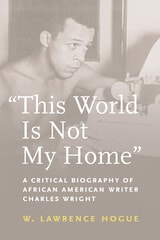
"This World Is Not My Home"
A Critical Biography of African American Writer Charles WrightW. Lawrence Hogue
University of Massachusetts Press, 2023
One of Book Authority's 8 New African-American and Black Biography Books Shaping 2025
In the 1960s, Charles Wright’s (1932–2008) star was on the rise. After dropping out of high school and serving in the Korean War, the young Black writer landed in New York, where he was mentored by Norman Mailer, signed a book deal with a leading publisher, and was celebrated by the likes of Langston Hughes and James Baldwin.
Over the decades to follow, Wright would lead a peripatetic and at times precarious life, moving between Tangier, Veracruz, Paris, and New York, penning a regular column for the Village Voice, living off the goodwill of his friends, and battling addiction and, later, mental health issues. As W. Lawrence Hogue shows, Wright’s innovative fiction stands apart, offering a different vision of outcast Black Americans in the postwar era and using satire to bring agency and humanity to working-class characters. This critical biography—the first devoted to Wright’s significant but largely forgotten story—brings new attention to the writer’s impressive body of work, in the context of a wild, but troubled, life.
"We Are All Leaders"
The Alternative Unionism of the Early 1930sEdited by Staughton Lynd
University of Illinois Press, 1996
Contains the Bryant Spann Memorial Prize in Literature for 1997, an award-winning essay, "The Very Last Hurrah" by Eric Leif Davin
This collection of articles delves into the little-known community-based unionism of the 1930s. Worlds apart from bureaucratic business unions like the AFL-CIO, these organizations emerged from workers involved in many kinds of labor, from African American nutpickers in St. Louis to chemical and rubber workers in Akron, and from bootleg miners in Pennsylvania to tenant farmers in the Mississippi Delta.
The contributors draw on eyewitness interviews, first-person narratives, trade union documents, and other primary sources to describe experimental forms of worker activism during the period. This alternative unionism was democratic, deeply rooted in mutual aid among workers in different crafts and work sites, and politically independent. The key to it was a value system based on egalitarianism. The cry, "We are all leaders!" resonated among rank-and-file activists. Their struggle, though often overlooked by historians, has much to teach us about union organizing today.
Contributors: John Borsos, Eric Leif Davin, Elizabeth Faue, Rosemary Feurer, Janet Irons, Michael Kozura, Mark D. Naison, Peter Rachleff, and Stan Weir
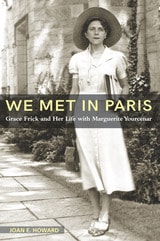
"We Met in Paris"
Grace Frick and Her Life with Marguerite YourcenarJoan E. Howard
University of Missouri Press, 2020
"Without Blare of Trumpets"
Walter Drew, The National Erectors' Association, and the Open Shop Movement, 1903-1957Sidney Fine
University of Michigan Press, 1995

(Re)viewing Creative, Critical and Commercial Practices in Contemporary Spanish Cinema
Edited by Duncan Wheeler and Fernando Canet
Intellect Books, 2014
... And Heaven Shed No Tears
Henry Armin Herzog
University of Wisconsin Press, 2005
1995 paperback, Saga Publishers / Folio Private
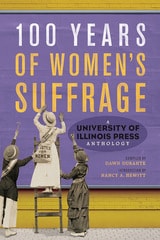
100 Years of Women's Suffrage
A University of Illinois Press AnthologyCompiled by Dawn Durante. Introduction by Nancy A. Hewitt
University of Illinois Press, 2019
A curation of important scholarship on a pivotal historical moment, 100 Years of Women’s Suffrage captures the complex and enduring struggle for fair and equal voting rights.
Contributors: Laura L. Behling, Erin Cassese, Mary Chapman, M. Margaret Conway, Carolyn Daniels, Bonnie Thornton Dill, Ellen Carol DuBois, Julie A. Gallagher, Barbara Green, Nancy A. Hewitt, Leonie Huddy, Kimberly Jensen, Mary-Kate Lizotte, Lady Constance Lytton, and Andrea G. Radke-Moss
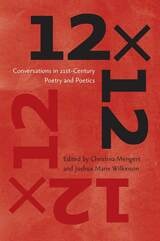
12 x 12
Conversations in 21st-Century Poetry and PoeticsChristina Mengert
University of Iowa Press, 2009
Christina Mengert and Joshua Marie Wilkinson have assembled an expansive and searching view of the world through the eyes of twenty-four of our most vital and engaging poets. Punctuated by poems from each contributor, 12 × 12 brings together an unparalleled range of poets and poetries, men and women from around the world, working poets for whom the form vitally matters.
Contributors
Jennifer K. Dick–Laura Mullen
Jon Woodward–Rae Armantrout
Sabrina Orah Mark–Claudia Rankine
Christina Hawkey–Tomaž Šalamun
Christine Hume–Rosemarie Waldrop
Srinkath Reddy–Mark Levine
Karen Volkman–Allen Grossman
Paul Fattaruso–Dara Wier
Mark Yakich–Mary Leader
Michelle Robinson–Paul Auster
Sawako Nakayasu–Carla Harryman
Ben Lerner–Aaron Kunin
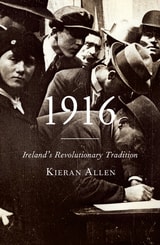
1916
Ireland's Revolutionary TraditionKieran Allen
Pluto Press, 2016
In 1916, Kieran Allen argues that this pivotal moment in Irish history has been obscured by those who see it only as a prelude for a war of independence. Emphasizing an often ignored social and political radicalism at the heart of the rebellion, he shows that it gave birth to a revolutionary tradition that continues to haunt the Irish elite. Socialist aspirations mixed, and sometimes clashed, with the republican current, but both were crushed in a counterrevolution that accompanied the Anglo-Irish treaty of 1921. The result today is a partitioned Ireland that acts as a neoliberal tax haven for multinational corporations—a state of affairs quite alien to both Connolly’s and Pearse’s vision.
Published to coincide with the Rising’s centennial, 1916: Ireland’s Revolutionary Tradition re-establishes the political role of socialist republican figures, offers a highly accessible history of the Easter Rising, and explores the militancy and radicalism that continues to haunt the Irish elite one hundred years later.
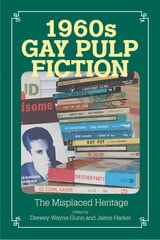
1960s Gay Pulp Fiction
The Misplaced HeritageDrewey Wayne Gunn
University of Massachusetts Press, 2013
As a result of a series of court cases, by the mid-1960s the U.S. post office could no longer interdict books that contained homosexuality. Gay writers were eager to take advantage of this new freedom, but the only houses poised to capitalize on the outpouring of manuscripts were “adult” paperback publishers who marketed their products with salacious covers. Gay critics, unlike their lesbian counterparts, have for the most part declined to take these works seriously, even though they cover an enormous range of genres: adventures, blue-collar and gray-flannel novels, coming-out stories, detective fiction, gothic novels, historical romances, military stories, political novels, prison fiction, romances, satires, sports stories, and spy thrillers—with far more short story collections than is generally realized. Twelve scholars have now banded together to begin a recovery of this largely forgotten explosion of gay writing that occurred in the 1960s.
Descriptions of these pulps have often been inadequate and misinforming, the result of misleading covers, unrepresentative sampling of texts, and a political blindness that refuses to grant worth to pre-Stonewall writing. This volume charts the broader implications of this state of affairs before examining some of the more significant pulp writers from the period. It brings together a diverse range of scholars, methodologies, and reading strategies. The evidence that these essays amass clearly demonstrates the significance of gay pulps for gay literary history, queer cultural studies, and book history.
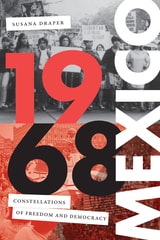
1968 Mexico
Constellations of Freedom and DemocracySusana Draper
Duke University Press, 2018
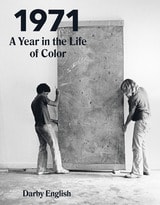
1971
A Year in the Life of ColorDarby English
University of Chicago Press, 2016
1971: A Year in the Life of Color looks at many black artists’ desire to gain freedom from overt racial representation, as well as their efforts—and those of their advocates—to further that aim through public exhibition. Amid calls to define a “black aesthetic,” these experiments with modernist art prioritized cultural interaction and instability. Contemporary Black Artists in America highlighted abstraction as a stance against normative approaches, while The DeLuxe Show positioned abstraction in a center of urban blight. The importance of these experiments, English argues, came partly from color’s special status as a cultural symbol and partly from investigations of color already under way in late modern art and criticism. With their supporters, black modernists—among them Peter Bradley, Frederick Eversley, Alvin Loving, Raymond Saunders, and Alma Thomas—rose above the demand to represent or be represented, compromising nothing in their appeals for interracial collaboration and, above all, responding with optimism rather than cynicism to the surrounding culture’s preoccupation with color.
1980
America's Pivotal YearJim Cullen
Rutgers University Press, 2023
1980 was a turning point in American history. When the year began, it was still very much the 1970s, with Jimmy Carter in the White House, a sluggish economy marked by high inflation, and the disco still riding the airwaves. When it ended, Ronald Reagan won the presidency in a landslide, inaugurating a rightward turn in American politics and culture. We still feel the effects of this tectonic shift today, as even subsequent Democratic administrations have offered neoliberal economic and social policies that owe more to Reagan than to FDR or LBJ. To understand what the American public was thinking during this pivotal year, we need to examine what they were reading, listening to, and watching.
1980: America's Pivotal Year puts the news events of the era—everything from the Iran hostage crisis to the rise of televangelism—into conversation with the year’s popular culture. Separate chapters focus on the movies, television shows, songs, and books that Americans were talking about that year, including both the biggest hits and some notable flops that failed to capture the shifting zeitgeist. As he looks at the events that had Americans glued to their screens, from the Miracle on Ice to the mystery of Who Shot J.R., cultural historian Jim Cullen garners surprising insights about how Americans’ attitudes were changing as they entered the 1980s.
Praise for Jim Cullen's previous Rutgers University Press books:
"Informed and perceptive" —Norman Lear on Those Were the Days: Why All in the Family Still Matters
"Jim Cullen is one of the most acute cultural historians writing today." —Louis P. Masur, author of The Sum of Our Dreams on Martin Scorsese and the American Dream
"This is a terrific book, fun and learned and provocative....Cullen provides an entertaining and thoughtful account of the ways that we remember and how this is influenced and directed by what we watch." —Jerome de Groot, author of Consuming History on From Memory to History

2001 and Counting
Kubrick, Nietzsche, and AnthropologyBruce Kapferer
Prickly Paradigm Press, 2014
In 2001 and Counting, renowned anthropologist Bruce Kapferer revisits 2001: A Space Odyssey, making a compelling case for its continued cultural relevance. While the film’s earliest audiences considered it to be a critical examination of European and American realities at the height of the Cold War, Kapferer shows that Kubrick’s masterwork speaks equally well to concerns of the contemporary world, including the Iraq War, the 2008 financial crisis, and the material and political effects of neoliberalism. Kapferer explores Kubrick’s central theme—the ever-changing relationship between humanity and technology—both with regard to current events and through the lens of Nietzsche’s Thus Spoke Zarathustra and the mythical concept of the eternal return.
A thought-provoking exploration of the cultural power of cinema, this volume by one of anthropology’s most insightful and imaginative thinkers will appeal to anthropologists and cineastes alike.

20th-Century Italian Women Writers
The Feminine ExperienceAlba Amoia
Southern Illinois University Press, 1996
As an international scholar and resident of Italy who has observed and shared the experiences of Italian women for the past twenty years, Alba Amoia has positioned herself perfectly to report to English-speaking audiences the great range and variety of writing produced by twentieth-century Italian women. Her personal contact with many of the authors she discusses lends further immediacy to her study.
Rather than focusing exclusively on contemporary living authors, Amoia discusses writers from the early part of the twentieth century as well, linking them with later writers spanning twentieth-century Italy’s literary movements and political, social, and economic developments. Yet the connections and contradictions that bind and divide these women are only beginning to be established because Italy is still a splintered country in which perceptions of Italian women as a historical group have only begun to crystallize. While feminine voices resound on the Italian literary scene, only recently has feminine authority made itself felt in the professional and institutional worlds.
The eleven writers in this volume criticize the female role in Italian society, externalize women’s unconscious needs, and offer unusual examples of feminine creativity. Amoia provides a critical treatment of each author, incorporating the accepted opinion of Italian and other critics. She isolates recurrent and fundamental themes in each author’s literary career: linguistic repression by males, personal frustration in the realm of "householditude," and disorientation within Italy’s unbalanced institutions and hierarchies still strongly anchored in archaic structures.
Amoia begins her discussion with two illustrious predecessors of Italy’s contemporary women writers: the 1926 Nobel Prize winner Grazia Deledda and the premier literary feminist Sibilla Aleramo. Continuing in chronological order, Amoia discusses Gianna Manzini, Lalla Romano, Elsa Morante, Natalia Ginzburg, Rosetta Loy, and Dacia Maraini. Amoia concludes her exploration of Italian women writers with three journalists: Matilde Serao, Oriana Fallaci, and Camilla Cederna.
Essentially, Amoia has provided a collection of succinct and accessible monographs featuring pertinent biographical information and extensive bibliographies. She discusses each author’s most representative works, seeking to give readers both a sense of these women as writers and an understanding of their significance in the male-dominated literary scene.
5 Years of 4th Genre
Martha Bates
Michigan State University Press, 2006
In 1999, Michigan State University Press launched Fourth Genre: Explorations in Creative Nonfiction, a journal that began with and has maintained a devotion to publishing notable, innovative work in nonfiction. The title reflects an intent to give nonfiction its due as a literary genre—to give writers of the 'fourth genre' a showcase for their work and to give readers a place to find the liveliest and most creative works in the form.
Given the genre's flexibility and expansiveness, journal editors Michael Steinberg and David Cooper have welcomed a variety of works— ranging from personal essays and memoirs to literary journalism and personal criticism. The essays are lyrical, self-interrogative, meditative, and reflective, as well as expository, analytical, exploratory, or whimsical. In short, Fourth Genre encourages a writer- to-reader conversation, one that explores the markers and boundaries of literary/creative nonfiction.
Since its inaugural issue, contributors have earned many literary awards: 5 Notable Essays of the Year (Best American Essay); the Lowell Thomas Travel Journalism Award; Notable Essay of the Year (Best American Travel Writing); and 4 Pushcart Prizes. Five Years of 4th Genre is a celebration of this significant literary journal. Culling a selection of some of the most creative of Fourth Genre’s first five years—the Pushcart winners are here, as well as those essays that are unique, those that tell us something new, those that startle us, and those that touch our hearts —this volume presents a representative sampling.
9/11
The Culture of CommemorationDavid Simpson
University of Chicago Press, 2006
In 9/11, Simpson argues that elements of the conventional culture of mourning and remembrance—grieving the dead, summarizing their lives in obituaries, and erecting monuments in their memory—have been co-opted for political advantage. He also confronts those who labeled the event an “apocalypse,” condemning their exploitation of 9/11 for the defense of torture and war.
In four elegant chapters—two of which expand on essays originally published in the London Review of Books to great acclaim—Simpson analyzes the response to 9/11: the nationally syndicated “Portraits of Grief” obituaries in the New York Times; the debates over the rebuilding of the World Trade Center towers and the memorial design; the representation of American and Iraqi dead after the invasion of March 2003, along with the worldwide circulation of the Abu Ghraib torture photographs; and the urgent and largely ignored critique of homeland rhetoric from the domain of critical theory.
Calling for a sustained cultural and theoretical analysis, 9/11 is the first book of its kind to consider the events of that tragic day with a perspective so firmly grounded in the humanities and so persuasive about the contribution they can make to our understanding of its consequences.
[...After the Media]
News from the Slow-Fading Twentieth CenturySiegfried Zielinski
University of Minnesota Press, 2013
The media are now redundant. In an overview of developments spanning the past seventy years, Siegfried Zielinski’s [ . . . After the Media] discusses how the means of technology-based communication assumed a systemic character and how theory, art, and criticism were operative in this process. Media-explicit thinking is contrasted with media-implicit thought. Points of contact with an arts perspective include a reinterpretation of the artist Nam June Paik and an introduction to the work of Jake and Dinos Chapman. The essay ends with two appeals. In an outline of a precise philology of exact things, Zielinski suggests possibilities of how things could proceed after the media. With a vade mecum against psychopathia medialis in the form of a manifesto, the book advocates for a distinction to be made between online existence and offline being.
¡Chicana Power!
Contested Histories of Feminism in the Chicano MovementBy Maylei Blackwell
University of Texas Press, 2011
The first book-length study of women's involvement in the Chicano Movement of the late 1960s and 1970s, ¡Chicana Power! tells the powerful story of the emergence of Chicana feminism within student and community-based organizations throughout southern California and the Southwest. As Chicanos engaged in widespread protest in their struggle for social justice, civil rights, and self-determination, women in el movimiento became increasingly militant about the gap between the rhetoric of equality and the organizational culture that suppressed women's leadership and subjected women to chauvinism, discrimination, and sexual harassment. Based on rich oral histories and extensive archival research, Maylei Blackwell analyzes the struggles over gender and sexuality within the Chicano Movement and illustrates how those struggles produced new forms of racial consciousness, gender awareness, and political identities.
¡Chicana Power! provides a critical genealogy of pioneering Chicana activist and theorist Anna NietoGomez and the Hijas de Cuauhtémoc, one of the first Latina feminist organizations, who together with other Chicana activists forged an autonomous space for women's political participation and challenged the gendered confines of Chicano nationalism in the movement and in the formation of the field of Chicana studies. She uncovers the multifaceted vision of liberation that continues to reverberate today as contemporary activists, artists, and intellectuals, both grassroots and academic, struggle for, revise, and rework the political legacy of Chicana feminism.
“Here, There and Everywhere”
The Foreign Politics of American Popular CultureEdited by Reinhold Wagnleitner and Elaine Tyler May
University Press of New England, 2000

“IN THE LIGHT OF LIKENESS—TRANSFORMED”
THE LITERARY ART OF LEON FORRESTDana A. Williams
The Ohio State University Press, 2005
“In the Light of Likeness—Transformed”, by Dana A. Williams, looks critically at the work of contemporary African American author Leon Forrest. Not only does she bring to the critical table a well-known but as yet understudied modernist author—an important endeavor in and of itself—but she also explores Forrest’s novels’ cultural dialogue with black ethnic culture and other African American authors, as well as provides in-depth readings of his prose and interpretations of his narrative style. Highly touted by both his literary forebear Ralph Ellison, who wrote the foreword to Forrest’s first novel, and his literary contemporary Toni Morrison, who edited his first three novels and wrote the foreword to his third, Leon Forrest is among the most gifted African American writers of our time. Yet, he is also among our most difficult.
Forrest's highly experimental narrative style, his reinterpretation of modernism, and his transformations of black cultural traditions into literary aesthetics often pose challenges of interpretation for the reader and the scholar alike. As the first single-authored book-length study of Forrest’s novel, this book offers readers pathways into his fiction. What this culturalist approach to the novels reveals is that Forrest’s fiction was foremost concerned with investigating ways for the African American to survive in the contemporary moment. Through a variety of characters, the novels reveal the African American’s art of transformation—the ability to find ways to make the wretchedness of the past work in positive ways.
“Proletarian Hegemony” in the Chinese Revolution and the Canton Commune of 1927
S. Bernard Thomas
University of Michigan Press, 1975
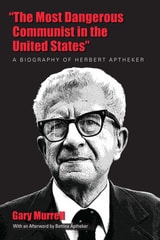
“The Most Dangerous Communist in the United States”
A Biography of Herbert ApthekerGary Murrell
University of Massachusetts Press, 2015
When J. Edgar Hoover declared Herbert Aptheker “the most dangerous Communist in the United States,” the notorious FBI director misconstrued his true significance. In this first book-length biography of Aptheker (1915–2003), Gary Murrell provides a balanced yet unflinching assessment of the controversial figure who was at once a leading historian of African America, radical political activist, literary executor of W. E. B. Du Bois, and lifelong member of the American Communist Party. Although blacklisted at U.S. universities, Aptheker published dozens of books, including the groundbreaking American Negro Slave Revolts (1943) and the monumental seven-volume Documentary History of the Negro People (1951–1994). He also edited four volumes of the correspondence and unpublished writings of Du Bois, an achievement that Eric Foner, writing in the New York Times Book Review, called “a milestone in the coming of age of Afro-American history.”
As Murrell shows, Aptheker the historian was inseparable from Aptheker the leading Communist Party intellectual, polemicist, and agitator. During the 1960s, his ability to rouse and inspire both black and white student radicals made him one of the few Old Leftists accepted by the New Left. Aptheker had joined the CPUSA during its heyday in the 1930s, convinced that only through the party's leadership could fascism be defeated and true liberation be achieved: he ended his affiliation five decades later in 1991 after the collapse of socialism in the Soviet Union and Eastern Europe.
In an afterword, Bettina Aptheker adds to Murrell's narrative by illuminating her mother Fay's vital contributions to her father's work and by affirming the particularly devastating challenges of life in a family dedicated to radical political and social change.
“We Must Document Ourselves Now”
Black Lesbian Cultural Legacies and the Politics of Self-RepresentationStephanie Andrea Allen
The Ohio State University Press, 2026
A long-overdue analysis of how Black lesbians have asserted their lived experience through creative practice, pushing back against heteropatriarchal systems that deny them visibility.
“We Must Document Ourselves Now” examines the essential but oft-ignored importance of Black lesbian literature and film in queer literary and film histories, arguing that Black lesbian cultural texts reflect creators’ lived experiences and resist the heteropatriarchal systems that deny Black lesbians visibility in popular culture. Stephanie Andrea Allen contends that these texts have three goals: to lay bare the experiences of Black lesbians in a raced, gendered, classed, and homophobic society; to challenge the notion that claiming Black lesbian identity is marginal or forbidden; and to take care of Black lesbians by bearing witness to their experiences through creative practice.
Insisting that Black feminist creative practice is an integral form of self and community care, Allen weaves analysis of cultural output spanning key sociocultural moments from 1974 to 2020 with interviews with Black lesbian cultural workers. “We Must Document Ourselves Now” examines the Black Arts / Black Power movement, the “boom” in lesbian and gay publishing, the so-called golden era of Black film, and twenty-first-century visual media to demonstrate how representations of Black lesbians, or lack thereof, were vital to constructing a cultural canon that focused on illuminating Black lesbian experiences in the United States.