Results by title
1116 books match the query 'Africa' and 3 start with a non-letter
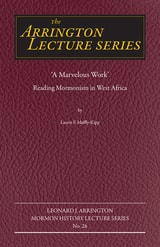
"A Marvelous Work"
Reading Mormonism in West AfricaLaurie F. Maffly-Kipp
Utah State University Press, 2022
The Arrington Lecture series, established by one of the twentieth-century West's most distinguished historians, Leonard Arrington, has become a leading forum for prominent historians to address topics related to Mormon history. Utah State University hosts the Leonard J. Arrington Mormon History Lecture Series through the Merrill-Cazier Library Special Collections and Archives department.
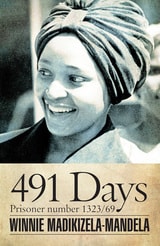
491 Days
Prisoner Number 1323/69Winnie Madikizela-Mandela
Ohio University Press, 2014
On a freezing winter’s night, a few hours before dawn on May 12, 1969, South African security police stormed the Soweto home of Winnie Madikizela-Mandela, activist and wife of the imprisoned Nelson Mandela, and arrested her in the presence of her two young daughters, then aged nine and ten.
Rounded up in a group of other antiapartheid activists under Section 6 of the Terrorism Act, designed for the security police to hold and interrogate people for as long as they wanted, she was taken away. She had no idea where they were taking her or what would happen to her children. For Winnie Mandela, this was the start of 491 days of detention and two trials.
Forty-one years after Winnie Mandela’s release on September 14, 1970, Greta Soggot, the widow of one of the defense attorneys from the 1969–70 trials, handed her a stack of papers that included a journal and notes she had written while in detention, most of the time in solitary confinement. Their reappearance brought back to Winnie vivid and horrifying memories and uncovered for the rest of us a unique and personal slice of South Africa’s history.
491 Days: Prisoner Number 1323/69 shares with the world Winnie Mandela’s moving and compelling journal along with some of the letters written between several affected parties at the time, including Winnie and Nelson Mandela, himself then a prisoner on Robben Island for nearly seven years.
Readers will gain insight into the brutality she experienced and her depths of despair, as well as her resilience and defiance under extreme pressure. This young wife and mother emerged after 491 days in detention unbowed and determined to continue the struggle for freedom.
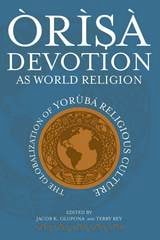
Òrìsà Devotion as World Religion
The Globalization of Yorùbá Religious CultureEdited by Jacob K. Olupona and Terry Rey
University of Wisconsin Press, 2008
The African spirit proved remarkably resilient in the face of the transatlantic slave trade, inspiring the perseverance of African religion wherever its adherents settled in the New World. Among the most significant manifestations of this spirit, Yorùbá religious culture persisted, adapted, and even flourished in the Americas, especially in Brazil and Cuba, where it thrives as Candomblé and Lukumi/Santería, respectively. After the end of slavery in the Americas, the free migrations of Latin American and African practitioners has further spread the religion to places like New York City and Miami. Thousands of African Americans have turned to the religion of their ancestors, as have many other spiritual seekers who are not themselves of African descent.
Ifá divination in Nigeria, Candomblé funerary chants in Brazil, the role of music in Yorùbá revivalism in the United States, gender and representational authority in Yorùbá religious culture—these are among the many subjects discussed here by experts from around the world. Approaching Òrìsà devotion from diverse vantage points, their collective effort makes this one of the most authoritative texts on Yorùbá religion and a groundbreaking book that heralds this rich, complex, and variegated tradition as one of the world’s great religions.