Results by title
3258 books match the query 'Art' and 19 start with a non-letter
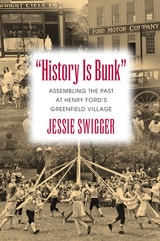
"History Is Bunk"
Assembling the Past at Henry Ford's Greenfield VillageJessie Swigger
University of Massachusetts Press, 2014
In 1916 a clearly agitated Henry Ford famously proclaimed that “history is more or less bunk.” Thirteen years later, however, he opened the outdoor history museum Greenfield Village in Dearborn, Michigan. It was written history's focus on politicians and military heroes that was bunk, he explained. Greenfield Village would correct this error by celebrating farmers and inventors.
The village eventually included a replica of Thomas Edison's Menlo Park, New Jersey, laboratory, the Wright brothers' cycle shop and home from Dayton, Ohio, and Ford's own Michigan birthplace. But not all of the structures were associated with famous men. Craft and artisan shops, a Cotswold cottage from England, and two brick slave cabins also populated the village landscape. Ford mixed replicas, preserved buildings, and whole-cloth constructions that together celebrated his personal worldview.
Greenfield Village was immediately popular. But that only ensured that the history it portrayed would be interpreted not only by Ford but also by throngs of visitors and the guides and publicity materials they encountered. After Ford's death in 1947, administrators altered the village in response to shifts in the museum profession at large, demographic changes in the Detroit metropolitan area, and the demands of their customers.
Jessie Swigger analyzes the dialogue between museum administrators and their audiences by considering the many contexts that have shaped Greenfield Village. The result is a book that simultaneously provides the most complete extant history of the site and an intimate look at how the past is assembled and constructed at history museums.
#exstrange
A Curatorial Intervention on EbayMarialaura Ghidini & Rebekah Modrak
Michigan Publishing Services, 2017
Over 80 contemporary artists and designers created “artworks as auctions” for #exstrange between January 15 and April 15, 2017, each using the elements of the auction listing—descriptive text, images, pricing, and categories—as tools of production.
Works include artist Lucy Pawlak’s collaboration with the Beat Officer to sell a series of clay objects as missing evidence from unexplained events in Mexico; IOCOSE’s sale of instant protests in the category “Specialty Services” where buyers chose the protest mantras, and outsourced performers demonstrated; and Susanne Cockrell & Ted Purves’ offering of a stick-gun with the memory of their son’s play in “Entertainment Memorabilia.”
Featured artists:
10.000 • Lanfranco Aceti • AILADI • Aysha Al Moayyed • Nasser Alzayani • Mary Ayling • Georgia Banks • Ann Bartges • Yogesh Barve • Kim Beck • Ajit Bhadoriya • Natalie Boterman • Sophia Brueckner • Carmel Buckley • Renee Carmichael • Alessio Chierico • Mia Cinelli • Susanne Cockrell • ConnX • Da Burn Gallery • Julia del Río • Tyler Denmead • César Escudero • Nihaal Faizal • FICTILIS • Eryn Foster • John D. Freyer • Elisa Giardina Papa • Angela Glanzmann • Maximilian Goldfarb • Archana Hande • Abhishek Hazra • Adam Hewins • Megan Hildebrandt • Joey Holder • Masimba Hwati • Regin Igloria • IOCOSE • JODI • Geraldine Juárez • KairUs Art+Research • Katerina Kamprani • Kamilia Kard • Tara Kelton • Matt Kenyon • Stephanie LaFreniere • Eno Laget • Nicolás Lamas • Martin Lang • Taekyeom Lee • LEXX Exhibitor Space • Lloyd Corporation • Silvio Lorusso • Breda Lynch • Garrett Lynch • Eva and Franco Mattes • Kembrew McLeod • Kathleen Meaney • Maria Miranda • Crisia Miroiu • Joana Moll • Martín Nadal • Norie Neumark • Xi Jie Ng • Maeve O'Neill • Chiara Passa • Lucy Pawlak • Sreshta Rit Premnath • Niko Princen • Ted Purves • Renuka Rajiv • Luis Romero • Armando Rosales • Robert Sakrowski • Alessandro Sambini • Sarah Ancelle Schönfeld • Anke Schüttler • Guido Segni • Chinar Shah • Jenine Sharabi • Yastika Prakash Shetty • Anupam Singh • Gagan Singh • Ishan Srivstava • Isabella Streffen • Surabhi Vaya • Wang Yue • Wu Jiaru • Yashaswini • Laura Yuile • Carlo Zanni • Huaqian Zhang
Guest curators:
Latifa Al Khalifa • Bani Brusadin • Peter Dykhuis • Fred Feinberg & Lu Zhang • Harrell Fletcher • Tamara Ibarra • João Laia • Nora O Murchú • Domenico Quaranta • Gaia Tedone • TSAO Yidi

'Avant-garde' Art Groups in China, 1979-1989
Paul Gladston
Intellect Books, 2013
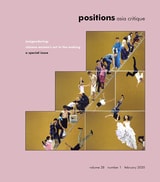
(En)gendering
Chinese Women's Art in the MakingShuqin Cui, special issue editor
Duke University Press, 0
Contributors. Julia F. Andrews, Lara C. W. Blanchard, Meiling Cheng, Shuqin Cui, Elise David, Linda Chui-han Lai, Tao Yongbai, Peggy Wang, Sasha Su-Ling Welland
(Re)Positioning Site Dance
Local Acts, Global PerspectivesEdited by Karen Barbour, Vicky Hunter, and Melanie Kloetzel
Intellect Books, 2019
(Re)viewing Creative, Critical and Commercial Practices in Contemporary Spanish Cinema
Edited by Duncan Wheeler and Fernando Canet
Intellect Books, 2014
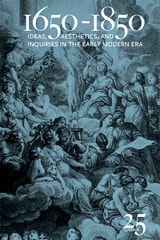
1650-1850
Ideas, Aesthetics, and Inquiries in the Early Modern Era (Volume 25)Kevin L. Cope
Bucknell University Press, 2020
About the annual journal 1650-1850
1650-1850 publishes essays and reviews from and about a wide range of academic disciplines—literature (both in English and other languages), philosophy, art history, history, religion, and science. Interdisciplinary in scope and approach, 1650-1850 emphasizes aesthetic manifestations and applications of ideas, and encourages studies that move between the arts and the sciences—between the “hard” and the “humane” disciplines. The editors encourage proposals for “special features” that bring together five to seven essays on focused themes within its historical range, from the Interregnum to the end of the first generation of Romantic writers. While also being open to more specialized or particular studies that match up with the general themes and goals of the journal, 1650-1850 is in the first instance a journal about the artful presentation of ideas that welcomes good writing from its contributors.
First published in 1994, 1650-1850 is currently in its 25th volume.
ISSN 1065-3112.
Published by Bucknell University Press. Distributed worldwide by Rutgers University Press.
1650-1850
Ideas, Aesthetics, and Inquiries in the Early Modern Era (Volume 27)Kevin L. Cope
Bucknell University Press, 2022
ISSN 1065-3112
1650-1850
Ideas, Aesthetics, and Inquiries in the Early Modern Era (Volume 30)Kevin L. Cope
Bucknell University Press, 2025
The contributors to volume 30 join with Enlightenment thinkers in pulling, pushing, and stretching the elastic boundaries of human experience. Essays on comical apocalypticism, the evolution of satire, and the Asian periphery of English literature open a volume that offers two special features on extreme aspects of a modernizing world. The first probes the undiscovered world of last wills and testaments, while the second explores the soaring world of eighteenth-century birds. As always, 1650–1850 culminates in a bevy of book reviews critiquing the latest scholarship on long-established specialties, unusual subjects, and broad reevaluations of the period.
Published by Bucknell University Press. Distributed worldwide by Rutgers University Press.
ISSN: 1065-3112
1650-1850
Ideas, Aesthetics, and Inquiries in the Early Modern Era (Volume 31)Kevin L. Cope
Bucknell University Press, 2026
Exploratory, investigative, and energetically analytical, 1650–1850 covers the full expanse of long-eighteenth-century thought, writing, and art while delivering abundant revelatory detail. Essays on well-known cultural figures combine with studies of emerging topics to unveil a vivid rendering of a dynamic period, simultaneously committed to singular genius and universal improvement. Welcoming research on all nations and language traditions, 1650–1850 invites readers into a truly global Enlightenment.
The contributors to volume 31 join with Enlightenment thinkers in charting the outposts of long eighteenth-century culture while discovering new features in seemingly familiar terrain. Essays explore outlandish but often observed activities such as medical quackery, Rosicrucian hermeticism, and the oral antics associated with the twisted “Malaprop” tradition. In happy contrast, the volume offers the second half of a sparkling special feature on the most familiar of all substances, water. Contributors lead us through an astounding assortment of aqueous topics, from the heritage of The Compleat Angler to the sanctified sprinklings of holy water. As always, 1650–1850 culminates in a bevy of full-length book reviews that robustly address the latest scholarship on long-established specialties, unusual subjects, and broad reevaluations of the period.
Published by Bucknell University Press. Distributed worldwide by Rutgers University Press.
ISSN: 1065-3112
1650–1850
Ideas, Aesthetics, and Inquiries in the Early Modern Era (Volume 24)Kevin L. Cope
Bucknell University Press, 2019
About the annual journal 1650-1850
1650-1850 publishes essays and reviews from and about a wide range of academic disciplines—literature (both in English and other languages), philosophy, art history, history, religion, and science. Interdisciplinary in scope and approach, 1650-1850 emphasizes aesthetic manifestations and applications of ideas, and encourages studies that move between the arts and the sciences—between the “hard” and the “humane” disciplines. The editors encourage proposals for “special features” that bring together five to seven essays on focused themes within its historical range, from the Interregnum to the end of the first generation of Romantic writers. While also being open to more specialized or particular studies that match up with the general themes and goals of the journal, 1650-1850 is in the first instance a journal about the artful presentation of ideas that welcomes good writing from its contributors.
First published in 1994, 1650-1850 is currently in its 24th volume.
ISSN 1065-3112.
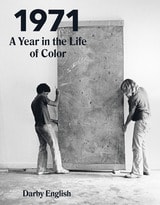
1971
A Year in the Life of ColorDarby English
University of Chicago Press, 2016
1971: A Year in the Life of Color looks at many black artists’ desire to gain freedom from overt racial representation, as well as their efforts—and those of their advocates—to further that aim through public exhibition. Amid calls to define a “black aesthetic,” these experiments with modernist art prioritized cultural interaction and instability. Contemporary Black Artists in America highlighted abstraction as a stance against normative approaches, while The DeLuxe Show positioned abstraction in a center of urban blight. The importance of these experiments, English argues, came partly from color’s special status as a cultural symbol and partly from investigations of color already under way in late modern art and criticism. With their supporters, black modernists—among them Peter Bradley, Frederick Eversley, Alvin Loving, Raymond Saunders, and Alma Thomas—rose above the demand to represent or be represented, compromising nothing in their appeals for interracial collaboration and, above all, responding with optimism rather than cynicism to the surrounding culture’s preoccupation with color.

25 Projects for Art Explorers
Christine Kirker
American Library Association, 2018
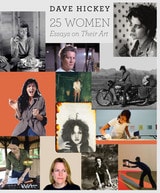
25 Women
Essays on Their ArtDave Hickey
University of Chicago Press, 2015
25 Women will not disappoint. The book collects Hickey’s best and most important writing about female artists from the past twenty years. But this is far more than a compilation: Hickey has revised each essay, bringing them up to date and drawing out common themes. Written in Hickey’s trademark style—accessible, witty, and powerfully illuminating—25 Women analyzes the work of Joan Mitchell, Bridget Riley, Fiona Rae, Lynda Benglis, Karen Carson, and many others. Hickey discusses their work as work, bringing politics and gender into the discussion only where it seems warranted by the art itself. The resulting book is not only a deep engagement with some of the most influential and innovative contemporary artists, but also a reflection on the life and role of the critic: the decisions, judgments, politics, and ethics that critics negotiate throughout their careers in the art world.
Always engaging, often controversial, and never dull, Dave Hickey is a writer who gets people excited—and talking—about art. 25 Women will thrill his many fans, and make him plenty of new ones.
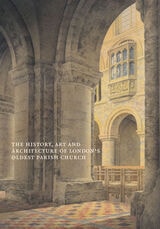
900 Years of St Bartholomew the Great
The History, Art and Architecture of London's Oldest Parish ChurchEdited by Charlotte Gauthier
Paul Holberton Publishing, 2022
The most comprehensive, updated history of St. Bartholomew the Great, the oldest parish church in London, as it celebrates its nine-hundred-year anniversary.
At the heart of the Smithfield area, with its pubs, restaurants, and market, is a church built when Henry I was King of England. Overlooking the fields where kings confronted rebellions, knights jousted, and heretics were burnt, St. Bartholomew’s Priory and Hospital played a central role in the history of medieval London.
The tale of St. Bartholomew’s is one of survival and renewal. Not only has the priory hosted many of London’s most famous (such as a young Benjamin Franklin), but it has also miraculously survived the tumults of the Reformation, the Civil War, the Great Fire of 1666, and the bomb raids of World Wars I and II.
Richly illustrated, 900 Years of St Bartholomew’s surveys the art, architecture, and deep historical significance of this enduring landmark.
¡Presente!
The Politics of PresenceDiana Taylor
Duke University Press, 2020
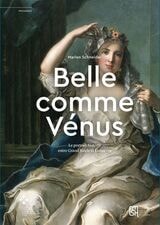
« Belle comme Vénus »
Le portrait historié entre Grand Siècle et LumièresMarlen Schneider
Diaphanes, 2020
Ces portraits dits « historiés », dans lesquels l’effigie d’une personne vivante s’enrichit d’attributs mythologiques comme dans un tableau d’histoire, sont un genre pictural à part entière. D’abord prérogative masculine adoptée par les grands pour célébrer leurs vertus, il devient vers 1680 l’apanage des modèles féminins : le langage allégorique les pare de qualités à connotation spécifiquement féminine et galante, comme la beauté, la jeunesse, la grâce, qui, bien comprises, pouvaient aussi être un moyen de manier le pouvoir. Dès les années 1740, ces peintures font cependant l’objet de critiques répétées et le genre perd peu à peu sa légitimité à la fin de l’Ancien Régime, avant que ce procédé de distinction aristocratique suscite la méfiance des historiens de l’art, qui n’y verront que l’expression d’un amusement futile de milieux oisifs.
Le présent ouvrage remet à leur juste place ces travestissements : à la fois œuvre d’art, objet culturel et pratique sociale, le portrait historié est un phénomène de goût révélateur d’une culture de cour en pleine transformation. Marlen Schneider met ici en lumière les fonctions, les propriétés formelles, la réception et la portée historique d’un type de représentation trop longtemps déconsidéré.
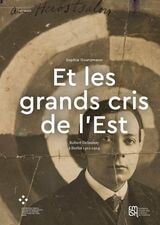
« Et les grands cris de l’Est »
Robert Delaunay à Berlin, 1912–1914Sophie Goetzmann
Diaphanes, 2021
Dans un premier temps, ce livre retrace en détail ce qui a été alors lu et vu de l’œuvre de Delaunay dans la capitale allemande. Ensuite, à travers l’étude de la réception critique du peinte français par trois figures majeures de la scène artistique berlinoise, il revient sur l’idée que le contexte culturel national entraverait la compréhension d’une œuvre ou en influencerait systématiquement les interprétations. En dépassant ainsi les préjugés nationaux qui nourrissent les débats esthétiques au début du XXe siècle et continuent d’imprégner aujourd’hui encore l’histoire de l’art, Sophie Goetzmann nous révèle les liens inattendus qui unissent, par-delà les frontières, les avant-gardes désignées sous les termes d’orphisme et d’expressionnisme.
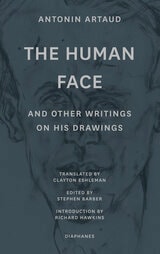
“The Human Face” and Other Writings on His Drawings
Antonin Artaud
Diaphanes, 2021
The many major exhibitions of Antonin Artaud’s drawings and drawn notebook pages in recent years—at New York’s Museum of Modern Art, Vienna’s Museum Moderner Kunst, and Paris’s Centre Georges Pompidou—have entirely transformed our perception of his work, reorienting it toward the artworks of his final years. This volume collects all three of Artaud’s major writings on his artworks. “The Human Face” (1947) was written as the catalog text for Artaud’s only gallery exhibition of his drawings during his lifetime, focusing on his approach to making portraits of his friends at the decrepit pavilion in the Paris suburbs where he spent the final year of his life. “Ten years that language is gone” (1947) examines the drawings Artaud made in his notebooks—his main creative medium at the end of his life—and their capacity to electrify his creativity when language failed him. “50 Drawings to assassinate magic” (1948), the residue of an abandoned book of Artaud’s drawings, approaches the act of drawing as part of the weaponry deployed by Artaud at the very end of his life to combat malevolent assaults and attempted acts of assassination. Together, these three extraordinary texts—pitched between writing and image—project Artaud’s ferocious engagement with the act of drawing.