Results by title
3071 books match the query 'Business & Economics' and 9 start with a non-letter

"Negro and White, Unite and Fight!"
A Social History of Industrial Unionism in Meatpacking, 1930-90Roger Horowitz
University of Illinois Press, 1997
This pathbreaking study traces the rise--and subsequent fall--of the United Packinghouse Workers of America (UPWA). Roger Horowitz looks at local leaders and meatpacking workers in Chicago, Kansas City, Sioux City, and Austin, Minnesota, closely examining the unionizing of the workplace and the prominent role of black workers and women in UPWA.
Horowitz shows how three major firms in U.S. meat production and distribution became dominant by virtually eliminating union power. The union's decline, he argues, reflected massive pressure by capital for lower labor costs and greater control over the work process. In the end, the victorious firms were those that had been most successful at increasing the rate of exploitation of their workers, who now labor in conditions as bad as those of a century ago.
"Rights, Not Roses"
Unions and the Rise of Working-Class Feminism, 1945-80Dennis A. Deslippe
University of Illinois Press, 2000
Educated, white collar professional women carried the most visible banners of feminism. But working class women were a powerful force in the campaign for gender equality. Dennis A. Deslippe explores how unionized wage-earning women led the struggle to place women's employment rights on the national agenda, decisively influencing both the contemporary labor movement and second-wave feminism.
Deslippe's account unravels a complex history of how labor leaders accommodated and resisted working women's demands for change. Through case studies of unions representing packinghouse and electrical workers, Deslippe explains why gender equality emerged as an issue in the 1960s and how the activities of wage-earning women in and outside of their unions shaped the content of the debate. He also traces the fault lines separating working-class women--who sought gender equality within the parameters of unionist principles such as seniority--from middle-class women--who sought an equal rights amendment that would guarantee an abstract equality for all women.
Thoughtful and detailed, "Rights, Not Roses" offers a new look at the complexities of working-class feminism.
"We Are All Leaders"
The Alternative Unionism of the Early 1930sEdited by Staughton Lynd
University of Illinois Press, 1996
Contains the Bryant Spann Memorial Prize in Literature for 1997, an award-winning essay, "The Very Last Hurrah" by Eric Leif Davin
This collection of articles delves into the little-known community-based unionism of the 1930s. Worlds apart from bureaucratic business unions like the AFL-CIO, these organizations emerged from workers involved in many kinds of labor, from African American nutpickers in St. Louis to chemical and rubber workers in Akron, and from bootleg miners in Pennsylvania to tenant farmers in the Mississippi Delta.
The contributors draw on eyewitness interviews, first-person narratives, trade union documents, and other primary sources to describe experimental forms of worker activism during the period. This alternative unionism was democratic, deeply rooted in mutual aid among workers in different crafts and work sites, and politically independent. The key to it was a value system based on egalitarianism. The cry, "We are all leaders!" resonated among rank-and-file activists. Their struggle, though often overlooked by historians, has much to teach us about union organizing today.
Contributors: John Borsos, Eric Leif Davin, Elizabeth Faue, Rosemary Feurer, Janet Irons, Michael Kozura, Mark D. Naison, Peter Rachleff, and Stan Weir
"Without Blare of Trumpets"
Walter Drew, The National Erectors' Association, and the Open Shop Movement, 1903-1957Sidney Fine
University of Michigan Press, 1995
20 Secrets to Success for NCAA Student-Athletes
Rick Burton
Ohio University Press, 2021
The premier NCAA student-athlete handbook, now in a second, updated edition designed for today’s competitive market and with a new chapter on name, image, and likeness (NIL) rights.
Few student-athletes dreaming of athletic stardom ever make it to the pros. Yet, the discipline and skills they’ve developed while balancing a sport and academics make them ideally suited for satisfying careers elsewhere.
The book’s authors draw on personal experience, interviews, expert opinion, and industry data to provide a game plan for student-athletes to help them transition from high school to college, navigate evolving rules about NIL rights, and find success in life after college.
Modeled after Stephen Covey’s The 7 Habits of Highly Effective People, this expanded and updated guide provides a much-needed strategy for student-athletes as they prepare for postcollege careers, while serving as a valuable resource for their parents, coaches, and sports administrators across the country.
33 Lessons on Capital
Reading Marx PoliticallyHarry Cleaver
Pluto Press, 2019
Harry Cleaver's treatise outlines and critiques Marx's analysis chapter by chapter. His unique interpretation of Marx's labour theory of value reveals how every theoretical category of Capital designates aspects of class struggle in ways that help us resist and escape them. At the same time, while rooted within the tradition of workerism, he understands the working class to include not only the industrial proletariat but also unwaged peasants, housewives, children and students.
A challenge to scholars and an invaluable resource for students and activists today.

43 Ways to Finance Your Feature Film
A Comprehensive Analysis of Film FinanceJohn W. Cones
Southern Illinois University Press, 2008
John W. Cones has updated his now classic 43 Ways toFinance Your Feature Film: A Comprehensive Analysis of Film Finance with a substantially reorganized and expanded third edition.
An essential reference guide for film professionals on every side of film financing, 43 Ways answers the question that every filmmaker and producer ultimately faces, the issue that can make or break any venture into the film industry: How do I finance my feature film? The third edition includes updated information and coverage of new options for financing.
In his clear and concise style and with expertise amassed over his nearly twenty years of experience in the film finance industry, Cones breaks financing options down into six main areas: gifts and grants, investor financing, domestic government subsidies and tax incentive programs, lender financing, international finance options, and studio or industry financing. Beginning with the forms of financing most likely to be accessible to independent feature film producers, Cones proceeds to other forms that become increasingly available as the producer’s career matures.
As an objective adviser, Cones provides specific, concise information regarding the many possible financing strategies and lists the distinct pros and cons of each strategy. This guide covers the options for film financing in rich detail so that even first-time producers and filmmakers will be able to make educated and informed decisions about the best approaches to financing their films. An extensive bibliography contains additional information about each form of film finance. Cones also counters much of the bad advice being provided by pseudoprofessional film finance consultants and points out scams that may separate unwary film producers from their money.
Although the book focuses on financing feature films, much of its information is relevant to the financing of other kinds of projects, such as short films, documentaries, videos, and multimedia and theatrical endeavors. Anyone considering making or investing in a feature film will be well served by this practical and helpful guide.
55 Steps to Outrageous Service
Outrageous Service Principles to Better Serve Your CustomersGreg Hatcher
Parkhurst Brothers, Inc., 2011
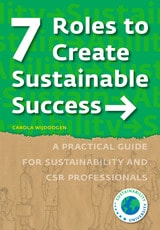
7 Roles to Create Sustainable Success
A Practical Guide for Sustainability and CSR ProfessionalsCarola Wijdoogen
Amsterdam University Press, 2020
The innovative science-based 7 Roles approach is explained using an excellent collection of practices and anecdotes from (among others) Kate Raworth ('Doughnut Economy') and CSOs of companies like Ingka Group, Levi Strauss & Co., Starbucks Coffee Company, Unilever Benelux, Microsoft, Kellogg Company, Interface Europe, KPN, Philips International B.V, DSM, AkzoNobel, Google, Tommy Hilfiger Global/PVH Europe, etc.