Results by title
496 books match the query 'Ethnic identity' and 3 start with a non-letter
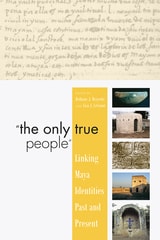
"The Only True People"
Linking Maya Identities Past and PresentBethany J. Beyyette
University Press of Colorado, 2017
"The Only True People" is a timely and rigorous examination of ethnicity among the ancient and modern Maya, focusing on ethnogenesis and exploring the complexities of Maya identity—how it developed, where and when it emerged, and why it continues to change over time. In the volume, a multidisciplinary group of well-known scholars including archaeologists, linguists, ethnographers, ethnohistorians, and epigraphers investigate ethnicity and other forms of group identity at a number of Maya sites and places, from the northern reaches of the Yucatan to the Southern Periphery, and across different time periods, from the Classic period to the modern day.
Each contribution challenges the notion of ethnically homogenous "Maya peoples" for their region and chronology and explores how their work contributes to the definition of "ethnicity" for ancient Maya society. Contributors confront some of the most difficult theoretical debates concerning identity in the literature today: how different ethnic groups define themselves in relation to others; under what circumstances ethnicity is marked by overt expressions of group membership and when it is hidden from view; and the processes that transform ethnic identities and their expressions.
By addressing the social constructs and conditions behind Maya ethnicity, both past and present, "The Only True People" contributes to the understanding of ethnicity as a complex set of relationships among people who lived in real and imagined communities, as well as among people separated by social boundaries. The volume will be a key resource for Mayanists and will be of interest to students and scholars of ethnography, anthropology, and cultural studies as well.
Contributors: McCale Ashenbrener, Ellen E. Bell, Marcello A. Canuto, Juan Castillo Cocom, David A. Freidel, Wolfgang Gabbert, Stanley P. Guente, Jonathan Hill, Charles Andrew Hofling, Martha J. Macri, Damien B. Marken, Matthew Restall, Timoteo Rodriguez, Mathew C. Samson, Edward Schortman, Rebecca Storey
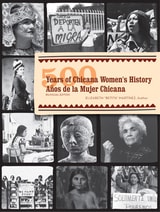
500 Years of Chicana Women's History / 500 Años de la Mujer Chicana
Bilingual EditionMartínez, Elizabeth "
Rutgers University Press, 2008
The history of Mexican Americans spans more than five centuries and varies from region to region across the United States. Yet most of our history books devote at most a chapter to Chicano history, with even less attention to the story of Chicanas.
500 Years of Chicana Women’s History offers a powerful antidote to this omission with a vivid, pictorial account of struggle and survival, resilience and achievement, discrimination and identity. The bilingual text, along with hundreds of photos and other images, ranges from female-centered stories of pre-Columbian Mexico to profiles of contemporary social justice activists, labor leaders, youth organizers, artists, and environmentalists, among others. With a distinguished, seventeen-member advisory board, the book presents a remarkable combination of scholarship and youthful appeal.
In the section on jobs held by Mexicanas under U.S. rule in the 1800s, for example, readers learn about flamboyant Doña Tules, who owned a popular gambling saloon in Santa Fe, and Eulalia Arrilla de Pérez, a respected curandera (healer) in the San Diego area. Also covered are the “repatriation” campaigns” of the Midwest during the Depression that deported both adults and children, 75 percent of whom were U.S.–born and knew nothing of Mexico. Other stories include those of the garment, laundry, and cannery worker strikes, told from the perspective of Chicanas on the ground.
From the women who fought and died in the Mexican Revolution to those marching with their young children today for immigrant rights, every story draws inspiration. Like the editor’s previous book, 500 Years of Chicano History (still in print after 30 years), this thoroughly enriching view of Chicana women’s history promises to become a classic.
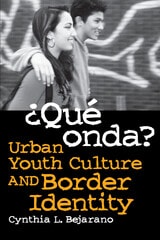
¿Qué Onda?
Urban Youth Culture and Border IdentityCynthia L. Bejarano
University of Arizona Press, 2005
For Latina/o adolescents who already find life challenging, the borderland is a place that presents continual affirmations of and contradictions about identity—questions of who is more Mexican than American or vice versa. This book analyzes the construction of Mexicana/o and Chicana/o identities through a four-year ethnographic study in a representative American high school. It reveals how identity politics impacts young people’s forms of communication and the cultural spaces they occupy in the school setting. By showing how identities are created and directly influenced by the complexities of geopolitics and sociocultural influences, it stresses the largely unexplored divisions among youths whose identities are located along a wide continuum of “Mexicanness.”
Through in-depth interviews and focus groups with both Mexicana/o and Chicana/o students, Cynthia Bejarano explores such topics as the creation of distinct styles that reinforce differences between the two groups; the use of language to further distinguish themselves from one another; and social stratification perpetuated by internal colonialism and the “Othering” process. These and other issues are shown to complicate how Latinas/os ethnically identify as Mexicanas/os or Chicanas/os and help explain how they get to this point.
In contrast to research that views identity as a reflection of immigration or educational experiences, this study embraces border theory to frame the complex and conflicted relations of adolescents as a result of their identity-making processes. This intimate glimpse into their lives provides valuable information about the diversity among youths and their constant efforts to create, define, and shape their identities according to cultural and social structures.