Results by title
484 books match the query 'Foreign relations' and 3 start with a non-letter
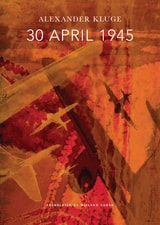
30 April 1945
The Day Hitler Shot Himself and Germany's Integration with the West BeganAlexander Kluge
Seagull Books, 2015
April 30, 1945, marked an end of sorts in the Third Reich. The last business day before a national holiday and then a series of transfers of power, April 30 was a day filled with contradictions and bewildering events that would forever define global history. It was on this day that while the Red Army occupied Berlin, Hitler committed suicide in his underground bunker, and, in San Francisco, the United Nations was being founded.
Alexander Kluge’s latest book, 30 April 1945, covers this single historic day and unravels its passing hours across the different theaters of the Second World War. Translated by Wieland Hoban, the book delves into the events happening around the world on one fateful day, including the life of a small German town occupied by American forces and the story of two SS officers stranded on the forsaken Kerguelen Islands in the South Indian Sea. Kluge is a master storyteller, and as he unfolds these disparate tales, one unavoidable question surfaces: What is the appropriate reaction to the total upheaval of the status quo?
Presented here with an afterword by Reinhard Jirgl, translated by Iain Galbraith, 30 April 1945 is a riveting collection of lives turned upside down by the deadliest war in history. The collective experiences Kluge paints here are jarring, poignant, and imbued with meaning. Seventy years later, we can still see our own reflections on the upheaval of a single day in 1945.
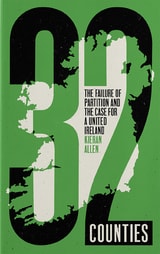
32 Counties
The Failure of Partition and the Case for a United IrelandKieran Allen
Pluto Press, 2021
'This is Irish history seen anew, from below, bristling with practical lessons for working-class struggle today' - Eamonn McCann
The 32 counties of Ireland were divided through imperial terror and gerrymandering. Partition was borne from a Tory strategy to defend the British Empire and has spawned a 'carnival of reaction' in Irish politics ever since. Over the last 100 years, conservative forces have dominated both states offering religious identity as a diversion from economic failures and inequality.
Through a sharp analysis of the history of partition, Kieran Allen rejects the view that the 'two cultures' of Catholic and Protestant communities lock people into permanent antagonism. Instead, the sectarian states have kept its citizens divided through political and economic measures like austerity, competition for reduced services and low wages.
Overturning conventional narratives, 32 Counties evokes the tradition of James Connolly and calls for an Irish unity movement from below to forge the North and the Republic into a secular, socialist and united Ireland.

7/7
The London Bombings, Islam and the Iraq WarMilan Rai
Pluto Press, 2006
This is the book Tony Blair doesn't want you to read about 7/7.
In February 2003, Tony Blair was warned by British intelligence that the invasion of Iraq would 'heighten' the risk of terrorism in Britain.
In July 2005, al-Qaeda struck in the heart of London. Despite the British Government's increasingly desperate attempts at denial, polls show that an overwhelming majority of people in Britain are convinced that there is a connection between the London bombings and the war on Iraq. A majority of Britons fault Tony Blair himself.
Using secret government documents declassified since the bombings, and leaks from British intelligence, Milan Rai exposes official deceit at the highest levels, and establishes the crucial role of British foreign policy in generating a home-grown version of al-Qaeda. Rai shows how an official report drawn up by the Home Office and Foreign Office in early 2004 identified 'foreign policy' - and the war in Iraq in particular - as a major cause of alienation among young British Muslims.
Examining the backgrounds of the 7/7 bombers, Milan Rai demonstrates that Islam is not to blame. Most importantly, the book shows us how to make sure that this never happens again -- and offers brief obituaries for the 52 people who lost their lives that day.