Results by title
2646 books match the query 'History & Criticism' and 8 start with a non-letter
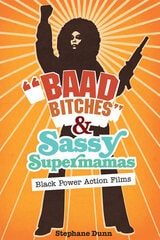
"Baad Bitches" and Sassy Supermamas
Black Power Action FilmsStephane Dunn
University of Illinois Press, 2008
Blaxploitation action narratives as well as politically radical films like Sweet Sweetback's Baadasssss Song typically portrayed black women as trifling "bitches" compared to the supermacho black male heroes. But starting in 1973, the emergence of "baad bitches" and "sassy supermamas" reversed the trend as self-assured, empowered, and tough black women took the lead in the films Cleopatra Jones, Coffy, and Foxy Brown.
Stephane Dunn unpacks the intersecting racial, sexual, and gender politics underlying the representations of racialized bodies, masculinities, and femininities in early 1970s black action films, with particular focus on the representation of black femininity. Recognizing a distinct moment in the history of African American representation in popular cinema, Dunn analyzes how it emerged from a radical political era influenced by the Black Power movement and feminism. Dunn also engages blaxploitation's legacy in contemporary hip-hop culture, as suggested by the music’s disturbing gender politics and the "baad bitch daughters" of Foxy Brown and Cleopatra Jones, rappers Foxy Brown and Lil' Kim.
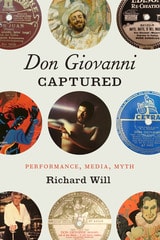
"Don Giovanni" Captured
Performance, Media, MythRichard Will
University of Chicago Press, 2022
Mozart’s opera Don Giovanni has long inspired myths about eros and masculinity. Over time, its performance history has revealed a growing trend toward critique—an increasing effort on the part of performers and directors to highlight the violence and predatoriness of the libertine central character, alongside the suffering and resilience of his female victims.
In “Don Giovanni” Captured, Richard Will sets out to analyze more than a century’s worth of recorded performances of the opera, tracing the ways it has changed from one performance to another and from one generation to the next. Will consults audio recordings, starting with wax cylinders and 78s, as well as video recordings, including DVDs, films, and streaming videos. As Will argues, recordings and other media shape our experience of opera as much as live performance does. Seen as a historical record, opera recordings are also a potent reminder of the refusal of works such as Don Giovanni to sit still. By choosing a work with such a rich and complex tradition of interpretation, Will helps us see Don Giovanni as a standard-bearer for evolving ideas about desire and power, both on and off the stage.
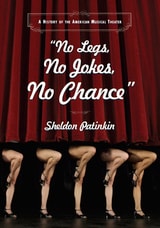
"No Legs, No Jokes, No Chance"
A History of the American Musical TheaterSheldon Patinkin
Northwestern University Press, 2008
Patinkin writes about the infancy of the musical--the revues, operettas, and early musical comedies, as well as the groundbreaking shows like Oklahoma!, and Show Boat that brought the form to its "golden age" during World War II. With insightful references to how history, literature, theater, fashion, popular music, and movies influenced musical theater generally and certain shows in particular, he traces a direct lineage from older forms to contemporary musicals. The result is a broad, clear, and detailed picture of American musicals within both an aesthetic and a historical context. Patinkin conveys the pleasure of the ever-changing forms of musical theater even as he gives readers the analytical tools and terms to understand and better appreciate this uniquely American art. The book features a selection of black and white photographs from historical musical productions, and each chapter includes suggestions for materials to watch and listen to at home or in the classroom.
"The Stage's Glory"
John Rich (1692–1761)Berta Joncus
University of Delaware Press, 2011
Published by University of Delaware Press. Distributed worldwide by Rutgers University Press.
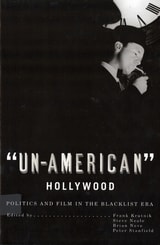
'Un-American' Hollywood
Politics and Film in the Blacklist EraStanfield, Peter
Rutgers University Press, 2007
The concept of “un-Americanism,” so vital to the HUAC crusade of the 1940s and 1950s, was resoundingly revived in the emotional rhetoric that followed the September 11th terrorist attacks. Today’s political and cultural climate makes it more crucial than ever to come to terms with the consequences of this earlier period of repression and with the contested claims of Americanism that it generated.
“Un-American” Hollywood reopens the intense critical debate on the blacklist era and on the aesthetic and political work of the Hollywood Left. In a series of fresh case studies focusing on contexts of production and reception, the contributors offer exciting and original perspectives on the role of progressive politics within a capitalist media industry.
Original essays scrutinize the work of individual practitioners, such as Robert Rossen, Joseph Losey, Jules Dassin, and Edward Dmytryk, and examine key films, including The Robe, Christ in Concrete, The House I Live In, The Lawless, The Naked City, The Prowler, Body and Soul, and FTA.

127 Years of Design 1890-2017
The Michigan DailyFrancesca Kielb
Michigan Publishing Services, 2017
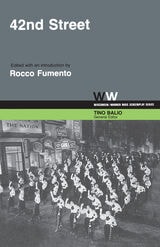
42nd Street
Edited by Rocco Fumento; Tino T. Balio, Series Editor
University of Wisconsin Press, 1980
This screenplay of 42nd Street, along with Rocco Fumento's thorough and engrossing introduction, takes the reader behind the scenes to see how the Warners studio took a dismal novel and, working within severe financial constraints brought on by the Great Depression, turned out a smash musical hit.
42nd Street is a watershed film, one that resuscitated the Hollywood musical during troubled times. Yet 42nd Street wasn't merely a Depression tonic, its multiple plot line was half-comic, half-serious. It was a fast-paced, energetic, and the first musical not to shrink away from the fact that a Depression was going on. The film is an odd, and oddly successful, fusion of the real with the fantastic.
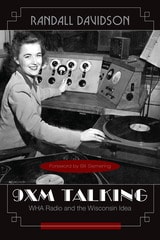
9XM Talking
WHA Radio and the Wisconsin IdeaRandall Davidson
University of Wisconsin Press, 2017