Results by title
732 books match the query 'Indigenous' and 5 start with a non-letter
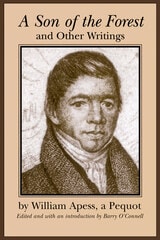
"A Son of the Forest" and Other Writings
William Apess
University of Massachusetts Press, 1997
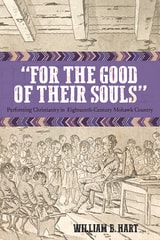
"For the Good of Their Souls"
Performing Christianity in Eighteenth-Century Mohawk CountryWilliam B. Hart
University of Massachusetts Press, 2020
Using the lens of performance theory to explain the ways in which the Mohawks considered converting and participating in Christian rituals, historian William B. Hart contends that Mohawks who prayed, sang hymns, submitted to baptism, took communion, and acquired literacy did so to protect their nation's sovereignty, fulfill their responsibility of reciprocity, serve their communities, and reinvent themselves. Performing Christianity was a means of "survivance," a strategy for sustaining Mohawk life and culture on their terms in a changing world.
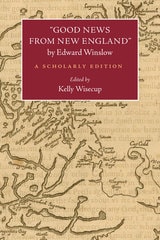
"Good News from New England" by Edward Winslow
A Scholarly EditionKelly Wisecup
University of Massachusetts Press, 2014
It was in the context of all of these roles that Winslow wrote Good News in an attempt to convince supporters in England that the colonists had established friendly relations with Native groups and, as a result, gained access to trade goods. Although clearly a work of diplomacy, masking as it did incidents of brutal violence against Indians as well as evidence of mutual mistrust, the work nevertheless offers, according to Kelly Wisecup, a more complicated and nuanced representation of the Pilgrims' first years in New England and of their relationship with Native Americans than other primary documents of the period.
In this scholarly edition, Wisecup supplements Good News with an introduction, additional primary texts, and annotations to bring to light multiple perspectives, including those of the first European travelers to the area, Native captives who traveled to London and shaped Algonquian responses to colonists, the survivors of epidemics that struck New England between 1616 and 1619, and the witnesses of the colonists' attack on the Massachusetts.
"Still They Remember Me"
Penobscot Transformer Tales, Volume 1Carol A. Dana, Margo Lukens, and Conor M. Quinn
University of Massachusetts Press, 2021
In "Still They Remember Me," stories are presented in the Penobscot language and English side-by-side, coupled with illustrations from members of the tribal community. For the first time, these stories are accessible to a young generation of Penobscot language learners and scholars of Native American literatures at all levels, from grade school to graduate school.
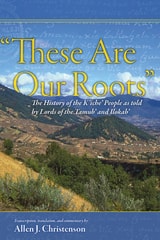
“These Are Our Roots”
The History of the K’iche’ People as Told by Lords of the Tamub’ and Ilokab’transcription, translation, and commentary by Allen J. Christenson
University Press of Colorado, 2026
In “These Are Our Roots”, Allen J. Christenson translates and analyzes historical documents composed by Tamub’ and Ilokab’ nobles of the K’iche’ Maya, who ruled much of the Guatemalan highlands until their lands were invaded by Spanish conquistadors in 1524. Complete original English translations of three Tamub’ texts and a new translation of the “Title of the Ilokab’” reveal how K’iche’ nobility strategically appropriated Christian elements from Dominican missionary texts while maintaining their Indigenous worldview. These documents served multiple purposes: legally establishing land rights, asserting nobility status, preserving cultural identity, and claiming religious legitimacy by positioning themselves as descendants of biblical figures—a sophisticated response to Spanish colonization that balanced accommodation and resistance through literacy, which had become a crucial tool for Indigenous elites navigating the colonial system.
The Tamub’ and Ilokab’ branches of the K’iche’ people have generally been overshadowed by their well-known Kaweq brethren, who wrote such literature masterpieces as the Popol Vuh and the Title of Totonicapán. But it is the voices relegated to the shadows of history that share views of events from different perspectives and whisper about what really happened behind the scenes—family jealousies, political rivalries, and delicious gossip about the great and the good who tend to focus on their own self-aggrandizing stories. “These Are Our Roots” is a valuable scholarly contribution to Maya studies and ethnohistory that makes these important primary sources more accessible to students and scholars.