Results by title
358 books match the query 'Labor & Industrial Relations' and 4 start with a non-letter
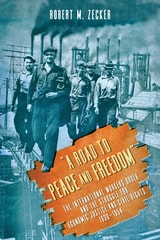
"A Road to Peace and Freedom"
The International Workers Order and the Struggle for Economic Justice and Civil Rights, 1930-1954Robert M. Zecker
Temple University Press, 2017
Mining extensive primary sources, Robert Zecker gives voice to the workers in “A Road to Peace and Freedom.” He describes the group's economic goals, commitment to racial justice, and activism, from lobbying to end segregation and lynching in America to defeating fascism abroad. Zecker also illustrates the panoply of entertainment, sports, and educational activities designed to cultivate the minds and bodies of members.
However, the IWO was led by Communists, and the Order was targeted for red-baiting during the Cold War, subject to government surveillance, and ultimately "liquidated." Zecker explains how the dismantling of the IWO and the general suppression of left-wing dissenting views on economic egalitarianism and racial equality had deleterious effects for the entire country. Moreover, Zecker shows why the sobering lesson of the IWO remains prescient today.
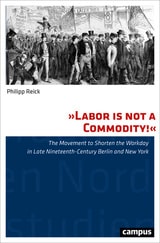
"Labor Is Not a Commodity!"
The Movement to Shorten the Workday in Late Nineteenth-Century Berlin and New YorkPhilipp Reick
Campus Verlag, 2016
As Reick demonstrates, while on both sides of the Atlantic workers opposed the unchecked commodification of labor power as a violation of their political, social, and economic rights, the emerging movements for protection from commodification did not promote a universalist concept of rights. By showing that American and German workers drew upon a strikingly similar rationality when formulating demands, this book reveals that we cannot label either the US labor movement as a deviation from the supposed norm of industrial contestation or its German counterpart as the embodiment of that norm.

"We Are All Leaders"
The Alternative Unionism of the Early 1930sEdited by Staughton Lynd
University of Illinois Press, 1996
Contains the Bryant Spann Memorial Prize in Literature for 1997, an award-winning essay, "The Very Last Hurrah" by Eric Leif Davin
This collection of articles delves into the little-known community-based unionism of the 1930s. Worlds apart from bureaucratic business unions like the AFL-CIO, these organizations emerged from workers involved in many kinds of labor, from African American nutpickers in St. Louis to chemical and rubber workers in Akron, and from bootleg miners in Pennsylvania to tenant farmers in the Mississippi Delta.
The contributors draw on eyewitness interviews, first-person narratives, trade union documents, and other primary sources to describe experimental forms of worker activism during the period. This alternative unionism was democratic, deeply rooted in mutual aid among workers in different crafts and work sites, and politically independent. The key to it was a value system based on egalitarianism. The cry, "We are all leaders!" resonated among rank-and-file activists. Their struggle, though often overlooked by historians, has much to teach us about union organizing today.
Contributors: John Borsos, Eric Leif Davin, Elizabeth Faue, Rosemary Feurer, Janet Irons, Michael Kozura, Mark D. Naison, Peter Rachleff, and Stan Weir
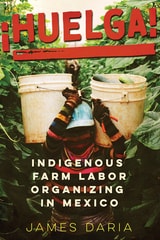
¡Huelga!
Indigenous Farm Labor Organizing in MexicoJames Daria
University of Arizona Press, 2026
On March 17, 2015, tens of thousands of Mexican farmworkers went on strike in San Quintin, Baja California, to protest horrible working conditions on the farms that produce most of the fresh fruits and vegetables you consume. Calling themselves the “slaves of the twenty-first century,” these mostly Indigenous men, women, and children rose up in defiance of the conditions of modern slavery, forced labor, sexual harassment, and “hunger wages.” This ethnography provides an in-depth look into how Indigenous farmworkers organize in the fields and their communities to improve wages and working conditions.
Since the strike, the farmworkers have organized a union to fight for justice in the fields. In this work, author James Daria accompanies these farmworkers as they struggle for dignity. Daria also charts the tensions inside the farmworker movement as women struggle to gain greater power in the home as well as at work. In an era of complex global integration, Daria shows us how what we eat is tied to the suffering of those who produce our food.
This book highlights and centers the Indigenous workers who struggle for justice in a global food system that connects us all.