Results by title
171 books match the query 'Labor unions' and 4 start with a non-letter
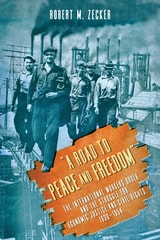
"A Road to Peace and Freedom"
The International Workers Order and the Struggle for Economic Justice and Civil Rights, 1930-1954Robert M. Zecker
Temple University Press, 2017
Mining extensive primary sources, Robert Zecker gives voice to the workers in “A Road to Peace and Freedom.” He describes the group's economic goals, commitment to racial justice, and activism, from lobbying to end segregation and lynching in America to defeating fascism abroad. Zecker also illustrates the panoply of entertainment, sports, and educational activities designed to cultivate the minds and bodies of members.
However, the IWO was led by Communists, and the Order was targeted for red-baiting during the Cold War, subject to government surveillance, and ultimately "liquidated." Zecker explains how the dismantling of the IWO and the general suppression of left-wing dissenting views on economic egalitarianism and racial equality had deleterious effects for the entire country. Moreover, Zecker shows why the sobering lesson of the IWO remains prescient today.

"Negro and White, Unite and Fight!"
A Social History of Industrial Unionism in Meatpacking, 1930-90Roger Horowitz
University of Illinois Press, 1997
This pathbreaking study traces the rise--and subsequent fall--of the United Packinghouse Workers of America (UPWA). Roger Horowitz looks at local leaders and meatpacking workers in Chicago, Kansas City, Sioux City, and Austin, Minnesota, closely examining the unionizing of the workplace and the prominent role of black workers and women in UPWA.
Horowitz shows how three major firms in U.S. meat production and distribution became dominant by virtually eliminating union power. The union's decline, he argues, reflected massive pressure by capital for lower labor costs and greater control over the work process. In the end, the victorious firms were those that had been most successful at increasing the rate of exploitation of their workers, who now labor in conditions as bad as those of a century ago.
"Without Blare of Trumpets"
Walter Drew, The National Erectors' Association, and the Open Shop Movement, 1903-1957Sidney Fine
University of Michigan Press, 1995
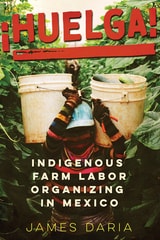
¡Huelga!
Indigenous Farm Labor Organizing in MexicoJames Daria
University of Arizona Press, 2026
On March 17, 2015, tens of thousands of Mexican farmworkers went on strike in San Quintin, Baja California, to protest horrible working conditions on the farms that produce most of the fresh fruits and vegetables you consume. Calling themselves the “slaves of the twenty-first century,” these mostly Indigenous men, women, and children rose up in defiance of the conditions of modern slavery, forced labor, sexual harassment, and “hunger wages.” This ethnography provides an in-depth look into how Indigenous farmworkers organize in the fields and their communities to improve wages and working conditions.
Since the strike, the farmworkers have organized a union to fight for justice in the fields. In this work, author James Daria accompanies these farmworkers as they struggle for dignity. Daria also charts the tensions inside the farmworker movement as women struggle to gain greater power in the home as well as at work. In an era of complex global integration, Daria shows us how what we eat is tied to the suffering of those who produce our food.
This book highlights and centers the Indigenous workers who struggle for justice in a global food system that connects us all.