Results by title
4030 books match the query 'Language Arts & Disciplines' and 30 start with a non-letter
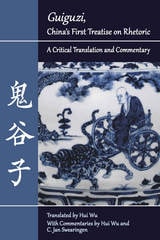
"Guiguzi," China's First Treatise on Rhetoric
A Critical Translation and CommentaryTranslated by Hui Wu / With Commentaries by Hui Wu and C. Jan Swearingen
Southern Illinois University Press, 2016
Wu’s translation includes footnotes that incorporate both past and present scholarly commentary, and is accompanied by a prefatory introduction that situates Guiguzi in the sociopolitical and cultural realities of ancient China, and a glossary of rhetorical terms used in the treatise. Swearingen presents a comparative study suggesting the similarities and differences between emerging Greek and Chinese rhetorics during the same period, including the cultural contexts of warring states and emergent empires that surrounded each.
“Guiguzi,” China’s First Treatise on Rhetoric combines a new translation of a historically significant text with scholarly analysis and critical apparatus that will contribute to the emerging global understanding of Chinese rhetoric and communication.
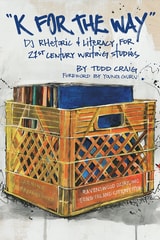
"K for the Way"
DJ Rhetoric and Literacy for 21st Century Writing StudiesTodd Craig
Utah State University Press, 2023
Using material from a larger qualitative research study that illustrates the Hip Hop DJ as a twenty-first-century new media reader, writer, and literary critic, Craig blends interviews from prominent and influential DJs in the Hip Hop community with narrative and interdisciplinary scholarship from writing studies, Hip Hop studies, African American studies, urban education, and ethnomusicology. The voices of DJs sit front and center, presenting a revolutionary conversation about writing and communication in the twenty-first century.
Weaving Craig’s life experiences with important discussions of racial literacies, “K for the Way” is a layered and utterly singular exploration of culture, identity, and literacy in America.
"K for the Way"
DJ Rhetoric and Literacy for 21st Century Writing StudiesTodd Craig
Utah State University Press, 2023
Using material from a larger qualitative research study that illustrates the Hip Hop DJ as a twenty-first-century new media reader, writer, and literary critic, Craig blends interviews from prominent and influential DJs in the Hip Hop community with narrative and interdisciplinary scholarship from writing studies, Hip Hop studies, African American studies, urban education, and ethnomusicology. The voices of DJs sit front and center, presenting a revolutionary conversation about writing and communication in the twenty-first century.
Weaving Craig’s life experiences with important discussions of racial literacies, “K for the Way” is a layered and utterly singular exploration of culture, identity, and literacy in America.
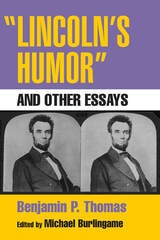
"Lincoln's Humor" and Other Essays
Benjamin P. Thomas. Edited by Michael Burlingame
University of Illinois Press, 2006
A skilled historian and a masterful storyteller himself, Thomas was widely regarded as the greatest Lincoln historian of his generation. With these essays, he combines historical depth with narrative grace in delineating Lincoln's qualities as a humorist, lawyer, and politician. From colorful tall tales to clever barbs aimed at political opponents, Lincoln clothed a shrewd wit in a homespun, backwoods vernacular. He used humor to defuse tension, illuminate a point, put others at ease--and sometimes for sheer fun. From an early reliance on broad humor and ridicule in speeches and on the stump, Lincoln's style shifted in 1854 to a more serious vein in which humor came primarily to elucidate an argument. "If I did not laugh occasionally I should die," he is said to have told his cabinet, "and you need this medicine as much as I do." Thomas brings his deep knowledge of Lincoln to essays on the great man's tumultuous career in Congress, his work as a lawyer, his experiences in the Courts, and his opinions of the South. A gracious survey of Lincoln's early biographers, particularly Ida Tarbell, stands alongside an appreciation of Harry Edward Pratt, a key figure in the early days of the Abraham Lincoln Association. Thomas also assesses Lincoln's use of language and the ongoing significance of the Gettysburg Address.
This diverse collection is enhanced by an introduction by Michael Burlingame, himself a leading biographer of Lincoln. Burlingame provides a balanced portrait of Thomas and his circuitous path toward writing history.
"The Girl in the Window" and Other True Tales
An Anthology with Tips for Finding, Reporting, and Writing Nonfiction NarrativesLane DeGregory
University of Chicago Press, 2023
This book—part anthology, part craft guide—provides a forensic reading of twenty-four of DeGregory’s singular stories, illustrating her tips for writers alongside pieces that put those elements under the microscope. Each of the pieces gathered here—including the Pulitzer Prize–winning title story—is accompanied by notes on how she built the story, plus tips on how nonfiction writers at all levels can do the same. Featuring a foreword by Beth Macy, author of the acclaimed Dopesick, this book is sure to delight fans of DeGregory’s writing, as well as introduce her to readers and writers who have not yet discovered her inspiring body of work.
"The Wrong Side of Privilege"
Advocacy, Community, and Politics: The Collected Essays of Stephen J. Parks, 2000–2020Stephen J. Parks
University Press of Colorado, 2025
"Too Good a Town"
William Allen White, Community, and the Emerging Rhetoric of Middle AmericaEdward G. Agran
University of Arkansas Press, 1999
For fifty years, William Allen White, first as a reporter and later as the long-time editor of the Emporia Gazette, wrote of his small town and its Mid-American values. By tailoring his writing to the emerging urban middle class of the early twentieth century, he won his “gospel of Emporia” a nationwide audience and left a lasting impact on he way America defines itself.
Investigating White’s life and his extensive writings, Edward Gale Agran explores the dynamic thought of one of America’s best-read and most-respected social commentators. Agran shows clearly how White honed his style and transformed the myth of conquering the western frontier into what became the twentieth-century ideal of community building.
Once a confidante of and advisor to Theodore Roosevelt, White addressed, and reflected in his work, all the great social and political oscillations of his time—urbanization and industrialism, populism, and progressivism, isolationism internationalism, Prohibition, and New Deal reform. Again and again, he asked the question “What’s the matter?” about his times and townspeople, then found the middle ground. With great care and discernment, Agran gathers the man strains of White’s messages, demonstrating one writer’s pivotal contribution to our idea of what it means to be an American.
(Inter)views
Cross-Disciplinary Perspectives on Rhetoric and LiteracyGary A. Olson
Southern Illinois University Press, 1991
This book contains interviews with psychologist Mary Field Belenky, linguist and philosopher of language Noam Chomsky, French deconstructionist Jacques Derrida, international literacy scholar Paulo Freire, distinguished anthropologist Clifford Geertz, philosopher Richard Rorty, and cultural critic Gayatri Chakravorty Spivak (all of whose work has influenced the discipline of rhetoric and composition) followed by essay responses from notable scholars in rhetoric and composition.
(Re)Considering What We Know
Learning Thresholds in Writing, Composition, Rhetoric, and LiteracyLinda Adler-Kassner
Utah State University Press, 2019
Part 1 raises questions about the ideologies of consensus that are associated with naming threshold concepts of a discipline. Contributions challenge the idea of consensus and seek to expand both the threshold concepts framework and the concepts themselves. Part 2 focuses on threshold concepts in action and practice, demonstrating the innovative ways threshold concepts and a threshold concepts framework have been used in writing courses and programs. Part 3 shows how a threshold concepts framework can help us engage in conversations beyond writing studies.
(Re)Considering What We Know raises new questions and offers new ideas that can help to advance the discussion and use of threshold concepts in the field of writing studies. It will be of great interest to scholars and graduate students in writing studies, especially those who have previously engaged with Naming What We Know.
Contributors:
Marianne Ahokas, Jonathan Alexander, Chris M. Anson, Ian G. Anson, Sarah Ben-Zvi, Jami Blaauw-Hara, Mark Blaauw-Hara, Maggie Black, Dominic Borowiak, Chris Castillo, Chen Chen, Sandra Descourtis, Norbert Elliot, Heidi Estrem, Alison Farrell, Matthew Fogarty, Joanne Baird Giordano, James Hammond, Holly Hassel, Lauren Heap, Jennifer Heinert, Doug Hesse, Jonathan Isaac, Katie Kalish, Páraic Kerrigan, Ann Meejung Kim, Kassia Krzus-Shaw, Saul Lopez, Jennifer Helane Maher, Aishah Mahmood, Aimee Mapes, Kerry Marsden, Susan Miller-Cochran, Deborah Mutnick, Rebecca Nowacek, Sarah O’Brien, Ọlá Ọládipọ̀, Peggy O’Neill, Cassandra Phillips, Mya Poe, Patricia Ratanapraphart, Jacqueline Rhodes, Samitha Senanayake, Susan E. Shadle, Dawn Shepherd, Katherine Stein, Patrick Sullivan, Brenna Swift, Carrie Strand Tebeau, Matt Thul, Nikhil Tiwari, Lisa Tremain, Lisa Velarde, Kate Vieira, Gordon Blaine West, Anne-Marie Womack, Kathleen Blake Yancey, Xiaopei Yang, Madylan Yarc
1,000 Signs of Life
Basic ASL for Everyday ConversationGallaudet University Press, 2004
Here’s the succinct handbook that will allow everyone to enjoy the beauty and functionality of American Sign Language. 1,000 Signs of Life: Basic ASL for Everyday Conversation illustrates a potpourri of intriguing and entertaining signs that can be grasped quickly and used to communicate with anyone familiar with ASL, deaf or hearing. Organized alphabetically in 17 categories, this handy paperback offers common signs for animals, food, clothes, people, health and body, the time, days of the week, seasons, colors, quantities, transportation and travel, and many more practical topics. Readers also can learn signs for community-related terms, holidays and religion, and for thoughts and emotions, signs that will offer them the opportunity to experience the full potential of ASL.
1,000 Signs of Life begins with a concise introduction to American Sign Language, including how it evolved and how its grammar and syntax work. Complementing this information are categories on signs for adjectives and adverbs, prepositions and locations, question words, and verbs and action words. Interspersed throughout the text are tips for signing, rules of signing etiquette, and engaging anecdotes about Deaf culture, Deaf people, and the Deaf community. 1,000 Signs of Life provides a fun, fast way to learn basic ASL signs and also offers easy-to-follow instructions and hints on how to use them in a variety of everyday situations. It's the perfect streamlined guide for signing ASL.
100+ Ideas to Inspire Smart Spaces and Creative Places
Elisabeth Doucett
American Library Association, 2020
- using “biophilic design” to bring nature into your library through gardens, plants, and greenery;
- transforming static spaces into “Instagram bait”;
- putting art installations in bathrooms;
- turning underutilized spaces like hallways and mezzanines into welcoming “chill” zones;
- creating pop-ups and other flexible spaces that change regularly;
- developing co-working spaces in libraries;
- preserving and promoting silent spaces; and
- creating “parklets” from parking spaces.
Complete with lists of additional resources for discovering even more ideas, this book will help all kinds of libraries create innovative spaces that will delight their communities.
127 Years of Design 1890-2017
The Michigan DailyFrancesca Kielb
Michigan Publishing Services, 2017

200+ Original and Adapted Story Program Activities
Rob Reid
American Library Association, 2018

2015 ACRL Academic Library Trends And Statistics For
Assoc of College & Research Libraries, 2015
209 Big Programming Ideas for Small Budgets
Chelsea Price
American Library Association, 2021
21St Century Access Services
On The Frontline Of AcademicMichael Krasulski
Assoc of College & Research Libraries, 2013
21st Century Access Services
On the Frontline of Academic LibrarianshipMichael J. Krasulski
Assoc of College & Research Libraries, 2013
25 Projects for Art Explorers
Christine Kirker
American Library Association, 2018
25 Projects for Eco Explorers
Christine Kirker
American Library Association, 2020
3-D Printers for Libraries
Jason Griffey
American Library Association, 2014
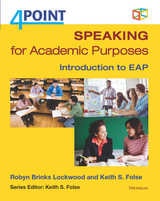
4 Point Speaking for Academic Purposes
Introduction to EAPRobyn Brinks Lockwood and Keith S. Folse
University of Michigan Press, 2017
The 4 Point series is designed for English language learners whose primary goal is to succeed in an academic setting. Academic English learners need skills-based books that focus on reading, listening, and speaking, as well as the two primary language bases of vocabulary and grammar. The ultimate goal is to help your students improve these skills and earn a 4.0 (GPA).
The Introduction to English for Academic Purposes (EAP) level is designed for students in academic programs who need a more general introduction to authentic academic content. The discrete skills volumes are designed for programs and courses that want to more intensively focus on key strategies and authentic academic content in one skill area.
Each 4 Point volume covers academic skills while providing reinforcement and systematic recycling of key vocabulary issues and further exposure to grammar issues. These volumes focus very heavily on vocabulary because language learners know that they are way behind their native-speaker counterparts when it comes to vocabulary. Each book highlights key vocabulary items, including individual words, compound words, phrasal verbs, short phrases, idioms, metaphors, collocations and longer set lexical phrases.
Speaking for Academic Purposes is an introductory textbook containing English for Academic Purposes content. Each unit includes activities to strengthen a range of speaking skills, notably: understanding classroom discourse, using academic language functions, recognizing signal words and phrases, and synthesizing information. These activities are presented within the context of one field of academic study (Architecture, Marketing, Earth Science, U.S. History, Chemistry, and Fine Arts) per unit.
Unique to this speaking text are six videos showing common student interactions. Access to the videos is free.
Each unit includes three academic speaking strategies (including one specific to making presentations) and tasks that involve participating in group discussions, interacting with native speakers, and making a presentation. The goal is to provide students with a variety of strategies/tools to master academic situations in which they need to participate.
40+ New Revenue Sources for Libraries and Nonprofits
Edmund A. Rossman
American Library Association, 2016
50+ Fandom Programs
Planning Festivals and Events for Tweens, Teens, and AdultsAmy Alessio
American Library Association, 2017
50+ Library Services
Innovation in ActionDiantha Dow Schull
American Library Association, 2013
- Analyzes key societal trends, such as longer lifespans and improved population health, and their implications for libraries' work with this demographic
- Profiles Leading-Edge States and Beacon Libraries from across the nation at the forefront of institutional change
- Discusses issues such as creativity, health, financial literacy, life planning, and intergenerational activities from the 50+ perspective, while showing how libraries can position themselves as essential centers for learning, encore careers, and community engagement
- Spotlights best practices that can be adapted for any setting, including samples of hundreds of projects and proposals that illustrate new approaches to 50+ policies, staffing, programs, services, partnerships, and communications
The wisdom and insight contained in this book can help make the library a center for positive aging.
50+ Programs for Tweens, Teens, Adults, and Families
12 Months of IdeasAmy Alessio
American Library Association, 2019
53 Ready-to-Use Kawaii Craft Projects
Ellyssa Kroski
American Library Association, 2020
In her new book Kroski, bestselling enthusiast of makerspaces, cosplay, and geek culture in libraries, has gathered creative and crafty librarians to share their most popular Kawaii programs. Running the gamut in terms of cost and difficulty, this book’s 53 programs are sure to include many that will fit your budget, space, and skills. Just scan the estimated budget, age range, materials, equipment needs, and learning outcomes in each listing. Projects include
- keychains with felt or 3D printing;
- slime squishies;
- 3D printed animal earrings;
- hosting a stuffed animal fashion show;
- monster emoji paper bookmarks;
- origami fortune cookies;
- buttons with anime or comic book art;
- crocheted coffee cozy or puppy nose warmer;
- tiny top hats with laser-cut felt cameos; and
- how to Kawaii-ify a planner.
What’s more, the plentiful suggestions for “next projects” scattered throughout the book will help you keep the super-cute fun going!
60 Ready-to-Use Coding Projects
Ellyssa Kroski
American Library Association, 2020
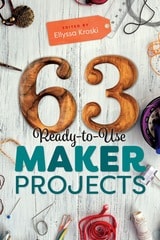
63 Ready-to-Use Maker Projects
Ellyssa Kroski
American Library Association, 2017
- a foam rocket launcher;
- stop-motion animation with 3D print characters;
- found-object robots;
- glowing ghost marionettes;
- Arduino eTextiles;
- magnetic slime;
- yarn painting;
- fidget flannels;
- an LED brooch; and
- cardboard sculpture.
With takeaways like origami tea lights or a t-shirt tote bag, your patrons will be sure to remember how much fun your library can be.

99 Poets/1999
An International Poetics Symposium, Volume 26Charles Bernstein
Duke University Press, 0
Each poet was asked to ponder a series of questions: Is identity an important issue for your work, and, if so, in what sense? What do you see as the most urgent, yet insufficiently addressed or considered, issue or issues for poetry and poetics at this moment? Do you see your work in the context of a national state, or in the context of international capital, or in some other context?
After years of exchange between the artists—through translations, readings, and visits—the result is a collection of unique and significant literary works, one that is richly suggestive for the future not only of poetry but of literary and cultural studies as well.
“The Sting of Death” and Other Stories
Shimao Toshio; Translated with an Introduction and Interpretive Comments by Kathryn Sparling
University of Michigan Press, 1985