Results by title
1993 books match the query 'Latin America' and 8 start with a non-letter
'ReCapricorning' the Atlantic
Special Issue of Luso-Brazilian Review 45:1 (2008)Edited by Peter M. Beattie
University of Wisconsin Press, 2010
This special issue of Luso-Brazilian Review includes articles on the Lusophone South Atlantic by historians of Africa and Brazil originally presented in May of 2006 at the Michigan State University and University of Michigan’s Atlantic History Workshop “ReCapricorning the Atlantic: Luso-Brazilian and Luso-African Perspectives on the Atlantic World.” Workshop participants set out to “ReCapricorn the Atlantic” by assessing how new research on the Lusophone South Atlantic modifies, challenges, or confirms major trends and paradigms in the expanding scholarship on Atlantic History.
1968 Mexico
Constellations of Freedom and DemocracySusana Draper
Duke University Press, 2018
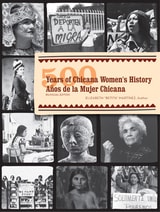
500 Years of Chicana Women's History / 500 Años de la Mujer Chicana
Bilingual EditionMartínez, Elizabeth "
Rutgers University Press, 2008
The history of Mexican Americans spans more than five centuries and varies from region to region across the United States. Yet most of our history books devote at most a chapter to Chicano history, with even less attention to the story of Chicanas.
500 Years of Chicana Women’s History offers a powerful antidote to this omission with a vivid, pictorial account of struggle and survival, resilience and achievement, discrimination and identity. The bilingual text, along with hundreds of photos and other images, ranges from female-centered stories of pre-Columbian Mexico to profiles of contemporary social justice activists, labor leaders, youth organizers, artists, and environmentalists, among others. With a distinguished, seventeen-member advisory board, the book presents a remarkable combination of scholarship and youthful appeal.
In the section on jobs held by Mexicanas under U.S. rule in the 1800s, for example, readers learn about flamboyant Doña Tules, who owned a popular gambling saloon in Santa Fe, and Eulalia Arrilla de Pérez, a respected curandera (healer) in the San Diego area. Also covered are the “repatriation” campaigns” of the Midwest during the Depression that deported both adults and children, 75 percent of whom were U.S.–born and knew nothing of Mexico. Other stories include those of the garment, laundry, and cannery worker strikes, told from the perspective of Chicanas on the ground.
From the women who fought and died in the Mexican Revolution to those marching with their young children today for immigrant rights, every story draws inspiration. Like the editor’s previous book, 500 Years of Chicano History (still in print after 30 years), this thoroughly enriching view of Chicana women’s history promises to become a classic.
¡Huelga!
Indigenous Farm Labor Organizing in MexicoJames Daria
University of Arizona Press, 2026
On March 17, 2015, tens of thousands of Mexican farmworkers went on strike in San Quintin, Baja California, to protest horrible working conditions on the farms that produce most of the fresh fruits and vegetables you consume. Calling themselves the “slaves of the twenty-first century,” these mostly Indigenous men, women, and children rose up in defiance of the conditions of modern slavery, forced labor, sexual harassment, and “hunger wages.” This ethnography provides an in-depth look into how Indigenous farmworkers organize in the fields and their communities to improve wages and working conditions.
Since the strike, the farmworkers have organized a union to fight for justice in the fields. In this work, author James Daria accompanies these farmworkers as they struggle for dignity. Daria also charts the tensions inside the farmworker movement as women struggle to gain greater power in the home as well as at work. In an era of complex global integration, Daria shows us how what we eat is tied to the suffering of those who produce our food.
This book highlights and centers the Indigenous workers who struggle for justice in a global food system that connects us all.
¡Presente!
The Politics of PresenceDiana Taylor
Duke University Press, 2020
¿Entiendes?
Queer Readings, Hispanic WritingsEmilie L. Bergmann and Paul Julian Smith, eds.
Duke University Press, 1995
Combining intimate knowledge of Spanish-speaking cultures with contemporary queer theory, these essays address texts that share both a common language and a concern with lesbian, gay, and bisexual identities. Using a variety of approaches, the contributors tease the homoerotic messages out of a wide range of works, from chronicles of colonization in the Caribbean to recent Puerto Rican writing, from the work of Cervantes to that of the most outrageous contemporary Latina performance artists. This volume offers a methodology for examining work by authors and artists whose sexuality is not so much open as "an open secret," respecting, for example, the biographical privacy of writers like Gabriela Mistral while responding to the voices that speak in their writing. Contributing to an archeology of queer discourses, ¿Entiendes? also includes important studies of terminology and encoded homosexuality in Argentine literature and Caribbean journalism of the late nineteenth century.
Whether considering homosexual panic in the stories of Borges, performances by Latino AIDS activists in Los Angeles, queer lives in turn-of-the-century Havana and Buenos Aires, or the mapping of homosexual geographies of 1930s New York in Lorca’s "Ode to Walt Whitman," ¿Entiendes? is certain to stir interest at the crossroads of sexual and national identities while proving to be an invaluable resource.
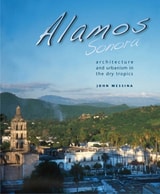
Álamos, Sonora
Architecture and Urbanism in the Dry TropicsJohn Messina
University of Arizona Press, 2008
Until now, there has never been a book about the architecture and urban form of Álamos. In this much-needed work, John Messina, who teaches architecture and is a practicing architect, provides a well-informed history and interpretive description of the town. He also examines building materials and construction techniques, as well as issues of building preservation and restoration. At the same time, the author considers what other cities might learn from Álamos. Particularly for cities in the American Southwest that are struggling to reduce sprawl and increase density without compromising their quality of life, Álamos offers a range of possible solutions.
Thoroughly illustrated and designed for lay readers and professionals alike, this engaging book captures the essence and the uniqueness of Álamos while asking what lessons can be drawn by architects and planners who are attempting to reshape our own cities and towns into more livable, viable, and people-friendly environments.
“These Are Our Roots”
The History of the K’iche’ People as Told by Lords of the Tamub’ and Ilokab’transcription, translation, and commentary by Allen J. Christenson
University Press of Colorado, 2026
In “These Are Our Roots”, Allen J. Christenson translates and analyzes historical documents composed by Tamub’ and Ilokab’ nobles of the K’iche’ Maya, who ruled much of the Guatemalan highlands until their lands were invaded by Spanish conquistadors in 1524. Complete original English translations of three Tamub’ texts and a new translation of the “Title of the Ilokab’” reveal how K’iche’ nobility strategically appropriated Christian elements from Dominican missionary texts while maintaining their Indigenous worldview. These documents served multiple purposes: legally establishing land rights, asserting nobility status, preserving cultural identity, and claiming religious legitimacy by positioning themselves as descendants of biblical figures—a sophisticated response to Spanish colonization that balanced accommodation and resistance through literacy, which had become a crucial tool for Indigenous elites navigating the colonial system.
The Tamub’ and Ilokab’ branches of the K’iche’ people have generally been overshadowed by their well-known Kaweq brethren, who wrote such literature masterpieces as the Popol Vuh and the Title of Totonicapán. But it is the voices relegated to the shadows of history that share views of events from different perspectives and whisper about what really happened behind the scenes—family jealousies, political rivalries, and delicious gossip about the great and the good who tend to focus on their own self-aggrandizing stories. “These Are Our Roots” is a valuable scholarly contribution to Maya studies and ethnohistory that makes these important primary sources more accessible to students and scholars.