Results by title
268 books match the query 'Mass media' and 2 start with a non-letter
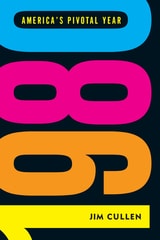
1980
America's Pivotal YearJim Cullen
Rutgers University Press, 2023
1980 was a turning point in American history. When the year began, it was still very much the 1970s, with Jimmy Carter in the White House, a sluggish economy marked by high inflation, and the disco still riding the airwaves. When it ended, Ronald Reagan won the presidency in a landslide, inaugurating a rightward turn in American politics and culture. We still feel the effects of this tectonic shift today, as even subsequent Democratic administrations have offered neoliberal economic and social policies that owe more to Reagan than to FDR or LBJ. To understand what the American public was thinking during this pivotal year, we need to examine what they were reading, listening to, and watching.
1980: America's Pivotal Year puts the news events of the era—everything from the Iran hostage crisis to the rise of televangelism—into conversation with the year’s popular culture. Separate chapters focus on the movies, television shows, songs, and books that Americans were talking about that year, including both the biggest hits and some notable flops that failed to capture the shifting zeitgeist. As he looks at the events that had Americans glued to their screens, from the Miracle on Ice to the mystery of Who Shot J.R., cultural historian Jim Cullen garners surprising insights about how Americans’ attitudes were changing as they entered the 1980s.
Praise for Jim Cullen's previous Rutgers University Press books:
"Informed and perceptive" —Norman Lear on Those Were the Days: Why All in the Family Still Matters
"Jim Cullen is one of the most acute cultural historians writing today." —Louis P. Masur, author of The Sum of Our Dreams on Martin Scorsese and the American Dream
"This is a terrific book, fun and learned and provocative....Cullen provides an entertaining and thoughtful account of the ways that we remember and how this is influenced and directed by what we watch." —Jerome de Groot, author of Consuming History on From Memory to History
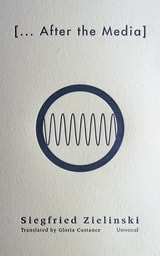
[...After the Media]
News from the Slow-Fading Twentieth CenturySiegfried Zielinski
University of Minnesota Press, 2013
The media are now redundant. In an overview of developments spanning the past seventy years, Siegfried Zielinski’s [ . . . After the Media] discusses how the means of technology-based communication assumed a systemic character and how theory, art, and criticism were operative in this process. Media-explicit thinking is contrasted with media-implicit thought. Points of contact with an arts perspective include a reinterpretation of the artist Nam June Paik and an introduction to the work of Jake and Dinos Chapman. The essay ends with two appeals. In an outline of a precise philology of exact things, Zielinski suggests possibilities of how things could proceed after the media. With a vade mecum against psychopathia medialis in the form of a manifesto, the book advocates for a distinction to be made between online existence and offline being.