Results by title
1210 books match the query 'Mexico' and 4 start with a non-letter
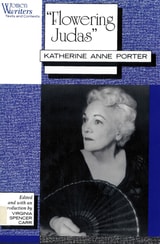
"Flowering Judas"
Katherine Anne PorterCarr, Virginia S
Rutgers University Press, 1993
Katherine Anne Porter often spoke of her story "Flowering Judas" as the tale she liked best of all her stories because it came the nearest to what she meant it to be. It is the story of Laura, an idealistic woman, who travels to Mexico from Arizona at the age of twenty-two to assist the Obreg-n Revolution.
This casebook on "Flowering Judas" addresses Porter's ambivalence surrounding her roles as woman and artist and also attests to the profound influence of Mexico upon her work. Readers of this early tale will not be surprised to learn that although Porter was a practicing feminist in her life and her work, she actually eschewed the feminist label.
Virginia Spencer Carr brings her own sharply focused biographer's eye to the introduction, further illuminating the story and the superb critical essays that it provokes. The casebook includes the authoritative text of the story itself, Porter's own statement regarding the genesis of this highly acclaimed work, an important interview, a collection of significant essays on "Flowering Judas" and the historical, cultural, and personal milieu from which the tale evolved, a bibliography, and a chronology of Porter's life and work.

1968 Mexico
Constellations of Freedom and DemocracySusana Draper
Duke University Press, 2018
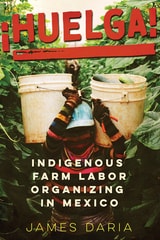
¡Huelga!
Indigenous Farm Labor Organizing in MexicoJames Daria
University of Arizona Press, 2026
On March 17, 2015, tens of thousands of Mexican farmworkers went on strike in San Quintin, Baja California, to protest horrible working conditions on the farms that produce most of the fresh fruits and vegetables you consume. Calling themselves the “slaves of the twenty-first century,” these mostly Indigenous men, women, and children rose up in defiance of the conditions of modern slavery, forced labor, sexual harassment, and “hunger wages.” This ethnography provides an in-depth look into how Indigenous farmworkers organize in the fields and their communities to improve wages and working conditions.
Since the strike, the farmworkers have organized a union to fight for justice in the fields. In this work, author James Daria accompanies these farmworkers as they struggle for dignity. Daria also charts the tensions inside the farmworker movement as women struggle to gain greater power in the home as well as at work. In an era of complex global integration, Daria shows us how what we eat is tied to the suffering of those who produce our food.
This book highlights and centers the Indigenous workers who struggle for justice in a global food system that connects us all.
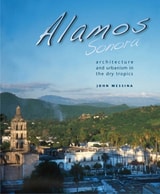
Álamos, Sonora
Architecture and Urbanism in the Dry TropicsJohn Messina
University of Arizona Press, 2008
Until now, there has never been a book about the architecture and urban form of Álamos. In this much-needed work, John Messina, who teaches architecture and is a practicing architect, provides a well-informed history and interpretive description of the town. He also examines building materials and construction techniques, as well as issues of building preservation and restoration. At the same time, the author considers what other cities might learn from Álamos. Particularly for cities in the American Southwest that are struggling to reduce sprawl and increase density without compromising their quality of life, Álamos offers a range of possible solutions.
Thoroughly illustrated and designed for lay readers and professionals alike, this engaging book captures the essence and the uniqueness of Álamos while asking what lessons can be drawn by architects and planners who are attempting to reshape our own cities and towns into more livable, viable, and people-friendly environments.