Results by title
121 books match the query 'Motion picture industry' and 3 start with a non-letter

(Re)viewing Creative, Critical and Commercial Practices in Contemporary Spanish Cinema
Edited by Duncan Wheeler and Fernando Canet
Intellect Books, 2014
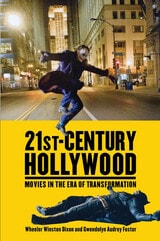
21st-Century Hollywood
Movies in the Era of TransformationDixon, Wheeler Winston
Rutgers University Press, 2011
They are shot on high-definition digital cameras—with computer-generated effects added in postproduction—and transmitted to theaters, websites, and video-on-demand networks worldwide. They are viewed on laptop, iPod, and cell phone screens. They are movies in the 21st century—the product of digital technologies that have revolutionized media production, content distribution, and the experience of moviegoing itself.
21st-Century Hollywood introduces readers to these global transformations and describes the decisive roles that Hollywood is playing in determining the digital future for world cinema. It offers clear, concise explanations of a major paradigm shift that continues to reshape our relationship to the moving image. Filled with numerous detailed examples, the book will both educate and entertain film students and movie fans alike.
43 Ways to Finance Your Feature Film
A Comprehensive Analysis of Film FinanceJohn W. Cones
Southern Illinois University Press, 2008
John W. Cones has updated his now classic 43 Ways toFinance Your Feature Film: A Comprehensive Analysis of Film Finance with a substantially reorganized and expanded third edition.
An essential reference guide for film professionals on every side of film financing, 43 Ways answers the question that every filmmaker and producer ultimately faces, the issue that can make or break any venture into the film industry: How do I finance my feature film? The third edition includes updated information and coverage of new options for financing.
In his clear and concise style and with expertise amassed over his nearly twenty years of experience in the film finance industry, Cones breaks financing options down into six main areas: gifts and grants, investor financing, domestic government subsidies and tax incentive programs, lender financing, international finance options, and studio or industry financing. Beginning with the forms of financing most likely to be accessible to independent feature film producers, Cones proceeds to other forms that become increasingly available as the producer’s career matures.
As an objective adviser, Cones provides specific, concise information regarding the many possible financing strategies and lists the distinct pros and cons of each strategy. This guide covers the options for film financing in rich detail so that even first-time producers and filmmakers will be able to make educated and informed decisions about the best approaches to financing their films. An extensive bibliography contains additional information about each form of film finance. Cones also counters much of the bad advice being provided by pseudoprofessional film finance consultants and points out scams that may separate unwary film producers from their money.
Although the book focuses on financing feature films, much of its information is relevant to the financing of other kinds of projects, such as short films, documentaries, videos, and multimedia and theatrical endeavors. Anyone considering making or investing in a feature film will be well served by this practical and helpful guide.