Results by title
754 books match the query 'Native American Studies' and 3 start with a non-letter
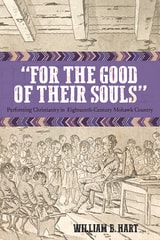
"For the Good of Their Souls"
Performing Christianity in Eighteenth-Century Mohawk CountryWilliam B. Hart
University of Massachusetts Press, 2020
In 1712, the Society for the Propagation of the Gospel in Foreign Parts opened its mission near present-day Albany, New York, and began baptizing residents of the nearby Mohawk village Tiononderoge, the easternmost nation of the Haudenosaunee (Iroquois) Confederacy. Within three years, about one-fifth of the Mohawks in the area began attending services. They even adapted versions of the service for use in private spaces, which potentially opened a door to an imagined faith community with the Protestants.
Using the lens of performance theory to explain the ways in which the Mohawks considered converting and participating in Christian rituals, historian William B. Hart contends that Mohawks who prayed, sang hymns, submitted to baptism, took communion, and acquired literacy did so to protect their nation's sovereignty, fulfill their responsibility of reciprocity, serve their communities, and reinvent themselves. Performing Christianity was a means of "survivance," a strategy for sustaining Mohawk life and culture on their terms in a changing world.
Using the lens of performance theory to explain the ways in which the Mohawks considered converting and participating in Christian rituals, historian William B. Hart contends that Mohawks who prayed, sang hymns, submitted to baptism, took communion, and acquired literacy did so to protect their nation's sovereignty, fulfill their responsibility of reciprocity, serve their communities, and reinvent themselves. Performing Christianity was a means of "survivance," a strategy for sustaining Mohawk life and culture on their terms in a changing world.
[more]
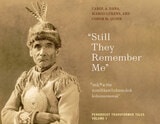
"Still They Remember Me"
Penobscot Transformer Tales, Volume 1Carol A. Dana, Margo Lukens, and Conor M. Quinn
University of Massachusetts Press, 2021
Newell Lyon learned the oral tradition from his elders in Maine's Penobscot Nation and was widely considered to be a "raconteur among the Indians." The thirteen stories in this new volume were among those that Lyon recounted to anthropologist Frank Speck, who published them in 1918 as Penobscot Transformer Tales. Transcribed for the first time into current Penobscot orthography and with a new English translation, this instructive and entertaining story cycle focuses on the childhood and coming-of-age of Gluskabe, the tribe's culture hero. Learning from his grandmother Woodchuck, Gluskabe applies lessons that help shape the Wabanaki landscape and bring into balance all the forces affecting human life. These tales offer a window into the language and culture of the Penobscot people in the early twentieth century.
In "Still They Remember Me," stories are presented in the Penobscot language and English side-by-side, coupled with illustrations from members of the tribal community. For the first time, these stories are accessible to a young generation of Penobscot language learners and scholars of Native American literatures at all levels, from grade school to graduate school.
In "Still They Remember Me," stories are presented in the Penobscot language and English side-by-side, coupled with illustrations from members of the tribal community. For the first time, these stories are accessible to a young generation of Penobscot language learners and scholars of Native American literatures at all levels, from grade school to graduate school.
[more]
Águila
The Vision, Life, Death, and Rebirth of a Two-Spirit Shaman in the Ozark MountainsMaría Cristina Moroles
University of Arkansas Press, 2024
In Águila: The Vision, Life, Death, and Rebirth of a Two-Spirit Shaman in the Ozark Mountains, María Cristina Moroles traces the path of her extraordinary life from the streets of Dallas to the wilderness of the Arkansas Ozarks, where she has resided for fifty years. Hailing from a large Indigenous and Mexican American family in Texas, Moroles apprentices herself to healers and shamans across the Americas as she follows the spiritual vision that leads her to establish a mountaintop sanctuary for women and children of color in a notoriously insular location in the Ozark Mountains. This is a survivor’s tale, and a back-to-the-lander’s tale, unlike any other. From early traumas to countercultural rebellion and profound spiritual awakening, Moroles recounts milestones that earn her the ceremonial names SunHawk and Águila, as she builds a sustainable community off the grid, atop a mountain otherwise uninhabited by human life. Águila tells the truth of one woman’s search for freedom and all women’s quest for dignity as it celebrates the healing powers of nature.
[more]