Results by title
1761 books match the query 'Public Policy' and 3 start with a non-letter
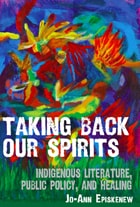
Taking Back Our Spirits
Indigenous Literature, Public Policy, and HealingJo-Ann Episkenew
University of Manitoba Press, 2009
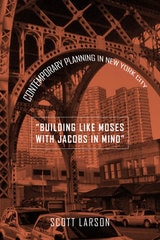
"Building Like Moses with Jacobs in Mind"
Contemporary Planning in New York CityScott Larson
Temple University Press, 2013
The antagonism between urbanist and writer Jane Jacobs and master builder Robert Moses may frame debates over urban form, but in "Building Like Moses with Jacobs in Mind," Scott Larson aims to use the Moses-Jacobs rivalry as a means for examining and understanding the New York City administration's redevelopment strategies and actions. By showing how the Bloomberg administration's plans borrow selectively from Moses' and Jacobs' writing, Larson lays bare the contradictions buried in such rhetoric and argues that there can be no equitable solution to the social and economic goals for redevelopment in New York City with such a strategy.
"Building Like Moses with Jacobs in Mind" offers a lively critique that shows how the legacies of these two planners have been interpreted—and reinterpreted—over time and with the evolution of urban space. Ultimately, he makes the case that neither figure offers a meaningful model for addressing stubborn problems—poverty, lack of affordable housing, and segregation along class and racial lines—that continue to vex today's cities.

(Mis)Understanding the Other Side
How Americans Explain Opposing Political ViewsMatthew V. Hibbing, Matthew Mettler, Jeffery J. Mondak, and Isaiah R. Raynal
Temple University Press, 2027
A genuine understanding of politics requires us to accept that even those with whom we disagree may have a reasoned basis for their preferences. Acknowledgment of the existence and legitimacy of opposing perspectives may help people with ingrained political differences communicate better and develop more thoughtful and informed rationales for their own opinions. (Mis)Understanding the Other Side analyzes Americans’ ability to recognize and understand dissenting views, a necessary step if we are to reduce partisan polarization and be more effective citizens.
The authors conducted a national survey of 2500 Americans to gauge people’s political motivations and their views on major political issues. The respondents were also asked to explain the rationale for “the other side.” Exploration of respondents’ own words and subsequent statistical analyses combine to show how well people articulate their own issue rationales and the extent to which they understand, and are receptive to, opposing positions.
(Mis)Understanding the Other Side identifies severe limitations in how and how well Americans explain both their own positions and those of people who disagree with them. The authors highlight the challenges these limitations pose for effective citizenship and point to strategies that may foster better understanding across lines of political difference.