Results by title
1861 books match the query 'Social life and customs' and 7 start with a non-letter
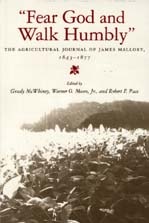
"Fear God and Walk Humbly"
The Agricultural Journal of James Mallory, 1843-1877James Mallory
University of Alabama Press, 1997
Most inhabitants of the Old South, especially the plain folk, devoted more time to leisurely activities—drinking, gambling, hunting, fishing, and just loafing—than did James Mallory, a workaholic agriculturalist, who experimented with new plants, orchards, and manures, as well as the latest farming equipment and techniques. A Whig and a Unionist, a temperance man and a peace lover, ambitious yet caring, business-minded and progressive, he supported railroad construction as well as formal education, even for girls. His cotton production—four bales per field hand in 1850, nearly twice the average for the best cotton lands in southern Alabama and Georgia--tells more about Mallory's steady work habits than about his class status.
But his most obvious eccentricity—what gave him reason to be remembered—was that nearly every day from 1843 until his death in 1877, Mallory kept a detailed journal of local, national, and often foreign news, agricultural activities, the weather, and especially events involving his family, relatives, slaves, and neighbors in Talladega County, Alabama. Mallory's journal spans three major periods of the South's history--the boom years before the Civil War, the rise and collapse of the Confederacy, and the period of Reconstruction after the Civil War. He owned slaves and raised cotton, but Mallory was never more than a hardworking farmer, who described agriculture in poetical language as “the greatest [interest] of all.”
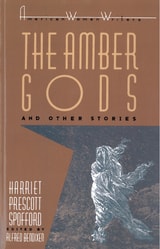
"The Amber Gods" and Other Stories by Harriet Prescott Spofford
Bendixen, Alfred
Rutgers University Press, 1989
The title story presents a self-centered and captivating woman who ruthlessly steals her orphan cousin's lover. In "Circumstance," a pioneer woman returning home through the woods at night is caught by a panther; her husband, who has come to save her, can only watch from the ground as she sings for her life, pinned in a tree. A train engineer hallucinates again and again that he is running over his wife. And Mrs. Craven, who's a bit "weak" in the head, mindlessly repeats "Three men went down cellar and only two came up." These stories combine elements of the best ghost stories—timing, detail, and character —with just enough chill to make you think twice about turning out your lights at night.
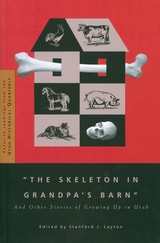
"The Skeleton in Grandpa's Barn"
And Other Stories of Growing Up in UtahStanford J. Layton
Signature Books, 2008
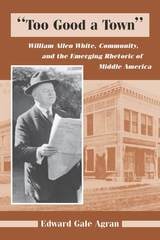
"Too Good a Town"
William Allen White, Community, and the Emerging Rhetoric of Middle AmericaEdward G. Agran
University of Arkansas Press, 1999
For fifty years, William Allen White, first as a reporter and later as the long-time editor of the Emporia Gazette, wrote of his small town and its Mid-American values. By tailoring his writing to the emerging urban middle class of the early twentieth century, he won his “gospel of Emporia” a nationwide audience and left a lasting impact on he way America defines itself.
Investigating White’s life and his extensive writings, Edward Gale Agran explores the dynamic thought of one of America’s best-read and most-respected social commentators. Agran shows clearly how White honed his style and transformed the myth of conquering the western frontier into what became the twentieth-century ideal of community building.
Once a confidante of and advisor to Theodore Roosevelt, White addressed, and reflected in his work, all the great social and political oscillations of his time—urbanization and industrialism, populism, and progressivism, isolationism internationalism, Prohibition, and New Deal reform. Again and again, he asked the question “What’s the matter?” about his times and townspeople, then found the middle ground. With great care and discernment, Agran gathers the man strains of White’s messages, demonstrating one writer’s pivotal contribution to our idea of what it means to be an American.
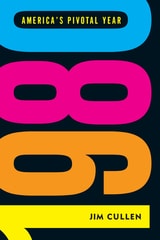
1980
America's Pivotal YearJim Cullen
Rutgers University Press, 2023
1980 was a turning point in American history. When the year began, it was still very much the 1970s, with Jimmy Carter in the White House, a sluggish economy marked by high inflation, and the disco still riding the airwaves. When it ended, Ronald Reagan won the presidency in a landslide, inaugurating a rightward turn in American politics and culture. We still feel the effects of this tectonic shift today, as even subsequent Democratic administrations have offered neoliberal economic and social policies that owe more to Reagan than to FDR or LBJ. To understand what the American public was thinking during this pivotal year, we need to examine what they were reading, listening to, and watching.
1980: America's Pivotal Year puts the news events of the era—everything from the Iran hostage crisis to the rise of televangelism—into conversation with the year’s popular culture. Separate chapters focus on the movies, television shows, songs, and books that Americans were talking about that year, including both the biggest hits and some notable flops that failed to capture the shifting zeitgeist. As he looks at the events that had Americans glued to their screens, from the Miracle on Ice to the mystery of Who Shot J.R., cultural historian Jim Cullen garners surprising insights about how Americans’ attitudes were changing as they entered the 1980s.
Praise for Jim Cullen's previous Rutgers University Press books:
"Informed and perceptive" —Norman Lear on Those Were the Days: Why All in the Family Still Matters
"Jim Cullen is one of the most acute cultural historians writing today." —Louis P. Masur, author of The Sum of Our Dreams on Martin Scorsese and the American Dream
"This is a terrific book, fun and learned and provocative....Cullen provides an entertaining and thoughtful account of the ways that we remember and how this is influenced and directed by what we watch." —Jerome de Groot, author of Consuming History on From Memory to History
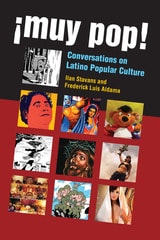
¡Muy Pop!
Conversations on Latino Popular CultureIlan Stavans and Frederick Luis Aldama
University of Michigan Press, 2013
Although investigations of Hispanic popular culture were approached for decades as part of folklore studies, in recent years scholarly explorations—of lucha libre, telenovelas, comic strips, comedy, baseball, the novela rosa and the detective novel, sci-fi, even advertising—have multiplied. What has been lacking is an overarching canvas that offers context for these studies, focusing on the crucial, framing questions: What is Hispanic pop culture? How does it change over time and from region to region? What is the relationship between highbrow and popular culture in the Hispanic world? Does it make sense to approach the whole Hispanic world as homogenized when understanding Hispanic popular culture? What are the differences between nations, classes, ethnic groups, religious communities, and so on? And what distinguishes Hispanic popular culture in the United States?
In ¡Muy Pop!, Ilan Stavans and Frederick Luis Aldama carry on a sustained, free-flowing, book-length conversation about these questions and more, concentrating on a wide range of pop manifestations and analyzing them at length. In addition to making Hispanic popular culture visible to the first-time reader, ¡Muy Pop! sheds new light on the making and consuming of Hispanic pop culture for academics, specialists, and mainstream critics.
“The Sting of Death” and Other Stories
Shimao Toshio; Translated with an Introduction and Interpretive Comments by Kathryn Sparling
University of Michigan Press, 1985