Results by title
247 books match the query 'South Africa' and 2 start with a non-letter

"Stay Out of Politics"
A Philosopher Views South AfricaRonald Aronson
University of Chicago Press, 1990
Along with his visa, Aronson was given the following warning by a consular officer: "Stay out of politics!" Believing that philosophy not only has a role to play but that it can, and must, involve itself in the vital social and political issues of our time, Aronson equally discovered that in South Africa politics is everywhere and inescapable. The lectures Aronson delivered focused on the meaning of progress and hope, on the threat—and experience—of disaster today, and on our responsibility to join the struggle for a humane and rational world. Two of the most provocative lectures are included here, the first a discussion of the Holocaust that has direct and intentional applications to the current situation in South Africa. The second lecture, in memory of the assassinated political philosopher Richard Turner, is a sketch of Aronson's philosophy of hope as seen from within the South African context.
Despite the limitations of teaching under possible surveillance in a revolutionary situation, Aronson witnessed the social reality of apartheid and heard the voices of its victims. Aronson's love for the South African people motivated him to write this powerful account. He presents a lecturer's tour of South Africa: the experiences that both confirmed his belief in the urgent need for majority rule but also revealed the complexities of the society that seeks to continue apartheid through all reforms; and his philosopher's reflections upon returning to the United States on the irrationality of apartheid and the ambiguities of the struggle to end it.
"Stay Out of Politics" is not only a powerful encounter with South Africa today, it is a provocative statement about philosophy—its nature, its tasks, its duty to understand and change the world in which we live.
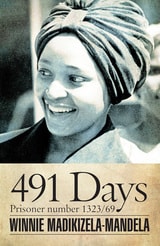
491 Days
Prisoner Number 1323/69Winnie Madikizela-Mandela
Ohio University Press, 2014
On a freezing winter’s night, a few hours before dawn on May 12, 1969, South African security police stormed the Soweto home of Winnie Madikizela-Mandela, activist and wife of the imprisoned Nelson Mandela, and arrested her in the presence of her two young daughters, then aged nine and ten.
Rounded up in a group of other antiapartheid activists under Section 6 of the Terrorism Act, designed for the security police to hold and interrogate people for as long as they wanted, she was taken away. She had no idea where they were taking her or what would happen to her children. For Winnie Mandela, this was the start of 491 days of detention and two trials.
Forty-one years after Winnie Mandela’s release on September 14, 1970, Greta Soggot, the widow of one of the defense attorneys from the 1969–70 trials, handed her a stack of papers that included a journal and notes she had written while in detention, most of the time in solitary confinement. Their reappearance brought back to Winnie vivid and horrifying memories and uncovered for the rest of us a unique and personal slice of South Africa’s history.
491 Days: Prisoner Number 1323/69 shares with the world Winnie Mandela’s moving and compelling journal along with some of the letters written between several affected parties at the time, including Winnie and Nelson Mandela, himself then a prisoner on Robben Island for nearly seven years.
Readers will gain insight into the brutality she experienced and her depths of despair, as well as her resilience and defiance under extreme pressure. This young wife and mother emerged after 491 days in detention unbowed and determined to continue the struggle for freedom.