Results by title
131 books match the query 'Texts' and 2 start with a non-letter
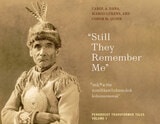
"Still They Remember Me"
Penobscot Transformer Tales, Volume 1Carol A. Dana, Margo Lukens, and Conor M. Quinn
University of Massachusetts Press, 2021
In "Still They Remember Me," stories are presented in the Penobscot language and English side-by-side, coupled with illustrations from members of the tribal community. For the first time, these stories are accessible to a young generation of Penobscot language learners and scholars of Native American literatures at all levels, from grade school to graduate school.

'Twas Only an Irishman's Dream
The Image of Ireland and the Irish in American Popular Song Lyrics, 1800-1920William H. A. Williams
University of Illinois Press, 1996
Over time, the image of the Irish in the United States changed from that of hard-drinking Paddies to genial working-class citizens.
In 'Twas Only an Irishman's Dream, William H. A. Williams traces the change in this image through more than seven hundred pieces of sheet music--popular songs from the stage and for the parlor--to show how Americans' opinions of Ireland and the Irish swung from one extreme to the other.
As Williams shows, sheet music's place as a commercial item meant it had to be acceptable to the broadest possible song-buying public. Negotiations about the image of the Irish and Irish Americans involved Irish songwriters, performers, and pressured groups on one side, and non-Irish writers, publishers, and audiences on the other. Williams ties the contents of song lyrics to the history of the Irish diaspora, revealing how societies create ethnic stereotypes and how such stereotypes evolve, and even disappear, from mainstream popular culture.