Results by title
441 books match the query 'Women and literature' and 6 start with a non-letter
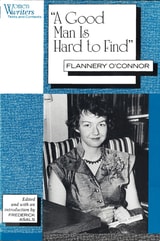
"A Good Man is Hard to Find"
Flannery O'ConnorAsals, Frederick
Rutgers University Press, 1993
"A Good Man Is Hard to Find" is Flannery O'Connor's most famous and most discussed story. O'Connor herself singled it out by making it the title piece of her first collection and the story she most often chose for readings or talks to students. It is an unforgettable tale, both riveting and comic, of the confrontation of a family with violence and sudden death. More than anything else O'Connor ever wrote, this story mixes the comedy, violence, and religious concerns that characterize her fiction.
This casebook for the story includes an introduction by the editor, a chronology of the author's life, the authoritative text of the story itself, comments and letters by O'Connor about the story, critical essays, and a bibliography. The critical essays span more than twenty years of commentary and suggest several approaches to the story--formalistic, thematic, deconstructionist-- all within the grasp of the undergraduate, while the introduction also points interested students toward still other resources. Useful for both beginning and advanced students, this casebook provides an in-depth introduction to one of America's most gifted modern writers.
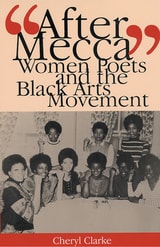
"After Mecca"
Women Poets and the Black Arts MovementClarke, Cheryl
Rutgers University Press, 2004
In "After Mecca," Cheryl Clarke explores the relationship between the Black Arts Movement and black women writers of the period. Poems by Gwendolyn Brooks, Ntozake Shange, Audre Lorde, Nikki Giovanni, Sonia Sanchez, Jayne Cortez, Alice Walker, and others chart the emergence of a new and distinct black poetry and its relationship to the black community's struggle for rights and liberation. Clarke also traces the contributions of these poets to the development of feminism and lesbian-feminism, and the legacy they left for others to build on.
She argues that whether black women poets of the time were writing from within the movement or writing against it, virtually all were responding to it. Using the trope of "Mecca," she explores the ways in which these writers were turning away from white, western society to create a new literacy of blackness.
"Doers of the Word"
African-American Women Speakers and Writers in the North (1830-1880)Peterson, Carla L
Rutgers University Press, 1998
In situating these women within the emerging African-American urban communities of the free North, Doers of the Word provides an important counterweight to the vast scholarship on Southern slavery and argues that black "Civil Rights movements" cannot be seen as a purely modern phenomenon. In particular, the book examines the ways in which this Northern black population, despite its heterogeneity, came together and established social organizations that would facilitate community empowerment; yet Peterson's analysis also acknowledges, and seeks to explain, the highly complex relationship of black women to these institutions, a relationship that rendered their stance as public intellectuals all the more bold and defiant.
Peterson begins her study in the 1830s, when a substantial body of oratory and writing by black women first emerged, and traces the development of this writing through the shifting political climate up to the end of Reconstruction. She builds her analyses upon Foucault's interdisciplinary model of discourse with an explicitly feminist approach, drawing upon sermons, spiritual autobiographies, travel and slave narratives, journalism, essays, poetry, speeches, and fiction. From these, Peterson is able to answer several key questions. First, what empowered these women to act, to speak out, and to write? Why, and in what ways, were they marginalized within both the African-American and larger American communities? Where did they act, speak, and write from?
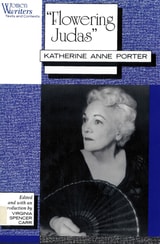
"Flowering Judas"
Katherine Anne PorterCarr, Virginia S
Rutgers University Press, 1993
Katherine Anne Porter often spoke of her story "Flowering Judas" as the tale she liked best of all her stories because it came the nearest to what she meant it to be. It is the story of Laura, an idealistic woman, who travels to Mexico from Arizona at the age of twenty-two to assist the Obreg-n Revolution.
This casebook on "Flowering Judas" addresses Porter's ambivalence surrounding her roles as woman and artist and also attests to the profound influence of Mexico upon her work. Readers of this early tale will not be surprised to learn that although Porter was a practicing feminist in her life and her work, she actually eschewed the feminist label.
Virginia Spencer Carr brings her own sharply focused biographer's eye to the introduction, further illuminating the story and the superb critical essays that it provokes. The casebook includes the authoritative text of the story itself, Porter's own statement regarding the genesis of this highly acclaimed work, an important interview, a collection of significant essays on "Flowering Judas" and the historical, cultural, and personal milieu from which the tale evolved, a bibliography, and a chronology of Porter's life and work.
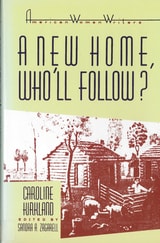
'A New Home, Who Will Follow?' by Caroline Kirkland
Zagarell, Sandra A
Rutgers University Press, 1990
A New Home is a vivid contribution to a new kind of narrative developed during the antebellum period, ethnographic fiction. Kirkland highlights the importance and the drama of local practices and everyday life in Montacute. She traces the way two groups of settlers slowly adjust to each other - the old hands and the newcomers from the East;. Dramatizing differences of class and culture, she also shows how the groups finally form a genuine community and a new, diverse culture. Kirkland also gives ethnographic fiction an original twist: she satirizes the provincialism and the rigidity of both groups of settlers.
After writing A New Home, Kirkland became a professional literary woman, working as an editor as well as a writer. In her introduction, Sandra Zagarell explores the implications of Kirkland's writing and professional career for our understanding of women, writing, and the world of literature in antebellum America.

20th-Century Italian Women Writers
The Feminine ExperienceAlba Amoia
Southern Illinois University Press, 1996
As an international scholar and resident of Italy who has observed and shared the experiences of Italian women for the past twenty years, Alba Amoia has positioned herself perfectly to report to English-speaking audiences the great range and variety of writing produced by twentieth-century Italian women. Her personal contact with many of the authors she discusses lends further immediacy to her study.
Rather than focusing exclusively on contemporary living authors, Amoia discusses writers from the early part of the twentieth century as well, linking them with later writers spanning twentieth-century Italy’s literary movements and political, social, and economic developments. Yet the connections and contradictions that bind and divide these women are only beginning to be established because Italy is still a splintered country in which perceptions of Italian women as a historical group have only begun to crystallize. While feminine voices resound on the Italian literary scene, only recently has feminine authority made itself felt in the professional and institutional worlds.
The eleven writers in this volume criticize the female role in Italian society, externalize women’s unconscious needs, and offer unusual examples of feminine creativity. Amoia provides a critical treatment of each author, incorporating the accepted opinion of Italian and other critics. She isolates recurrent and fundamental themes in each author’s literary career: linguistic repression by males, personal frustration in the realm of "householditude," and disorientation within Italy’s unbalanced institutions and hierarchies still strongly anchored in archaic structures.
Amoia begins her discussion with two illustrious predecessors of Italy’s contemporary women writers: the 1926 Nobel Prize winner Grazia Deledda and the premier literary feminist Sibilla Aleramo. Continuing in chronological order, Amoia discusses Gianna Manzini, Lalla Romano, Elsa Morante, Natalia Ginzburg, Rosetta Loy, and Dacia Maraini. Amoia concludes her exploration of Italian women writers with three journalists: Matilde Serao, Oriana Fallaci, and Camilla Cederna.
Essentially, Amoia has provided a collection of succinct and accessible monographs featuring pertinent biographical information and extensive bibliographies. She discusses each author’s most representative works, seeking to give readers both a sense of these women as writers and an understanding of their significance in the male-dominated literary scene.