Results by title
187 books match the query '1951-' and 17 start with a

A Good Long Drive
Fifty Years of Texas Country ReporterBob Phillips
University of Texas Press, 2021
In 2021, Texas Country Reporter celebrates its fiftieth season on the air. Broadcast every week on stations across Texas, it focuses on “ordinary people doing extraordinary things.” And at the center of it is Bob Phillips, the show’s creator and host—an erstwhile poor kid from Dallas who ended up with a job that allowed him to rub elbows with sports figures, entertainers, and politicians but who preferred to spend his time on the back roads, listening to less-famous Texans tell their stories.
In this memoir, Phillips tells his own story, from his early days as a reporter and his initial pitch for the show while a student at SMU to his ongoing work at the longest-running independently produced TV show in American television history. As we travel with Phillips on his journey, we meet Willie Nelson and former Dallas Cowboys coach Tom Landry; reflect on memorable, unusual, and challenging show segments; experience the behind-the-scenes drama that goes on in local television; witness the launching of an annual festival; and discover the unbelievable allure of Texas, its culture, and, especially, its people. Spanning generations, A Good Long Drive is proof that life’s journey really is a destination unto itself.
A Government as Good as Its People
Jimmy Carter
University of Arkansas Press, 1996
A Just Cause
The Impeachment and Removal of Governor Rod BlagojevichBernard H. Sieracki. Foreword by Jim Edgar
Southern Illinois University Press, 2016
During the predawn hours of December 9, 2008, an FBI team swarmed the home of Illinois governor Rod Blagojevich and took him away in handcuffs. The shocking arrest, based on allegations of corruption and extortion, launched a chain of political events never before seen in Illinois. In A Just Cause, Bernard H. Sieracki delivers a dynamic firsthand account of this eight-week political crisis, beginning with Blagojevich’s arrest, continuing through his impeachment and trial, and culminating in his conviction and removal from office. Drawing on his own eyewitness observations of the hearings and trial, the comments of interviewees, trial transcripts, and knowledge gained from decades of work with the Illinois legislature, Sieracki tells the compelling story of the first impeachment and removal from office of an Illinois governor, while providing a close look at the people involved.
A Just Cause depicts Blagojevich as a master of political gamesmanship, a circus ringmaster driven by personal ambition and obsessed with private gain. Sieracki examines in depth the governor’s unethical behavior while in office, detailing a litany of partisan and personal hostilities that spanned years. He thoroughly covers the events leading to Blagojevich’s downfall and the reactions of the governor’s cohorts. The author discusses the numerous allegations against Blagojevich, including attempts to “sell” appointments, jobs, and contracts in exchange for financial contributions. Sieracki then exhaustively recounts Blagojevich’s senate trial and the governor’s removal from office.
This engrossing volume is both a richly detailed case study of the American checks-and-balances system and an eyewitness account of unprecedented events. It will appeal to anyone interested in the stunning, true tale of a state upholding the maxim “The welfare of the people is the supreme law.”
A Man for All Seasons
Monroe Sweetland and the Liberal ParadoxWilliam Robbins
Oregon State University Press, 2015
Historian William G. Robbins illuminates the wrenching transformation of American political culture in A Man for All Seasons: Monroe Sweetland and the Liberal Paradox. Racial and economic inequalities motivated much of Sweetland’s civic life, including his lifelong memberships in the American Civil Liberties Committee, the National Association for the Advancement of Colored People, the Urban League, the Japanese American Citizens League, and the Red Cross, where Sweetland worked repatriating American prisoners of war after Japan’s surrender.
Robbins’ portrait is holistic, exploring Sweetland’s socialist beginnings, inconsistencies in his politics—especially during the Cold War—and his regional legacy. He was the most important person in the resurgence of the modern, liberal Oregon Democratic Party from the late 1940s to the 1960s. He joined the National Education Association in 1964 and became the driving force behind the Bilingual Education Act of 1968 and the fight for the age-18 vote, achieved in the ratification of the 26th amendment in 1971. Monroe Sweetland was a nationally prominent figure, whose fights bequeathed to modern America important legislation that shaped its political landscape.

A Moving Meditation
Life on a Cape Cod Kettle PondStephen G. Waller
University of Massachusetts Press, 2023
Cape Cod is known for its beaches, throngs of summer visitors, and the activities that accompany seaside living, but it is also home to many kettle ponds, which offer a more tranquil setting. Formed from glaciers breaking apart and so named due to a rounded shape that appears like a kettle, these waterways are home to a diverse array of wildlife, while remaining peaceful and even a bit hidden.
Big enough for a canoeist to feel solitude and serenity, small enough to not appear on large-scale maps, Centerville’s Long Pond (one of seven on the Cape that share this name), consists of fifty-one acres of crystal clear waters, fresh air, and the fish, turtles, waterfowl, ospreys, and otters that call this special place home. In A Moving Meditation, Stephen G. Waller offers an intimate look at the pond’s intriguing natural and human history; its abundant animal life, across the seasons; and the encroaching effects of climate change.
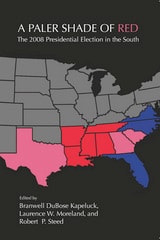
A Paler Shade of Red
The 2008 Presidential Election in the SouthBranwell DuBose Kapeluck
University of Arkansas Press, 2009

A Pryor Commitment
David Pryor
Butler Center for Arkansas Studies, 2009
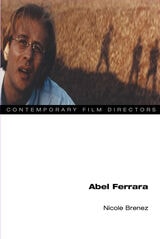
Abel Ferrara
Nicole Brenez. Translated from the French by Adrian Martin
University of Illinois Press, 2006
Nicole Brenez argues for Abel Ferrara’s place in a line of grand inventors who have blurred distinctions between industry and avant-garde film, including Orson Welles, Monte Hellman, and Nicholas Ray. Rather than merely reworking genre film, Brenez understands Ferrara’s oeuvre as formulating new archetypes that depict the evil of the modern world. Focusing as much on the human figure as on elements of storytelling, she argues that films such as Bad Lieutenant express this evil through visionary characters struggling against the inadmissible (inadmissible behavior, morality, images, and narratives).
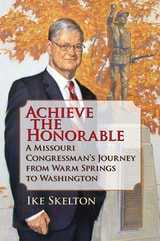
Achieve the Honorable
A Missouri Congressman's Journey from Warm Springs to WashingtonIke Skelton
Southern Illinois University Press, 2013
During his years in the U.S. House of Representatives, Skelton became known as a bipartisan negotiator and a champion of the Armed Services. Throughout the decades, he helped steer the nation through its most dangerous challenges, from Communism to terrorism; took a leading role in the reform of the Department of Defense; dedicated himself to fulfilling the interests of his constituents; and eventually rose to become chair of the House Armed Services Committee during such pivotal events as the wars in Iraq and Afghanistan. In addition to detailing Skelton’s political career and its accompanying challenges and triumphs, Achieve the Honorable provides inside glimpses into the lives of political titans like Harry Truman, Richard Nixon, and Bill Clinton. Along the way, we are treated to Skelton’s engaging humor and shrewd insight into twentieth- and twenty-first-century U.S. politics.
Advances in Teaching Sign Language Interpreters
Cynthia B. Roy
Gallaudet University Press, 2005
Picking up where Innovative Practices in Teaching Sign Language Interpreters left off, this new collection presents the best new interpreter teaching techniques proven in action by the eminent contributors assembled here. In the first chapter, Dennis Cokely discusses revising curricula in the new century based upon experiences at Northeastern University. Jeffrey E. Davis delineates how to teach observation techniques to interpreters, while Elizabeth Winston and Christine Monikowski suggest how discourse mapping can be considered the Global Positioning System of translation.
In other chapters, Laurie Swabey proposes ways to handle the challenge of referring expressions for interpreting students, and Melanie Metzger describes how to learn and recognize what interpreters do in interaction. Jemina Napier contributes information on training interpreting students to identify omission potential. Robert G. Lee explains how to make the interpreting process come alive in the classroom. Mieke Van Herreweghe discusses turn-taking and turn-yielding in meetings with Deaf and hearing participants in her contribution. Anna-Lena Nilsson defines “false friends,” or how contextually incorrect use of facial expressions with certain signs in Swedish Sign Language can be detrimental influences on interpreters. The final chapter by Kyra Pollitt and Claire Haddon recommends retraining interpreters in the art of telephone interpreting, completing Advances in Teaching Sign Language Interpreters as the new authoritative volume in this vital communication profession.

After Wallace
The 1986 Contest for Governor and Political Change in AlabamaPatrick R. Cotter
University of Alabama Press, 2009
With the retirement of an aging and ill George Wallace, both the issues and candidates contending for the office were able to set the course of Alabama politics for generations to follow. Whereas the Wallace regimes were particular to Alabama, and the gubernatorial campaign was conducted in a partial vacuum with his absence, Alabama also experienced a wave of partisan realignment. A once solidly Democratic South was undergoing a tectonic political shift as white voters in large numbers abandoned their traditional Democratic political home for the revived Republicans, a party shaped in many respects by the Wallace presidential bids of 1968 and 1972 and the Reagan revolution of the 1980s.
Alabama's own Democratic Party contributed to this massive shift with self-destructive campaign behavior that disgusted many of its traditional voters who wound up staying home or voting for a little-known Republican. From the gubernatorial election of 1986 came the shaky balance between the two parties that exists today.
After Wallace recollects and analyzes how these shifts occurred, citing extensive newspaper coverage from the time as well as personal observations and poll data collected by the authors. This volume is certain to be a valuable work for any political scientist, especially those with an interest in Alabama or southern politics.
Against Theory
Literary Studies and the New PragmatismW. J. T. Mitchell
University of Chicago Press, 1985
The argument is directed against both sides of the current debates in literary theory, criticizing theoretical "objectivists" like E. D. Hirsch, Jr., on the one hand, and proponents of indeterminacy like Paul de Man on the other. The attack is not just on a particular way of doing theory but on the entire project of literary theory. The challenge is not only to a way of thinking and writing but to a way of making a living.
The resulting controversy has drawn so much attention among literary critics that it has been collected in a single volume so that the debate can be followed from start to finish. This collection includes the essay "Against Theory," seven responses to it, and a rejoinder by Knapp and Michaels (originally published in Critical Inquiry 9:4); in addition, there are two new statements plus a final reply by Knapp and Michaels.
The debate chronicled in this volume raises the most fundamental issues in the theory of meaning and the practice of interpretation. Are Knapp and Michaels confronting literary theory with a new "pragmatic" form of theory? Or are they (as some of their respondents suggest) arguing for a new form of nihilism? "If it is a nihilism," writes editor W. J. T. Mitchell, "it is one that demands an answer, not easy polemical dismissal, one that calls for theory to clarify its claims, not to mystify them and the easy assurance of intellectual fashion and institutional authority." It is the intention of Against Theory to aid in that clarification.

Agenda for Reform
Winthrop Rockefeller as Governor of Arkansas, 1967–71Cathy Kunzinger Urwin
University of Arkansas Press, 1991
Alabama Politics in the Twenty-First Century
William H. Stewart
University of Alabama Press, 2016
An essential guide to understanding politics, power, and governance in modern Alabama.
Why does Alabama rank so low on many of the indicators of quality of life? Why did some of the most dramatic developments in the civil rights revolution of the 1960s take place in Alabama? Why is it that a few interest groups seem to have the most political power in Alabama? William H. Stewart’s Alabama Politics in the Twenty-First Century explores these questions and more, illuminating many of the often misunderstood details of contemporary Alabama politics in this cohesive and comprehensive publication.
The Alabama state government, especially as a specimen of Deep South politics, is a topic of frequent discussion by its general public—second only to college football. However, there remains a surprising lack of literature focusing on the workings of the state’s bureaucracy in an extensive and systematic way. Bearing in mind the Yellowhammer State’s long and rich political history, Stewart concentrates on Alabama’s statecraft from the first decade of the twenty-first century through the November 2010 elections and considers what the widespread Republican victories mean for their constituents. He also studies several different themes prominent during the 2010 elections, including the growing number and influence of special interest groups, the respective polarization of whites and blacks into the Republican and Democratic parties, and the increasingly unwieldy state constitution.
This fascinating and revealing text provides a wealth of information about an extremely complex state government. Featuring detailed descriptions of important concepts and events presented in a thorough and intelligible manner, Alabama Politics in the Twenty-First Century is perfect for scholars, students, everyday Alabamians, or anyone who wants the inside scoop on the subtle inner workings of the Cotton State’s politics.

Aleksandr Sokurov
Russian ArkBirgit Beumers
Intellect Books, 2016
This companion to Russian Ark addresses all key aspects of the film, beginning with a comprehensive synopsis, an in-depth analysis, and an account of the production history. Birgit Beumers goes on from there to discuss the work that went into the now-legendary Steadicam shot—which required two thousand actors and three orchestras—and she also offers an account of the film’s critical and public reception, showing how it helped to establish director Aleksandr Sokurov as perhaps the leading filmmaker in Russia today.
Archipelagoes of My South
Episodes in the Shaping of a Region, 1830–1965J. Mills Thornton III
University of Alabama Press, 2016
A collection of essays representing forty-five years of reflection on the central problems of southern history bound together by a common concern with defining the crucial interaction of race and class in the formation of southern politics and life
“The tourist archipelagoes of my South / are prisons, too, corruptible” writes the poet Derek Walcott. While Walcott refers to the islands of the Caribbean, the analogous idea of a land made into solitary islands by an imprisoned and inherited corruption is historian J. Mills Thornton III’s American South. The captivating essays in Archipelagoes of My South: Episodes in the Shaping of a Region, 1830–1965 address this overarching and underlying narrative of Alabama politics and the history of the South.
Highlighting events as significant as the role of social and economic conflict in the southern secession movement, various aspects of Reconstruction, and the role of the Ku Klux Klan in the politics of the 1920s, Thornton draws from various points in the southern past in an effort to identify and understand the sources of the region’s power. Moreover, each essay investigates its subject matter and peels back layers with an aim to clarify why the enormous diversity of the southern experience makes that power so great, all the while allowing the reader to see connections that would not otherwise be apparent.
Archipelagoes of My South gathers previously uncollected essays into a single volume covering the entire length and breadth of Thornton’s career. The author’s principal concerns have always been the arc of regional evolution and the significance of the local. Thus, the mechanisms of political and social change and the interrelationships across eras and generations are recurring themes in many of these essays.
Even those who have spent their entire lives in the South may be unaware of the fractured layers of history that lie beneath the landscape they inhabit. For those southern residents who seek to comprehend more of their own past, this landmark compilation of essays on Alabama and southern history endeavors to provide illumination and enlightenment.

Archive Activism
Memoir of a "Uniquely Nasty" JourneyCharles Francis
University of North Texas Press, 2023