Results by title
3703 books match the query '19th Century' and 343 start with a

A Beautiful Fight
The Racial Politics of Capoeira in Backland BahiaEsther Viola Kurtz
University of Michigan Press, 2025
2026 Dance Studies Association de la Torre Bueno First Book Award Shortlist Finalist
A Beautiful Fight examines the potentials and limits of capoeira Angola to cohere a multiracial community committed to antiracist struggle. Capoeira, a musical fight-game that originated among enslaved Africans in Brazil, holds special significance for Black Brazilian activists as a spiritual and political practice that affirms the value of Black lives, thus countering anti-Black violence sanctioned by the Brazilian state. However, many capoeira groups count more white practitioners than Black, especially groups of the politicized, Afrocentric style capoeira Angola, raising debates about appropriation of Black culture that resonate across the Americas. A Beautiful Fight addresses these tensions. Drawing on ethnographic research with a multiracial capoeira Angola group in Brazil’s Bahian sertão or backlands, Esther Viola Kurtz explores diverse group members’ understandings of capoeira’s spiritual and political meanings and considers how white participation impacts capoeira’s antiracist politics. A Beautiful Fight argues that white practitioners occupying space in capoeira divert attention from Black members’ concerns and reproduce racist and colonialist ideologies, albeit unintentionally. In this way, the book complicates claims that shared music and dance bridge differences and facilitate cross-racial unity, yet Kurtz proposes that capoeira still transmits knowledge and tools that, when used with intention, commitment, and care, can be wielded to collaboratively contest racism and imagine a more just world.
A Black Corps d'Elite
An Egyptian Sudanese Conscript Battalion with the French Army in Mexico, 1863-1867, and its Survivors in Subsequent African HistoryRichard Hill
Michigan State University Press, 1995
For several years, the armies of Napoleon III deployed some 450 Muslim Sudanese slave soldiers in Veracruz, the port of Mexico City. As in the other case of Western hemisphere military slavery (the West India Regiments, a British unit in existence 1795-1815), the Sudanese were imported from Africa in the hopes that they would better survive the tropical diseases that so terribly afflicted European soldiers. In both cases, the Africans did indeed fulfill these expectations. The mixture of cultures embodied by this event has piqued the interest of several historians, so it is by no means unknown. Hill and Hogg provide a particularly thorough account of this exotic interlude, explaining its background, looking in detail at the battle record in Mexico, and figuring out who exactly made up the battalion. Much in their account is odd and interesting, for example, the Sudanese superiority to Austrian troops and their festive nine-day spree in Paris on the emperor's tab. The authors also assess the episode's longer-term impact on the Sudan, showing that the veterans of Mexico, having learnt much from their extended exposure to French military practices, rose quickly in the ranks, then taught these methods to others.
A Black Gambler’s World of Liquor, Vice, and Presidential Politics
William Thomas Scott of Illinois, 1839–1917Bruce L. Mouser
University of Wisconsin Press, 2014
Scott helped build the National Negro Liberty Party to forward economic, political, and legal rights for his race. But the hustling that had brought him business success proved his undoing as a national political figure. He was the NNLP's initial presidential nominee, only to be replaced by a better-educated and more socially acceptable candidate, George Edwin Taylor.
A Blockaded Family
Life in Southern Alabama During the Civil WarParthenia Hague
University of Alabama Press, 2005
Parthenia Hague experienced the Civil War while employed as a schoolteacher on a plantation near Eufaula, Alabama. This book recounts how a frightened and war-weary household dealt with privations during the blockade imposed on the South by the federal navy. The memoir of Parthenia Hague is a detailed look at the ingenious industry and self-sufficiency employed by anxious citizens as the northern army closed in.

A Century of Church History
The Legacy of Philip SchaffEdited by Henry Warner Bowden. Foreword by Jaroslav Pelikan
Southern Illinois University Press, 1988
In commemoration of the hundredth anniversary of the American Society of Church History, this monumental compilation of historiographical scholarship calls on 10 eminent specialists to review significant achievements that over the past century have shaped current understanding of the multifaceted church.
The book inevitably honors the memory of Philip Schaff, the great 19th century church historian who laid the foundations of the discipline in America and in 1888 founded the ASCH. In examining the major subfields of church history, many of which Schaff pioneered himself in the U.S., the essayists explore such topics as early Christianity, the medieval church, the Reformation, American religious liberty, creeds and liturgies, and ecumenism.
The anthology includes David W. Lotz, "Philip Schaff and the Idea of Church History"; Robert M. Kingdon, "Reformation Studies"; John F. Wilson, "Civil Authority and Religious Freedom in America: Philip Schaff on the United States as a Christian Nation"; and Aidan Kavanagh, "Liturgical and Credal Studies"; Henry W. Bowden, "The First Century: Institutional Development and Ideas about the Profession"; Glenn F. Chesnut, "A Century of Patristic Studies, 1888–1988"; Bernard McGinn, "The Gold of Catholicity": Reflections on a Century of American Study of Medieval Church History"; Jay P. Dolan, "Immigration and American Christianity: A History of Their Histories"; Gerald H. Anderson, "To the Ends of the Earth: American Protestants in Pursuit of Mission"; and John T. Ford, "Ecumenical Studies."
The topics addressed in this book are the major concerns of church history today. The essays provide a critical survey of major developments in the different fields over the past century, discussing the scholars and publications that brought new information to light or changed the general understanding of church history by contributing fresh interpretations. In bringing readers up to date in church history by surveying benchmark contributions in each of the special areas surveyed, the contributors seek to orient historians and stimulate colleagues toward further investigation of a common past.
A common thread running through all of these essays, Bowden notes, "is the recognition that we are heirs to a major change in historical self-understanding. Over the course of a century we have moved from views where history taught lessons of exclusivist rectitude to an appreciation of shared heritage and mutual development." Two appendixes provide extensive historical data about the society itself.
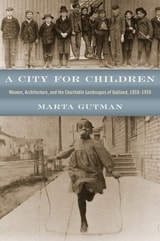
A City for Children
Women, Architecture, and the Charitable Landscapes of Oakland, 1850-1950Marta Gutman
University of Chicago Press, 2014
In A City for Children, Marta Gutman focuses on the use and adaptive reuse of everyday buildings in Oakland, California, to make the city a better place for children. She introduces us to the women who were determined to mitigate the burdens placed on working-class families by an indifferent industrial capitalist economy. Often without the financial means to build from scratch, women did not tend to conceive of urban land as a blank slate to be wiped clean for development. Instead, Gutman shows how, over and over, women turned private houses in Oakland into orphanages, kindergartens, settlement houses, and day care centers, and in the process built the charitable landscape—a network of places that was critical for the betterment of children, families, and public life. The industrial landscape of Oakland, riddled with the effects of social inequalities and racial prejudices, is not a neutral backdrop in Gutman’s story but an active player. Spanning one hundred years of history, A City for Children provides a compelling model for building urban institutions and demonstrates that children, women, charity, and incremental construction, renovations, alterations, additions, and repurposed structures are central to the understanding of modern cities.
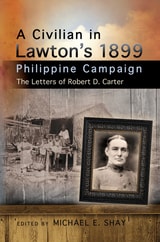
A Civilian in Lawton's 1899 Philippine Campaign
The Letters of Robert D. CarterEdited by Michael E. Shay
University of Missouri Press, 2013
In the midst of the Philippine-American War, twenty-two-year-old Robert Dexter Carter served in Manila as a civilian quartermaster clerk. Through his letters to his family, he provided a vivid picture of army life in Manila—the sights, the smells, and his responses to the native culture. In addition to his letters, his diary and several related articles present a firsthand account of the historic voyage of the United States Army Transport Grant through the Suez Canal to Manila in early 1899. Carter’s writings not only tell of his sometimes harrowing experiences, but also reveal the aspirations and fears of a young man not quite sure of his next steps on life’s journey.
Carter’s father, Robert Goldthwaite Carter, was a war hero and a longtime friend of Maj. Gen. Henry W. Lawton. Carter obtained his position through Lawton’s influence, and his respect for Lawton is clear throughout his writings. A frequent guest in the Lawton home, the young clerk was introduced to many notable figures both military and civilian. Carter’s letters, particularly to his father, are full of news and gossip related to his commander. In other letters, he reveals the kindness and generosity of Mrs. Lawton, who took time to look out for Carter while he was in the hospital and often loaned him books.
This well-researched and expertly edited work casts light on the role of support troops in war, a subject too often minimized or ignored. Shay begins each chapter with an introduction that establishes the setting, the context of events, and the disposition of Carter and his compatriots and provides notes and commentary to place the letters in context. By choosing not to edit the offensive expletives of a sometimes arrogant and racist young man, Shay presents a fully nuanced portrait of a young American exploring the larger world in a time of turmoil.
Enhanced by photographs from collections at the Library of Congress and the Military History Institute, as well as many of Carter’s own whimsical drawings, the book will appeal to armchair historians and scholars alike.
A Collective Pursuit
Teachers' Unions and Education ReformLesley Lavery
Temple University Press, 2020
Teachers’ unions are the organizations responsible for safeguarding the conditions of teachers’ employment. Union supporters claim strong synergies between teachers’ interests and students’ interests, but critics of unions insist that the stance of teachers in collective bargaining may disadvantage students as unions reduce the power of administrators to manage, remove, reward or retain excellent teachers.
In A Collective Pursuit, Lesley Laveryunpacks how teachers’ unions today are fighting for contracts that allow them to earn a decent living and build “schools all students deserve.” She explains the form and function of the nation’s largest teachers’ unions. Lavery then explores unionization campaigns in the Twin Cities charter schools. A Collective Pursuit also examines teacher strikes and contract negotiations, school finance and finance reform, and district and union attempts to address racial achievement gaps, to provide a context for understanding the economic, political, and demographic forces that inspire teachers to improve conditions for students.
A Collective Pursuit emphasizes that while teachers’ unions serve a traditional, economic role, they also provide a vast array of valuable services to students, educators, parents, and community members.
A Conquering Spirit
Fort Mims and the Redstick War of 1813–1814Gregory A. Waselkov
University of Alabama Press, 2009
WINNER, ADULT NONFICTION BOOK OF THE YEAR AWARD BY THE ALABAMA LIBRARY ASSOCIATION
WINNER, CLINTON JACKSON COLEY AWARD FROM THE ALABAMA HISTORICAL ASSOCIATION
Uncovering the Forgotten Battle That Changed a Nation.
The Fort Mims massacre changed the course of American history in many ways, not the least of which was the ensuing rise of one Andrew Jackson to the national stage. The unprecedented Indian victory over the encroaching Americans who were bent on taking their lands and destroying their culture horrified many and injured the young nation's pride. Tragedies such as this one have always rallied Americans to a common cause: a single-minded determination to destroy the enemy and avenge the fallen. The August 30, 1813 massacre at Fort Mims, involving hundreds of dead men, women, and children, was just such a spark.
Gregory Waselkov tells compellingly the story of this fierce battle at the fortified plantation home of Samuel Mims in the Tensaw District of the Mississippi Territory. With valuable maps, tables, and artifact illustrations, Waselkov looks closely at the battle to cut through the legends and misinformation that have grown around the event almost from the moment the last flames died at the smoldering ruins. At least as important as the details of the battle, though, is his elucidation of how social forces remarkably converged to spark the conflict and how reverberations of the battle echo still today, nearly two hundred years later.

A Contemporary Archaeology of London's Mega Events
From the Great Exhibition to London 2012Jonathan Gardner
University College London, 2022
This book explores the traces of London’s most significant modern “mega events”: the Great Exhibition of 1851, the 1951 Festival of Britain’s South Bank Exhibition, and the 2012 Olympic and Paralympic Games. Though only open for a few weeks or months, mega events permanently and disruptively reshape their host cities and societies: they demolish and rebuild whole districts, they draw in materials and participants from around the globe, and their organizers self-consciously seek to leave a “legacy” that will endure for decades or more. The book argues that these spectacles must thus be seen as long-lived and persistent, rather than simply transient or short-term phenomena. It explores the long-term history of each event through contemporary archaeology, examining the contents and building materials of the Great Exhibition’s Crystal Palace and their extraordinary afterlife at Sydenham, South London; how the Festival of Britain’s South Bank Exhibition employed displays of ancient history to construct a new postwar British identity; and how London 2012 dealt with competing visions of the past as archaeology, waste, and heritage in creating a vision of the future.
A Contested Borderland
Competing Russian and Romanian Visions of Bessarabia in the Second Half of the 19th and Early 20th CenturyAndrei Cusco
Central European University Press, 2017
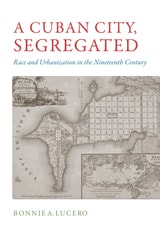
A Cuban City, Segregated
Race and Urbanization in the Nineteenth CenturyBonnie A. Lucero
University of Alabama Press, 2019
Founded as a white colony in 1819, Cienfuegos, Cuba, quickly became home to people of African descent, both free and enslaved, and later a small community of Chinese and other immigrants. Despite the racial, ethnic, and cultural diversity that defined the city’s population, the urban landscape was characterized by distinctive racial boundaries, separating the white city center from the heterogeneous peripheries. A Cuban City, Segregated: Race and Urbanization in the Nineteenth Century explores how the de facto racial segregation was constructed and perpetuated in a society devoid of explicitly racial laws.
Drawing on the insights of intersectional feminism, Bonnie A. Lucero shows that the key to understanding racial segregation in Cuba is recognizing the often unspoken ways specifically classed notions and practices of gender shaped the historical production of race and racial inequality. In the context of nineteenth-century Cienfuegos, gender, race, and class converged in the concept of urban order, a complex and historically contingent nexus of ideas about the appropriate and desired social hierarchy among urban residents, often embodied spatially in particular relationships to the urban landscape.
As Cienfuegos evolved subtly over time, the internal logic of urban order was driven by the construction and defense of a legible, developed, aesthetically pleasing, and, most importantly, white city center. Local authorities produced policies that reduced access to the city center along class and gendered lines, for example, by imposing expensive building codes on centric lands, criminalizing poor peoples’ leisure activities, regulating prostitution, and quashing organized labor. Although none of these policies mentioned race outright, this new scholarship demonstrates that the policies were instrumental in producing and perpetuating the geographic marginality and discursive erasure of people of color from the historic center of Cienfuegos during its first century of existence.

A Death-Dealing Famine
The Great Hunger in IrelandChristine Kinealy
Pluto Press, 1997

A Dirty History of Photography
Chemistry, Fog, and EmpireMichelle Henning
University of Chicago Press, 2025
Dependent on the extractive practices of fossil-fueled industrial capitalism, chemical photography’s emulsions and films were highly sensitive to polluted atmospheres, and photographic companies had to work hard to control this sensitivity. Drawing on histories of empire, coal, and chemistry and from the archives of British photographic manufacturer Ilford Limited, Michelle Henning exposes the ways photography shaped how we see and understand the atmosphere while leaving its toxic residues in the air, soil, and water.
Structured as thirty-six short chapters and with over seventy illustrations, this innovative book begins in interwar London, follows the supply of Ilford products to photographers on the West African coast, and considers photography as a military technology linked to the development of chemical warfare. Combining close readings of photographs with discussions of low-light, tropical, and aerial photography, Henning examines the extraction and development of photographic materials, their role in the current environmental crisis, and how they have shaped experiences of time and the environment.
A Double-Edged Sword
The Biography of Commodore Jesse Duncan Elliott, 1782–1845David F. Long
University of Alabama Press, 2026
An overdue reassessment of one of the US Navy’s most decorated—and divisive—early commanders, whose legacy remains teetering between heroism and scandalous.
A Double-Edged Sword: The Biography of Commodore Jesse Duncan Elliott, 1782–1845 is a comprehensive and long-overdue portrait of one of the most polarizing figures in early US naval history. Written over the course of a decade and completed shortly before the author’s death, this meticulously researched biography revisits the career of a man once hailed for his military exploits—and later condemned for a myriad of personal controversies—including his perceived missteps while in command.
David F. Long traces Elliott’s rise from promising young officer to commodore, chronicling his leadership during key moments such as the capture of the brig Caledonia, the defense of Fort Erie, and his central—but contested—role in the Battle of Lake Erie. Despite notable contributions to the Navy’s early successes, including his diplomatic work and restoration of the USS Constitution, Elliott’s legacy was clouded by scandal: accusations of cowardice, a notorious duel, a contentious command style, and a drawn-out court-martial that ended his career in disgrace.
Serving as both biography and reflective historical analysis, Long paints a vivid picture of the early US Navy—its rivalries, growing pains, and evolving institutional identity. His balanced account of Elliott’s life, neither excusing his faults nor downplaying his achievements, places the commodore’s story in direct conversation with the challenges and ambitions of a rapidly expanding American maritime power. This is a must read for scholars of naval and military history, early American politics, or anyone interested in the brazen albeit controversial legacy of a forgotten national hero.

A Dream of Arcadia
Anti-Industrialism in Spanish LIterature, 1895–1905By Lily Litvak
University of Texas Press, 1975
The dream of “progress” that animated many nineteenth-century artistic and political movements gave way at the turn of the century to a dissatisfaction with the Industrial Civilization and a recurrent pessimism about a future dominated by mechanization. Art Nouveau, which was both a style and a movement, embodied this dissatisfaction, marking the turn-of-the-century period with an aesthetic that consciously set out to revolutionize literature, the arts, and society within the framework of a brutalizing, wildly burgeoning Industrial Civilization. Generally associated with northern European culture, Art Nouveau also had a great impact in the south, particularly in Spain.
A Dream of Arcadia is the first work to explore Spain’s fertile and imaginative Art Nouveau. Through the eyes of four major Spanish writers, Lily Litvak views several different aspects of the turn-of-the-century struggle against the advances of industrialism in Spain. Her interpretation of the early works of Ramón del Valle Inclán, Miguel de Unamuno, José Martínez Ruiz (Azorín), and Pío Baroja exposes a longing for a preindustrial arcadia based on a return to nature, the revival of handicrafts and medieval art, an attraction to rural primitive societies, and a revulsion against the modern city. Set against the European literary and artistic background of the period, her observations place the Spanish manifestations of Art Nouveau within the context of the better-known northern phenomena. Of particular interest is her discussion of the influences of John Ruskin, William Morris, and the Pre-Raphaelites, which demonstrates how the general European mood was articulated in Spain.
Litvak concludes that Valle Inclán, Unamuno, Azorín, and Baroja must be considered as more than simply fin de siècle writers, for they became part of a general movement, generated by Art Nouveau, that spans an entire century. A Dream of Arcadia demonstrates that Art Nouveau was more than a flash on Europe's artistic horizon; it is a philosophy with ramifications that have led to communes, handcrafted articles, and nomadic adolescents in search of truth.

A Drunkard's Defense
Alcohol, Murder, and Medical Jurisprudence in Nineteenth-Century AmericaMichele Rotunda
University of Massachusetts Press, 2021
Is drunkenness a defense for murder? In the early nineteenth century, the answer was a resounding no. Intoxication was considered voluntary, and thus provided no defense. Yet as the century progressed, American courts began to extend exculpatory value to heavy drinking. The medicalization of alcohol use created new categories of mental illness which, alongside changes in the law, formed the basis for defense arguments that claimed unintended consequences and lack of criminal intent. Concurrently, advocates of prohibition cast “demon rum” and the “rum-seller” as the drunkard's accomplices in crime, mitigating offenders' actions. By the postbellum period, a backlash, led by medical professionals and an influential temperance movement, left the legacy of an unsettled legal standard.
In A Drunkard's Defense, Michele Rotunda examines a variety of court cases to explore the attitudes of nineteenth-century physicians, legal professionals, temperance advocates, and ordinary Americans toward the relationship between drunkenness, violence, and responsibility, providing broader insights into the country's complicated relationship with alcohol.

A Drunkard's Story
Life on the Nineteenth-Century Public StageThomas Augst
University of Chicago Press, 2026
An unparalleled portrait of nineteenth-century social reform and the magnetic oratory that gave it force, told through the career of temperance advocate John B. Gough.
John B. Gough was perhaps nineteenth-century America’s most famous ex-drunkard—a man who had hit rock bottom but then found the determination to recover and preach sobriety with unusual scope and impact. Through an exploration of Gough’s life, Thomas Augst investigates a world in which a public speaker could achieve immense fame by delivering a remarkable 12,000 popular lectures over his lifetime across the United States, Canada, and Great Britain. Gough kept a voluminous archive of his comings and goings, day after day, speech after speech. Augst is among the first scholars to fully mine these materials, and he uses them to illuminate the redemptive power of storytelling in the lives of citizens. In the process, A Drunkard’s Story follows an itinerant journey through the cultural history of social reform.
John Gough’s life was fascinating in its own right, but Augst’s exploration of it also opens a window onto a rich interplay among performance, autobiography, and celebrity. The ways that people flocked to hear Gough tell his tale, and the contagious enthusiasm with which he was greeted far and wide, might seem from another time—but also surprisingly contemporary in the age of the influencer.
A Duel of Giants
Bismarck, Napoleon III, and the Origins of the Franco-Prussian WarDavid Wetzel
University of Wisconsin Press, 2001
Combining impeccable scholarship and literary elegance, David Wetzel depicts the drama of machinations and passions that exploded in a war that forever changed the face of European history.

A Family Practice
The Russell Doctors and the Evolving Business of Medicine, 1799-1989William D. Lindsey
University of Arkansas Press, 2020
The authors take a wide-ranging look at the meaning of intergenerational vocations and the role of family, the economy, and social issues on the evolution of medical education and practice in the United States.
A Fire Bell in the Past
The Missouri Crisis at 200, Volume I, Western Slavery, National ImpasseJeffrey L. Pasley
University of Missouri Press, 2021
Drawing on the participants in two landmark conferences held at the University of Missouri and the City University of New York, this first of two volumes finds myriad new perspectives on the Missouri Crisis. Celebrating Missouri’s bicentennial the scholarly way, with fresh research and unsparing analysis, this eloquent collection of essays from distinguished historians gives the epochal struggle over Missouri statehood its due as a major turning point in American history.
Contributors include the editors, Christa Dierksheide, David N. Gellman, Sarah L. H. Gronningsater, Robert Lee, Donald Ratcliffe, Andrew Shankman, Anne Twitty, John R. Van Atta, and David Waldstreicher.
A Fire Bell in the Past
The Missouri Crisis at 200, Volume II: “The Missouri Question” and Its AnswersJeffrey L. Pasley
University of Missouri Press, 2021
Drawn from the of participants in two landmark conferences held at the University of Missouri and the City University of New York, those who contributed original essays to this second of two volumes—a group that includes young scholars and foremost authorities in the field—answer the Missouri “Question,” in bold fashion, challenging assumptions both old and new in the long historiography by approaching the event on its own terms, rather than as the inevitable sequel of the flawed founding of the republic or a prequel to its near destruction.
This second volume of A Fire Bell in the Past features a foreword by Daive Dunkley. Contributors include Dianne Mutti Burke, Christopher Childers, Edward P. Green, Zachary Dowdle, David J. Gary, Peter Kastor, Miriam Liebman, Matthew Mason, Kate Masur, Mike McManus, Richard Newman, and Nicholas Wood.
A Flock Divided
Race, Religion, and Politics in Mexico, 1749–1857Matthew D. O Hara
Duke University Press, 2010
O’Hara focuses on interactions between church authorities and parishioners from the late-colonial era into the early-national period, first in Mexico City and later in the surrounding countryside. Paying particular attention to disputes regarding caste status, the category of “Indian,” and the ownership of property, he demonstrates that religious collectivities from neighborhood parishes to informal devotions served as complex but effective means of political organization for plebeians and peasants. At the same time, longstanding religious practices and ideas made colonial social identities linger into the decades following independence, well after republican leaders formally abolished the caste system that classified individuals according to racial and ethnic criteria. These institutional and cultural legacies would be profound, since they raised fundamental questions about political inclusion and exclusion precisely when Mexico was trying to envision and realize new forms of political community. The modes of belonging and organizing created by colonialism provided openings for popular mobilization, but they were always stalked by their origins as tools of hierarchy and marginalization.
A Foreign Kingdom
Mormons and Polygamy in American Political Culture, 1852-1890Christine Talbot
University of Illinois Press, 2013
A Forgotten Front
Florida during the Civil War EraEdited by Seth A. Weitz and Jonathan C. Sheppard
University of Alabama Press, 2018
In many respects Florida remains the forgotten state of the Confederacy. Journalist Horace Greeley once referred to Florida in the Civil War as the “smallest tadpole in the dirty pool of secession.” Although it was the third state to secede, Florida’s small population and meager industrial resources made the state of little strategic importance. Because it was the site of only one major battle, it has, with a few exceptions, been overlooked within the field of Civil War studies.
During the Civil War, more than fifteen thousand Floridians served the Confederacy, a third of which were lost to combat and disease. The Union also drew the service of another twelve hundred white Floridians and more than a thousand free blacks and escaped slaves. Florida had more than eight thousand miles of coastline to defend, and eventually found itself with Confederates holding the interior and Federals occupying the coasts—a tenuous state of affairs for all. Florida’s substantial Hispanic and Catholic populations shaped wartime history in ways unique from many other states. Florida also served as a valuable supplier of cattle, salt, cotton, and other items to the blockaded South.
A Forgotten Front: Florida during the Civil War Era provides a much-needed overview of the Civil War in Florida. Editors Seth A. Weitz and Jonathan C. Sheppard provide insight into a commonly neglected area of Civil War historiography. The essays in this volume examine the most significant military engagements and the guerrilla warfare necessitated by the occupied coastline. Contributors look at the politics of war, beginning with the decade prior to the outbreak of the war through secession and wartime leadership and examine the period through the lenses of race, slavery, women, religion, ethnicity, and historical memory.
A Frontier Life
Jacob Hamblin, Explorer and Indian MissionaryTodd M. Compton
University of Utah Press, 2013
Winner of the Evans Biography Award, the John Whitmer Historical Society Best Biography Award, and the Francis Armstrong Madsen Best Book Award
Frontiersman, colonizer, missionary to the Indians, and explorer of the American West, Jacob Hamblin has long been one of the most enigmatic figures in Mormon history. In this defining biography, Todd Compton examines and disentangles many of the myths and controversies surrounding Hamblin. His Grand Canyon adventures and explorations as a guide alongside John Wesley Powell are well documented, as are his roles as a missionary, cultural liaison, and negotiator to the Indian tribes of southern Utah and Arizona. Hamblin struggled in this latter role, sometimes unable to bridge the gulf between Mormonism and Indian culture. He disavowed violent conflict and ceaselessly sought peaceful resolutions where others resorted to punitive action. He strove above all for mutual understanding in the absence of conversion.
A Frontier Life provides a rich narrative that fleshes out a picture of a sometimes vilified figure, particularly in regard to his connection to the infamous Mountain Meadows Massacre, where Compton provides nuanced discussion clarifying Hamblin’s post-massacre role—he was not present at the massacre, but reported on it to both Brigham Young and military investigators. Compton’s engagement with Mormon historiography and previous Hamblin portrayals will make this work of particular interest to both scholars and students. The casual reader will take pleasure in learning of a true pioneer who lived life at the geographical, cultural, and spiritual boundaries of his era. This dramatic, entertaining biography is a truly significant contribution to Mormon history.
A Great Fear
Luís de Onís and the Shadow War against Napoleon in Spanish America, 1808–1812Timothy Hawkins
University of Alabama Press, 2019
How fear of Napoleon's shadow empire helped shape the fate of Spanish America.
A Great Fear: Luís de Onís and the Shadow War against Napoleon in Spanish America, 1808–1812 explores why Spanish Americans did not take the opportunity to seize independence in this critical period when Spain was overrun by French armies and, arguably, in its weakest state. In the first years after his appointment as Spanish ambassador to the United States, Luís de Onís claimed the heavy responsibility of defending Spanish America from the wave of French spies, subversives, and soldiers whom he believed Napoleon was sending across the Atlantic to undermine the empire.
As a leading representative of Spain’s loyalist government in the Americas, Onís played a central role in identifying, framing, and developing what soon became a coordinated response from the colonial bureaucracy to this perceived threat. This crusade had important short-term consequences for the empire. Since it paralleled the emergence of embryonic independence movements against Spanish rule, colonial officials immediately conflated these dangers and attributed anti-Spanish sentiment to foreign conspiracies.
Little direct evidence of Napoleon’s efforts at subversion in Spanish America exists. However, on the basis of prodigious research, Hawkins asserts that the fear of French intervention mattered far more than the reality. Reinforced by detailed warnings from Ambassador Onís, who found the United States to be the staging ground for many of the French emissaries, colonial officials and their subjects became convinced that Napoleon posed a real threat. The official reaction to the threat of French intervention increasingly led Spanish authorities to view their subjects with suspicion, as potential enemies rather than allies in the struggle to preserve the empire. In the long term, this climate of fear eroded the legitimacy of the Spanish Crown among Spanish Americans, a process that contributed to the unraveling of the empire by the 1820s.
This study draws on documents and official records from both sides of the Hispanic Atlantic, with extensive research conducted in Spain, Guatemala, Argentina, and the United States. Overall, it is a provocative interpretation of the repercussions of Napoleonic intrigue and espionage in the New World and a stellar examination of late Spanish colonialism in the Americas.
A Great and Rising Nation
Naval Exploration and Global Empire in the Early US RepublicMichael A. Verney
University of Chicago Press, 2022
Conventional wisdom holds that, until the Spanish-American War of 1898, the United States was a feeble player on the world stage, with an international presence rooted in commerce rather than military might. Michael A. Verney’s A Great and Rising Nation flips this notion on its head, arguing that early US naval expeditions, often characterized as merely scientific, were in fact deeply imperialist. Circling the globe from the Mediterranean to South America and the Arctic, these voyages reflected the diverse imperial aspirations of the new republic, including commercial dominance in the Pacific World, religious empire in the Holy Land, proslavery expansion in South America, and diplomatic prestige in Europe. As Verney makes clear, the United States had global imperial aspirations far earlier than is commonly thought.
A Greater Ireland
The Land League and Transatlantic Nationalism in Gilded Age AmericaEly M. Janis
University of Wisconsin Press, 2014
As this "Greater Ireland" flourished, new opportunities arose for women and working-class men to contribute within Irish-American society. Exploring the complex interplay of ethnicity, class, and gender, Janis demonstrates the broad range of ideological, social, and political opinion held by Irish Americans in the 1880s. Participation in the Land League deeply influenced a generation that replaced their old county and class allegiances with a common cause, shaping the future of Irish-American nationalism.
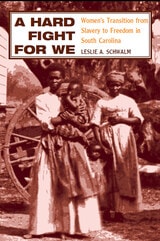
A Hard Fight for We
Women's Transition from Slavery to Freedom in South CarolinaLeslie A. Schwalm
University of Illinois Press, 1997
African-American women fought for their freedom with courage and vigor during and after the Civil War. Leslie Schwalm explores the vital roles of enslaved and formerly enslaved women on the rice plantations of lowcountry South Carolina, both in antebellum plantation life and in the wartime collapse of slavery. From there, she chronicles their efforts as freedwomen to recover from the impact of the war while redefining their lives and labor.
Freedwomen asserted their own ideas of what freedom meant and insisted on important changes in the work they performed both for white employers and in their own homes. As Schwalm shows, these women rejected the most unpleasant or demeaning tasks, guarded the prerogatives they gained under the South's slave economy, and defended their hard-won freedoms against unwanted intervention by Northern whites and the efforts of former owners to restore slavery's social and economic relations during Reconstruction. A bold challenge to entrenched notions, A Hard Fight for We places African American women at the center of the South's transition from a slave society.
A Hercules in the Cradle
War, Money, and the American State, 1783–1867Max M. Edling
University of Chicago Press, 2014
Two and a half centuries after the American Revolution the United States stands as one of the greatest powers on earth and the undoubted leader of the western hemisphere. This stupendous evolution was far from a foregone conclusion at independence. The conquest of the North American continent required violence, suffering, and bloodshed. It also required the creation of a national government strong enough to go to war against, and acquire territory from, its North American rivals.
In A Hercules in the Cradle, Max M. Edling argues that the federal government’s abilities to tax and borrow money, developed in the early years of the republic, were critical to the young nation’s ability to wage war and expand its territory. He traces the growth of this capacity from the time of the founding to the aftermath of the Civil War, including the funding of the War of 1812 and the Mexican War. Edling maintains that the Founding Fathers clearly understood the connection between public finance and power: a well-managed public debt was a key part of every modern state. Creating a debt would always be a delicate and contentious matter in the American context, however, and statesmen of all persuasions tried to pay down the national debt in times of peace.

A Herzen Reader
Alexander Herzen, Kathleen Parthe
Northwestern University Press, 2012
A History in Indigenous Voices
Menominee, Ho-Chunk, Oneida, Stockbridge, and Brothertown Interactions in the Removal EraCarol Cornelius
Wisconsin Historical Society Press, 2023
Treaties made in the 1800s between the United States and the Indigenous nations of what is now Wisconsin have had profound influence on the region’s cultural and political landscape. Yet few people realize that in the early part of that century, the Menominee and Ho-Chunk Nations of Wisconsin signed land treaties with several Indigenous nations from New York State. At the onset of the removal era, these eastern nations, including the Oneida Nation and the Six Nations Confederacy, were under constant pressure from the federal government and land speculators to move to lands around Green Bay and Lake Winnebago.
In this groundbreaking book, Carol A. Cornelius has compiled a careful account of these nation-to-nation treaties, in large part in the words of those Indigenous leaders who served as the voices and representatives of their nations. Drawing on a rich collection of primary sources, Cornelius walks readers through how, why, and for whom these treaties were made and how the federal government’s failure and unwillingness to acknowledge their legitimacy led to the further loss of Indigenous lands. The living documents transcribed here testify to the complexity and sovereignty of Indigenous governance then and now, making this volume a vital resource for historians and an accessible introduction to Indigenous treatymaking in Wisconsin.
Winner of the 2024 Wisconsin Historical Society’s Book of Merit Award
Finalist for the 2023 Foreword INDIES Book of the Year Award for Adult Nonfiction History
A History of Chicago, Volume I
The Beginning of a City 1673-1848Bessie Louise Pierce
University of Chicago Press, 1937
Originally conceived as a centennial history of Chicago, the project became, under the guidance of renowned historian Bessie Louise Pierce, a definitive, three-volume set describing the city’s growth—from its humble frontier beginnings to the horrors of the Great Fire, the construction of some of the world’s first skyscrapers, and the opulence of the 1893 World’s Fair. Pierce and her assistants spent over forty years transforming historical records into an inspiring human story of growth and survival.
Rich with anecdotal evidence and interviews with the men and women who made Chicago great, all three volumes will now be available for the first time in years. A History of Chicago will be essential reading for anyone who wants to know this great city and its place in America.
“With this rescue of its history from the bright, impressionable newspapermen and from the subscription-volumes, Chicago builds another impressive memorial to its coming of age, the closing of its first ‘century of progress.’”—E. D. Branch, New York Times (1937)

A History of Chicago, Volume II
From Town to City 1848-1871Bessie Louise Pierce
University of Chicago Press, 1940
Originally conceived as a centennial history of Chicago, the project became, under the guidance of renowned historian Bessie Louise Pierce, a definitive, three-volume set describing the city’s growth—from its humble frontier beginnings to the horrors of the Great Fire, the construction of some of the world’s first skyscrapers, and the opulence of the 1893 World’s Fair. Pierce and her assistants spent over forty years transforming historical records into an inspiring human story of growth and survival.
Rich with anecdotal evidence and interviews with the men and women who made Chicago great, all three volumes will now be available for the first time in years. A History of Chicago will be essential reading for anyone who wants to know this great city and its place in America.
“With this rescue of its history from the bright, impressionable newspapermen and from the subscription-volumes, Chicago builds another impressive memorial to its coming of age, the closing of its first ‘century of progress.’”—E. D. Branch, New York Times (1937)
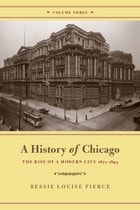
A History of Chicago, Volume III
The Rise of a Modern City, 1871-1893Bessie Louise Pierce
University of Chicago Press, 1957
Originally conceived as a centennial history of Chicago, the project became, under the guidance of renowned historian Bessie Louise Pierce, a definitive, three-volume set describing the city’s growth—from its humble frontier beginnings to the horrors of the Great Fire, the construction of some of the world’s first skyscrapers, and the opulence of the 1893 World’s Fair. Pierce and her assistants spent over forty years transforming historical records into an inspiring human story of growth and survival.
Rich with anecdotal evidence and interviews with the men and women who made Chicago great, all three volumes will now be available for the first time in years. A History of Chicago will be essential reading for anyone who wants to know this great city and its place in America.
“With this rescue of its history from the bright, impressionable newspapermen and from the subscription-volumes, Chicago builds another impressive memorial to its coming of age, the closing of its first ‘century of progress.’”—E. D. Branch, New York Times (1937)

A History of Fort Worth in Black & White
165 Years of African-American LifeRichard F. Selcer
University of North Texas Press, 2015
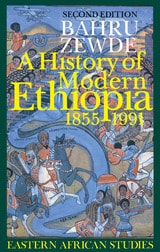
A History of Modern Ethiopia, 1855–1991
Second EditionBahru Zewde
Ohio University Press, 2002
Bounded by Sudan to the west and north, Kenya to the south, Somalia to the southeast, and Eritrea and Djibouti to the northeast, Ethiopia is a pivotal country in the geopolitics of the region. Yet it is important to understand this ancient and often splintered country in its own right.
In A History of Modern Ethiopia, Bahru Zewde, one of Ethiopia’s leading historians, provides a compact and comprehensive history of his country, particularly the last two centuries. Of importance to historians, political scientists, journalists, and Africanists alike, Bahru’s A History of Modern Ethiopia, now with additional material taking it up to the last decade, will be the preeminent overview of present-day Ethiopia.

A History of Modern Singapore, 1819-2005
Constance Turnbull
National University of Singapore Press, 2020

A History of Scandinavian Literature, 1870-1980
Sven Rossel
University of Minnesota Press, 1982
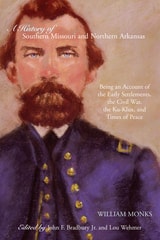
A History of Southern Missouri and Northern Arkansas
Being an Account of the Early Settlements, the Civil War, the Ku-Klux, and Times of PeaceWilliam Monks
University of Arkansas Press, 2006
Originally published in 1907 and now reprinted for the first time, this is the only account published by a Union guerrilla in the border region of the central Ozarks, where political and civil violence lasted from the Civil War well into the 1880s.
There were probably many people who wanted to shoot Billy Monks. He was a Union patriot and skilled guerrilla fighter to some, but others called him a bushwhacker, a murderer, and a thief. His was a very personal combat: he commanded, rallied, arrested, killed, quarreled with, and sued people he knew. His life provides a striking example of the cliché that the war did not end in 1865, but continued fiercely on several fronts for another decade as partisan factions settled old scores and battled for local political control.
This memoir was Monks’s last salvo at his old foes, by turns self-defense and an uncompromising affirmation of the Radical Union cause in the Ozarks. The editors include a new biographical sketch of the author, fill in gaps in his narrative, identify all the people and places to which he refers, and offer a detailed index. Monks himself illustrated the volume with staged photographs of key events re-created by aged comrades who appear to have been just barely able to hoist the muskets they hold as props.

A History of the "Atlantic Monthly," 1857-1909
Yankee Humanism at High Tide and EbbEllery Sedgwick
University of Massachusetts Press, 1994
From its founding in 1857 until its sale by Houghton Mifflin in 1908, the Atlantic Monthly was the most respected literary periodical in the United States. This study focuses on the magazine's first seven editors: James Russell Lowell, James T. Fields, William Dean Howells, Thomas Bailey Aldrich, Horace Scudder, Walter Hines Page, and Bliss Perry. Ellery Sedgwick examines their personalities, editorial policies, and literary tastes, and shows how each balanced his role as advocate of “high” culture with the demands of the literary marketplace and American democracy.
Although the Atlantic was rooted in the Yankee humanism of Boston, Cambridge, and Concord, its scope was national. Sedgwick points out that while the magazine spoke for high culture, its tradition was one of intellectual tolerance and of moderate liberalism on social and political issues. It supported abolition, women's rights, and religious tolerance, and published incisive criticism of unregulated industrial capitalism. The Atlantic also played an important role in the rise of American literary realism, and published early work not only by such authors as James, Jewett, and Howells, but also by Chesnutt, Du Bois, Cahan, and Zitkala-Sa.
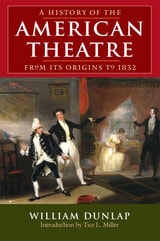
A History of the American Theatre from Its Origins to 1832
William Dunalp, Introduction by Tice L. Miller
University of Illinois Press, 2005
As America passed from a mere venue for English plays into a country with its own nationally regarded playwrights, William Dunlap lived the life of a pioneer on the frontier of the fledgling American theatre, full of adventures, mishaps, and close calls. He adapted and translated plays for the American audience and wrote plays of his own as well, learning how theatres and theatre companies operated from the inside out.
Dunlap's masterpiece, A History of American Theatre was the first of its kind, drawing on the author's own experiences. In it, he describes the development of theatre in New York, Philadelphia, and South Carolina as well as Congress's first attempts at theatrical censorship. Never before previously indexed, this edition also includes a new introduction by Tice L. Miller.
A History of the Osage People
Louis F. Burns
University of Alabama Press, 2004
Four centuries. One people. A legacy that shaped a nation.
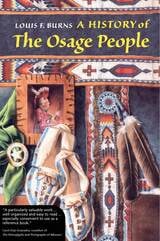
Osage traditional lands are located in mid-continental America encompassed by the present-day states of Arkansas, Missouri, Kansas, and Oklahoma. Major waterways through these lands and the defensible terrain of the Ozark range provided the tribe a distinct advantage in prehistoric and early historic times. A warlike people, the Osage long encroached on neighboring tribal lands, especially those of the Caddo to the southwest. Yet good natural boundaries and centuries of success in warfare afforded the tribe little advantage in attempts to forestall Euro-American westward expansion. Three major routes to the West—the Missouri and Arkansas Rivers and the Continental Trail—crossed Osage land, so conflict with the newcomers was inevitable.
Louis Burns draws on ancestral oral traditions and research in a broad body of literature to tell the story of the Osage people. He writes clearly and concisely, from the Osage perspective. First published in 1989 and for many years out of print, this revised edition is augmented by a new preface and maps. Because of its masterful compilation and synthesis of the known data, A History of the Osage People continues to be the best reference for information on an important American Indian people.
A Hole in the Ground with a Liar at the Top
Fraud and Deceit in the Golden Age of American MiningDan Plazak
University of Utah Press, 2006
A Home in the West
Or, Emigration and Its ConsequencesRockwell, M. Emilia
University of Iowa Press, 2005

A House Divided
Orthodoxy and Schism in Nineteenth-Century Central European JewryJacob Katz
University Press of New England, 2005
A Joint Enterprise
Indian Elites and the Making of British BombayPreeti Chopra
University of Minnesota Press, 2010
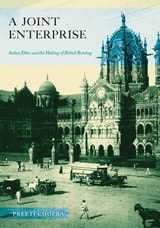
Chopra shows how the European and Indian engineers, architects, and artists worked with each other to design a city—its infrastructure, architecture, public sculpture—that was literally constructed by Indian laborers and craftsmen. Beyond the built environment, Indian philanthropists entered into partnerships with the colonial regime to found and finance institutions for the general public. Too often thought to be the product of the singular vision of a founding colonial regime, British Bombay is revealed by Chopra as an expression of native traditions meshing in complex ways with European ideas of urban planning and progress.
The result, she argues, was the creation of a new shared landscape for Bombay’s citizens that ensured that neither the colonial government nor the native elite could entirely control the city’s future.
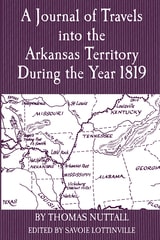
A Journal of Travels into the Arkansas Territory During the Year 1819
Thomas Nuttall
University of Arkansas Press, 1999
This is the famous naturalist Thomas Nuttall's only surviving complete journal of his American scientific explorations. Covering his travels in Arkansas and what is now Oklahoma, it is pivotal to an understanding of the Old Southwest in the early nineteenth century, when the United States was taking inventory of its acquisitions from the Louisiana Purchase.
The account follows Nuttall's route from Philadelphia to Pittsburg, down the Ohio River to its mouth, then down the Mississippi River to the Arkansas Post, and up the Arkansas River with a side trip to the Red River. It is filled with valuable details on the plants, animals, and geology of the region, as well as penetrating observations of the resident native tribes, the military establishment at Fort Smith, the arrival of the first governor of Arkansas Territory, and the beginnings of white settlement.
Originally published in 1980 by the University of Oklahoma Press, this fine edited version of Nuttall's work boasts a valuable introduction, notes, maps, and bibliography by Savoie Lottinville. The editor provided common names for those given in scientific classification and substituted modern genus and species names for the ones used originally by Nuttall. The resulting journal is a delight to read for anyone—historian, researcher, visitor, resident, or enthusiast.
A Journey through Texas; or, a Saddle-Trip on the Southwestern Frontier
By Frederick Law Olmsted
University of Texas Press, 1978
Early in the year 1854 Frederick Law Olmsted, a young New England journalist, crossed the Louisiana border and set off on horseback into the teeth of the Texas winter. In A Journey through Texas he recounts his travels along the Old San Antonio Road through East Texas' piney woods, the dry prairies further west, the chaparral of South Texas, the coastal prairies, and the rich bottomlands around Houston and Galveston.
Olmsted does not romanticize the discomforts of his trip—the monotonous food, crude housing, wet and dry northers, rough companions—yet his book reflects a sense of limitless possibility for this new and open country. The cultured Easterner remembers in relentless detail the squalor and brutality met with in parts of East Texas, but he writes fondly of the civility and cleanliness of the German settlements around New Braunfels.
In his introductory "A Letter to a Southern Friend," omitted in earlier reprints, Olmsted sets forth his views opposing the extension of slavery into the West and promoting free-soil agriculture for frontier states.
The remarkably versatile Olmsted is best known as the founder of landscape architecture in America and for works including Central Park and Stanford University.
In his Foreword, Larry McMurtry calls A Journey through Texas an "intelligent, lively, readable book, packed with keen observation and lightened by a delicate strain of humor."