77 books match the query 'Adventurers & Explorers' and 6 start with a
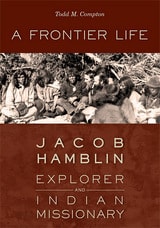
cover of A Frontier Life: Jacob Hamblin, Explorer and Indian Missionary

A Frontier Life

Jacob Hamblin, Explorer and Indian Missionary

Todd M. Compton

University of Utah Press, 2013

Winner of the Juanita Brooks Prize in Mormon Studies
Winner of the Evans Biography Award, the John Whitmer Historical Society Best Biography Award, and the Francis Armstrong Madsen Best Book Award

Frontiersman, colonizer, missionary to the Indians, and explorer of the American West, Jacob Hamblin has long been one of the most enigmatic figures in Mormon history. In this defining biography, Todd Compton examines and disentangles many of the myths and controversies surrounding Hamblin. His Grand Canyon adventures and explorations as a guide alongside John Wesley Powell are well documented, as are his roles as a missionary, cultural liaison, and negotiator to the Indian tribes of southern Utah and Arizona. Hamblin struggled in this latter role, sometimes unable to bridge the gulf between Mormonism and Indian culture. He disavowed violent conflict and ceaselessly sought peaceful resolutions where others resorted to punitive action. He strove above all for mutual understanding in the absence of conversion.

A Frontier Life provides a rich narrative that fleshes out a picture of a sometimes vilified figure, particularly in regard to his connection to the infamous Mountain Meadows Massacre, where Compton provides nuanced discussion clarifying Hamblin’s post-massacre role—he was not present at the massacre, but reported on it to both Brigham Young and military investigators. Compton’s engagement with Mormon historiography and previous Hamblin portrayals will make this work of particular interest to both scholars and students. The casual reader will take pleasure in learning of a true pioneer who lived life at the geographical, cultural, and spiritual boundaries of his era. This dramatic, entertaining biography is a truly significant contribution to Mormon history.
[more]
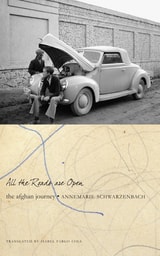
cover of All the Roads Are Open: The Afghan Journey

All the Roads Are Open

The Afghan Journey

Annemarie Schwarzenbach

Seagull Books, 2011
In June 1939 Annemarie Schwarzenbach and fellow writer Ella Maillart set out from Geneva in a Ford, heading for Afghanistan. The first women to travel Afghanistan’s Northern Road, they fled the storm brewing in Europe to seek a place untouched by what they considered to be Western neuroses.
 
The Afghan journey documented in All the Roads Are Open is one of the most important episodes of Schwarzenbach’s turbulent life. Her incisive, lyrical essays offer a unique glimpse of an Afghanistan already touched by the “fateful laws known as progress,” a remote yet “sensitive nerve centre of world politics” caught amid great powers in upheaval. In her writings, Schwarzenbach conjures up the desolate beauty of landscapes both internal and external, reflecting on the longings and loneliness of travel as well as its grace.
 
Maillart’s account of their trip, The Cruel Way, stands as a classic of travel literature, and, now available for the first time in English, Schwarzenbach’s memoir rounds out the story of the adventure.
 
Praise for the German Edition
 “Above all, [Schwarzenbach’s] discovery of the Orient was a personal one. But the author never loses sight of the historical and social context. . . . She shows no trace of colonialist arrogance. In fact, the pieces also reflect the experience of crisis, the loss of confidence which, in that decade, seized the long-arrogant culture of the West.”—Süddeutsche Zeitung
[more]
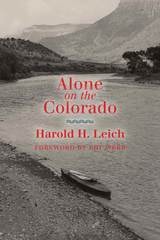
cover of Alone on the Colorado

Alone on the Colorado

Harold H. Leich

University of Utah Press, 2019

Harold Leich set out on a westward journey in the summer of 1933. His travel narrative details his river trip down the Yellowstone River and the first descent by boat of the upper Colorado River from Grand Lake, Colorado, through Cataract Canyon, Utah. He was the first to push through this entire upper section, running rapids that had never known a paddle, rebuild­ing his kayak along the riverbanks, camping rough, and meeting ranchers and railroad workers in these remote regions. Leich’s sudden change of fortune in Cataract Canyon, in the most isolated part of Utah, and his soul searching as he worked his way out of a perilous situ­ation, will speak to anyone who has ventured beyond roads and trails and faced potential tragedy alone.

Alone on the Colorado takes readers on the adventure of running rivers and riding the rails, while painting a unique and optimistic portrait of Depression-era America. 
[more]
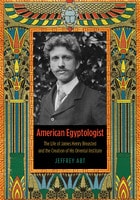
cover of American Egyptologist: The Life of James Henry Breasted and the Creation of His Oriental Institute

American Egyptologist

The Life of James Henry Breasted and the Creation of His Oriental Institute

Jeffrey Abt

University of Chicago Press, 2011

James Henry Breasted (1865–1935) had a career that epitomizes our popular image of the archaeologist. Daring, handsome, and charismatic, he traveled on expeditions to remote and politically unstable corners of the Middle East, helped identify the tomb of King Tut, and was on the cover of Time magazine. But Breasted was more than an Indiana Jones—he was an accomplished scholar, academic entrepreneur, and talented author who brought ancient history to life not just for students but for such notables as Teddy Roosevelt and Sigmund Freud.

In American Egyptologist, Jeffrey Abt weaves together the disparate strands of Breasted’s life, from his small-town origins following the Civil War to his evolution into the father of American Egyptology and the founder of the Oriental Institute in the early years of the University of Chicago. Abt explores the scholarly, philanthropic, diplomatic, and religious contexts of his ideas and projects, providing insight into the origins of America’s most prominent center for Near Eastern archaeology.
 
An illuminating portrait of the nearly forgotten man who demystified ancient Egypt for the general public, American Egyptologist restores James Henry Breasted to the world and puts forward a brilliant case for his place as one of the most important scholars of modern times.
[more]
[more]
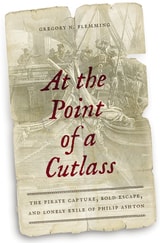
cover of At the Point of a Cutlass: The Pirate Capture, Bold Escape, and Lonely Exile of Philip Ashton

At the Point of a Cutlass

The Pirate Capture, Bold Escape, and Lonely Exile of Philip Ashton

Gregory N. Flemming

University Press of New England, 2015

A handful of sea stories define the American maritime narrative. Stories of whaling, fishing, exploration, naval adventure, and piracy have always captured our imaginations, and the most colorful of these are the tales of piracy. Called America’s real-life Robinson Crusoe, the true story of Philip Ashton—a nineteen-year-old fisherman captured by pirates, impressed as a crewman, subjected to torture and hardship, who eventually escaped and lived as a castaway and scavenger on a deserted island in the Caribbean—was at one time as well known as the tales of Cooper, Hawthorne, and Defoe. Based on a rare copy of Ashton’s 1725 account, Gregory N. Flemming’s vivid portrait recounts this maritime world during the golden age of piracy. Fishing vessels and merchantmen plied the coastal waters and crisscrossed the Atlantic and Caribbean. It was a hard, dangerous life, made more so by both the depredations and temptations of piracy. Chased by the British Royal Navy, blown out of the water or summarily hung when caught, pirate captains such as Edward Low kidnapped, cajoled, beat, and bribed men like Ashton into the rich—but also vile, brutal, and often short—life of the pirate. In the tradition of Nathaniel Philbrick, At the Point of a Cutlass expands on a lost classic narrative of America and the sea, and brings to life a forgotten world of ships and men on both sides of maritime law.
[more]