Results by title
1116 books match the query 'Africa' and 141 start with a

A Bed Called Home
Life In The Migrant Labour Hostels of Cape TownMamphela Ramphele
Ohio University Press, 1993
In this challenging study, Dr. Mamphela Ramphele documents the life of the hostel dwellers of Cape Town, for whom a bed is literally a home for both themselves and their families. Elaborating the concept of space in its many dimensions—not just physical, but political, ideological, social, and economic as well—she emphasizes the constraints exerted on hostel dwellers by the limited spaces they inhabit. At the same time, she argues that within these constraints people have managed to find room for manoeuvre, and in her book explores the emancipatory possibilities of their environment.
The text is illustrated with a number of black-and-white photographs taken by Roger Meintjes in the townships and hostels.
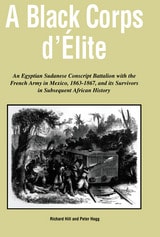
A Black Corps d'Elite
An Egyptian Sudanese Conscript Battalion with the French Army in Mexico, 1863-1867, and its Survivors in Subsequent African HistoryRichard Hill
Michigan State University Press, 1995
For several years, the armies of Napoleon III deployed some 450 Muslim Sudanese slave soldiers in Veracruz, the port of Mexico City. As in the other case of Western hemisphere military slavery (the West India Regiments, a British unit in existence 1795-1815), the Sudanese were imported from Africa in the hopes that they would better survive the tropical diseases that so terribly afflicted European soldiers. In both cases, the Africans did indeed fulfill these expectations. The mixture of cultures embodied by this event has piqued the interest of several historians, so it is by no means unknown. Hill and Hogg provide a particularly thorough account of this exotic interlude, explaining its background, looking in detail at the battle record in Mexico, and figuring out who exactly made up the battalion. Much in their account is odd and interesting, for example, the Sudanese superiority to Austrian troops and their festive nine-day spree in Paris on the emperor's tab. The authors also assess the episode's longer-term impact on the Sudan, showing that the veterans of Mexico, having learnt much from their extended exposure to French military practices, rose quickly in the ranks, then taught these methods to others.
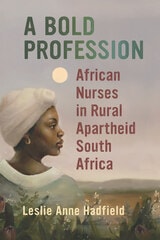
A Bold Profession
African Nurses in Rural Apartheid South AfricaLeslie Anne Hadfield
University of Wisconsin Press, 2023
Leslie Anne Hadfield compellingly demonstrates how these women were able to successfully carve out their own professional space and reshape notions of health and healing in the Eastern Cape. Bringing forth the stories of these nurses in their own voices, A Bold Profession is an homage to their dedication to the well-being of their communities. Hadfield sheds light on the struggles of balancing commitment to career and family lives during an oppressive apartheid. The volume fills an important gap for scholars studying the history of women, nursing, and health care in South Africa, illuminating the humanity of health care workers.
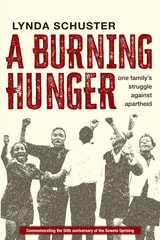
A Burning Hunger
One Family’s Struggle Against ApartheidLynda Schuster
Ohio University Press, 2006
Reissued for the 50th anniversary of the Soweto Uprising, A Burning Hunger reveals how one family’s courage ignited resistance and forever changed South Africa.
If the Mandelas were the generals in the fight for black liberation, the Mashininis were the foot soldiers. Theirs is a story of exile, imprisonment, torture, and loss, but also of dignity, courage, and strength in the face of appalling adversity. Originally published in Great Britain to critical acclaim, A Burning Hunger: One Family’s Struggle Against Apartheid tells a deeply moving human story and is one of the seminal books about the struggle against apartheid.
This family, Joseph and Nomkhitha Mashinini and their thirteen children, became immersed in almost every facet of the liberation struggle—from guerrilla warfare to urban insurrection. Although Joseph and Nomkhitha were peaceful citizens who had never been involved in politics, five of their sons became leaders in the antiapartheid movement. When the students of Soweto rose up in 1976 to protest a new rule making Afrikaans the language of instruction, they were led by charismatic young Tsietsi Mashinini. Scores of students were shot down and hundreds were injured. Tsietsi’s actions on that day set in motion a chain of events that would forever change South Africa, define his family, and transform their lives.
A Burning Hunger shows the human catastrophe that plagued generations of black Africans in the powerful story of one religious and law-abiding Soweto family. Basing her narrative on extensive research and interviews, Lynda Schuster richly portrays this remarkable family and in so doing reveals black South Africa during a time of momentous change.
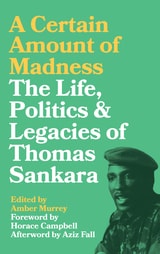
A Certain Amount of Madness
The Life Politics and Legacies of Thomas SankaraAmber Murrey
Pluto Press, 2018
This book looks at Sankara's political philosophies and legacies and their relevance today. Analyses of his synthesis of Pan-Africanism and humanist Marxist politics, as well as his approach to gender, development, ecology and decolonisation offer new insights to Sankarist political philosophies. Critical evaluations of the limitations of the revolution examine his relationship with labour unions and other aspects of his leadership style. His legacy is revealed by looking at contemporary activists, artists and politicians who draw inspiration from Sankarist thought in social movement struggles today, from South Africa to Burkina Faso.
In the 30th anniversary of his assassination, this book illustrates how Sankara's political praxis continues to provide lessons and hope for decolonisation struggles today.
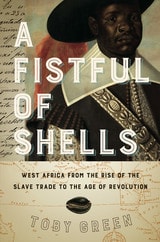
A Fistful of Shells
West Africa from the Rise of the Slave Trade to the Age of RevolutionToby Green
University of Chicago Press, 2019
With A Fistful of Shells, Toby Green transforms our view of West and West-Central Africa by reconstructing the world of these kingdoms, which revolved around trade, diplomacy, complex religious beliefs, and the production of art. Green shows how the slave trade led to economic disparities that caused African kingdoms to lose relative political and economic power. The concentration of money in the hands of Atlantic elites in and outside these kingdoms brought about a revolutionary nineteenth century in Africa, parallel to the upheavals then taking place in Europe and America. Yet political fragmentation following the fall of African aristocracies produced radically different results as European colonization took hold.
Drawing not just on written histories, but on archival research in nine countries, art, oral history, archaeology, and letters, Green lays bare the transformations that have shaped world politics and the global economy since the fifteenth century and paints a new and masterful portrait of West Africa, past and present.
A Heart for the Work
Journeys through an African Medical SchoolClaire L. Wendland
University of Chicago Press, 2010
Burnout is common among doctors in the West, so one might assume that a medical career in Malawi, one of the poorest countries in the world, would place far greater strain on the idealism that drives many doctors. But, as A Heart for the Work makes clear, Malawian medical students learn to confront poverty creatively, experiencing fatigue and frustration but also joy and commitment on their way to becoming physicians. The first ethnography of medical training in the global South, Claire L. Wendland’s book is a moving and perceptive look at medicine in a world where the transnational movement of people and ideas creates both devastation and possibility.
Wendland, a physician anthropologist, conducted extensive interviews and worked in wards, clinics, and operating theaters alongside the student doctors whose stories she relates. From the relative calm of Malawi’s College of Medicine to the turbulence of training at hospitals with gravely ill patients and dramatically inadequate supplies, staff, and technology, Wendland’s work reveals the way these young doctors engage the contradictions of their circumstances, shedding new light on debates about the effects of medical training, the impact of traditional healing, and the purposes of medicine.
A History of Modern Ethiopia, 1855–1991
Second EditionBahru Zewde
Ohio University Press, 2002
Bounded by Sudan to the west and north, Kenya to the south, Somalia to the southeast, and Eritrea and Djibouti to the northeast, Ethiopia is a pivotal country in the geopolitics of the region. Yet it is important to understand this ancient and often splintered country in its own right.
In A History of Modern Ethiopia, Bahru Zewde, one of Ethiopia’s leading historians, provides a compact and comprehensive history of his country, particularly the last two centuries. Of importance to historians, political scientists, journalists, and Africanists alike, Bahru’s A History of Modern Ethiopia, now with additional material taking it up to the last decade, will be the preeminent overview of present-day Ethiopia.
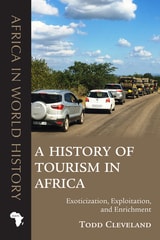
A History of Tourism in Africa
Exoticization, Exploitation, and EnrichmentTodd Cleveland
Ohio University Press, 2021
An engaging social history of foreign tourists’ dreams, the African tourism industry’s efforts to fulfill them, and how both sides affect each other.
Since the nineteenth century, foreign tourists and resident tourism workers in Africa have mutually relied upon notions of exoticism, but from vastly different perspectives. Many of the countless tourists who have traveled to the African continent fail to acknowledge or even realize that skilled African artists in the tourist industry repeatedly manufacture “authentic” experiences in order to fulfill foreigners’ often delusional, or at least uninformed, expectations. These carefully nurtured and controlled performances typically reinforce tourists’ reductive impressions—formed over centuries—of the continent, its peoples, and even its wildlife. In turn, once back in their respective homelands, tourists’ accounts of their travels often substantiate, and thereby reinforce, prevailing stereotypes of “exotic” Africa. Meanwhile, Africans’ staged performances not only impact their own lives, primarily by generating remunerative opportunities, but also subject the continent’s residents to objectification, exoticization, and myriad forms of exploitation.
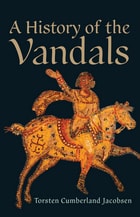
A History of the Vandals
Torsten Cumberland Jacobsen
Westholme Publishing, 2012
The First General History in English of the Germanic People Who Sacked Rome in the Fifth Century AD and Established a Kingdom in North Africa
The fifth century AD was a time of great changes in the Mediterranean world. In the early 400s, the Roman Empire ranged from the lowlands of Scotland to the Upper Nile and from Portugal to the Caucasus. It was almost at its widest extent, and although ruled by two emperors—one in the West and one in the East—it was still a single empire. One hundred years later, Roman control of Western Europe and Western North Africa had been lost. In its place, a number of Germanic kingdoms had been established in these regions, with hundreds of thousands of Germanic and other peoples settling permanently inside the former borders of the Western Roman Empire.
One of the most fascinating of these tribes of late antiquity were the Vandals, who over a period of six hundred years had migrated from the woodland regions of Scandinavia across Europe and ended in the deserts of North Africa. In A History of the Vandals, the first general account in English covering the entire story of the Vandals from their emergence to the end of their kingdom, historian Torsten Cumberland Jacobsen pieces together what we know about the Vandals, sifting fact from fiction. In the middle of the fifth century the Vandals, who professed Arianism, a form of Christianity considered heretical by the Roman emperor, created the first permanent Germanic successor state in the West and were one of the deciding factors in the downfall of the Western Roman Empire. Later Christian historians described their sack of Rome in 455 and their vehement persecution of Catholics in their kingdom, accounts that were sensationalized and gave birth to the term “vandalism.”
In the mid-sixth century, the Vandals and their North African kingdom were the first target of Byzantine Emperor Justinian’s ambitious plan to reconquer the lost territories of the fallen Western Empire. In less than four months, what had been considered one of the strongest Germanic kingdoms had been defeated by a small Roman army led by the general Belisarius. Despite later rebellions, this was the end of the Germanic presence in North Africa, and in many ways the end of the Arian heresy of Christianity. For the Romans it was the incredibly successful start of the reconquest of the lost lands of the Western Empire.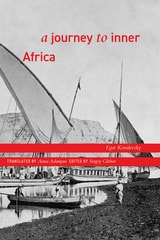
A Journey to Inner Africa
Egor Kovalevsky
Amherst College Press, 2020
Contributions by Egor Kovalevsky, Anna Aslanyan, Sergey Glebov, David Schimmelpenninck, Mukaram Hhana, and Michal Wasiucionek
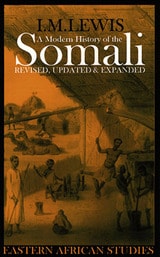
A Modern History of the Somali
Nation and State in the Horn of AfricaI. M. Lewis
Ohio University Press, 2002
This latest edition of A Modern History of the Somali brings I. M. Lewis’s definitive history up to date and shows the amazing continuity of Somali forms of social organization. Lewis’s history portrays the ingeniousness with which the Somali way of life has been adapted to all forms of modernity.
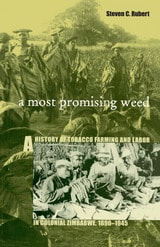
A Most Promising Weed
A History of Tobacco Farming and Labor in Colonial Zimbabwe, 1890–1945Steven C. Rubert
Ohio University Press, 1998
A Motorcycle on Hell Run
Tanzania, Black Power, and the Uncertain Future of Pan-Africanism, 1964–1974Seth M. Markle
Michigan State University Press, 2017
A Mouth Sweeter Than Salt
An African MemoirToyin Falola
University of Michigan Press, 2005
-Ama Ata Aidoo
"A splendid coming-of-age story so full of vivid color and emotion, the words seem to dance off the page. But this is not only Falola's memoir; it is an account of a new nation coming into being and the tensions and negotiations that invariably occur between city and country, tradition and modernity, men and women, rich and poor. A truly beautiful book."
-Robin D. G. Kelley
"More than a personal memoir, this book is a rich minihistory of contemporary Nigeria recorded in delicious detail by a perceptive eyewitness who grew up at the crossroads of many cultures."
-Bernth Lindfors
"The reader is irresistibly drawn into Falola's world. The prose is lucid. There is humor. This work is sweet. Period."
-Ngugi wa Thiongo'o
A Mouth Sweeter Than Salt gathers the stories and reflections of the early years of Toyin Falola, the grand historian of Africa and one of the greatest sons of Ibadan, the notable Yoruba city-state in Nigeria.
Redefining the autobiographical genre altogether, Falola miraculously weaves together personal, historical, and communal stories, along with political and cultural developments in the period immediately preceding and following Nigeria's independence, to give us a unique and enduring picture of the Yoruba in the mid-twentieth century. This is truly a literary memoir, told in language rich with proverbs, poetry, song, and humor.
Falola's memoir is far more than the story of one man's childhood experiences; rather, he presents us with the riches of an entire culture and community-its history, traditions, pleasures, mysteries, household arrangements, forms of power, struggles, and transformations.
A Nervous State
Violence, Remedies, and Reverie in Colonial CongoNancy Rose Hunt
Duke University Press, 2016
A Place That Matters Yet
John Gubbins's MuseumAfrica in the Postcolonial WorldSara Byala
University of Chicago Press, 2013
A Primer for Teaching African History
Ten Design PrinciplesTrevor R. Getz
Duke University Press, 2018
A Primer for Teaching Indian Ocean World History
Ten Design PrinciplesEdward A. Alpers and Thomas F. McDow
Duke University Press, 2024
A Prodigy's Calling
The Early Musical Biography of Cosmas Magaya, Zimbabwean Mbira MasterPaul F. Berliner
University of Chicago Press, 2024
Ethnomusicologist Paul F. Berliner has been studying Zimbabwean mbira for more than fifty years. When he first arrived in what was then Rhodesia after the nation declared independence from the United Kingdom, he met Cosmas Magaya, a mbira player who would become his teacher and lifelong collaborator. A Prodigy’s Calling chronicles the early years of Magaya’s life, documenting the master mbira player’s journey from child prodigy to established expert. As a child, Magaya was immersed in mbira music through his father’s work as a healer and spirit medium. As Magaya grew, so too did his world; his performances extended beyond the family compound as his skill and knowledge increased, bringing him into contact with a society fraught with decolonial conflict.
Following Magaya’s childhood, readers will learn how his upbringing guided his journey through the community’s social networks and how his early sensibilities, proclivities, and talents shaped his development. At the same time, his deepening engagement with music and the ancestors was affected by overlapping tensions between Shona cosmology and Christian ideology, rural and urban lifestyles, and the escalating African nationalist struggle and the white supremacist state. While Magaya’s story reflects profound social changes in the nation, it is also a story of musical apprenticeship. Readers following Magaya’s discovery of ever finer details in the music’s richly layered patterns will enhance their ability to hear mbira music’s forms, variations, and sonic qualities. Linocut illustrations by South African artist Lucas Bambo bring the narrative to life, and Berliner’s spirited storytelling is accompanied by QR codes that take readers directly to recordings of music as Magaya learns it. Appendices for musicians interested in learning or improving their mbira playing complement the story of Magaya’s early life. Inviting the reader into the very tradition it recounts, the book offers intimate insights into the relationships among music, Shona cosmology, and colonial politics in everyday life.
A Prophet of the People
Isaiah Shembe and the Making of a South African ChurchLauren V. Jarvis
Michigan State University Press, 2024
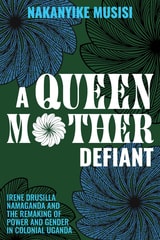
A Queen Mother Defiant
Irene Drusilla Namaganda and the Remaking of Power and Gender in Colonial UgandaNakanyike B. Musisi
University of Wisconsin Press, 2026
In 1941, Irene Drusilla Namaganda, the reigning queen mother of British-occupied Buganda, shocked the kingdom when she revealed she was six months pregnant—only fifteen months after the king’s death. The father of her child, a schoolteacher nearly two decades her junior, quickly became the focal point for a scandal that engulfed the monarchy. The ensuing political crisis led to Namaganda’s removal from the office of queen mother (Nnamasole) and her companion’s exile, spurring her own departure.
Drawing from extensive archival research and in-depth oral interviews, this long-awaited biography analyzes Namaganda’s roles as wife, mother, widow, and prominent yet controversial cultural-political icon. Nakanyike Musisi moves beyond the scandal to explore how the monarch’s character and personal choices defied expectations of royal women and redefined motherhood, power, and tradition. She challenges dominant narratives in African political history and gender studies to show how African women navigated competing systems of authority and in doing so reshaped both the institution of monarchy and broader cultural and historical landscapes.
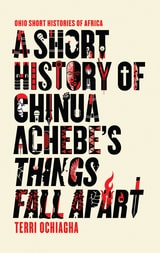
A Short History of Chinua Achebe’s Things Fall Apart
Terri Ochiagha
Ohio University Press, 2018
The publication of Chinua Achebe’s Things Fall Apart (1958) is heralded as the inaugural moment of modern African fiction, and the book remains the most widely read African novel of all time. Translated into dozens of languages, it has sold more than twelve million copies and has become a canonical reading in schools the world over. While Things Fall Apart is neither the first African novel to be published in the West nor necessarily the most critically valued, its iconic status has surpassed even that of its author.
Until now—in the sixtieth anniversary year of its publication—there has not been an updated history that moves beyond the book’s commonly discussed contexts and themes. In the accessible and concise A Short History of Chinua Achebe’s Things Fall Apart, Terri Ochiagha provides that history, asking new questions and bringing to wider attention unfamiliar but crucial elements of the Things Fall Apart story. These include new insights into questions of canonicity and into literary, historiographical, and precolonial aesthetic influences. She also assesses adaptations and appropriations not just in films but in theater, hip-hop, and popular literary genres such as Onitsha Market Literature.
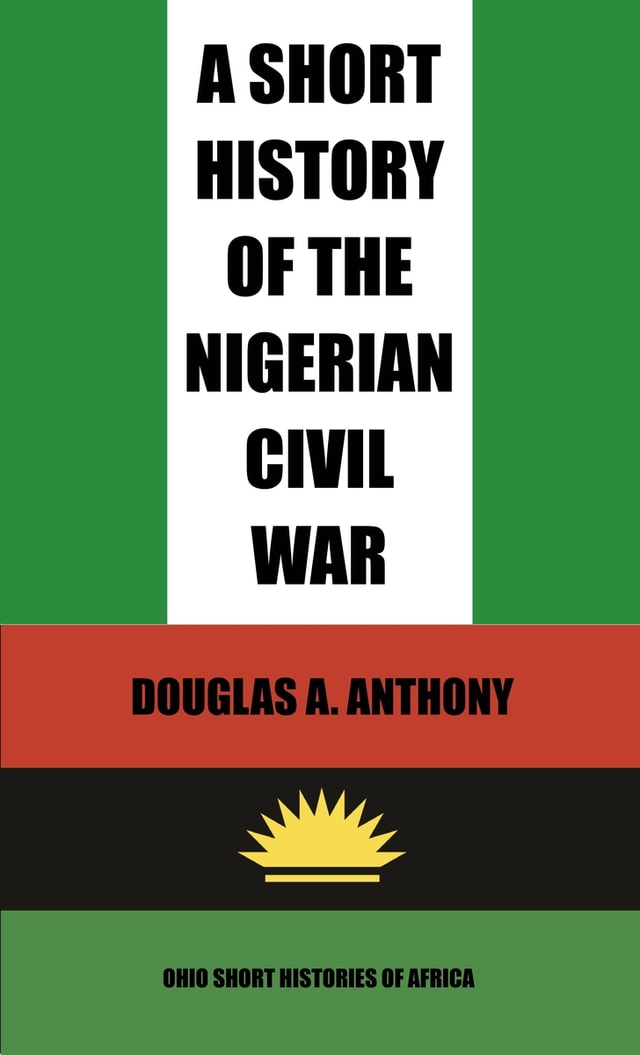
A Short History of the Nigerian Civil War
Douglas A. Anthony
Ohio University Press, 2027
A Short History of the Nigerian Civil War is an accessible and balanced scholarly account of the 1967–70 conflict (also remembered as the Nigeria-Biafra War or simply the Biafran War). More than a seminal event in the history of Africa’s most populous country, the war marked a tragic milestone in the narrative of African decolonization. It also helped shape both international humanitarianism and media coverage of conflicts in developing countries, and offers an interesting, counterintuitive footnote to Cold War history. Interest in the war remains high, though recent book-length treatments have gravitated to memoir and specialized accounts. This book offers readers a concise, evenhanded introduction to the war’s causes, major events, and consequences, presented with a balance of narrative and analysis.
Author Douglas A. Anthony begins by explaining the influence of British imperialism on the country’s historical trajectory. Colonial geography and governance presented the leaders of newly independent Nigeria a template for ongoing polarization and suspicion, and when a military coup toppled the country’s short-lived First Republic (1960–66), existing geopolitical, economic, and ethnic tensions reached unprecedented levels. A second coup, accompanied by lethal coordinated attacks by civilians and soldiers on members of the Igbo ethnic group, triggered the return of most Igbos to their home region in southeastern Nigeria. Here, in May 1967, they declared independence as the Republic of Biafra, led by Chukwuemeka Odumegwu Ojukwu.
The war that followed, which Nigerian military leader Yakubu Gowon had promised would be a brief police action, lasted thirty months. During that time, Biafra, blockaded and diplomatically isolated, confronted larger and better-supplied Nigerian forces, an economic embargo, and escalating starvation. What the Nigerian government described as a war of unification was for most Biafrans a defensive war against a genocidal threat. By most accounts one million people died, the vast majority Biafran civilians.
With the war’s end in 1970, Biafra’s people and greatly diminished territory rejoined Nigeria. But behind formal declarations of “No victor, no vanquished” lingered the war’s enormous human, economic, and political consequences, felt most acutely by Igbos, many of whom continue to contend with a legacy of marginalization.
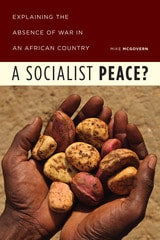
A Socialist Peace?
Explaining the Absence of War in an African CountryMike McGovern
University of Chicago Press, 2017
Guinea is rich in resources, but its people are some of the poorest in the world. Its political situation is polarized by fiercely competitive ethnic groups. Weapons flow freely through its lands and across its borders. And, finally, it is still recovering from the oppressive regime of Sékou Touré. McGovern argues that while Touré’s reign was hardly peaceful, it was successful—often through highly coercive and violent measures—at establishing a set of durable national dispositions, which have kept the nation at peace. Exploring the ambivalences of contemporary Guineans toward the afterlife of Touré’s reign as well as their abiding sense of socialist solidarity, McGovern sketches the paradoxes that undergird political stability.

A Will for the Machine
Computerization, Automation, and the Arts in South AfricaMark Sanders
University of Chicago Press, 2026
There are many books about the history and discourses of computerization in the United States but relatively little about these phenomena anywhere in the Global South. In A Will for the Machine, Mark Sanders outlines South Africa’s entry into the computer age in the 1960s and ’70s and explains how it coincided with the high point of apartheid. South Africa’s government viewed automation and computerization as one way of barring Black Africans from skilled work and reserving it for whites. Sanders unpacks this peculiar history, relates it to early twentieth-century struggles around mechanization in mining and telephony in South Africa, and analyzes responses to it by the writers Miriam Tlali and J. M. Coetzee, the artist William Kentridge, and Handspring Puppet Company. Showing how the arts realize ideas about the ethics and politics of automation, Sanders contributes to debates about locally divergent understandings of computer technology and human-computer interaction.
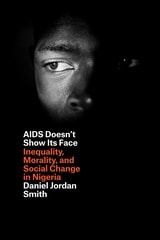
AIDS Doesn't Show Its Face
Inequality, Morality, and Social Change in NigeriaDaniel Jordan Smith
University of Chicago Press, 2014
Drawing on twenty years of fieldwork in Nigeria, Smith tells a story of dramatic social changes, ones implicated in the same inequalities that also factor into local perceptions about AIDS—inequalities of gender, generation, and social class. Nigerians, he shows, view both social inequality and the presence of AIDS in moral terms, as kinds of ethical failure. Mixing ethnographies that describe everyday life with pointed analyses of public health interventions, he demonstrates just how powerful these paired anxieties—medical and social—are, and how the world might better alleviate them through a more sensitive understanding of their relationship.
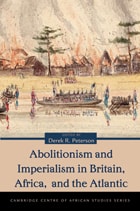
Abolitionism and Imperialism in Britain, Africa, and the Atlantic
Derek R. Peterson
Ohio University Press, 2010
The abolition of the slave trade is normally understood to be the singular achievement of eighteenth-century British liberalism. Abolitionism and Imperialism in Britain, Africa, and the Atlantic expands both the temporal and the geographic framework in which the history of abolitionism is conceived. Abolitionism was a theater in which a variety of actors—slaves, African rulers, Caribbean planters, working-class radicals, British evangelicals, African political entrepreneurs—played a part. The Atlantic was an echo chamber, in which abolitionist symbols, ideas, and evidence were generated from a variety of vantage points. These essays highlight the range of political and moral projects in which the advocates of abolitionism were engaged, and in so doing it joins together geographies that are normally studied in isolation.
Where empires are often understood to involve the government of one people over another, Abolitionism and Imperialism shows that British values were formed, debated, and remade in the space of empire. Africans were not simply objects of British liberals’ benevolence. They played an active role in shaping, and extending, the values that Britain now regards as part of its national character. This book is therefore a contribution to the larger scholarship about the nature of modern empires.
Contributors: Christopher Leslie Brown, Seymour Drescher, Jonathon Glassman, Boyd Hilton, Robin Law, Phillip D. Morgan, Derek R. Peterson, John K. Thornton
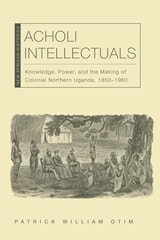
Acholi Intellectuals
Knowledge, Power, and the Making of Colonial Northern Uganda, 1850–1960Patrick William Otim
Ohio University Press, 2024

Adventures in Africa
Gianni Celati
University of Chicago Press, 2000
In 1997 the celebrated Italian novelist and essayist Gianni Celati accompanied his friend, filmmaker Jean Talon, on a journey to West Africa which took them from Mali to Senegal and Mauritania. The two had been hoping to research a documentary about Dogon priests, but frustrated by red tape, their voyage became instead a touristic adventure. The vulnerable, prickly, insightful Celati kept notebooks of the journey, now translated by Adria Bernardi as Adventures in Africa. Celati is the privileged traveler, overwhelmed by customs he doesn't understand, always at the mercy of others who are trying to sell him something he doesn't want to buy, and aware of himself as the Tourist who is always a little disoriented and at the center of the continual misadventures that are at the heart of travel.
Celati's book is both a travelogue in the European tradition and a trenchant meditation on what it means to be a tourist. Celati learns to surrender to the chaos of West Africa and in the process produces a work of touching and comic descriptions, in the lucid and ironic prose that is his hallmark. Hailed as one of the best travelogues on Africa ever written and awarded the first Zerilli-Marimó prize, Adventures in Africa is a modest yet profound account of the utter discombobulation of travel.
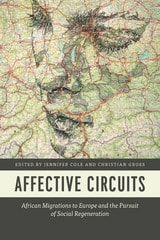
Affective Circuits
African Migrations to Europe and the Pursuit of Social RegenerationEdited by Jennifer Cole and Christian Groes
University of Chicago Press, 2016
The contributors point to the intersecting streams of goods, people, ideas, and money as they circulate between African migrants and their kin who remain back home. They also show the complex ways that emotions become entangled in these exchanges. Examining how these circuits operate in domains of social life ranging from child fosterage to binational marriages, from coming-of-age to healing and religious rituals, the book also registers the tremendous impact of state officials, laws, and policies on migrant experience. Together these essays paint an especially vivid portrait of new forms of kinship at a time of both intense mobility and ever-tightening borders.
Affective Justice
The International Criminal Court and the Pan-Africanist PushbackKamari Maxine Clarke
Duke University Press, 2019
Affective Trajectories
Religion and Emotion in African CityscapesHansjörg Dilger, Astrid Bochow, Marian Burchardt, and Matthew Wilhelm-Solomon, editors
Duke University Press, 2019
Contributors. Astrid Bochow, Marian Burchardt, Rafael Cazarin, Hansjörg Dilger, Alessandro Gusman, Murtala Ibrahim, Peter Lambertz, Isabelle L. Lange, Isabel Mukonyora, Benedikt Pontzen, Hanspeter Reihling, Matthew Wilhelm-Solomon
Africa & Africans in Antiquity
Edwin M. Yamauchi
Michigan State University Press, 2001
Africa and Africans in Antiquity assesses recent historical research and archaeology under way in Egypt, North Africa, the Sudan, and the Horn of Africa. Whereas many European and American scholars of earlier generations believed that Egyptian contacts with Africa to the south were not culturally significant, research contained in this important collection rejects such notions. At the same time, the volume takes issue with Afrocentric scholars who argue that most Egyptians were 'black' and that blacks are the rightful heirs to Egypt's past grandeur. These ten thought-provoking essays demonstrate that this large region was an ethnic and cultural mosaic in antiquity, a place where Phoenicians, Berbers, Greeks, as well as Egyptians and Nubians interacted.
Africa Every Day
Fun, Leisure, and Expressive Culture on the ContinentOluwakemi M. Balogun
Ohio University Press, 2019
Africa South
Harm J. de Blij
Northwestern University Press, 1962
Africa Writes Back
The African Writers Series and the Launch of African LiteratureJames Currey
Ohio University Press, 2008
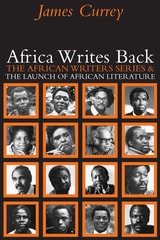
June 17, 2008, is the fiftieth anniversary of the publication of Chinua Achebe’s Things Fall Apart by Heinemann. This publication provided the impetus for the foundation of the African Writers Series in 1962 with Chinua Achebe as the editorial adviser.
Africa Writes Back: The African Writers Series and the Launch of African Literature captures the energy of literary publishing in a new and undefined field. Portraits of the leading characters and the many consultants and readers providing reports and advice to new and established writers make Africa Writes Back a stand-out book. James Currey’s voice and insights are an added bonus.
CONTENTS
Publishing and selling the African Writers Series
The African Writers Series Portfolio & George Hallett’s covers
Main dates for the African Writers Series
INTRODUCTION: The establishment of African Literature
Publishing Chinua Achebe
1. WRITERS FROM WEST AFRICA
Nigeria: The country where so much started
Negritude from Senegal to Cameroun
Magic & realism from Ghana, The Gambia & Sierra Leone
2. WRITERS FROM EASTERN AFRICA
Towards the oral & the popular in Kenya, Uganda & Tanzania
Publishing Ngugi
3. WRITERS FROM THE HORN & NORTH-EASTERN AFRICA
Emperors in Ethiopia
Publishing Nuruddin Farah
Arab authors in Egypt & Sudan
4. WRITERS FROM SOUTH AFRICA
Resistance in South Africa
Publishing Alex la Guma
Publishing Dennis Brutus
Publishing Bessie Head
Publishing Masizi Kunene
5. WRITERS FROM SOUTHERN AFRICAN
Guns & Guerrillas in Mozambique &Angola
Zambia Shall be Free
Death & detention in Malawi
The struggle to become Zimbabwe
Publishing Dambudzo Marechera
CONCLUSION: Is there still a role for the African Writers Series?
Africa and the Disciplines
The Contributions of Research in Africa to the Social Sciences and HumanitiesEdited by Robert H. Bates, V. Y. Mudimbe, and Jean F. O'Barr
University of Chicago Press, 1993
African Studies, contrary to some accounts, is not a separate continent in the world of American higher education. Its intellectual borders touch those of economics, literature, history, philosophy, and art; its history is the story of the world, both ancient and modern. This is the clear conclusion of Africa and the Disciplines, a book that addresses the question: Why should Africa be studied in the American university?
This question was put to distinguished scholars in the social sciences and humanities, prominent Africanists who are also leaders in their various disciplines. Their responses make a strong and enlightening case for the importance of research on Africa to the academy.
Paul Collier's essay, for example, shows how studies of African economies have clarified our understanding of the small open economies, and contributed to the theory of repressed inflation and to a number of areas in microeconomics as well. Art historian Suzanne Blier uses the terms and concepts that her discipline has applied to Africa to analyze the habits of mind and social practice of her own field. Christopher L. Miller describes the confounding and enriching impact of Africa on European and American literary theory. Political scientist Richard Sklar outlines Africa's contributions to the study of political modernization, pluralism, and rational choice. These essays, together with others from scholars in history, anthropology, philosophy, and comparative literature, attest to the influence of African research throughout the curriculum.
For many, knowledge from Africa seems distant and exotic. These powerful essays suggest the contrary: that such knowledge has shaped the way in which scholars in various disciplines understand their worlds. Eloquent testimony to Africa's necessary place in the mainstream of American education, this book should alter the academy's understanding of the significance of African research, its definition of core and periphery in human knowledge.
"These essays are at once exceptionally thoughtful and remarkably comprehensive. Not only do they offer an unusually interesting overview of African studies; they are also striking for the depth and freshness of their insights. This is the sort of volume from which both seasoned regional experts and students stand to learn an enormous amount."—John Comaroff, University of Chicago
"These essays provide an important perspective on the evolution of African studies and offer insights into what Africa can mean for the different humanistic and social science disciplines. Many show in ingenious and subtle ways the enormous potential that the study of Africa has for confounding the main tenets of established fields. One could only hope that the strictures expressed here would be taken to heart in the scholarly world."—Robert L. Tignor, Princeton University
Africa and the Olympics
Winning Away from the PodiumTodd Cleveland
Ohio University Press, 2024
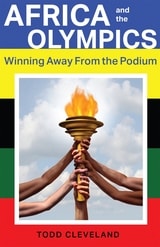
At the 2020 Tokyo Olympic Games (held in 2021 due to COVID-19), the fifty-four African countries that participated finished the tournament with the lowest medal haul for any continent, continuing a historic trend since the inception of the modern Games in 1896. Reflecting this relative lack of sporting success, African Olympians—aside from elite Kenyan distance runners—rarely register in the minds of even the most dedicated followers of the Games. Yet for all their seeming invisibility on the Olympic landscape, African states, athletes, and officials have long been “winning” at the Olympics, albeit often far removed from the medal podium. Africa and the Olympics shows how African actors have achieved these nonsporting victories and examines how they have used the Olympics to engage in transformative political activity, realize social mobility, and enhance the quality of life for individuals, communities, and entire nations. In tracing these historical and contemporary processes and the motivations that underlie them, the book complicates reductive notions of the Olympics as solely a sporting competition and instead considers Africa’s engagement with the Games as a series of opportunities to improve personal, communal, ethnic, national, and even continental plights. If few sports fans have thought extensively about Africa and the Olympics, scholars have been only slightly more engaged with the subject. Most of this scholarship focuses on the International Olympic Committee’s ban of apartheid South Africa from 1964 to 1988. Other works that consider the Olympics more broadly tend to deal with Africa only summarily, further reducing its already low profile. As a result, the academic literature resembles a patchwork of circumscribed studies dispersed in a range of fields and disciplines. Not since the publication of Africa at the Olympics almost fifty years ago has a single volume featured a comprehensive history of the continent and the Games. This book both updates and expands previous work and, most importantly, reframes the analytical engagement with this topic.
Africa and the West
Philip D. Curtin
University of Wisconsin Press, 1974
“This book offers some exciting examples of the insights to be gained from studies of the intellectual responses of Africans to the West. In six case studies, anthropologists, historians, and a literary critic study the impact of the West on African patterns of thought.”—Library Journal
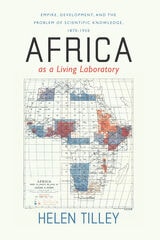
Africa as a Living Laboratory
Empire, Development, and the Problem of Scientific Knowledge, 1870-1950Helen Tilley
University of Chicago Press, 2011
Tropical Africa was one of the last regions of the world to experience formal European colonialism, a process that coincided with the advent of a range of new scientific specialties and research methods. Africa as a Living Laboratory is a far-reaching study of the thorny relationship between imperialism and the role of scientific expertise—environmental, medical, racial, and anthropological—in the colonization of British Africa.
A key source for Helen Tilley’s analysis is the African Research Survey, a project undertaken in the 1930s to explore how modern science was being applied to African problems. This project both embraced and recommended an interdisciplinary approach to research on Africa that, Tilley argues, underscored the heterogeneity of African environments and the interrelations among the problems being studied. While the aim of British colonialists was unquestionably to transform and modernize Africa, their efforts, Tilley contends, were often unexpectedly subverted by scientific concerns with the local and vernacular. Meticulously researched and gracefully argued, Africa as a Living Laboratory transforms our understanding of imperial history, colonial development, and the role science played in both.
Africa in America
Slave Acculturation and Resistance in the American South and the British Caribbean, 1736-1831Michael Mullin
University of Illinois Press, 1992
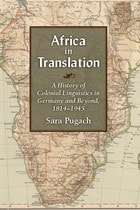
Africa in Translation
A History of Colonial Linguistics in Germany and Beyond, 1814-1945Sara Pugach
University of Michigan Press, 2022
The study of African languages in Germany, or Afrikanistik, originated among Protestant missionaries in the early nineteenth century and was incorporated into German universities after Germany entered the “Scramble for Africa” and became a colonial power in the 1880s. Despite its long history, few know about the German literature on African languages or the prominence of Germans in the discipline of African philology. In Africa in Translation: A History of Colonial Linguistics in Germany and Beyond, 1814–1945, Sara Pugach works to fill this gap, arguing that Afrikanistik was essential to the construction of racialist knowledge in Germany. While in other countries biological explanations of African difference were central to African studies, the German approach was essentially linguistic, linking language to culture and national identity. Pugach traces this linguistic focus back to the missionaries’ belief that conversion could not occur unless the “Word” was allowed to touch a person’s heart in his or her native language, as well as to the connection between German missionaries living in Africa and armchair linguists in places like Berlin and Hamburg. Over the years, this resulted in Afrikanistik scholars using language and culture rather than biology to categorize African ethnic and racial groups. Africa in Translation follows the history of Afrikanistik from its roots in the missionaries’ practical linguistic concerns to its development as an academic subject in both Germany and South Africa throughout the nineteenth and twentieth centuries.
Jacket image: Perthes, Justus. Mittel und Süd-Afrika. Map. Courtesy of the University of Michigan's Stephen S. Clark Library map collection.
Africa in the Indian Imagination
Race and the Politics of Postcolonial CitationAntoinette Burton
Duke University Press, 2016
Africa in the World’s Time
Rewriting the Past Beyond Colonial NarrativesMamadou Diouf
Seagull Books, 2025
Mamadou Diouf unearths the intellectual and cultural traditions that have long defined Africa, proving that history was never just written about Africa, but also by it.
For too long, Africa has been framed as an afterthought in world history—a continent written into the margins of time. In Africa in the World’s Time, renowned historian Mamadou Diouf dismantles these colonial narratives and reclaims Africa’s rightful place at the center of global historical thought. Moving beyond Western frameworks, Diouf examines the continent’s intellectual traditions and demonstrates how African artists and historians have shaped and reshaped how we understand the past.
Tracing central debates from the independence era to today, Diouf examines figures like Cheikh Anta Diop and Samir Amin, as well as the vital role of literature and film in contesting predominant histories. He challenges the linear, Eurocentric timelines that have long governed historical discourse, and puts forward a vision of Africa as a force that has always been influencing and reimagining the world.
Africa's Last Colonial Currency
The CFA Franc StoryFanny Pigeaud
Pluto Press, 2021

Africa's Last Colonial Currency
The CFA Franc StoryFanny Pigeaud
Pluto Press, 2021
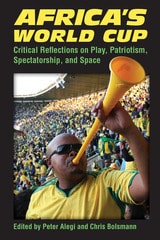
Africa's World Cup
Critical Reflections on Play, Patriotism, Spectatorship, and SpaceEdited by Peter Alegi and Chris Bolsmann
University of Michigan Press, 2013
Africa’s World Cup: Critical Reflections on Play, Patriotism, Spectatorship, and Spacefocuses on a remarkable month in the modern history of Africa and in the global history of football. Peter Alegi and Chris Bolsmann are well-known experts on South African football, and they have assembled an impressive team of local and international journalists, academics, and football experts to reflect on the 2010 World Cup and its broader significance, its meanings, complexities, and contradictions.
The World Cup’s sounds, sights, and aesthetics are explored, along with questions of patriotism, nationalism, and spectatorship in Africa and around the world. Experts on urban design and communities write on how the presence of the World Cup worked to refashion urban spaces and negotiate the local struggles in the hosting cities. The volume is richly illustrated by authors’ photographs, and the essays in this volume feature chronicles of match day experiences; travelogues; ethnographies of fan cultures; analyses of print, broadcast, and electronic media coverage of the tournament; reflections on the World Cup’s private and public spaces; football exhibits in South African museums; and critiques of the World Cup’s processes of inclusion and exclusion, as well as its political and economic legacies.
The volume concludes with a forum on the World Cup, including Thabo Dladla, Director of Soccer at the University of KwaZulu-Natal, Mohlomi Kekeletso Maubane, a well-known Soweto-based writer and a soccer researcher, and Rodney Reiners, former professional footballer and current chief soccer writer for the Cape Argus newspaper in Cape Town. This collection will appeal to students, scholars, journalists, and fans.
Cover illustration: South African fan blowing his vuvuzela at South Africa vs. France, Free State Stadium, Bloemfontein, June 22, 2010. Photo by Chris Bolsmann.
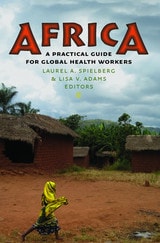
Africa
A Practical Guide for Global Health WorkersEdited by Laurel A. Spielberg and Lisa V. Adams
Dartmouth College Press, 2011
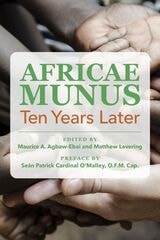
Africae Munus
Ten Years LaterAgbaw-ebai
St. Augustine's Press, 2022
Building on the vitality and enthusiasm of the Church in Africa, it is important to lift their faith through scholarly research and academic reflections. We cannot fully appreciate the dedication, commitment and perseverance of the Catholic community throughout the African continent if we do not know the truth of their sufferings and persecution and understand their resilience in the light of faith. This collection, drawn from the halls of academia, provides an important contribution to the understanding and advancement of Catholic Africa, following the insights and enlightenment of Pope Emeritus Benedict. It is my hope that these essays will enrich your understanding and experience of the Catholic faith.
— From the Preface by Seán Patrick Cardinal O’Malley