Results by title
240 books match the query 'Agriculture & Food Policy' and 19 start with a
A Long, Deep Furrow
Three Centuries of Farming in New EnglandHoward S. Russell
Brandeis University Press, 1982
A Most Promising Weed
A History of Tobacco Farming and Labor in Colonial Zimbabwe, 1890–1945Steven C. Rubert
Ohio University Press, 1998

A Perfect Pint's Beer Guide to the Heartland
Michael Agnew
University of Illinois Press, 2014
- Agnew's exclusive choices on which beers to try at each location
- Entries on every brewery's history and philosophy
- Information on tours, tasting rooms and attached pubs, and dining options and other amenities
- A survey of each brewery's brands, including its flagship beer plus seasonal brews and special releases
- Brewery equipment and capacity
- Nearby attractions
In addition, Agnew sets the stage with a history of Midwestern beer spanning the origins of the immigrant brewers who arrived in the 1800s to the homebrewers-made-good who have built a new kind of brewing culture founded on creativity, dedication to quality, and attention to customer feedback.
Informed and unique, A Perfect Pint's Beer Guide to the Heartland is the essential companion for beer aficionados and curious others determined to drink the best the Midwest has to offer.
Includes more than 150 full color images, including the region's most distinctive beer labels, trademarks, and company logos.
A Rich and Tantalizing Brew
A History of How Coffee Connected the WorldJeanette M. Fregulia
University of Arkansas Press, 2019
The history of coffee is much more than the tale of one luxury good—it is a lens through which to consider various strands of world history, from food and foodways to religion and economics and sociocultural dynamics.
A Rich and Tantalizing Brew traces the history of coffee from its cultivation and brewing first as a private pleasure in the highlands of Ethiopia and Yemen through its emergence as a sought-after public commodity served in coffeehouses first in the Muslim world, and then traveling across the Mediterranean to Italy, to other parts of Europe, and finally to India and the Americas. At each of these stops the brew gathered ardent aficionados and vocal critics, all the while reshaping patterns of socialization.
Taking its conversational tone from the chats often held over a steaming cup, A Rich and Tantalizing Brew offers a critical and entertaining look at how this bitter beverage, with a little help from the tastes that traveled with it—chocolate, tea, and sugar—has connected people to each other both within and outside of their typical circles, inspiring a new context for sharing news, conducting business affairs, and even plotting revolution.
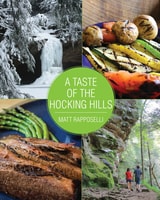
A Taste of the Hocking Hills
Matt Rapposelli
Ohio University Press, 2018
When chef Matt Rapposelli left the National Park Service to attend culinary school in New England, he was moving from one passion to another. What later brought those passions together was a job in the Hocking Hills, southeast Ohio’s stunning, wild landscape, where the restaurants he helmed—at Hocking Hills Lodge and Lake Hope Lodge—gained a resounding reputation for classic dishes that, driven by the regional vernacular and the natural seasonal abundance of Appalachia, were impeccably fresh and flavorful.
A Taste of the Hocking Hills intermingles delicious recipes with striking photographs of a region to which thousands trek each year. Rapposelli presents dishes by the season, noting the specialties that appear on his menus in a given time of year. Whether enjoying a winter evening or a summer morning, cooks will be able to bring a bit of the Hocking Hills home.

A Tortilla Is Like Life
Food and Culture in the San Luis Valley of ColoradoBy Carole M. Counihan
University of Texas Press, 2009
Located in the southern San Luis Valley of Colorado, the remote and relatively unknown town of Antonito is home to an overwhelmingly Hispanic population struggling not only to exist in an economically depressed and politically marginalized area, but also to preserve their culture and their lifeways. Between 1996 and 2006, anthropologist Carole Counihan collected food-centered life histories from nineteen Mexicanas—Hispanic American women—who had long-standing roots in the Upper Rio Grande region. The interviews in this groundbreaking study focused on southern Colorado Hispanic foodways—beliefs and behaviors surrounding food production, distribution, preparation, and consumption.
In this book, Counihan features extensive excerpts from these interviews to give voice to the women of Antonito and highlight their perspectives. Three lines of inquiry are framed: feminist ethnography, Latino cultural citizenship, and Chicano environmentalism. Counihan documents how Antonito's Mexicanas establish a sense of place and belonging through their knowledge of land and water and use this knowledge to sustain their families and communities. Women play an important role by gardening, canning, and drying vegetables; earning money to buy food; cooking; and feeding family, friends, and neighbors on ordinary and festive occasions. They use food to solder or break relationships and to express contrasting feelings of harmony and generosity, or enmity and envy. The interviews in this book reveal that these Mexicanas are resourceful providers whose food work contributes to cultural survival.
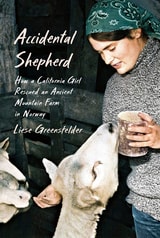
Accidental Shepherd
How a California Girl Rescued an Ancient Mountain Farm in NorwayLiese Greensfelder
University of Minnesota Press, 2024
A summer job turns serious when a young woman takes the reins on a remote farm—and learns far more than how to herd sheep
In May 1972, Liese Greensfelder arrived in the small Norwegian town of Øystese to startling news: Johannes, the farmer who hired her for the summer, had just been hospitalized after a stroke. Could she please watch over his place for a month or so, until he got back on his feet? Twenty years old and with no farming experience, Liese was dropped off the next day at a centuries-old mountain farm at the end of a dirt road high above the magnificent Hardanger Fjord—with 115 sheep, two cows, one calf, a draft horse, and a Norwegian herding dog to care for.
Armed with a command of Danish that enabled rudimentary communication, Liese began learning from neighbors who spoke an ancient Norwegian dialect—how to feed the animals, milk by hand, and supervise her first lambing. The farm was run in the old way: horses and wagons instead of tractors, haymaking in the rain, and hikes into the mountains to check on the sheep that ranged free over those wild peaks all summer. And, she was quick to discover, the farm was on the brink of ruin, for Johannes was a heartless man who had abused his animals and neglected his buildings and equipment for decades.
Although her employer had alienated his neighbors, they immediately welcomed the American newcomer and offered her help. As “a month or so” stretched to a year and Liese struggled for the survival of the farm, she joined this tight-knit enclave of farmers, learning their stories and history, adopting their dialect, and growing intimately familiar with the grass-based farming practices that had sustained them for generations.
From moments of levity, such as sampling a neighbor’s fruit wines, Christmas parties, and skiing; to soul-battering challenges, including the directive to kill a fox, sending sheep to slaughter, rotten silage, and vicious weather; to the yearnings of a young woman awash in a sea of masculinity, Accidental Shepherd is a candid account of Liese’s year in a remote farmhouse. Confronted with dangers and obstacles for which she was utterly unprepared, she tells a story of remarkable resilience and records the fascinating but rapidly vanishing traditions of the community that took her in.
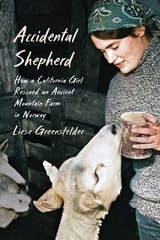
Accidental Shepherd
How a California Girl Rescued an Ancient Mountain Farm in NorwayLiese Greensfelder
University of Minnesota Press, 2024
A summer job turns serious when a young woman takes the reins on a remote farm—and learns far more than how to herd sheep
In May 1972, Liese Greensfelder arrived in the small Norwegian town of Øystese to startling news: Johannes, the farmer who hired her for the summer, had just been hospitalized after a stroke. Could she please watch over his place for a month or so, until he got back on his feet? Twenty years old and with no farming experience, Liese was dropped off the next day at a centuries-old mountain farm at the end of a dirt road high above the magnificent Hardanger Fjord—with 115 sheep, two cows, one calf, a draft horse, and a Norwegian herding dog to care for.
Armed with a command of Danish that enabled rudimentary communication, Liese began learning from neighbors who spoke an ancient Norwegian dialect—how to feed the animals, milk by hand, and supervise her first lambing. The farm was run in the old way: horses and wagons instead of tractors, haymaking in the rain, and hikes into the mountains to check on the sheep that ranged free over those wild peaks all summer. And, she was quick to discover, the farm was on the brink of ruin, for Johannes was a heartless man who had abused his animals and neglected his buildings and equipment for decades.
Although her employer had alienated his neighbors, they immediately welcomed the American newcomer and offered her help. As “a month or so” stretched to a year and Liese struggled for the survival of the farm, she joined this tight-knit enclave of farmers, learning their stories and history, adopting their dialect, and growing intimately familiar with the grass-based farming practices that had sustained them for generations.
From moments of levity, such as sampling a neighbor’s fruit wines, Christmas parties, and skiing; to soul-battering challenges, including the directive to kill a fox, sending sheep to slaughter, rotten silage, and vicious weather; to the yearnings of a young woman awash in a sea of masculinity, Accidental Shepherd is a candid account of Liese’s year in a remote farmhouse. Confronted with dangers and obstacles for which she was utterly unprepared, she tells a story of remarkable resilience and records the fascinating but rapidly vanishing traditions of the community that took her in.
Acorns and Bitter Roots
Starch Grain Research in the Prehistoric Eastern WoodlandsTimothy C. Messner
University of Alabama Press, 2011
Messner’s analysis is based on extensive reviews of the literature on early historic, prehistoric native plant use, and the collation of all available archaeobotanical data, a review of which also guided the author in selecting contemporary botanical specimens to identify and in interpreting starch residues recovered from ancient plant-processing technologies. The evidence presented here sheds light on many local ecological and cultural developments as ancient people shifted their subsistence focus from estuarine to riverine settings. These archaeobotanical datasets, Messner argues, illuminate both the conscious and unintentional translocal movement of ideas and ecologies throughout the Eastern Woodlands.
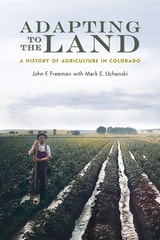
Adapting to the Land
A History of Agriculture in ColoradoJohn F. Freeman
University Press of Colorado, 2021
Ancestral Puebloans farmed and grazed within the limits of nature. Early settlers adjusted their cultivation methods through trial and error, while later agriculturists relied on research and technical advice from the Colorado Agricultural College. As part of wartime mobilization, the federal government prompted farmers to efficiently increase yields. To meet the demand for food and fiber scientific and technical innovations led to the development of new plant cultivars and livestock breeds, advances in mechanization, and widespread use of synthetic amendments. Increasing concern over soil fertility and the loss of irrigation water to urbanization contributed to more changes. Despite, or perhaps because of, what we see today along the Front Range, Colorado may still have a chance to slow or even reverse its seemingly unrestrained growth, creating a more vibrant, earth-friendly society in which agriculture plays an increasingly significant part. Scientific discoveries and innovations in regenerative cultivation are clearing the path to a more sustainable future.
Adapting to the Land adds an ecological and horticultural perspective to historical interpretations of recurring agricultural issues in the state and tracks the concept of stewardship, suggesting that spiritual beliefs continue to contribute to debates over acceptable agricultural practices and the effects of urbanization upon the land. This book will be a key resource for students, scholars, and general readers interested in agricultural and Colorado history, sustainability, and rural sociology.
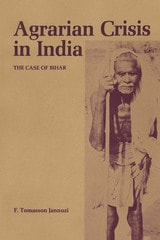
Agrarian Crisis in India
The Case of BiharBy F. Tomasson Jannuzi
University of Texas Press, 1974
Although much has been written on agrarian reforms in India, there are few in-depth studies of specific states and none concerning the relevance of agrarian reforms to the economic development and political stability of Bihar— a state containing one-tenth of the people of India, a population comparable in magnitude to that of the United Kingdom or France. F. Tomasson Jannuzi's field research in Bihar, beginning with village-level surveys and interviews in 1956 and extending through repeated visits through August 1970, has enabled him to provide a unique perspective on events and issues associated with the continuing struggle to transform Bihar's agrarian structure.
Agrarian Crisis in India is at once a history of post-independence agrarian reforms in an important state of India, a detailed critique of the statutory loopholes that have frustrated successive land-reform measures, and a penetrating analysis of the economic, political, and social implications of the failure of agrarian reforms to be implemented in twentieth-century Bihar. The author's analysis of the case of Bihar provides insights not only into the agrarian crisis in Bihar but also into other agrarian societies in the midst of social and economic transformation.
Experts in the field of economic development traditionally have held that the goals of increased production and distributive justice must be approached in sequence. It has been considered almost axiomatic that economic growth will result initially in growing inequalities among classes within a region and among regions within a country. Professor Jannuzi suggests that in Bihar a compelling alternative to this conventional wisdom is an economic-development strategy based on the recognition that the agricultural-production and distributive-justice goals are inseparable and must be addressed simultaneously. He suggests that economic growth in rural Bihar may become impossible if distributive justice continues to be denied to significant sections of the peasantry and, conversely, that distributive justice will prove an illusory target unless economic growth can be assured. Professor Jannuzi recommends the implementation of specified agrarian reforms in Bihar as the prerequisite for meeting the agricultural-production and distributive-justice goals.
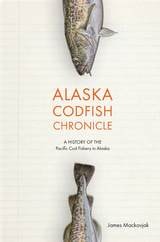
Alaska Codfish Chronicle
A History of the Pacific Cod Fishery in AlaskaJames Mackovjak
University of Alaska Press, 2019
Alaska Codfish Chronicle is the first comprehensive history of this fishery. It looks at the early decades of the fishery’s history, a period marked by hardship and danger, as well as the dominance of foreign fishermen. And the modern era, beginning in 1976 when the United States claimed an exclusive economic zone around the Alaska coasts, “Americanizing” the fishery and replacing the foreign fleets that had been ravaging the resources in the Gulf of Alaska and the Bering Sea. Today, the Pacific cod fishery is, in terms of poundage, the second largest fishery in Alaska, and considered among the best-managed fisheries in the world.
This history is extremely well documented, does not spare details, and is accessible to general readers. It incorporates nearly a hundred photographs and illustrations and is sprinkled with numerous observations from fishing industry journals and reports, even incorporating poems and recipes, making this an especially thorough and unique account of one of Alaska’s most iconic and important industries.
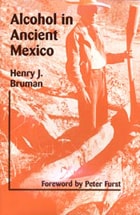
Alcohol in Ancient Mexico
Henry Bruman
University of Utah Press, 2000
Alcohol in Ancient Mexico reconstructs the variety and extent of distillation traditions in the ancient cultures of Mexico, describing in detail the various plants and processes used to make such beverages, their prevalence, and their significance for local culture.
The art of distillation arrived in Mexico with the Spaniards in the sixteenth century. However, well before that time, native skills and available resources had contributed to a well-developed tradition of intoxicating beverages, many of which are still produced and consumed.
In the 1930’s Henry Bruman visited various Mexican and Central American Indian tribes to reconstruct the variety and extent of these ancient traditions. He discerned five distinct areas defined by the culturally most significant beverages, all superimposed over the great mescal wine region. Within these five areas he noted wine made from cactus, cactus fruit, cornstalks, and mesquite pods; beer from sprouted maize; and fermented sap from pulque agaves.
Outside the mescal region he observed widespread consumption in the Yucatan of a wine made from fermented honey and balché bark, plus lesser-known beverages in other regions. He also observed the frequent inclusion in the fermentation process of alkaloid-bearing ingredients such as peyote and tobacco, plants whose roots or bark contain saponins—which act as cardiac poisons—and even poisons from certain toads.
Alcohol in Ancient Mexico also considers the relative absence of alcoholic drink in the southwestern United States, the introduction of sills following the Spanish conquest, and possible sources for the introduction of coconut wine.
Previously unpublished, the research presented here retains its relevance today, and the photographs offer a fascinating glimpse at a traditional world that has now almost vanished.

America's Founding Fruit
The Cranberry in a New EnvironmentSusan Playfair
University Press of New England, 2014
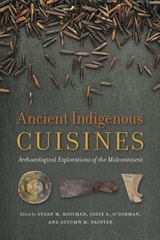
Ancient Indigenous Cuisines
Archaeological Explorations of the MidcontinentEdited by Susan M. Kooiman, Jodie A. O'Gorman, and Autumn M. Painter
University of Alabama Press, 2025
New essays from foodways archaeology related to cuisine in social, cultural, and environmental contexts.
This collection of original essays is the first to cover recent trends in foodways archaeology in the Midwest using the concept of cuisine: the selection of food ingredients and methods of food preparation, cooking, and serving/consumption in relation to their social, cultural, and environmental contexts. This work span the Early Archaic (9000 BC) to Late Precontact (up to around AD 1500) in ecological zones of present-day Michigan, Indiana, Illinois, Wisconsin, Minnesota, North Dakota, and Manitoba. Chapters trace development from hunter-gathering to horticultural practices to the more robust farming/fishing/hunting model centered on maize, squash, and other domesticates.
As Susan M. Kooiman, Jodie A. O’Gorman, and Autumn M. Painter note, identification of past cooking habits and evolving methods for foodstuffs identification can help archaeologists to reconstruct foodways and connect food behaviors with identity and associated fundamental societal beliefs. Contributors to this collection use cutting-edge methods and perspectives and consider a range of questions and outcomes that demonstrate the versatility and strength of culinary studies. To move the field forward, contributors also note areas for further analysis and improvement.
This volume targets archaeologists and students, archaeobotanists and zooarchaeologists, and those curious about Indigenous food culture. Engaging content includes chapters on the construction of earth ovens, the use-alteration of pottery and residue, a discussion of cuisine combining plant and animal data with ceramic trends, and the various contexts of plates to understand cooking methods and the social role of cuisine. Others examine faunal remains, the plant remains of feasting, the introduction of maize, the use of limestone nixtamalization, and archaeobotanical assemblages that reveal shifts in cuisine. A conclusion addresses the question, Why cuisine?
CONTRIBUTORS
Rebecca K. Albert / Alleen Betzenhauser / Jennifer R. Haas / Mary M. King / Susan M. Kooiman / Mary E. Malainey / Terrance J. Martin / Fernanda Neubauer / Kelsey Nordine / Jodie A. O’Gorman / Autumn M. Painter / Jeffrey M. Painter / Kimberly Schaefer / Mary Simon

Appetites of Empire
Food, Farming, and Fitness Rhetorics During the Obama EraDustin Greenwalt
University of Alabama Press, 2026
In Imperial Styles: Food, Farming, and Fitness Rhetorics During the Obama Era, Dustin Greenwalt examines how discussions of food, farming, and fitness became influential sites for negotiating questions of identity, citizenship, health, and economic life during the early twenty-first century.
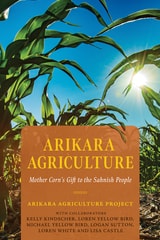
Arikara Agriculture
Mother Corn’s Gift to the Sahnish PeopleArikara Agriculture Project; With collaborators Kelly Kindscher, Loren Yellow Bird, Michael Yellow Bird, Logan Sutton, Loren White, and Lisa Castle
University of Arizona Press, 2027
Drawing on a remarkable combination of early twentieth-century field notes, archaeological evidence, historical accounts, and the voices of Arikara collaborators, Arikara Agriculture: Mother Corn’s Gift to the Sahnish People offers a richly layered account of one of the Plains’ most accomplished agricultural societies.
Living along the Missouri River in present-day North and South Dakota, the Sahnish (Arikara) people cultivated expansive fields of corn, beans, squash, sunflowers, and other crops, sustaining vibrant communities and extensive trade networks. At the heart of this remarkable book are the invaluable records of ethnobotanist Melvin Gilmore, who documented the knowledge of Arikara elders between 1916 and 1924, capturing a lifeway on the cusp of profound change.
More than a historical study, this volume foregrounds the cultural, spiritual, and ecological significance of agriculture in Sahnish life. The contributors discuss how corn was the center of the Arikaras’ world and how it, and other agricultural crops, were important not just as food but also for the culture. The book illuminates traditional horticultural methods, food preparation techniques, and the enduring relevance of these practices today.
Both a vital contribution to ethnobiology and a community-centered preservation of knowledge, this work speaks to ongoing conversations about Indigenous foodways, resilience, and the revitalization of traditional ecological knowledge.
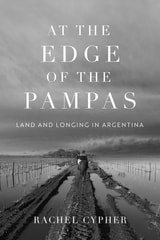
At the Edge of the Pampas
Land and Longing in ArgentinaRachel Cypher
University of Arizona Press, 2027
Industrial agriculture has transformed vast stretches of the Earth, but few places reveal its contradictions more clearly than the Pampas of Argentina.
In At the Edge of the Pampas, anthropologist Rachel Cypher traces the explosive rise of genetically modified soybeans across one of the world’s great agricultural heartlands. Drawing on immersive long-term fieldwork, the book moves from soybean fields and cattle feedlots to dryland forests to show that industrial agriculture takes many forms. Soy—one of the world’s most standardized commodities—must first pass through local ecologies, informal economies, inherited obligations, and intimate relations of trust before it can circulate as a global asset.
Urgent and deeply original, At the Edge of the Pampas offers a major rethinking of how value is gathered within industrial capitalism and how unruly social and ecological life persists inside even the most engineered landscapes.

Aunt Sammy's Radio Recipes
The Original 1927 Cookbook and Housekeeper's ChatJustin Nordstrom
University of Arkansas Press, 2018
From the 1920s through the 1940s, American kitchens had a welcome guest in “Aunt Sammy,” a creation of the US Department of Agriculture and its Bureau of Home Economics. Through the radio program Housekeeper’s Chat, Aunt Sammy gave lively advice on food preparation, household chores, parenting and children, and gender dynamics as she encouraged women to embrace the radio and a host of modern consumer household products. The recipes she shared were gathered, in 1927, into a cookbook that became a valuable household manual for tens of thousands of Americans.
Aunt Sammy’s Radio Recipes revives the famous cookbook and joins it with extensive excerpts from the accompanying radio broadcasts, providing a fascinating study of how a witty and charming fictionalized personae became one of the early celebrity chefs of the radio age.