Results by title
64 books match the query 'American prose literature' and 5 start with a
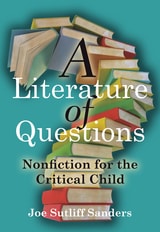
A Literature of Questions
Nonfiction for the Critical ChildJoe Sutliff Sanders
University of Minnesota Press, 2018
Nonfiction books for children—from biographies and historical accounts of communities and events to works on science and social justice—have traditionally been most highly valued by educators and parents for their factual accuracy. This approach, however, misses an opportunity for young readers to participate in the generation and testing of information.
In A Literature of Questions, Joe Sutliff Sanders offers an innovative theoretical approach to children’s nonfiction that goes beyond an assessment of a work’s veracity to develop a book’s equivocation as a basis for interpretation. Addressing how such works are either vulnerable or resistant to critical engagement, Sanders pays special attention to the attributes that nonfiction shares with other forms of literature, including voice and character, and those that play a special role in the genre, such as peritexts and photography.
The first book-length work to theorize children’s nonfiction as nonfiction from a literary perspective, A Literature of Questions carefully explains how the genre speaks in unique ways to its young readers and how it invites them to the project of understanding. At the same time, it clearly lays out a series of techniques for analysis, which it then applies and nuances through extensive close readings and case studies of books published over the past half century, including recent award-winning books such as Tanya Lee Stone’s Almost Astronauts: Thirteen Women Who Dared to Dream and We Are the Ship: The Story of Negro League Baseball by Kadir Nelson. By looking at a text’s willingness or reluctance to let children interrogate its information and ideological context, Sanders reveals how nonfiction can make young readers part of the project of learning rather than passive recipients of information.
Act Like You Know
African-American Autobiography and White IdentityCrispin Sartwell
University of Chicago Press, 1998
There is, Sartwell contends, a fundamental elusiveness to that identity. Whiteness defines itself as normative, as a neutral form of the human condition, marking all other forms of identity as "racial" or "ethnic" deviations. Invisible to itself, white identity seeks to define its essence over and against those other identities, in effect defining itself through opposition and oppression. By maintaining fictions of black licentiousness, violence, and corruption, white identity is able to cast itself as humane, benevolent, and pure; the stereotype fabricates not only the oppressed but the oppressor as well. Sartwell argues that African-American autobiography perceives white identity from a particular and unique vantage point; one that is knowledgeable and intimate, yet fundamentally removed from the white world and thus unencumbered by its obfuscating claims to normativity.
Throughout this provocative work, Sartwell steadfastly recognizes the many ways in which he too is implicated in the formulation and perpetuation of racial attitudes and discourse. In Act Like You Know, he challenges both himself and others to take a long, hard look in the mirror of African-American autobiography, and to find there, in the light of those narratives, the visible features of white identity.
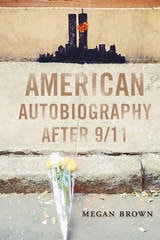
American Autobiography after 9/11
Megan Brown
University of Wisconsin Press, 2017
This lively and theoretically grounded book analyzes twenty-first-century memoirs from Three Cups of Tea to Fun Home, emphasizing the ways in which they reinforce and circulate ideologies, becoming guides or models for living. Brown expands her inquiry beyond books to the autobiographical narratives in reality television and political speeches. She offers a persuasive explanation for the memoir boom: the genre as a response to an era of uncertainty and struggle.
American Autobiography
Retrospect And ProspectPaul John Eakin
University of Wisconsin Press, 1991
The first four essays review the major historical periods of American autobiography, placing the classic texts of American autobiographical literature from Captain John Smith to Malcolm X in the illuminating context of lesser-known contemporary narratives. Daniel B. Shea writes on colonial America, Lawrence Buell on the American Renaissance, Susanna Egan on the years after the Civil War, and Albert E. Stone on the twentieth century.
The second part of American Autobiography shows the diversity of voices, forms, audiences, and modes of identity in the literature of American autobiography. Provocative essays by William Boelhower and Sau-Ling Cynthia Wong on immigrant autobiography discuss the changes in the sense of self that occur when strangers come to a strange land. Arnold Krupat writes about how American Indians conceptualize the self and about the relationship between oral and written discourse. William L. Andrews evaluates the strong body of critical theory that has grown up around African-American autobiography, showing how both the genre and its criticism have responded to contemporary historical pressures. Carol Holly explores the model of personal identity that underlies nineteenth-century women’s autobiographies, and Blanche Gelfant examines the narrative and political strategies of Emma Goldman’s autobiography, especially her use of popular romance and melodrama.
The last essay offers a more personal perspective on contemporary autobiography: a “dialogue” between Robert and Jane Coles about how they developed their method of eliciting first-person oral narratives for their famous Children of Crisis and Women of Crisis series.
These essays raise theoretical issues that are examined in Paul John Eakin’s incisive introduction: How do we define a literary genre of protean shape and perplexing cultural multiplicity? How do we approach the special problems created by documents that are both historical and literary texts, ones that pose difficult questions about truth and representation? Most important, how is the canon of American autobiography to be constructed, and how is its history to be written? Tracing that critical history, Eakin explains how changing ideas about “the mainstream” and “the marginal” have revitalized our retrospective view of American autobiography and opened up new and exciting prospects for today’s reader.
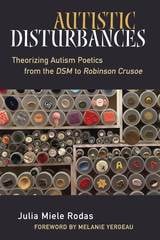
Autistic Disturbances
Theorizing Autism Poetics from the DSM to Robinson CrusoeJulia Miele Rodas
University of Michigan Press, 2018