Results by title
76 books match the query 'Animal rights' and 16 start with a
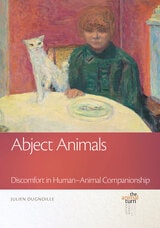
Abject Animals
Discomfort in Human–Animal CompanionshipJulien Dugnoille
Michigan State University Press, 2027
Abject Animals: Discomfort in Human–Animal Companionship explores the emotional contradictions and ethical tensions at the heart of human–animal relationships through a cross-cultural, multispecies ethnography of cats and dogs in the UK, France, and South Korea. Framing cats and dogs as “abject animals,” Julien Dugnoille examines how the treatment of animals can generate discomfort—emotional, moral, and bodily—through their commodification in cafés, markets, shelters, and homes. Drawing on Kristeva’s theory of abjection alongside the ideas of Bataille, Blanchot, and Weil, the book interrogates the commodified intimacy of contemporary human–animal companionship, revealing how labor, cuteness, and care mask underlying hierarchies and exploitation. Through richly detailed fieldwork and autoethnographic reflection, it critiques normative ideas of “healthy” companionship, arguing instead for forms of interspecies attunement that embrace discomfort and resist instrumentalization. Abject Animals is both a theoretical intervention and a call for more ethical, ego-disrupting relationships with the nonhuman.
All Creatures Safe and Sound
The Social Landscape of Pets in DisastersSarah E. DeYoung and Ashley K. Farmer
Temple University Press, 2021
Some of the most striking news stories from natural disasters are of animals tied to trees or cats swimming through murky flood waters. Although the issue of evacuating pets has gained more attention in recent disasters, there are still many failures throughout local and national systems of managing pets and accommodating animals in emergencies.
All Creatures Safe and Sound is a comprehensive study of what goes wrong in our disaster response that shows how people can better manage pets in emergencies—from the household level to the large-scale, national level. Authors Sarah DeYoung and Ashley Farmer offer practical disaster preparedness tips while they address the social complexities that affect disaster management and animal rescue. They track the developments in the management of pets since Hurricane Katrina, including an analysis of the 2006 PETS Act, which dictates that animals should be included in hazard and disaster planning. Other chapters focus on policies in place for sheltering and evacuation, coalitions for animal welfare and the prevention of animal cruelty, organizational coordination, decision-making, preparedness, the role of social media in animal rescue and response, and how privilege and power shape disaster experiences and outcomes.
Using data they collected from seven major recent American disasters, ranging from Hurricanes Harvey, Irma, and Florence to the Camp, Tubbs, and Carr Fires in California and the Hawaii Lava Flow, the authors provide insights about the successes and failures of animal care. All Creatures Safe and Sound also outlines what still needs to change to best prepare for the safety and welfare of pets, livestock, and other companion animals in times of crisis.
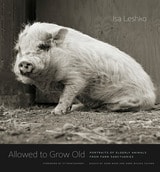
Allowed to Grow Old
Portraits of Elderly Animals from Farm SanctuariesIsa Leshko
University of Chicago Press, 2019
Isa Leshko shows us, brilliantly, with this collection of portraits. To create these portraits, she spent hours with her subjects, gaining their trust and putting them at ease. The resulting images reveal the unique personality of each animal. It’s impossible to look away from the animals in these images as they unforgettably meet our gaze, simultaneously calm and challenging. In these photographs we see the cumulative effects of the hardships of industrialized farm life, but also the healing that time can bring, and the dignity that can emerge when farm animals are allowed to age on their own terms.
Each portrait is accompanied by a brief biographical note about its subject, and the book is rounded out with essays that explore the history of animal photography, the place of beauty in activist art, and much more. Open this book to any page. Meet Teresa, a thirteen-year-old Yorkshire Pig, or Melvin, an eleven-year-old Angora Goat, or Tom, a seven-year-old Broad Breasted White Turkey. You’ll never forget them.
Animal Ethics for Veterinarians
Edited by Andrew Linzey and Clair Linzey
University of Illinois Press, 2017
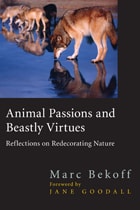
Animal Passions and Beastly Virtues
Reflections on Redecorating NatureMarc Bekoff, foreword by Jane Goodall
Temple University Press, 2005
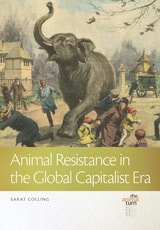
Animal Resistance in the Global Capitalist Era
Sarat Colling
Michigan State University Press, 2020
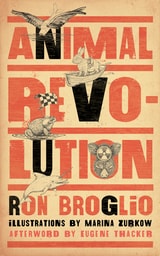
Animal Revolution
Ron Broglio
University of Minnesota Press, 2022
Why our failure to consider the power of animals is to our deep detriment
Animals are staging a revolution—they’re just not telling us. From radioactive boar invading towns to jellyfish disarming battleships, this book threads together news accounts and more in a powerful and timely work of creative, speculative nonfiction that imagines a revolution stirring and asks how humans can be a part of it. If the coronavirus pandemic has taught us anything, it is that we should pay attention to how we bump up against animal worlds and how animals will push back. Animal Revolution is a passionate, provocative, cogent call for us to do so.
Ron Broglio reveals how fur and claw and feather and fin are jamming the gears of our social machine. We can try to frame such disruptions as environmental intervention or through the lens of philosophy or biopolitics, but regardless the animals persist beyond our comprehension in reminding us that we too are part of an animal world. Animals see our technologies and machines as invasive beings and, in a nonlinguistic but nonetheless intensive mode of communicating with us, resist our attempts to control them and diminish their habitats. In doing so, they expose the environmental injustices and vulnerabilities in our systems.
A witty, informative, and captivating work—at the juncture of posthumanism, animal studies, phenomenology, and environmental studies—Broglio reminds us of our inadequacy as humans, not our exceptionalism.
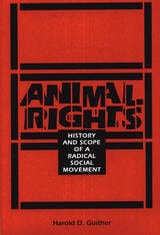
Animal Rights
History and Scope of a Radical Social MovementHarold D. Guither
Southern Illinois University Press, 1998
In the past decade, philosopher Bernard Rollin points out, we have "witnessed a major revolution in social concern with animal welfare and the moral status of animals." Adopting the stance of a moderate, Harold Guither attempts to provide an unbiased examination of the paths and goals of the members of the animal rights movement and of its detractors.
Given the level of confusion, suspicion, misunderstanding, and mistrust between the two sides, Guither admits the difficulty in locating, much less staying in, the middle of the road. The philosophical conflict, however, is fairly clear: those who resist reform, fearing that radical change in the treatment of animals will infringe on their business and property rights, versus the new activists who espouse a different set of moral and ethical obligations toward animals.
From his position as a moderate, Guither presents a brief history of animal protection and the emergence of animal rights, describes the scope of the movement, and identifies major players such as Paul and Linda McCartney and organizations such as People for the Ethical Treatment of Animals that are actively involved in the movement. He concentrates on what is actually happening in the 1990s, discussing in detail the possible consequences of the current debate for those who own, use, or enjoy animals in entertainment and leisure pursuits. A reference work for students in animal sciences and veterinary medicine, the book also poses questions for philosophers, sociologists, and public policymakers as well as animal owners, animal and biomedical researchers, and manufacturers and distributors of animal equipment and supplies.
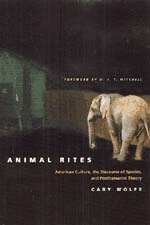
Animal Rites
American Culture, the Discourse of Species, and Posthumanist TheoryCary Wolfe
University of Chicago Press, 2002

Animal Theology
Andrew Linzey
University of Illinois Press, 1995
In Linzey’s view, animal rights is synonymous with animal theology. Linzey argues that historical theology, creatively defined, must reject humanocentricity. Questioning the assumption that if theology is to speak on this issue, “it must only do so on the side of the oppressors,” Linzey investigates not only the abstractions of theory, but also the realities of hunting, animal experimentation, and genetic engineering. His is a pioneering, vital, and unequivocally Christian voice advocating on behalf of the countless creatures who share our world and our lives but cannot speak for themselves.
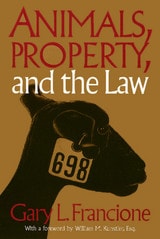
Animals Property & The Law
Gary Francione
Temple University Press, 1995
"Pain is pain, irrespective of the race, sex, or species of the victim," states William Kunstler in his foreword. This moral concern for the suffering of animals and their legal status is the basis for Gary L. Francione's profound book, which asks, Why has the law failed to protect animals from exploitation?
Francione argues that the current legal standard of animal welfare does not and cannot establish fights for animals. As long as they are viewed as property, animals will be subject to suffering for the social and economic benefit of human beings.
Exploring every facet of this heated issue, Francione discusses the history of the treatment of animals, anticruelty statutes, vivisection, the Federal Animal Welfare Act, and specific cases such as the controversial injury of anaesthetized baboons at the University of Pennsylvania. He thoroughly documents the paradoxical gap between our professed concern with humane treatment of animals and the overriding practice of abuse permitted by U.S. law.
Animals and Race
Jonathan W. Thurston-Torres
Michigan State University Press, 2023
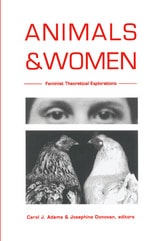
Animals and Women
Feminist Theoretical ExplorationsCarol J. Adams and Josephine Donovan, eds.
Duke University Press, 1995
This wide-ranging multidisciplinary anthology presents original material from scholars in a variety of fields, as well as a rare, early article by Virginia Woolf. Exploring the leading edge of the species/gender boundary, it addresses such issues as the relationship between abortion rights and animal rights, the connection between woman-battering and animal abuse, and the speciesist basis for much sexist language. Also considered are the ways in which animals have been regarded by science, literature, and the environmentalist movement. A striking meditation on women and wolves is presented, as is an examination of sexual harassment and the taxonomy of hunters and hunting. Finally, this compelling collection suggests that the subordination and degradation of women is a prototype for other forms of abuse, and that to deny this connection is to participate in the continued mistreatment of animals and women.
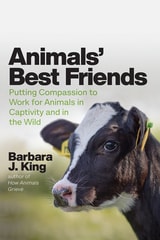
Animals' Best Friends
Putting Compassion to Work for Animals in Captivity and in the WildBarbara J. King
University of Chicago Press, 2021
Finalist for the 2021 Siskiyou Prize for New Environmental Literature
As people come to understand more about animals’ inner lives—the intricacies of their thoughts and the emotions that are expressed every day by whales and cows, octopus and mice, even bees—we feel a growing compassion, a desire to better their lives. But how do we translate this compassion into helping other creatures, both those that are and are not our pets? Bringing together the latest science with heartfelt storytelling, Animals’ Best Friends reveals the opportunities we have in everyday life to help animals in our homes, in the wild, in zoos, and in science labs, as well as those considered to be food.
Barbara J. King, an expert on animal cognition and emotion, guides us on a journey both animal and deeply human. We meet cows living relaxed lives in an animal sanctuary—and cows with plastic portals in their sides at a university research station. We observe bison free-roaming at Yellowstone National Park and chimpanzees confined to zoos. We learn with King how to negotiate vegetarian preferences in omnivore restaurants. We experience the touch of a giant Pacific octopus tasting King’s skin with one of his long, neuron-rich arms. We reflect on animal testing as King shares her own experience as the survivor of a particularly nasty cancer. And in a moment all too familiar to many of us, we recover from a close encounter with two spiders in the home.
This is a book not of shaming and limitation, but of uplift and expansion. Throughout this journey, King makes no claims of personal perfection. Though an animal expert, she is just like the rest of us: on a journey still, learning each day how to be better, and do better, for animals. But as Animals’ Best Friends makes clear, challenging choices can bring deep rewards. By turning compassion into action on behalf of animals, we not only improve animals’ lives—we also immeasurably enrich our own.
Animals, Mind, and Matter
The Inside StoryJosephine Donovan
Michigan State University Press, 2022
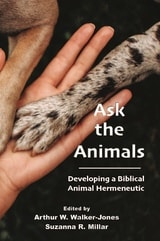
Ask the Animals
Developing a Biblical Animal HermeneuticArthur W. Walker-Jones
SBL Press, 2024
Ask the animals, and they will tell you.
Birds, beasts, and creeping things swarm throughout the Bible’s pages. Despite their prevalence, most biblical scholars have viewed them merely as metaphors, passive objects, or background embellishment to the human experience. This collection seeks to move beyond this traditional view of biblical animals by engaging the growing interdisciplinary field of animal studies. Contributors Peter Joshua Atkins, Jared Beverly, William P. Brown, Margaret Cohen, Jacob R. Evers, Michael J. Gilmour, William “Chip” Gruen, Dong Hyeon Jeong, Brian Fiu Kolia, Anne Létourneau, Robert R. MacKay, Suzanna R. Millar, Timothy J. Sandoval, Robert Paul Seesengood, Ken Stone, Brian James Tipton, Arthur W. Walker-Jones, and Jaime L. Waters showcase the breadth and depth of inquiry that animal studies can foster in biblical studies as well as what animal studies can gain from a more rigorous engagement with biblical texts. Together the essays offer an animal hermeneutic that supports the flourishing of all creatures.