Results by title
51 books match the query 'Athens' and 8 start with a
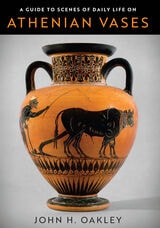
A Guide to Scenes of Daily Life on Athenian Vases
John H. Oakley
University of Wisconsin Press, 2020
John H. Oakley's clear, accessible writing provides sound information with just the right amount of detail. Specialists of Greek art will welcome this book for its text and illustrations. This guide is an essential and much-needed reference for scholars and an ideal sourcebook for classics and art history.
Antiphon the Athenian
Oratory, Law, and Justice in the Age of the SophistsBy Michael Gagarin
University of Texas Press, 2002
Winner, Friends of the Dallas Public Library Award from the Texas Institute of Letters, 2003
Antiphon was a fifth-century Athenian intellectual (ca. 480-411 BCE) who created the profession of speechwriting while serving as an influential and highly sought-out adviser to litigants in the Athenian courts. Three of his speeches are preserved, together with three sets of Tetralogies (four hypothetical paired speeches), whose authenticity is sometimes doubted. Fragments also survive of intellectual treatises on subjects including justice, law, and nature (physis), which are often attributed to a separate Antiphon the Sophist. Were these two Antiphons really one and the same individual, endowed with a wide-ranging mind ready to tackle most of the diverse intellectual interests of his day?
Through an analysis of all these writings, this book convincingly argues that they were composed by a single individual, Antiphon the Athenian. Michael Gagarin sets close readings of individual works within a wider discussion of the fifth-century Athenian intellectual climate and the philosophical ferment known as the sophistic movement. This enables him to demonstrate the overall coherence of Antiphon's interests and writings and to show how he was a pivotal figure between the sophists and the Attic orators of the fourth century. In addition, Gagarin's argument allows us to reassess the work of the sophists as a whole, so that they can now be seen as primarily interested in logos (speech, argument) and as precursors of fourth-century rhetoric, rather than in their usual role as foils for Plato.
Antisthenes of Athens
Texts, Translations, and CommentarySusan H. Prince
University of Michigan Press, 2015
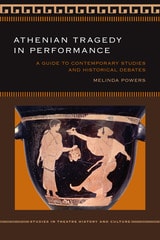
Athenian Tragedy in Performance
A Guide to Contemporary Studies and Historical DebatesMelinda Powers
University of Iowa Press, 2014
A case study of Euripides’s Bacchae, which provides more information about performance than any other extant tragedy, demonstrates possible methods for reconstructing the play’s historical performance and also the inevitable challenges inherent in that task, from the limited sources and the difficulty of interpreting visual material, to the risks of conflating actor with character and extrapolating backward from contemporary theatrical experience.
As an inquiry into the study of theatre and performance, an introduction to historical writing, a reference for further reading, and a clarification of several general misconceptions about Athenian tragedy and its performance, this historiographical analysis will be useful to specialists, practitioners, and students alike.
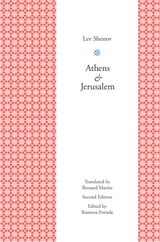
Athens and Jerusalem
Lev Shestov
Ohio University Press, 2016
For more than two thousand years, philosophers and theologians have wrestled with the irreconcilable opposition between Greek rationality (Athens) and biblical revelation (Jerusalem). In Athens and Jersusalem, Lev Shestov—an inspiration for the French existentialists and the foremost interlocutor of Edmund Husserl, Martin Heidegger, and Martin Buber during the interwar years—makes the gripping confrontation between these symbolic poles of ancient wisdom his philosophical testament, an argumentative and stylistic tour de force.
Although the Russian-born Shestov is little known in the Anglophone world today, his writings influenced many twentieth-century European thinkers, such as Albert Camus, D. H. Lawrence, Thomas Mann, Czesław Miłosz, and Joseph Brodsky. Athens and Jerusalem is Shestov’s final, groundbreaking work on the philosophy of religion from an existential perspective. This new, annotated edition of Bernard Martin’s classic translation adds references to the cited works as well as glosses of passages from the original Greek, Latin, German, and French. Athens and Jerusalem is Shestov at his most profound and most eloquent and is the clearest expression of his thought that shaped the evolution of continental philosophy and European literature in the twentieth century.
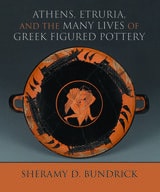
Athens, Etruria, and the Many Lives of Greek Figured Pottery
Sheramy D. Bundrick
University of Wisconsin Press, 2021
Thousands of Greek painted vases have emerged from excavations of tombs, sanctuaries, and settlements throughout Etruria, from southern coastal centers to northern communities in the Po Valley. Using documented archaeological assemblages, especially from tombs in southern Etruria, Bundrick challenges the widely held assumption that Etruscans were hellenized through Greek imports. She marshals evidence to show that Etruscan consumers purposefully selected figured pottery that harmonized with their own local needs and customs, so much so that the vases are better described as etruscanized. Athenian ceramic workers, she contends, learned from traders which shapes and imagery sold best to the Etruscans and employed a variety of strategies to maximize artistry, output, and profit.

Athens, Ohio
The Village YearsRobert L. Daniel
Ohio University Press, 1997
Two hundred years ago, Rufus Putnam, leader of the Ohio Company, sent eleven men west into the Ohio Country to found what is now the City of Athens. As one of the oldest communities in Ohio, Athens has a heritage rich in history and lore. Now, as Athens looks ahead to its third century, historian and raconteur Robert L. Daniel provides a timely assessment of the community’s past.
Drawing on reminiscences by Athens residents over the past two centuries, and on newspaper accounts, institutional archives, census records, and a host of historic photographs and drawings, Daniel illustrates how the Athens community grew, how it changed over the years, and what it was like to have lived in Athens in the past, from the times before white settlement to 1920. He identifies the problems the community faced and how it went about resolving them—its efforts to provide local government, the changing ways its people earned a living, the ways they worshipped, their efforts to establish Ohio University, how they coped during times of war, and what they did to amuse themselves.
In a lively style peppered with firsthand accounts by the people who made Athens, Daniel narrates his tale with wry humor and a sharp eye for detail. Always focusing on the people who lived there, he brings Athens to life during its village years.