Results by title
221 books match the query 'Beyond' and 6 start with a

A Practical Toolbox
Curricular Pathways in Iberian, Latin American, LatinX Studies, and BeyondEdited by Palmar Álvarez-Blanco, Christine Henseler, and Stephanie A. Mueller
Lever Press, 2027
With clear roadmaps for university faculty and administrators, A Practical Toolbox outlines engaging and impactful courses, programs, methodologies and partnerships emerging in Iberian, Latin American, and LatinX Studies. Contributors provide exploratory and pragmatic examples of how individuals, groups, and organizations are moving the fields of language, linguistics, and cultural production forward within the broader humanities and higher education landscapes. Many of the projects included in this volume exemplify how Spanish and Hispanic Studies programs can be ideally situated to meet the needs and draw on the strengths of these growing student populations. Chapters are organized into five broad approaches: navigating institutional structures through creative interdisciplinary models; connecting to local communities and organizations through public humanities, civically engaged partnerships, and social justice projects; asset-based pedagogies for Heritage, Latinx, Indigenous, and First Gen learners; innovations in Language and Area Studies for specific purposes; and expanding beyond textbooks to engage a new generation. Topics include enrollments, first-gen students, heritage learners, artificial intelligence, ecological perspectives, Spanish for specific purposes, civic engagement, public scholarship, community collaborations, public humanities, and more. By bringing students, educators, researchers, and communities into meaningful collaboration, it reimagines what the humanities can do.
ABC Learning Design
Active, Blended, Connected and BeyondEdited by Clive Young, Nataša Perovic, Leo Havemann, and Karen Shackleford-Cesare
University College London, 2026
A practical, step-by-step guide to the ABC Learning Design method, designed for local adaptation and readily transferable across institutions committed to educational reform.
ABC Learning Design is a popular and effective rapid design method for developing educational programs, modules, and short courses that has been widely adopted across the UK and Europe. This book introduces ABC Learning Design to a new audience, adding insights from institutions that have localised and implemented the method in diverse contexts.

Access, Fronthaul and Backhaul Networks for 5G & Beyond
Muhammad Ali Imran
The Institution of Engineering and Technology, 2017
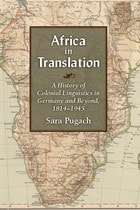
Africa in Translation
A History of Colonial Linguistics in Germany and Beyond, 1814-1945Sara Pugach
University of Michigan Press, 2022
The study of African languages in Germany, or Afrikanistik, originated among Protestant missionaries in the early nineteenth century and was incorporated into German universities after Germany entered the “Scramble for Africa” and became a colonial power in the 1880s. Despite its long history, few know about the German literature on African languages or the prominence of Germans in the discipline of African philology. In Africa in Translation: A History of Colonial Linguistics in Germany and Beyond, 1814–1945, Sara Pugach works to fill this gap, arguing that Afrikanistik was essential to the construction of racialist knowledge in Germany. While in other countries biological explanations of African difference were central to African studies, the German approach was essentially linguistic, linking language to culture and national identity. Pugach traces this linguistic focus back to the missionaries’ belief that conversion could not occur unless the “Word” was allowed to touch a person’s heart in his or her native language, as well as to the connection between German missionaries living in Africa and armchair linguists in places like Berlin and Hamburg. Over the years, this resulted in Afrikanistik scholars using language and culture rather than biology to categorize African ethnic and racial groups. Africa in Translation follows the history of Afrikanistik from its roots in the missionaries’ practical linguistic concerns to its development as an academic subject in both Germany and South Africa throughout the nineteenth and twentieth centuries.
Jacket image: Perthes, Justus. Mittel und Süd-Afrika. Map. Courtesy of the University of Michigan's Stephen S. Clark Library map collection.
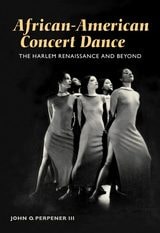
African-American Concert Dance
THE HARLEM RENAISSANCE AND BEYONDJohn O. Perpener III
University of Illinois Press, 2001
Perpener begins with Hemsley Winfield, a versatile performer and director whose company, the New Negro Art Theatre, launched the careers of Edna Guy, Randolph Sawyer, and Ollie Burgoyne, among many others. Also profiled are Charles Williams, who directed the Hampton Creative Dance Group at the Hampton Institute in Virginia, and Asadata Dafora Horton, a native African who established himself as the preeminent purveyor of African dance and culture in America during the 1930s. Dafora's African Dance Troupe, which at one point came under the umbrella of the WPA Federal Theatre Project, was a focal point of the famous "voodoo" Macbeth, an all-black production set in Haiti and directed by the young Orson Welles.
Stepping onto the path cleared by these early innovators, two important artists combined dance with anthropology to expand the reach and scope of African-American dance. Katherine Dunham and Pearl Primus both studied anthropology and engaged in extensive fieldwork that infused their dances with Caribbean and African influences. Dunham founded two ambitious training schools, one in New York and one in East St. Louis, while Primus's projects included an African Arts Center in Monrovia, Liberia, dedicated to collecting dance material, teaching, and organizing professional performances.
Perpener examines the politics of racial and cultural difference and their impact on these early African-American dance leaders. In particular he documents the critical reception of their work, detailing the rigid preconceptions of African-American dance that white critics imposed on black artists. He also surveys important black dancers and choreographers since 1950, including Talley Beatty, Donald McKayle, Alvin Ailey, Eleo Pomare, Rod Rodgers, and Dianne McIntyre, and discusses how they have extended and diverged from traditions established by their predecessors.
Amplifications of Black Sound from Colonial Mexico
Vocality and BeyondSarah Finley
Vanderbilt University Press, 2024
Amplifications of Black Sound from Colonial Mexico is the first extensive study of Afro-descendant sonorities in New Spain or elsewhere in colonial Latin America. In this context, it attends to Black sounds through a framework that remixes Jacques Derrida’s reading of the ear’s anatomy with theories like Gilroy’s lower frequencies or Fred Moten’s phonic materiality. Sarah Finley’s aim is to unsettle the divide between self and other so the auditory archive might emerge as a polyphonic record that exceeds dichotomies of sounding object / listening subject. Through sampling the Afro-descendant sounds of this archive, this book recovers and rearticulates Black voices and auditory practices in New Spain.