Results by title
5159 books match the query 'Biography' and 527 start with a
A Bag of Marbles
Joseph Joffo
University of Chicago Press, 2000
A Beautiful, Cruel Country
Eva Antonia Wilbur-Cruce
University of Arizona Press, 1987
Eva Antonia Wilbur inherited a unique affinity for the land. Granddaughter of a Harvard-educated physician who came to the Territory in the 1860s, she was the firstborn child of a Mexican mother and Anglo father who instilled in her an appreciation for both cultures. Little Toña learned firsthand the responsibilities of ranching—an education usually reserved for boys—and also experienced the racial hostility that occurred during those final years before the Tohono O'odham were confined to a reservation.
Begun as a reminiscence to tell younger family members about their "rawhide tough and lonely" life at the turn of the century, Mrs. Wilbur-Cruce's book is rich with imagery and dialogue that brings the Arivaca area to life. Her story is built around the annual cycle of ranch life—its spring and fall round-ups, planting and harvesting—and features a cavalcade of border characters, anecdotes about folk medicine, and recollections of events that were most meaningful in a young girl's life. Her account constitutes a valuable primary source from a region about which nothing similar has been previously published, while the richness of her story creates a work of literature that will appeal to readers of all ages.
A Belfast Girl
A 1960s American folk music legend weaves stories of a girlhood on “the singing streets” of Ireland, marriage in Scotland, and arrival in AmericaMaggi Kerr Peirce
Parkhurst Brothers, Inc., 2013
A 1960s American folk music legend weaves stories of a girlhood on “the singing streets” of Ireland, marriage in Scotland, and arrival in America

A Belief in Providence
A Life of Saint Theodora GuerinJulie Young
Indiana Historical Society Press, 2007

A Biographical Dictionary of Actors, Volume 2, Belfort to Byzand
Actresses, Musicians, Dancers, Managers, and Other Stage Personnel in London, 1660-1800Philip H. Highfill, Jr., Kalman A. Burnim, and Edward A. Langhans
Southern Illinois University Press, 1973
Tobe completed in 12volumes, this monumental work here begins publication with the first two volumes—Abaco to Bertie and Bertin to Byzard. When completed, it is expected that the biographical dictionary will include information on more than 8,500 individuals.
Hundreds of printed sources have been searched for this project, and dozens of repositories combed, and the names of personnel listed have been filtered through parish registers whenever possible. From published and unpublished sources, from wills, archives of professional societies and guilds, from records of colleges, universities, and clubs, and from the contributions of selfless scholars, the authors have here assembled material which illuminates theatrical and musical activity in London in the 1660–1800 period.
The information here amassed will doubtless be augmented by other specialists in Restoration and eighteenth-century theatre and drama, but it is not likely that the number of persons now known surely or conjectured finally to have been connected with theatrical enterprise in this period will ever be increased considerably. Certainly, the contributions made here add immeasurably to existing knowledge, and in a number of instances correct standard histories or reference works.
The accompanying illustrations, estimated to be some 1,400 likenesses—at least one picture of each subject for whom a portrait exists—may prove to be a useful feature of the Work. The authors have gone beyond embellishment of the text, and have attempted to list all original portraits any knowledge of which is now recoverable, and have tried to ascertain the present location of portraits in every medium.
A Biographical Dictionary of Women's Movements and Feminisms
Central, Eastern, and South Eastern Europe, 19th and 20th CenturiesAnna Loutfi
Central European University Press, 2006

A Biscuit for Your Shoe
Beatrice Upshaw
University of North Texas Press, 2020
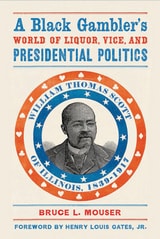
A Black Gambler’s World of Liquor, Vice, and Presidential Politics
William Thomas Scott of Illinois, 1839–1917Bruce L. Mouser
University of Wisconsin Press, 2014
Scott helped build the National Negro Liberty Party to forward economic, political, and legal rights for his race. But the hustling that had brought him business success proved his undoing as a national political figure. He was the NNLP's initial presidential nominee, only to be replaced by a better-educated and more socially acceptable candidate, George Edwin Taylor.
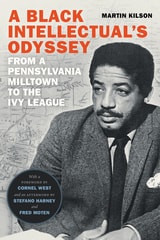
A Black Intellectual's Odyssey
From a Pennsylvania Milltown to the Ivy LeagueMartin Kilson
Duke University Press, 2021
He gives a sweeping sociological tour of Ambler as a multiethnic, working-class company town while sketching the social, economic, and racial elements that marked everyday life. From narrating the area's history of persistent racism and the racial politics in the integrated schools to describing the Black church's role in buttressing the town's small Black community, Kilson vividly renders his experience of northern small-town life during the 1930s and 1940s.
At Lincoln University, Kilson's liberal political views coalesced as he became active in the local NAACP chapter. While at Lincoln and during his graduate work at Harvard, Kilson observed how class, political, and racial dynamics influenced his peers' political engagement, diverse career paths, and relationships with white people. As a young professor, Kilson made a point of assisting Harvard's African American students in adapting to life at a white institution.
Throughout his career, Kilson engaged in pioneering scholarship while mentoring countless students. A Black Intellectual's Odyssey features contributions from three of his students: a foreword by Cornel West and an afterword by Stefano Harney and Fred Moten.
A Blacklist Education
American History, a Family Mystery, and a Teacher Under FireJane S. Smith
Rutgers University Press, 2025
Finalist for the Society of Midland Authors Richard Frisbie Award for Adult Nonfiction
In A Blacklist Education, a mysterious file of family papers triggers a journey through the dark days of political purges in the 1950s. Jane S. Smith tells the story of the anticommunist witch hunt that sent shockwaves through New York City’s public schools as more than a thousand teachers were targeted by Board of Education investigators. Her father was one of them—a fact she learned only long after his death.
Beginning in 1949, amid widespread panic about supposed communist subversion, investigators questioned teachers in their homes, accosted them in their classrooms, and ordered them to report to individual hearings. The interrogations were not published, filmed, open to the public, or reported in the news. By 1956, hundreds of New York City teachers had been fired, often because of uncorroborated reports from paid informers or anonymous accusers.
Most of the targeted teachers resigned or retired without any public process, their names recorded only in municipal files and their futures never known. Their absence became the invisible outline of an educational void, a narrowing of thought that pervaded classrooms for decades. In this highly personal story, family lore and childhood memory lead to restricted archives, forgotten inquisitions, and an eerily contemporary campaign to control who could teach and what was acceptable for students to learn.
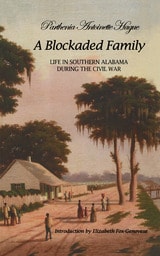
A Blockaded Family
Life in Southern Alabama During the Civil WarParthenia Hague
University of Alabama Press, 2005
Parthenia Hague experienced the Civil War while employed as a schoolteacher on a plantation near Eufaula, Alabama. This book recounts how a frightened and war-weary household dealt with privations during the blockade imposed on the South by the federal navy. The memoir of Parthenia Hague is a detailed look at the ingenious industry and self-sufficiency employed by anxious citizens as the northern army closed in.
A Body in the O
Performances and StoriesTim Miller
University of Wisconsin Press, 2019
A Border Son
My Life in Activism, Education, and PoliticsJorge B. Haynes, Jr.with Denise Gamino and Benton Graham
University of Texas Press, 2026
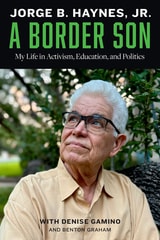
Behind the success of every great politician, inspiring activist, or business titan, there is a staffer; Jorge B. Haynes was that staffer for some of the most influential leaders in Texas, Florida, and California.
Jorge B. Haynes had a knack for finding his way into the rooms where history was being made. From his work boycotting farmworker conditions alongside Cesar Chavez and Dolores Huerta as a young man in California to his role in President Bill Clinton’s NAFTA war room in the 1990s, he was the man advising some of the country’s most influential leaders and he left an imprint on the monumental moments that defined their time. His career spanned almost five decades, beginning with his decision to leave home in Laredo to serve in the US Air Force. But his service to the country took many different forms. Haynes worked for the Bureau of the Census the first year Latinos were allowed to declare their Hispanic heritage. He wrote speeches and orchestrated pivotal meetings for top political leadership in Texas and later Florida. In the final years of his career, he fought to make college a more accessible path for under-represented students in California.
As his paternal grandmother used to say, “Cuando vas a un lugar donde nunca has estado, finge que has estado allí,” which means, “When you go somewhere that you've never been, pretend like you've been there before.” By the end of his career, there weren’t many places that Haynes hadn’t been.
A Born Writer
Juanita Harrison and Her Beautiful WorldCathryn Halverson
University of Massachusetts Press, 2025
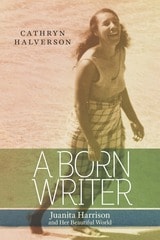
Despite the challenges she faced as an average southern Black woman of her time, Juanita Harrison transcended expectations, earning a unique place in African American and literary history. Over the course of more than four decades, she traveled constantly, first throughout the US and then throughout the world. To fund her trips, she took on short-term jobs as housekeeper, cook, and nurse, never committing to any one household. Always on the move, she made it a rule to travel alone, and she had a penchant for “passing,” not as white but as local. Her wanderlust was less aspirational and upwardly mobile than dedicated to the pursuit of leisure, freedom, and experience. “It’s my life to see and enjoy,” she declared.
In 1936, she published My Great, Wide, Beautiful World, a travelogue that charts her life between 1927 and 1935. A compilation of letters she sent to friends, employers, and patrons during her travels, the book was an immediate success, running through nine printings within ten months and becoming a bestseller for that year. The illustrious Atlantic Monthly published excerpts, the book was reviewed in newspapers and magazines nationwide, and it attracted a remarkably diverse readership, sparking the enthusiasm of Black working-class library patrons, white women’s book clubs, Japanese American journalists, Harlem Renaissance luminaries, and many others. It came back into print in 1996, ensuring her legacy would endure.
A Born Writer is the first biography of this fascinating woman who found a uniquely rewarding way to live and work that many would envy today. Combining micro histories, literary criticism, and biography—and despite limited archival records—Cathryn Halverson skillfully traces Harrison from her birth in the bitterly divided South to her death in Hawai’i, tracking her varied experiences along the way in New York, Havana, Paris, Madrid, Cairo, Mumbai, Kobe, Buenos Aires, and many other places. The resulting portrait shows a woman who transcended all kinds of borders—political, social, and cultural—to experience a freedom rarely available to women, and especially women of color, in the early-to-mid twentieth century, an achievement that continues to resonate.
A Box of Photographs
Roger Grenier
University of Chicago Press, 2013
A Boyhood Dream Realized
Half a Century of Texas Culture, One Newspaper Column at a TimeBurle Pettit
University of North Texas Press, 2019
A Brave and Lovely Woman
Mamah Borthwick and Frank Lloyd WrightMark Borthwick
University of Wisconsin Press, 2025
Little of Wright’s life and work has been left untouched by his many admirers, critics, and biographers. And yet the woman who stood at the center of his emotional life, Mamah Borthwick, has fallen into near obscurity. Mark Borthwick—a distant relative—recenters Mamah Borthwick in her own life, presenting a detailed portrait of a fascinating woman, a complicated figure who was at once a dedicated mother and a faithless spouse, a feminist and a member of a conservative sorority, a vivacious extrovert and a social pariah. Careful research and engaging prose at last give Borthwick, an obscure but crucial character in one of America’s most famous tragedies, center stage.
A Brief Life of Aquinas
The Theologian in His ContextJean-Pierre Torrell
Catholic University of America Press, 2024
A Burning Hunger
One Family’s Struggle Against ApartheidLynda Schuster
Ohio University Press, 2006
Reissued for the 50th anniversary of the Soweto Uprising, A Burning Hunger reveals how one family’s courage ignited resistance and forever changed South Africa.
If the Mandelas were the generals in the fight for black liberation, the Mashininis were the foot soldiers. Theirs is a story of exile, imprisonment, torture, and loss, but also of dignity, courage, and strength in the face of appalling adversity. Originally published in Great Britain to critical acclaim, A Burning Hunger: One Family’s Struggle Against Apartheid tells a deeply moving human story and is one of the seminal books about the struggle against apartheid.
This family, Joseph and Nomkhitha Mashinini and their thirteen children, became immersed in almost every facet of the liberation struggle—from guerrilla warfare to urban insurrection. Although Joseph and Nomkhitha were peaceful citizens who had never been involved in politics, five of their sons became leaders in the antiapartheid movement. When the students of Soweto rose up in 1976 to protest a new rule making Afrikaans the language of instruction, they were led by charismatic young Tsietsi Mashinini. Scores of students were shot down and hundreds were injured. Tsietsi’s actions on that day set in motion a chain of events that would forever change South Africa, define his family, and transform their lives.
A Burning Hunger shows the human catastrophe that plagued generations of black Africans in the powerful story of one religious and law-abiding Soweto family. Basing her narrative on extensive research and interviews, Lynda Schuster richly portrays this remarkable family and in so doing reveals black South Africa during a time of momentous change.
A Captive Audience
Voices of Japanese American Youth in World War II ArkansasAli Welky
Butler Center for Arkansas Studies, 2015
Intended for young-adult readers, this book explores important dimensions of Arkansas and U.S. history, including human rights and what it means to be an American.
A Carpetbagger in Reverse
Arthur W. Mitchell, America's First Black Democratic CongressmanJohn Morris Knapp
University of Alabama Press, 2025
From Alabama to Congress—Arthur W. Mitchell’s fight for justice rewrote the rules of Black political power.
A Carpetbagger in Reverse offers a landmark reassessment of the life, career, and accomplishments of groundbreaking Congressman Arthur W. Mitchell, the first Black Democrat elected to Congress and the only Black member of Congress during his four terms of service from 1935 to 1943.
Born to former enslaved people in Alabama in 1883, Mitchell studied with Booker T. Washington at Tuskegee Institute and later moved to Washington DC and became a lawyer. He continued his career in Chicago, where the Great Migration had helped transform the city’s South Side into a vibrant, multiracial enclave.
As a congressman, Mitchell helped to create an enduring alliance between Black Americans and the Democratic party. Seeing his primary role as representing the South’s disempowered Black population, his belief that solutions to the region’s racial problems should arise from a new cadre of locally trained leaders brought him into frequent, vituperative conflict with the NAACP, the Republican Party, and the Black press. The first Black lawyer to argue successfully before the Supreme Court, his unanimous victory in Mitchell v. United States would have long-term consequences for the Civil Rights Movement.
A Carpetbagger in Reverse is the first publication significantly based on Mitchell’s papers, an essential and often overlooked source of insights about the development of Black political and culture life in the 1930s and 1940s.
A Century of Populist Demagogues
Eighteen European Portraits, 1918–2018Ivan T. Berend
Central European University Press, 2020
The renowned historian Ivan T. Berend discusses populist demagoguery through the presentation of eighteen politicians from twelve European countries spanning World War I to the present. Berend defines demagoguery, reflects on its connections with populism, and examines the common features and differences in the demagogues’ programs and language.
Mussolini and Hitler, the “model demagogues,” are only briefly discussed, as is the election of Donald Trump in the United States and its impact on Europe. The eighteen detailed portraits include two communists, two fascists, and several right-wing and anti-EU politicians, extending across the full range of demagoguery. The author covers Béla Kun, the leader of the Hungarian Soviet Republic in 1919, weaving through Codreanu and Gömbös from the 1930s, on to Stahremberg and Haider in Austria, and then more broadly throughout Europe from Ceaușescu, Milošević, Tuđjman, Izetbegović, Berlusconi, Wilders, to the two Le Pens, Farage, and Boris Johnson, Orbán and the two Kaczyńskis. Each case includes an analysis of the time and place and is illustrated with quotations from the demagogues’ speeches.
This book is a warning about the continuing threat of populist demagogues both for their subjects and for history itself. Berend insists on the crucial importance for Europe to understand the reality behind their promises and persuasive language as imperative to impeding their success.

A Cezanne in the Hedge and Other Memories of Charleston and Bloomsbury
Edited by Hugh Lee
University of Chicago Press, 1992
A Chance for Love
The World War II Letters of Marian Elizabeth Smith and Lt. Eugene T. Petersen, USMCREugene Peterson
Michigan State University Press, 1998
In mid-February 1944 Marian Elizabeth Smith, a young Wisconsin woman, met Marine Corps Lieutenant Eugene T. Petersen on the passenger train, El Capitan, as it made its 42-hour run from Los Angeles to Chicago. After a brief acquaintance, he left the United States to join the Third Marine Division on Guam and eventually to take part in the battle for Iwo Jima in February and March of 1945. The collected letters of their subsequent 18-month correspondence reveal much about wartime life at home and abroad. This correspondence represents a time capsule of current events as Smith and Petersen discuss Franklin Roosevelt, the United Nations, internationalism, popular movies, the French aviator and poet Antoine de St. Exupery, the comic strip Barnaby, and the frustrations of dealing with sometimes less-than- enlightened parents. The loss of Marian's brother during the bombing of Ploesti, Rumania, in June 1944, brought Petersen and Smith closer together, and after hundreds of letters the "chance for love" Marian had suggested early in their correspondence evolved into a marriage that has endured for more than half a century.
A Chance to Make a Difference
A MemoirJohn P. Schaefer
University of Arizona Press, 2025
Southwest Books of the Year Top Pick
John P. Schaefer was only thirty-six years old when he assumed the role of fifteenth president of the University of Arizona in 1971. The son of hardworking German immigrants, Schaefer grew up in Queens, New York, where childhood centered on sports, academics, and the great outdoors.
Earning a PhD in chemistry in 1958, Dr. Schaefer’s career skyrocketed through the ranks of academia, moving him from junior faculty to university president in a mere decade. As president, he led the University of Arizona through a transformational period of growth and is credited with securing the university’s status as a top-tier research institution.
A Chance to Make a Difference recounts poignant, eye-opening, and often humorous stories from childhood to presidency, revealing the characteristics of an inspiring university leader.
A Chancellor's Tale
Transforming Academic MedicineRalph Snyderman, MD
Duke University Press, 2016
A Chickasaw Lady, a Governor’s Wife
Alice Hearrell Murray in the Era of the New WomanSuzanne H. Schrems
University of North Texas Press, 2026
A Chinese Rebel beyond the Great Wall
The Cultural Revolution and Ethnic Pogrom in Inner MongoliaTJ Cheng, Uradyn E. Bulag, and Mark Selden
University of Chicago Press, 2023
During the Great Leap Forward, as hundreds of thousands of Chinese famine refugees headed to Inner Mongolia, Cheng Tiejun arrived in 1959 as a middle school student. In 1966, when the PRC plunged into the Cultural Revolution, he joined the Red Guards just as Inner Mongolia’s longtime leader, Ulanhu, was purged. With the military in control, and with deepening conflict with the Soviet Union and its ally Mongolia on the border, Mongols were accused of being nationalists and traitors. A pogrom followed, taking more than 16,000 Mongol lives, the heaviest toll anywhere in China.
At the heart of this book are Cheng’s first-person recollections of his experiences as a rebel. These are complemented by a close examination of the documentary record of the era from the three coauthors. The final chapter offers a theoretical framework for Inner Mongolia’s repression. The repression’s goal, the authors show, was not to destroy the Mongols as a people or as a culture—it was not a genocide. It was, however, a “politicide,” an attempt to break the will of a nationality to exercise leadership of their autonomous region. This unusual narrative provides urgently needed primary source material to understand the events of the Cultural Revolution, while also offering a novel explanation of contemporary Chinese minority politics involving the Uyghurs, Tibetans, and Mongols.
A Cinema of Obsession
The Life and Work of Mai ZetterlingMariah Larsson
University of Wisconsin Press, 2020
Critics have compared her work to that of Ingmar Bergman, Luis Buñuel, and Federico Fellini, but Zetterling had a distinct style—alternately radical and reactionary—that straddled the gendered divide between high art and mass culture. Tackling themes of sexuality, isolation, and creativity, her documentaries, short and feature films, and television works are visually striking. Her oeuvre provoked controversy and scandal through her sensational representations of reproduction and motherhood.
Mariah Larsson provides a lively and authoritative take on Zetterling's legacy and complicated position within film and women's history. A Cinema of Obsession provides necessary perspective on how the breadth of an artist's collected works keeps gatekeepers from recognizing their achievements, and questions why we still distinguish between national and global visual cultures and the big and small screens in the #MeToo era.
A Colonel in the Armored Divisions
A Memoir, 1941-1945William S. Triplet, Edited by Robert H. Ferrell
University of Missouri Press, 2001
In this fascinating memoir William S. Triplet continues the saga begun in his earlier book, A Youth in the Meuse-Argonne: A Memoir, 1917-1918. After serving in World War I, Triplet chose to become a career military man and entered West Point. Upon graduation in 1924, his assignments were routine—to regiments in the Southwest and in Panama or as an officer in charge of Reserve Officers' Training Corps units or of men sent to a tank school. All this changed, however, when a new war opened in Europe.
From 1940 to1942, Triplet was assigned to the Infantry Board at Fort Benning, Georgia, where he engaged in testing new weapons and machines for the expanding army. He became a full colonel in December 1942. After leaving Benning he received posts with four armored forces: the Thirteenth Armored Division forming in the United States, an amphibious tank and troop carrier group training at Fort Ord, California, and the Second and Seventh Armored Divisions in Europe. His extraordinary abilities as a tank commander became evident in the Seventh Armored, where he took over a four-thousand-man unit known as Combat Command A. He was soon moving from triumph to triumph as he led his unit into Germany. Here was much room for professional judgment and decision, and the colonel was in his element. In the war's last days Triplet and his men fought their way to the Baltic, preventing many German troops from joining in the defense of Berlin against the advancing Soviet army.
Although Triplet was recommended for brigadier general, Dwight D. Eisenhower believed the U.S. Army had enough generals to finish the war; thus, the indomitable Triplet served out the few remaining years of his career as a colonel. After retiring in 1954, Triplet moved to Leesburg, Virginia, where he soon began to mull over his military experiences. Fascinated by the history he had witnessed, engaged by the attraction of writing about it, he recorded his memories with a combination of verve, thoughtfulness, and harsh judgments concerning ranking officers he considered incompetent— generals not excluded.
Through his annotations, Robert H. Ferrell provides the historical context for Triplet's experiences. Well written and completely absorbing, A Colonel in the Armored Divisions provides readers the rare opportunity to see firsthand what a real professional in the U.S. Army thought about America's preparation for and participation in the war against Germany and Japan.
A Colored Man Round the World
David F. Dorr
University of Michigan Press, 1999
Malini Johar Schueller has edited and annotated the 1858 text and added a critical introduction that provides a useful context for understanding and appreciating this important but heretofore neglected document. Her edition of A Colored Man Round the World provides a fascinating account of Dorr's negotiation of the conflicting roles of slave versus man, taking into account all of the racial complexities that existed at the time. As a traveler abroad, Dorr claimed an American selfhood that allowed him mobility in Europe, and he benefited from the privileges accorded American "Orientalists" venturing in the near East. However, any empowerment that Dorr experienced while a tourist vanished upon his return to America.
The book will be welcomed for the rare perspective it provides of the mid-nineteenth century, through the eyes of an African-American slave and for the light it casts on world and U.S. history as well as on questions of racial and national identity.
Malini Johar Schueller is Professor of English, University of Florida.
A Communist Odyssey
The life of József Pogány/John PepperThomas Sakmyster
Central European University Press, 2012
A Community of Writers
Paul Engle and the Iowa Writers' WorkshopDana, Robert
University of Iowa Press, 1999
With these words, written long before his Iowa Writers' Workshop became world famous, much imitated, and academically rich, Paul Engle captured the spirit behind his beloved workshop. Now, in this collection of essays by and about those writers who shared the energetic early years, Robert Dana presents a dynamic, informative tribute to Engle and his world.
The book's three sections mingle myth and history with style and grace and no small amount of humor. The beginning essays are given over to memories of Paul Engle in his heyday. The second group focuses particularly on those teachers—Robert Lowell, John Berryman, Kurt Vonnegut, for example—who made the workshop hum on a day-to-day basis. Finally, the third section is devoted to storytelling: tall tales, vignettes, surprises, sober and not-so-sober moments. Engle's own essay, "The Writer and the Place," describes his "simple, and yet how reckless" conviction that "the creative imagination in all of the arts is as important, as congenial, and as necessary, as the historical study of all the arts."
Today, of course, there are hundreds of writers' workshops, many of them founded and directed by graduates of the original Iowa workshop. But when Paul Engle arrived in Iowa there were exactly two. His indomitable nature and great persuasive powers, combined with his distinguished reputation as a poet, loomed large behind the enhancement of the Iowa Writers' Workshop. This volume of fine and witty essays reveals the enthusiasm and drive and sheer pleasure that went into Iowa's renowned workshop.
A Confederate Chronicle
The Life of a Civil War SurvivorPamela Chase Hain
University of Missouri Press, 2005
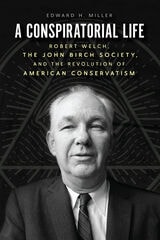
A Conspiratorial Life
Robert Welch, the John Birch Society, and the Revolution of American ConservatismEdward H. Miller
University of Chicago Press, 2021
Though you may not know his name, Robert Welch (1899-1985)—founder of the John Birch Society—is easily one of the most significant architects of our current political moment. In A Conspiratorial Life, the first full-scale biography of Welch, Edward H. Miller delves deep into the life of an overlooked figure whose ideas nevertheless reshaped the American right.
A child prodigy who entered college at age 12, Welch became an unlikely candy magnate, founding the company that created Sugar Daddies, Junior Mints, and other famed confections. In 1958, he funneled his wealth into establishing the organization that would define his legacy and change the face of American politics: the John Birch Society. Though the group’s paranoiac right-wing nativism was dismissed by conservative thinkers like William F. Buckley, its ideas gradually moved from the far-right fringe into the mainstream. By exploring the development of Welch’s political worldview, A Conspiratorial Life shows how the John Birch Society’s rabid libertarianism—and its highly effective grassroots networking—became a profound, yet often ignored or derided influence on the modern Republican Party. Miller convincingly connects the accusatory conservatism of the midcentury John Birch Society to the inflammatory rhetoric of the Tea Party, the Trump administration, Q, and more. As this book makes clear, whether or not you know his name or what he accomplished, it’s hard to deny that we’re living in Robert Welch’s America.
A Convergence of Lives
Sofia Kovalevskaia - Scientist, Writer, RevolutionaryKoblitz, Ann
Rutgers University Press, 1993
Sofia Kovalevskaia's interest in mathematics was roused at an early age--her attic nursery had been wallpapered with lecture notes for a course on calculus. She spent hours studying the mysterious walls, trying to figure out which page followed from the next. Kovalevskaia (1850-1891) became the only woman mathematician whose name all mathematicians recognize, thanks to her contributions to mathematical analysis. Indeed, she was the first professional woman scientist to win international eminence in any field: the first woman doctorate in mathematics, the first to hold a chair in mathematics, the first to sit on the editorial board of a major scientific journal.
She was also an accomplished writer, a proponent of women's rights and education, a wife and mother in an unconventional marriage, and a champion of radical political causes in Russia and Western Europe--a friend and correspondent of Dostoyevsky, Chekhov, George Eliot, Kropotkin, Helmholtz, and Darwin. This sympathetic portrait of a remarkable woman will appeal to any reader, non-mathematicians and mathematicians alike.
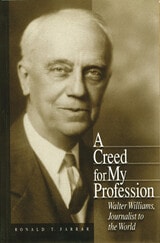
A Creed for My Profession
Walter Williams, Journalist to the WorldRonald T. Farrar
University of Missouri Press, 1998
This superb biography provides for the first time a candid look at the remarkable life of Walter Williams, the man who founded the world's first school of journalism and perhaps contributed more toward the promotion of professional journalism than any other person of his time.
Williams, the youngest of six children, was born in Boonville, Missouri, in 1864. Never an athletic child, he always had a love of books and of learning; yet, he scarcely had a high school education. He began his journalistic career as a printer's devil at seventy cents per week and eventually became editor and part- owner of a weekly in Columbia, Missouri. During his time as an editor, Williams became convinced that journalism would never reach its potential until its practitioners had the opportunity for university training in their field. After years of crusading, he established the first journalism school, on the University of Missouri campus. Later, he was chosen president of the University of Missouri, which he led with distinction during the Great Depression.
Williams was an unwavering advocate of high professional standards. His Journalist's Creed became one of the most widely circulated codes of professional ethics. Williams inspired the confidence of his fellow journalists, and he carried his message to nearly every country in which newspapers were published. Not only did he invent journalism education, he also created global organizations of journalists and spread the gospel of professionalism throughout the world. His death, in 1935, was mourned throughout the United States, and editorial tributes came from around the world. As one British editor succinctly put it, "Williams was not born to greatness. Neither was it thrust upon him. Literally, he achieved greatness."
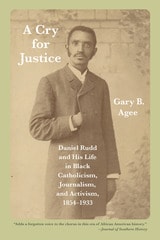
A Cry for Justice
Daniel Rudd and His Life in Black Catholicism, Journalism, and Activism, 1854-1933Gary B. Agee
University of Arkansas Press, 2017
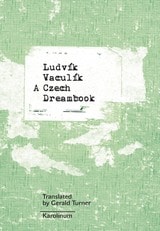
A Czech Dreambook
Ludvík Vaculík
Karolinum Press, 2018
Fifty-four weeks later, what Vaculík turns out to have written is a unique mixture of diary, dream journal, and outright fiction—an inverted roman à clef in which the author, his family, his mistresses, and the real leaders of the Czech underground play major roles. Undisputedly the most debated novel among the Prague dissident community of the 1980s, it is a work that Vaculík himself described as an amalgam of “hard-boiled documentary” and “magic fiction,” while Václav Havel called it “a truly profound and perceptive account. . . . A great novel about modern life and the crisis of contemporary humanity.”
A Czech Dreambook has been hailed as the most important work of Czech literature in the past forty years. And yet it has never before been available in English. Flawlessly translated by Gerald Turner, Vaculík’s masterpiece is a brilliant exercise in style, dry humor, and irony—an important portrait of the lives and longings of the dissidents and post-Communist elites.
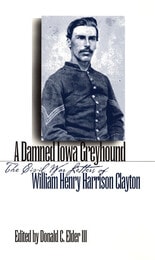
A Damned Iowa Greyhound
The Civil War Letters of William Henry Harrison ClaytonDonald C. Elder, III
University of Iowa Press, 1998
William Henry Harrison Clayton was one of nearly 75,000 soldiers from Iowa to join the Union ranks during the Civil War. Possessing a high school education and superior penmanship, Clayton served as a company clerk in the 19th Infantry, witnessing battles in the Trans-Mississippi theater. His diary and his correspondence with his family in Van Buren County form a unique narrative of the day-to-day soldier life as well as an eyewitness account of critical battles and a prisoner-of-war camp.
Clayton participated in the siege of Vicksburg and took part in operations against Mobile, but his writings are unique for the descriptions he gives of lesser-known but pivotal battles of the Civil War in the West. Fighting in the Battle of Prairie Grove, the 19th Infantry sustained the highest casualties of any federal regiment on the field. Clayton survived that battle with only minor injuries, but he was later captured at the Battle of Stirling's Plantation and served a period of ten months in captivity at Camp Ford, Texas.
Clayton's writing reveals the complicated sympathies and prejudices prevalent among Union soldiers and civilians of that period in the country's history. He observes with great sadness the brutal effects of war on the South, sympathizing with the plight of refugees and lamenting the destruction of property. He excoriates draft evaders and Copperheads back home, conveying the intra-sectional acrimony wrought by civil war. Finally, his racist views toward blacks demonstrate a common but ironic attitude among Union soldiers whose efforts helped lead to the abolition of slavery in the United States.
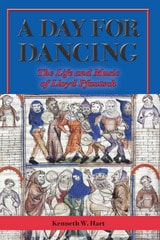
A Day for Dancing
The Life and Music of Lloyd PfautschKenneth W. Hart
University of North Texas Press, 2014
A Deaf Adult Speaks Out
Leo Jacobs
Gallaudet University Press, 1989
This new edition includes an update of services by and for deaf people, and an expanded chapter on legislation and social issues that have had an impact on the Deaf community in the last ten years.
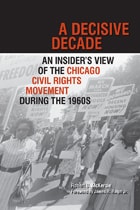
A Decisive Decade
An Insider's View of the Chicago Civil Rights Movement during the 1960sRobert B. McKersie, Foreword by James R. Ralph Jr.
Southern Illinois University Press, 2013
The deeply personal story of a historic time in Chicago, Robert B. McKersie’s A Decisive Decade follows the unfolding action of the Civil Rights Movement as it played out in the Windy City. McKersie’s participation as a white activist for black rights offers a unique, firsthand viewpoint on the debates, boycotts, marches, and negotiations that would forever change the face of race relations in Chicago and the United States at large.
Described within are McKersie’s intimate observations on events as they developed during his participation in such historic occasions as the impassioned marches for open housing in Chicago; the campaign to end school segregation under Chicago Schools Superintendent Benjamin Willis; Operation Breadbasket’s push to develop economic opportunities for black citizens; and dialogs with corporations to provide more jobs for blacks in Chicago. In addition, McKersie provides up close and personal descriptions of the iconic Civil Rights leaders who spearheaded some of the most formative battles of Chicago’s Civil Rights movement, including Dr. Martin Luther King, Jr., Reverend Jesse Jackson, Timuel Black Jr. and W. Alvin Pitcher. The author illumines the tensions experienced by two major institutions in responding to the demands of the civil rights movement: the university and the church. Packed with historical detail and personal anecdotes of these history-making years, A Decisive Decade offers a never-before-seen perspective on one of our nation’s most tumultuous eras.

A Deeper Blue
The Life and Music of Townes Van ZandtRobert Earl Hardy
University of North Texas Press, 2008
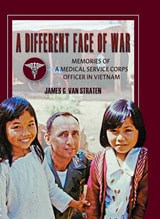
A Different Face of War
Memories of a Medical Service Corps Officer in VietnamJames G. Van Straten
University of North Texas Press, 2015

A Doctor in Galilee
The Life and Struggle of a Palestinian in IsraelHatim Kanaaneh
Pluto Press, 2008
Hatim Kanaaneh is a Palestinian doctor who has struggled for over 35 years to bring medical care to Palestinians in Galilee, against a culture of anti-Arab discrimination. This is the story of how he fought for the human rights of his patients and overcame the Israeli authorities' cruel indifference to their suffering.
Kanaaneh is a native of Galilee, born before the creation of Israel. He left to study medicine at Harvard, before returning to work as a public health physician with the intention of helping his own people. He discovered a shocking level of disease and malnutrition in his community and a shameful lack of support from the Israeli authorities. After doing all he could for his patients by working from inside the system, Kanaaneh set up The Galilee Society, an NGO working for equitable health, environmental and socio-economic conditions for Palestinian Arabs in Israel.
This is a brilliant memoir that shows how grass roots organisations can loosen the Zionist grip upon Palestinian lives.
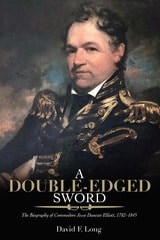
A Double-Edged Sword
The Biography of Commodore Jesse Duncan Elliott, 1782–1845David F. Long
University of Alabama Press, 2026
An overdue reassessment of one of the US Navy’s most decorated—and divisive—early commanders, whose legacy remains teetering between heroism and scandalous.
A Double-Edged Sword: The Biography of Commodore Jesse Duncan Elliott, 1782–1845 is a comprehensive and long-overdue portrait of one of the most polarizing figures in early US naval history. Written over the course of a decade and completed shortly before the author’s death, this meticulously researched biography revisits the career of a man once hailed for his military exploits—and later condemned for a myriad of personal controversies—including his perceived missteps while in command.
David F. Long traces Elliott’s rise from promising young officer to commodore, chronicling his leadership during key moments such as the capture of the brig Caledonia, the defense of Fort Erie, and his central—but contested—role in the Battle of Lake Erie. Despite notable contributions to the Navy’s early successes, including his diplomatic work and restoration of the USS Constitution, Elliott’s legacy was clouded by scandal: accusations of cowardice, a notorious duel, a contentious command style, and a drawn-out court-martial that ended his career in disgrace.
Serving as both biography and reflective historical analysis, Long paints a vivid picture of the early US Navy—its rivalries, growing pains, and evolving institutional identity. His balanced account of Elliott’s life, neither excusing his faults nor downplaying his achievements, places the commodore’s story in direct conversation with the challenges and ambitions of a rapidly expanding American maritime power. This is a must read for scholars of naval and military history, early American politics, or anyone interested in the brazen albeit controversial legacy of a forgotten national hero.
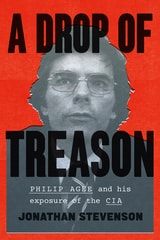
A Drop of Treason
Philip Agee and His Exposure of the CIAJonathan Stevenson
University of Chicago Press, 2021
The first biography of this contentious, legendary man, Jonathan Stevenson’s A Drop of Treason is a thorough portrait of Agee and his place in the history of American foreign policy and the intelligence community during the Cold War and beyond. Unlike mere whistleblowers, Agee exposed American spies by publicly blowing their covers. And he didn’t stop there—his was a lifelong political struggle that firmly allied him with the social movements of the global left and against the American project itself from the early 1970s on. Stevenson examines Agee’s decision to turn, how he sustained it, and how his actions intersected with world events.
Having made profound betrayals and questionable decisions, Agee lived a rollicking, existentially fraught life filled with risk. He traveled the world, enlisted Gabriel García Márquez in his cause, married a ballerina, and fought for what he believed was right. Raised a conservative Jesuit in Tampa, he died a socialist expat in Havana. In A Drop of Treason, Stevenson reveals what made Agee tick—and what made him run.
A Dutch Family in the Middle Colonies
1660-1880Firth Haring Fabend
Rutgers University Press, 1991
As she traces the lives of the Harings and their neighbors, Fabend focuses on their marriage and childbearing patterns, living conditions, agricultural methods, and relative economic position. She investigates inheritance patterns, concluding that the position of women deteriorated under English law. She is equally interested in the political and religious life of the family. The Harings formed a church fitting their Pietist beliefs, and this church became central to community life. Their theology encouraged them to question religious authority, which in turn fostered the questioning of political authority. Their community became a seedbed for revolutionary activity. Fabend examines the family's position in the Revolution--primarily patriot--and the losses they suffered in that conflict.
The Harings of colonial America were ideal yeoman farmers, a class that stood well in the social hierarchy of the day. They were industrious, they prospered, and they participated in the civic life of colonial America. But once the new republic formed, they were not very visible. Fabend argues that they maintained their "Dutchness" more consciously than ever after the Revolution, which hindered their full participation in public affairs. In some ways, the fifth and sixth generations were more Dutch than the early generations.
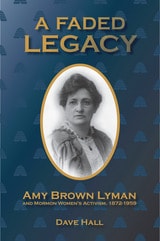
A Faded Legacy
Amy Brown Lyman and Mormon Women's Activism, 1872 - 1959Dave Hall
University of Utah Press, 2015
Placing Lyman’s story within a local and national context, award-winning author Dave Hall examines the roots and trajectory of Mormon women’s activism. Born into a polygamist family, Lyman entered the larger sphere of public life at the time when the practice of polygamy was ending and Mormonism had begun assimilating mainstream trends. The book follows her life as she prepared for a career, married, and sought meaning in a rapidly changing society. It recounts her involvement in the Relief Society, the Mormon women’s charity group that she led for many years and sought to transform into a force for social welfare, and it considers the influence of her connections with national and international women’s organizations. The final period of Lyman’s life, in which she resigned from the Relief Society amidst personal tragedy, offers insight into the reasons Mormon women abandoned their activist heritage for a more conservative role, a stance that is again evolving.
Winner of the Mormon History Association's Best First Book Award.