Results by title
235 books match the query 'Books and reading' and 13 start with a

A Few Good Books
Stephanie L. Maatta
American Library Association, 2010
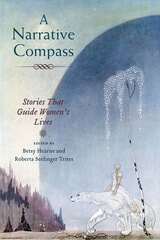
A Narrative Compass
Stories that Guide Women's LivesEdited by Betsy Hearne and Roberta Seelinger Trites
University of Illinois Press, 2008
Each of us has a narrative compass, a story that has guided our lifework. In this extraordinary collection, women scholars from a variety of disciplines identify and examine the stories that have inspired them, haunted them, and shaped their research, from Little House on the Prairie to Little Women, from the fairy tales of Hans Christian Andersen and Alice's Adventures in Wonderland to Nancy Drew, Mary Jane, and even the Chinese memoir Jottings from the Transcendant's Abode at Mt. Youtai. Telling the "story of her story" leads each of the essayists to insights about her own approach to studying narratives and to a deeper, often surprising, understanding of the power of imagination.
Contributors are Deyonne Bryant, Minjie Chen, Cindy L. Christiansen, Beverly Lyon Clark, Karen Coats, Wendy Doniger, Bonnie Glass-Coffin, Betsy Hearne, Joanna Hearne, Ann Hendricks, Rania Huntington, Christine Jenkins, Kimberly Lau, Pamela Riney-Kehrberg, Maria Tatar, Ebony Elizabeth Thomas, Roberta Seelinger Trites, Claudia Quintero Ulloa, and Ofelia Zepeda.

A Reader’s Delight
Noel Perrin
Brandeis University Press, 1988
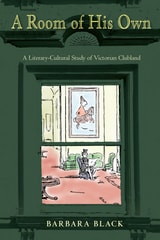
A Room of His Own
A Literary-Cultural Study of Victorian ClublandBarbara Black
Ohio University Press, 2012
In nineteenth-century London, a clubbable man was a fortunate man, indeed. The Reform, the Athenaeum, the Travellers, the Carlton, the United Service are just a few of the gentlemen’s clubs that formed the exclusive preserve known as “clubland” in Victorian London—the City of Clubs that arose during the Golden Age of Clubs. Why were these associations for men only such a powerful emergent institution in nineteenth-century London? Distinctly British, how did these single-sex clubs help fashion men, foster a culture of manliness, and assist in the project of nation building? What can elite male affiliative culture tell us about nineteenth-century Britishness?
A Room of His Own sheds light on the mysterious ways of male associational culture as it examines such topics as fraternity, sophistication, nostalgia, social capital, celebrity, gossip, and male professionalism. The story of clubland (and the literature it generated) begins with Britain’s military heroes home from the Napoleonic campaign and quickly turns to Dickens’s and Thackeray’s acrimonious Garrick Club Affair. It takes us to Richard Burton’s curious Cannibal Club and Winston Churchill’s The Other Club; it goes underground to consider Uranian desire and Oscar Wilde’s clubbing and resurfaces to examine the problematics of belonging in Trollope’s novels. The trespass of French socialist Flora Tristan, who cross-dressed her way into the clubs of Pall Mall, provides a brief interlude. London’s clubland—this all-important room of his own—comes to life as Barbara Black explores the literary representations of clubland and the important social and cultural work that this urban site enacts. Our present-day culture of connectivity owes much to nineteenth-century sociability and Victorian networks; clubland reveals to us our own enduring desire to belong, to construct imagined communities, and to affiliate with like-minded comrades.
A World of Fiction
Digital Collections and the Future of Literary HistoryKatherine Bode
University of Michigan Press, 2018
A Year of Programs for Teens 2
Amy Alessio
American Library Association, 2011
ALSC's Popular Picks for Young Readers
Diane Foote
American Library Association, 2014
After-School Clubs for Kids
Thematic Programming to Encourage ReadingLisa M. Shaia
American Library Association, 2014
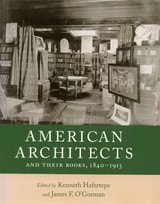
American Architects and Their Books, 1840-1915
Kenneth Hafertepe
University of Massachusetts Press, 2007
In this well-illustrated volume, a chronological sequel to American Architects and Their Books to 1848, twelve distinguished historians of architecture discuss from various points of view the books that inspired architects both famous and not-so-famous, and the books the architects themselves produced. They examine the multifaceted relationship of nineteenth- and early twentieth-century architects to print culture—the literary works that architects collected, used, argued over, wrote, illustrated, designed, printed, were inspired by, cribbed from, educated clients with, advertised their services through, designed libraries for, or just plain enjoyed. The result is a volume that presents the intersection of the history of architecture, the history of ideas, and the history of the book. Changes in print culture during this period had a significant impact on the architectural profession, as revealed in these well-informed scholarly essays.
In addition to the editors, contributors include Jhennifer A. Amundson, Edward R. Bosley, Ted Cavanagh, Elspeth Cowell, Elaine Harrington, Michael J. Lewis, Anne E. Mallek, Daniel D. Reiff, Earle G. Shettleworth, Jr., and Chris Szczesny-Adams. Among the architects discussed are A. J. Downing, Charles Sumner Greene, James Sims, Samuel Sloan, John Calvin Stevens, Thomas U. Walter, and Frank Lloyd Wright.
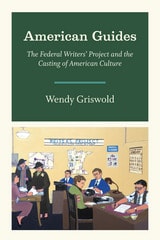
American Guides
The Federal Writers’ Project and the Casting of American CultureWendy Griswold
University of Chicago Press, 2016
Griswold’s subject here is the Project’s American Guides, an impressively produced series that set out not only to direct travelers on which routes to take and what to see throughout the country, but also to celebrate the distinctive characteristics of each individual state. Griswold finds that the series unintentionally diversified American literary culture’s cast of characters—promoting women, minority, and rural writers—while it also institutionalized the innovative idea that American culture comes in state-shaped boxes. Griswold’s story alters our customary ideas about cultural change as a gradual process, revealing how diversity is often the result of politically strategic decisions and bureaucratic logic, as well as of the conflicts between snobbish metropolitan intellectuals and stubborn locals. American Guides reveals the significance of cultural federalism and the indelible impact that the Federal Writers’ Project continues to have on the American literary landscape.
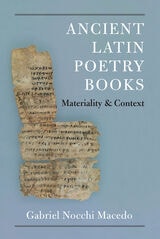
Ancient Latin Poetry Books
Materiality and ContextGabriel Nocchi Macedo
University of Michigan Press, 2021
Before the invention of printing, all forms of writing were done by hand. For a literary text to circulate among readers, and to be transmitted from one period in time to another, it had to be copied by scribes. As a result, two copies of an ancient book were different from one another, and each individual book or manuscript has its own history. The oldest of these books, those that are the closest to the time in which the texts were composed, are few, usually damaged, and have been often neglected in the scholarship. Ancient Latin Poetry Books presents a detailed study of the oldest manuscripts still extant that contain texts by Latin poets, such as Virgil, Terence, and Ovid. Analyzing their physical characteristics, their script, and the historical contexts in which they were produced and used, this volume shows how manuscripts can help us gain a better understanding of the history of texts, as well as of reading habits over the centuries. Since the manuscripts originated in various places of the Latin-speaking world, Ancient Latin Poetry Books investigates the readership and reception of Latin poetry in many different contexts, such schools in the Egyptian desert, aristocratic circles in southern Italy, and the Christian élite in late antique Rome. The research also contributes to our knowledge about the use of writing and the importance of the written text in antiquity. This is an innovative approach to the study of ancient literature, one that takes the materiality of texts into consideration.
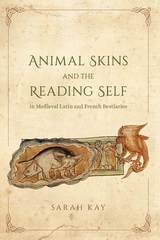
Animal Skins and the Reading Self in Medieval Latin and French Bestiaries
Sarah Kay
University of Chicago Press, 2017
Bestiaries present accounts of animals whose fantastic behaviors should be imitated or avoided, depending on the given trait. In a highly original argument, Kay suggests that the association of beasts with books is here both literal and material, as nearly all surviving bestiaries are copied on parchment made of animal skin, which also resembles human skin. Using a rich array of examples, she shows how the content and materiality of bestiaries are linked due to the continual references in the texts to the skins of other animals, as well as the ways in which the pages themselves repeatedly—and at times, it would seem, deliberately—intervene in the reading process. A vital contribution to animal studies and medieval manuscript studies, this book sheds new light on the European bestiary and its profound power to shape readers’ own identities.
Annotated Book Lists Teen Reader
The Best from the Experts at YALSA-BKAmerican Library Association, 2011