Results by title
74 books match the query 'Church' and 7 start with a
A Church of Our Own
Disestablishment and Diversity in American ReligionWarner, R. Stephen
Rutgers University Press, 2005
In this definitive collection of essays spanning fifteen years, R. Stephen Warner traces the development of the “new paradigm” interpretation of American religion. Originally formulated in the 1990s in response to prevailing theories of secularization that focused on the waning plausibility of religion in modern societies, the new paradigm reoriented the study of religion to a focus on communities, subcultures, new religious institutions, and the fluidity of modern religious identities. This perspective continues to be one of the most important driving forces in the field and one of the most significant challenges to the idea that religious pluralism inevitably leads to religious decline.
A leading sociologist of religion, Warner shows how the new paradigm stresses the role that religion plays as a vehicle for the bonding and expression of communities within the United States—a society founded on the principle of religious disestablishment and characterized by a diverse and mobile population. Chapters examine evangelicals and Pentecostals, gay and lesbian churches, immigrant religious institutions, Hispanic parishes, and churches for the deaf in terms of this framework. Newly written introductory and concluding essays set these groups within the broad context of the developing field. A thoughtfully organized and timely collection, the volume is a valuable classroom resource as well as essential reading for scholars of contemporary religion.
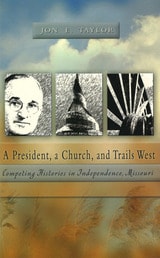
A President, a Church and Trails West
Competing Histories in Independence, MissouriJon E. Taylor
University of Missouri Press, 2008
Over the past century, three nationally significant histories have vied for space and place in Independence, Missouri. Independence was declared Zion by Joseph Smith, served as a gathering and provisioning point for trails west, and was called home by President Harry S. Truman for sixty-four years. Historian Jon E. Taylor has integrated research from newspapers, public documents, oral histories, and private papers to detail how the community has preserved and remembered these various legacies.
Truman’s legacy would appear to have been secured in Independence via three significant designations—his presidential library opened there in 1957, his neighborhood was designated a national historic landmark in 1972, and his home was declared a national historic site in 1982. However, Taylor argues that Truman’s seeming dominance in the community’s memory is in fact endangered by competition from the other aspects of the town’s historical heritage.
Taylor considers the role Mormon history has played in the city's history and chronicles how the Reorganized Church of Jesus Christ of Latter Day Saints returned to Independence to fulfill Joseph Smith's dream of creating Zion in the city, a situation that impacted neighborhoods near the Truman home. Taylor also examines the city's fascination with the Santa Fe, Oregon, and California trails, detailing how that history was lost and remembered and is now immortalized on the Independence square and in the National Frontier Trails Museum.
In the 1980s, the city council reduced the size of the Truman Heritage District, created to maintain Truman’s association with his neighborhood, after church opposition. At the same time, city officials pushed to make Independence a major tourist destination, a move largely dependent upon the city capitalizing on its association with Truman. These inconsistent policies and incongruous goals have led to innumerable changes in the landscape Truman enjoyed during his legendary morning walks.
A President, a Church, and Trails West chronicles one city’s struggle to preserve its history and the built environment. Taylor places the role of preservation in Independence not only within the larger context of preservation in the United States but also within the context of American environmental history. This volume is sure to appeal to anyone interested in public history, historic preservation, history and memory, and local history.
Aging in the Church
How Social Relationships Affect HealthNeal M. Krause
Templeton Press, 2008
A growing number of studies indicate that older people in the church form social ties that have a significant positive impact on their physical and mental health. In Aging in the Church, Neal Krause comprehensively assesses the various relationships that stem from church involvement.
Among the many types of relationships Krause explores are close companion friendships, social-support structures (such as assistance provided by fellow church members during difficult times), and interactions that arise from Bible study and prayer groups. Through his thorough investigation of the underlying links between these relationships and the ways they relate to attributes like forgiveness, hope, gratitude, and altruism, the author hopes to explain why older adults who are involved in religious activities tend to enjoy better physical and mental health than those who are not engaged in religious communities. Going beyond merely reviewing the existing research on this subject, Aging in the Church provides a blueprint for taking research on church-based social relationships and health to the next level by identifying conceptual and methodological issues that investigators will confront as they delve more deeply into these connections.
Though these are complex issues, readers will find plain language and literature drawn from a wide array of disciplines, including sociology, psychology, public health, medicine, psychiatry, nursing, social work, gerontology, and theology. Literature, poetry, philosophy, and ethical ideas supplement the insights from these diverse fields. As a result, Aging in the Church takes on a genuinely interdisciplinary focus that will appeal to various scholars, researchers, and students.
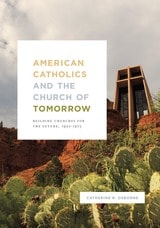
American Catholics and the Church of Tomorrow
Building Churches for the Future, 1925–1975Catherine R. Osborne
University of Chicago Press, 2018
Catherine R. Osborne’s innovative new book finds the answer: the alignment between postwar advancements in technology and design and evolutionary thought within the burgeoning American Catholic community. A new, visibly contemporary approach to design, church leaders thought, could lead to the rebirth of the church community of the future. As Osborne explains, the engineering breakthroughs that made modernist churches feasible themselves raised questions that were, for many Catholics, fundamentally theological. Couldn’t technological improvements engender worship spaces that better reflected God's presence in the contemporary world? Detailing the social, architectural, and theological movements that made modern churches possible, American Catholics and the Churches of Tomorrow breaks important new ground in the history of American Catholicism, and also presents new lines of thought for scholars attracted to modern architectural and urban history.
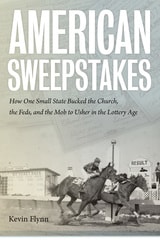
American Sweepstakes
How One Small State Bucked the Church, the Feds, and the Mob to Usher in the Lottery AgeKevin Flynn
University Press of New England, 2015
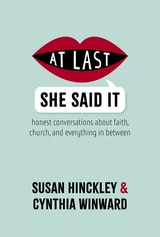
At Last She Said It
Honest Conversations About Faith, Church, and Everything in BetweenSusan Hinckley and Cynthia Winward
Signature Books, 2025
“Women of faith, discussing complicated things.” That’s how authors Susan Hinckley and Cynthia Winward describe At Last She Said It, and they don’t expect the knots to untangle themselves. Even with two very different personalities and a decade or so between them, as their friendship developed they kept stumbling onto what felt like an uncanny amount of common ground in their church experiences. Often their conversations ended with, “Why isn’t anyone talking about this? Someone should do a podcast!” So they did. They had a hunch they weren’t the only women wishing they had a place to discuss the things they were thinking about, a lot of which they’d never said—or heard—out loud. That hunch was right. Their 200-and-counting recorded conversations have been downloaded some two million times. Hinckley and Winward have learned, right along with their listeners, that there’s no power quite like finding out you’re not alone.
Their book now asks Latter-day Saints to think about old ideas in new ways. Stretching can be uncomfortable, but the willingness to consider diverse perspectives—even on the things we hold most dear—feels essential in an evolving world. So does being open to changing our minds, including how we think about ourselves. Faith is alive when it’s growing, and growing means change. Hopefully, these conversations will be the beginning of thousands more.
At Last She Said It
Honest Conversations About Faith, Church, and Everything in BetweenSusan Hinckley and Cynthia Winward
Signature Books, 2025
“Women of faith, discussing complicated things.” That’s how authors Susan Hinckley and Cynthia Winward describe At Last She Said It, and they don’t expect the knots to untangle themselves. Even with two very different personalities and a decade or so between them, as their friendship developed they kept stumbling onto what felt like an uncanny amount of common ground in their church experiences. Often their conversations ended with, “Why isn’t anyone talking about this? Someone should do a podcast!” So they did. They had a hunch they weren’t the only women wishing they had a place to discuss the things they were thinking about, a lot of which they’d never said—or heard—out loud. That hunch was right. Their 200-and-counting recorded conversations have been downloaded some two million times. Hinckley and Winward have learned, right along with their listeners, that there’s no power quite like finding out you’re not alone.
Their book now asks Latter-day Saints to think about old ideas in new ways. Stretching can be uncomfortable, but the willingness to consider diverse perspectives—even on the things we hold most dear—feels essential in an evolving world. So does being open to changing our minds, including how we think about ourselves. Faith is alive when it’s growing, and growing means change. Hopefully, these conversations will be the beginning of thousands more.