108 books match the query 'Comparative Religion' and 11 start with a
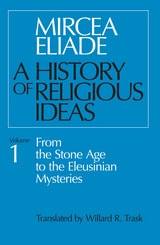
cover of A History of Religious Ideas, Volume 1: From the Stone Age to the Eleusinian Mysteries

A History of Religious Ideas, Volume 1

From the Stone Age to the Eleusinian Mysteries

Mircea Eliade

University of Chicago Press, 1978
"No one has done so much as Mr. Eliade to inform literature students in the West about 'primitive' and Oriental religions. . . . Everyone who cares about the human adventure will find new information and new angles of vision."—Martin E. Marty, New York Times Book Review
[more]
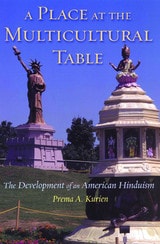
cover of A Place at the Multicultural Table: The Development of an American Hinduism

A Place at the Multicultural Table

The Development of an American Hinduism

Kurien, Prema

Rutgers University Press, 2007

Multiculturalism in the United States is commonly lauded as a positive social ideal celebrating the diversity of our nation. But, in reality, immigrants often feel pressured to create a singular formulation of their identity that does not reflect the diversity of cultures that exist in their homeland. Hindu Americans have faced this challenge over the last fifteen years, as the number of Indians that have immigrated to this country has more than doubled.

In A Place at the Multicultural Table, Prema A. Kurien shows how various Hindu American organizations--religious, cultural, and political--are attempting to answer the puzzling questions of identity outside their homeland. Drawing on the experiences of both immigrant and American-born Hindu Americans, Kurien demonstrates how religious ideas and practices are being imported, exported, and reshaped in the process. The result of this transnational movement is an American Hinduism--an organized, politicized, and standardized version of that which is found in India.

This first in-depth look at Hinduism in the United States and the Hindu Indian American community helps readers to understand the private devotions, practices, and beliefs of Hindu Indian Americans as well as their political mobilization and activism. It explains the differences between immigrant and American-born Hindu Americans, how both understand their religion and their identity, and it emphasizes the importance of the social and cultural context of the United States in influencing the development of an American Hinduism.
[more]
cover of A Theory of Religion

A Theory of Religion

Stark, Rodney

Rutgers University Press, 1996

In this unique text, Stark and Bainbridge begin with basic statements about human nature and, employing the principles of logic and philosophy, build toward increasingly complex propositions about societies and their religious institutions. They provide a rigorous yet flexible sociological theory of religion as well as a general sociological model for deriving macrolevel theory from microlevel evidence.
[more]
cover of Accounting for Fundamentalisms: The Dynamic Character of Movements

Accounting for Fundamentalisms

The Dynamic Character of Movements

Edited by Martin E. Marty and R. Scott Appleby

University of Chicago Press, 1994
Accounting for Fundamentalisms features treatments of fundamentalist movements, groups that often make headlines but are rarely understood, as part of the multivolume Fundamentalism Project. This book remains a standard reference source for comprehending the dynamics of fundamentalist movements around the world. Surveying fundamentalist movements in Christianity, Judaism, Islam, Hinduism, Sikhism, and Buddhism, the contributors to Accounting for Fundamentalisms describe the organization of these movements, their leadership and recruiting techniques, and the ways in which their ideological programs and organizational structures shift over time in response to changing political and social environments.
[more]
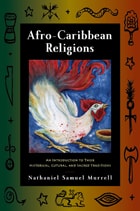
cover of Afro-Caribbean Religions: An Introduction to Their Historical, Cultural, and Sacred Traditions

Afro-Caribbean Religions

An Introduction to Their Historical, Cultural, and Sacred Traditions

Nathaniel Samuel Murrell

Temple University Press, 2009

Religion is one of the most important elements of Afro-Caribbean culture linking its people to their African past, from Haitian Vodou and Cuban Santeria—popular religions that have often been demonized in popular culture—to Rastafari in Jamaica and Orisha-Shango of Trinidad and Tobago. In Afro-Caribbean Religions, Nathaniel Samuel Murrell provides a comprehensive study that respectfully traces the social, historical, and political contexts of these religions. And, because Brazil has the largest African population in the world outside of Africa, and has historic ties to the Caribbean, Murrell includes a section on Candomble, Umbanda, Xango, and Batique.

This accessibly written introduction to Afro-Caribbean religions examines the cultural traditions and transformations of all of the African-derived religions of the Caribbean along with their cosmology, beliefs, cultic structures, and ritual practices. Ideal for classroom use, Afro-Caribbean Religions also includes a glossary defining unfamiliar terms and identifying key figures.
[more]
cover of Against Dogmatism: Dwelling in Faith and Doubt

Against Dogmatism

Dwelling in Faith and Doubt

Madhuri Yadlapati

University of Illinois Press, 2013

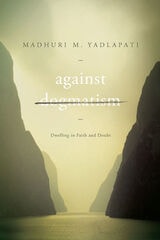
Many contemporary discussions of religion take an absolute, intractable approach to belief and nonbelief that privileges faith and dogmatism while treating doubt as a threat to religious values. As Madhuri M. Yadlapati demonstrates, however, there is another way: a faith (or nonfaith) that embraces doubt and its potential for exploring both the depths and heights of spiritual reflection and speculation. Through three distinct discussions of faith, doubt, and hope, Yadlapati explores what it means to live creatively and responsibly in the everyday world as limited, imaginative, and questioning creatures. She begins with a perceptive survey of diverse faith experiences in Islam, Buddhism, Judaism, Hinduism, and Protestant Christianity and then narrows her focus to Protestant Christianity and Hinduism to explore how the great thinkers of those faiths have embraced doubt in the service of spiritual transcendence.

Yadlapati traces religious perspectives on trust, humility, belonging, commitment, and lively skepticism as they relate to faith and doubt. Drawing on various doctrines, scriptures, and the writings of great religious thinkers such as C. S. Lewis, Søren Kierkegaard, Karl Barth, and Raimon Panikkar, Yadlapati demonstrates how doubt can serve to enhance faith, not hinder it. Defending the rich tapestry of faith and doubt against polarization, Against Dogmatism reveals an ecumenical middle way, a spiritual approach native to traditions in which faith and doubt are interwoven in constructive and dynamic ways.
[more]
cover of American Examples, Vol 4: New Conversations about Religion

American Examples, Vol 4

New Conversations about Religion

Edited by Candace Lukasik, Joshua Urich, and Michael J. Altman

University of Alabama Press, 2025

Case studies that vividly reimagine the meaning and applications of American religious history 

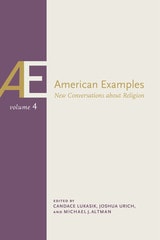
American Examples: New Conversations about Religion, Volume Four, continues the annual anthology series produced by the American Examples workshop at the University of Alabama’s Department of Religious Studies. The goal of American Examples is to examine examples of “something someone called religious, somewhere someone called America” by asking theoretical questions that exceed the boundaries of American religion or American religious history. This volume features seven essays exploring examples ranging from American Muslim headwear to online pickup artists to the connections between Dutch immigrants and Japanese students. This collection offers valuable insights for scholars and students within and beyond the field of American religious history.

Visit americanexamples.ua.edu for more information on upcoming workshop dates and future projects
[more]
cover of Ancient Egypt: Cradle of Early Christianity

Ancient Egypt

Cradle of Early Christianity

Tjeu van den Berk

Eburon Academic Publishers, 2021

Traces the sources of the Christian religion to ancient Egypt.

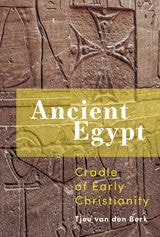
The earliest Christian myths emerged in the melting pot of gnostic Alexandria—not in orthodox Jerusalem, classical Athens, or legalistic Rome. In this book, Tjeu van den Berk traces the sources of the Christian faith to the banks of the river Nile. Focusing on ancient archetypes, van den Berk underscores the striking similarities between the Egyptian and Christian religions. In this fascinating study, he explores the symbolism of the Trinity, the cross, and the myths of a god born of a virgin. He also traces the origins of the stories of Lazarus and Saint George, and he finds stunning parallels between Egyptian mythology and the Book of Revelation. 
 
[more]
cover of Apples and Oranges: Explorations In, On, and With Comparison

Apples and Oranges

Explorations In, On, and With Comparison

Bruce Lincoln

University of Chicago Press, 2018

Comparison is an indispensable intellectual operation that plays a crucial role in the formation of knowledge. Yet comparison often leads us to forego attention to nuance, detail, and context, perhaps leaving us bereft of an ethical obligation to take things correspondingly as they are. Examining the practice of comparison across the study of history, language, religion, and culture, distinguished scholar of religion Bruce Lincoln argues in Apples and Oranges for a comparatism of a more modest sort.

Lincoln presents critiques of recent attempts at grand comparison, and enlists numerous theoretical examples of how a more modest, cautious, and discriminating form of comparison might work and what it can accomplish. He does this through studies of shamans, werewolves, human sacrifices, apocalyptic prophecies, sacred kings, and surveys of materials as diverse and wide-ranging as Beowulf, Herodotus’s account of the Scythians, the Native American Ghost Dance, and the Spanish Civil War.

Ultimately, Lincoln argues that concentrating one's focus on a relatively small number of items that the researcher can compare closely, offering equal attention to relations of similarity and difference, not only grants dignity to all parties considered, it yields more reliable and more interesting—if less grandiose—results. Giving equal attention to the social, historical, and political contexts and subtexts of religious and literary texts also allows scholars not just to assess their content, but also to understand the forces, problems, and circumstances that motivated and shaped them.  

 
[more]
cover of Autobiography, Volume 1: 1907-1937, Journey East, Journey West

Autobiography, Volume 1

1907-1937, Journey East, Journey West

Mircea Eliade

University of Chicago Press, 1990

"Here finally are Eliade's memoirs of the first thirty years of his life in Mac Linscott Rickett's crisp and lucid English translation. They present a fascinating account of the early development of a Renaissance talent, expressed in everything from daily and periodical journalism, realistic and fantastic fiction, and general nonfiction works to distinguished contributions to the history of religions. Autobiography follows an apparently amazingly candid report of this remarkable man's progression from a mischievous street urchin and literary prodigy, through his various love affairs, a decisive and traumatic Indian sojourn, and active, brilliant participation in pre-World War II Romanian cultural life."—Seymour Cain, Religious Studies Review
[more]
cover of Autobiography, Volume 2: 1937-1960, Exile's Odyssey

Autobiography, Volume 2

1937-1960, Exile's Odyssey

Mircea Eliade

University of Chicago Press, 1988

"Here finally are Eliade's memoirs of the first thirty years of his life in Mac Linscott Rickett's crisp and lucid English translation. They present a fascinating account of the early development of a Renaissance talent, expressed in everything from daily and periodical journalism, realistic and fantastic fiction, and general nonfiction works to distinguished contributions to the history of religions. Autobiography follows an apparently amazingly candid report of this remarkable man's progression from a mischievous street urchin and literary prodigy, through his various love affairs, a decisive and traumatic Indian sojourn, and active, brilliant participation in pre-World War II Romanian cultural life."—Seymour Cain, Religious Studies Review
[more]