Results by title
59 books match the query 'Concepts' and 3 start with a

A Tallgrass Prairie Alphabet
Claudia McGehee
University of Iowa Press, 2004
[more]
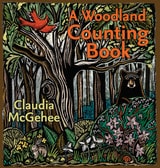
A Woodland Counting Book
Claudia McGehee
University of Iowa Press, 2006
Towering oak and hickory woodlands once fringed the tallgrass prairie of the Midwest. In a wondrous mixture of plant and animal life, big mammals like black bears and cougars thrived alongside gray foxes and ovenbirds. But as more people arrived, the woodlands, like the tallgrass prairie, were cleared with amazing speed. Now only small portions of this special habitat remain, and many of its animals and plants are endangered or extinct. Despite the great loss, many people are working to restore and enlarge what remains so that woodlands can continue to support a rich wildlife community. And so we can all enjoy a walk in the woods. A Woodland Counting Book helps children learn about the woodland family. From one splendid white oak to fifty busy carpenter ants, illustrator Claudia McGehee counts the wonders of the woodlands in this beautifully illustrated companion to her previous children’s book, A Tallgrass Prairie Alphabet. As she follows spring to summer to fall to winter, returning at the book’s end to springtime in “one woodland community,” McGehee introduces more than twenty species of plants and animals. From the white oaks that tower overhead to shelter the woodland citizens to the delicate showy lady’s-slipper orchid and from the barred owls with distinctive hoots and calls to tiny evening bats which roost in hollow trees, we meet a wild world of woodland life. We find luna moths and serviceberries, shagbark hickories, blue spotted salamanders, wild turkeys, red squirrels, orchard orioles, and a host of other familiar and not-so-familiar plants and animals. A section of woodland notes gives common and scientific names of and interesting information about all featured species. These vibrantly colored scratchboard illustrations reveal the beauty of our woodland communities, guiding nature lovers and children of all ages through a much-loved landscape.
[more]
Articulating the World
Conceptual Understanding and the Scientific ImageJoseph Rouse
University of Chicago Press, 2015
Naturalism as a guiding philosophy for modern science both disavows any appeal to the supernatural or anything else transcendent to nature, and repudiates any philosophical or religious authority over the workings and conclusions of the sciences. A longstanding paradox within naturalism, however, has been the status of scientific knowledge itself, which seems, at first glance, to be something that transcends and is therefore impossible to conceptualize within scientific naturalism itself.
In Articulating the World, Joseph Rouse argues that the most pressing challenge for advocates of naturalism today is precisely this: to understand how to make sense of a scientific conception of nature as itself part of nature, scientifically understood. Drawing upon recent developments in evolutionary biology and the philosophy of science, Rouse defends naturalism in response to this challenge by revising both how we understand our scientific conception of the world and how we situate ourselves within it.
In Articulating the World, Joseph Rouse argues that the most pressing challenge for advocates of naturalism today is precisely this: to understand how to make sense of a scientific conception of nature as itself part of nature, scientifically understood. Drawing upon recent developments in evolutionary biology and the philosophy of science, Rouse defends naturalism in response to this challenge by revising both how we understand our scientific conception of the world and how we situate ourselves within it.
[more]