Results by title
69 books match the query 'Country life' and 5 start with a
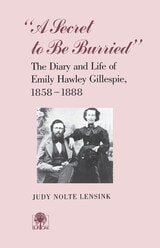
A Secret To Be Burried
Diary Emily Hawley GillespieJudy Nolte Lensink
University of Iowa Press, 1989
The sound of nineteenth-century women, once thought lost to us, is alive because ordinary women like Emily Hawley Gillespie gave voice to their thoughts in diaries. This condensed version of the 2,500-page journals of Emily Gillespie, faithfully written from 1858 to 1888, is a detailed account of rural Iowa life. More than this, it contains the reflections of a woman who dreamed of being a painter and writer and instead became a wife and a mother, a woman whose radical convictions were recorded in her diary, while publicly she conformed to the prescribed life of a Victorian pioneer woman. Through Emily's journals, readers are offered immediate and unmodified contact with settlers in Iowa one hundred years ago. A wealth of facts are included—what produce she harvested and preserved from her garden, how her husband tended his fields and what he raised, the challenges and rewards of family life.
Judy Lensink's skillful analysis shows the larger patterns in Emily Gillespie's life and provides keys that unlock the diary's secrets. Emily's life is revealed as a youth full of promise fading into middle and declining years of lost dreams and eventual tragedy, which caused her to write, "I have written many things in my journal, but the worst is a secret to be burried when I shall cease to be."
A Spell on the Water
Marjorie Kowalski Cole
University of Michigan Press, 2011
"I couldn't put it down."
---Barbara Kingsolver
In 1955, Mary and Jim Leader have the American dream: careers in medicine; a young and healthy family; and even a vacation home---a shabby resort far from bustling Chicago. But one hot afternoon changes everything. Mary, now a widow, must find a path out of her grief into a future for herself and five small children.
In Michigan to sell the resort, Mary sees seven hawks riding the storm winds over the lake. This place, she thinks, can heal them with its wild beauty, so she moves her family to the northern lakeshore.
But Mary has forgotten what it's like to live in a tiny rural community, where almost everyone has a stake in maintaining the status quo. Secrets are kept at great cost as Mary's children often struggle to raise themselves. A coming-of-age story for each member of the family, this is a novel of quiet heroism and the power of personal freedom.
Praise for Marjorie Kowalski Cole and her previous novel, Correcting the Landscape:
". . . her writing is simple, vivid and gorgeous."
---Eugene Register-Guard
". . . a remarkable new talent. Critics have lined up to praise the book."
---Tucson Citizen
"Cole's style is subtle but engrossing . . . It is quite a debut."
---Booklist
Cover illustration: ©iStockphoto.com/ImagineGolf

After The Fire
A Writer Finds His PlacePaul Zimmer
University of Minnesota Press, 2002
Looking back at a lifetime of rich experience from Wisconsin’s driftless hills
We all dream of finding the place we can be most ourselves, the landscape that seems to have been crafted just for us. The poet Paul Zimmer has found his: a farm in the driftless hills of southwestern Wisconsin, a region of rolling land and crooked rivers, "driftless" because here the great glaciers of the Patrician ice sheet split widely, leaving behind a heart-shaped area untouched by crushing ice. After the Fire is the story of Zimmer’s journey from his boyhood in the factory town of Canton, Ohio, and his days as a soldier during atomic tests in the Nevada desert, to his many years in the book business as a writer and publisher, and the rural tranquillity of his present life.
Zimmer juxtaposes timeless rustic subjects (tending the land, country people and their ways, the ever-changing beauty of his natural surroundings) with flashbacks to key moments: his first and only boxing match, hearing Count Basie play and discovering his lifelong love of jazz, his return to the France of his ancestors, his painful departure from the publishing world after forty years. These stories are full of humor and pathos, keen insights and poignant meditations, but the real center of the book is the abiding beauty of the driftless hills, the silence and peace that is the source of and reward for Zimmer’s hard-won wisdom. Above all, it is a meditation on the ways that nature provides deep meaning and solace, and a consideration of the importance of finding the right place.
All the Leavings
Laurie Easter
Oregon State University Press, 2021
Whether recounting the home birth of her second child, encounters with cougars, the fraught dynamics of mother-daughter relationships, the destructive power of wildfires, or the community bonds challenged by a tragic suicide, Easter’s writing is firmly grounded in place. She takes readers deep into the heart of a still-wild Oregon, perilous yet rich with natural beauty.
Written from one woman’s perspective as a mother, wife, and friend, All the Leavings is ultimately a book about love—for the child who faces a health crisis, for the friend dying of AIDS, for the one entangled by addiction who then disappears. Long after the final page is turned, it will resonate with readers interested in essays, memoir, alternative lifestyles, and the literature of the West.
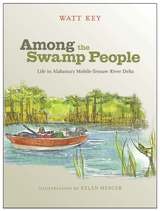
Among the Swamp People
Life in Alabama's Mobile-Tensaw River DeltaWatt Key
University of Alabama Press, 2015
Among the Swamp People is the story of author Watt Key’s discovery of the Mobile-Tensaw River Delta. “The swamp” consists of almost 260,000 acres of wetlands located just north of Mobile Bay. There he leases a habitable outcropping of land and constructs a primitive cabin from driftwood to serve as a private getaway. His story is one that chronicles the beauties of the delta’s unparalleled natural wonders, the difficulties of survival within it, and an extraordinary community of characters—by turns generous and violent, gracious and paranoid, hilarious and reckless—who live, thrive, and perish there.
There is no way into the delta except by small boat. To most it would appear a maze of rivers and creeks between stunted swamp trees and mud. Key observes that there are few places where one can step out of a boat without “sinking to the knees in muck the consistency of axle grease. It is the only place I know where gloom and beauty can coexist at such extremes. And it never occurred to me that a land seemingly so bleak could hide such beauty and adventure.”
It also chronicles Key’s maturation as a writer, from a twenty-five-year-old computer programmer with no formal training as a writer to a highly successful, award-winning writer of fiction for a young adult audience with three acclaimed novels published to date.
In learning to make a place for himself in the wild, as in learning to write, Key’s story is one of “hoping someone—even if just myself—would find value in my creations.”