Results by title
76 books match the query 'Cultural History' and 9 start with a
A Crooked Line
From Cultural History to the History of SocietyGeoff Eley
University of Michigan Press, 2005
--Lizabeth Cohen, author of A Consumers' Republic
"A Crooked Line brilliantly captures the most significant shifts in the landscape of historical scholarship that have occurred in the last four decades. Part personal history, part insightful analysis of key methodological and theoretical historiographical tendencies since the late 1960s, always thoughtful and provocative, Eley's book shows us why history matters to him and why it should also matter to us."
--Robert Moeller, University of California, Irvine
"Part genealogy, part diagnosis, part memoir, Eley's account of the histories of social and cultural history is a tour de force."
--Antoinette Burton, Professor of History and Catherine C. and Bruce A. Bastian Professor of Global and Transnational Studies, University of Illinois
"Eley's reflections on the changing landscape of academic history in the last forty years will interest and benefit all students of the discipline. Both a native informant and an analyst in this account, Eley combines the two roles superbly to produce one of most engaging and compelling narratives of the recent history of History."
--Dipesh Chakrabarty, author of Provincializing Europe
Using his own intellectual biography as a narrative device, Geoff Eley tracks the evolution of historical understanding in our time from social history through the so-called "cultural turn," and back again to a broad history of society.
A gifted writer, Eley carefully winnows unique experiences from the universal, and uses the interplay of the two to draw the reader toward an organic understanding of how historical thinking (particularly the work of European historians) has evolved under the influence of new ideas. His work situates history within History, and offers students, scholars, and general readers alike a richly detailed, readable guide to the enduring value of historical ideas.
Geoff Eley is Professor of History at the University of Michigan.
A Cultural History of Heredity
Staffan Müller-Wille and Hans-Jörg Rheinberger
University of Chicago Press, 2012
It was only around 1800 that heredity began to enter debates among physicians, breeders, and naturalists. Soon thereafter it evolved into one of the most fundamental concepts of biology. Here Staffan Müller-Wille and Hans-Jörg Rheinberger offer a succinct cultural history of the scientific concept of heredity. They outline the dramatic changes the idea has undergone since the early modern period and describe the political and technological developments that brought about these changes.
Müller-Wille and Rheinberger begin with an account of premodern theories of generation, showing that these were concerned with the procreation of individuals rather than with hereditary transmission. The authors reveal that when hereditarian thinking first emerged, it did so in a variety of cultural domains, such as politics and law, medicine, natural history, breeding, and anthropology. Müller-Wille and Rheinberger then track theories of heredity from the late nineteenth century—when leading biologists considered it in light of growing societal concerns with race and eugenics—through the rise of classical and molecular genetics in the twentieth century, to today, as researchers apply sophisticated information technologies to understand heredity. What readers come to see from this exquisite history is why it took such a long time for heredity to become a prominent concept in the life sciences and why it gained such overwhelming importance in those sciences and the broader culture over the last two centuries.

A Cultural History of the Disneyland Theme Parks
Middle Class KingdomsSabrina Mittermeier
Intellect Books, 2020
When the first Disneyland opened its doors in 1955, it reinvented the American amusement park and transformed the travel, tourism, and entertainment industries forever. Now a global vacation empire, the original park in Anaheim, California, has been joined by massive complexes in Florida, Tokyo, Paris, Hong Kong, and Shanghai.
Spanning six decades, three continents, and five distinct cultures, Sabrina Mittermeier presents an interdisciplinary examination of the parks, situating them in their proper historical context and exploring the distinct cultural, social, and economic landscapes that defined each one at the time of its construction. Mittermeier then spotlights the central role of class in the subsequent success or failure of each venture. The first comparative study of the Disney theme parks, the book closes a significant gap in existing research and is an important new contribution to the field.
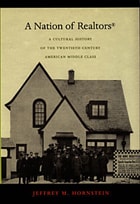
A Nation of Realtors®
A Cultural History of the Twentieth-Century American Middle ClassJeffrey M. Hornstein
Duke University Press, 2005
Hornstein draws on trade journals, government documents on housing policy, material from the archives of the National Association of Realtors and local real estate boards, demographic data, and fictional accounts of real estate agents. He chronicles the early efforts of real estate brokers to establish their profession by creating local and national boards, business practices, ethical codes, and educational programs and by working to influence laws from local zoning ordinances to national housing policy. A rich and original work of American history, A Nation of Realtors® illuminates class, gender, and business through a look at the development of a profession and its enormously successful effort to make the owner-occupied, single-family home a key element of twentieth-century American identity.
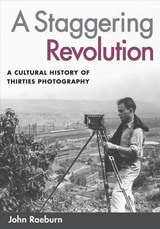
A Staggering Revolution
A Cultural History of Thirties PhotographyJohn Raeburn
University of Illinois Press, 2006
While other studies of thirties photography have concentrated on the documentary work of the Farm Security Administration (FSA), no previous book has considered it alongside so many of the decade's other important photographic projects. A Staggering Revolution includes individual chapters on Edward Steichen's celebrity portraiture; Berenice Abbott's Changing New York project; the Photo League's ethnography of Harlem; and Edward Weston's western landscapes, made under the auspices of the first Guggenheim Fellowship awarded to a photographer. It also examines Margaret Bourke-White's industrial and documentary pictures, the collective undertakings by California's Group f.64, and the fashion magazine specialists, as well as the activities of the FSA and the Photo League.
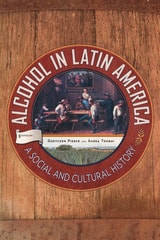
Alcohol in Latin America
A Social and Cultural HistoryEdited by Gretchen Pierce and Áurea Toxqui
University of Arizona Press, 2014
Alcohol in Latin America is the first interdisciplinary study to examine the historic role of alcohol across Latin America and over a broad time span. Six locations—the Andean region, Argentina, Brazil, Chile, Guatemala, and Mexico—are seen through the disciplines of anthropology, archaeology, art history, ethnohistory, history, and literature. Organized chronologically beginning with the pre-colonial era, it features five chapters on Mesoamerica and five on South America, each focusing on various aspects of a dozen different kinds of beverages.
An in-depth look at how alcohol use in Latin America can serve as a lens through which race, class, gender, and state-building, among other topics, can be better understood, Alcohol in Latin America shows the historic influence of alcohol production and consumption in the region and how it is intimately connected to the larger forces of history.
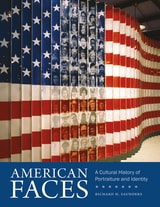
American Faces
A Cultural History of Portraiture and IdentityRichard H. Saunders
University Press of New England, 2016

American Plastic
A Cultural HistoryMeikle, Jeffrey L
Rutgers University Press, 1995
Winner of the 1996 Dexter Prize from the Society for the History of Technology and a 1996 Choice Outstanding Academic Book
“A splendid history of plastic. The book is authoritative, thorough, interdisciplinary, and intriguing. . . [Meikle] traces the course of plastics from 19th–century celluloid and the fist wholly synthetic bakelite, in 1907, through the proliferation of compounds (vinyls, acrylics, polystyrene, nylon, etc.) and recent ecological concerns. . . .Interested readers of whatever predisposition will likely enjoy this comprehensive and thoughtful treatise.”—Publishers Weekly
“A landmark account. . . . He combines a first–rate technological history with a most impressive cultural analysis of how plastics evolved from a material surrounded by utopian expectations to a material epitomizing inferiority and eventually to a part of everyday life. . . . One of the most significant works ever written in the history of American technology and culture.”
—Nature
“[A] truly outstanding work . . . here is a work of intellectual strength written with great literary style. . . . This significant work is likely to be widely cited in academic circles, defining the field for a generation of readers. Don’t let it pass you by! An extraordinary contribution, for all levels of readers.”—Choice
“This is real interdisciplinary work, roaming in focus, adaptive in method.”—Journal of American History
“This scholarly and comprehensive work . . . is nontechnical and emphasizes the social and cultural impact of plastics. . . . Highly recommended for anyone with an interest in understanding contemporary society.”—Library Journal

Annali d’Italianistica
Violence Resistance Tolerance Sacrifice in Italy's Literary & Cultural HistoryChiara Ferrari
Arizona Center for Medieval and Renaissance Studies, 2017