Results by title
78 books match the query 'Diseases' and 10 start with a
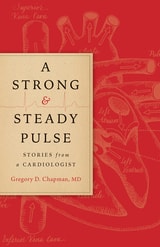
A Strong and Steady Pulse
Stories from a CardiologistGregory D. Chapman, MD
University of Alabama Press, 2021
A seasoned cardiologist shares his experiences, opinions, and recommendations about heart disease and other cardiac problems.
A Strong and Steady Pulse: Stories from a Cardiologist provides an insider’s perspective on the field of cardiovascular medicine told through vignettes and insights drawn from Gregory D. Chapman’s three decades as a cardiologist and professor of medicine. In twenty-six bite-sized chapters based on real-life patients and experiences, Chapman provides an overview of contemporary cardiovascular diseases and treatments, illuminating the art and science of medical practice for lay audiences and professionals alike.
With A Strong and Steady Pulse, Chapman provides medical students and general readers with a better understanding of cardiac disease and its contributing factors in modern life, and he also provides insights on the diagnostic process, medical decision making, and patient care. Each chapter presents a patient and their initial appearance, described in clear detail as Chapman gently walks us through his evaluation and the steps he and his associates take to determine the underlying problem. Chapman’s stories are about real people dealing with life and death situations—including the physicians, nurses, medical students, and other team members who try to save lives in emergent, confusing conditions.
The sometimes hard-won solutions to these medical challenges combine new technology and cutting-edge research together with insights drawn from Chapman’s past experiences as an intern and resident in Manhattan during the AIDS epidemic, as a postdoctoral fellow at Duke University in the 1990s, and in practice in Nashville, Tennessee, and Birmingham, Alabama. Conditions addressed include the recognition and management of heart attack, heart failure, arrhythmia, valvular heart disease, cardiac transplantation, broken heart syndrome, hypertension, and the depression some people experience after a heart attack, as well as related topics like statin drugs, the Apple Watch ECG feature, and oral anticoagulants. Finally, the emergence of the COVID-19 virus and its disruption of normal hospital routines as the pandemic unfolded is addressed in an epilogue.
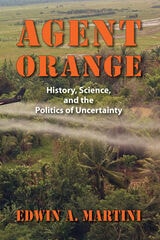
Agent Orange
History, Science, and the Politics of UncertaintyEdwin A. Martini
University of Massachusetts Press, 2012
Taking on what one former U.S. ambassador called “the last ghost of the Vietnam War,” this book examines the far-reaching impact of Agent Orange, the most infamous of the dioxin-contaminated herbicides used by American forces in Southeast Asia. Edwin A. Martini's aim is not simply to reconstruct the history of the “chemical war” but to investigate the ongoing controversy over the short- and long-term effects of weaponized defoliants on the environment of Vietnam, on the civilian population, and on the troops who fought on both sides.
Beginning in the early 1960s, when Agent Orange was first deployed in Vietnam, Martini follows the story across geographical and disciplinary boundaries, looking for answers to a host of still unresolved questions. What did chemical manufacturers and American policymakers know about the effects of dioxin on human beings, and when did they know it? How much do scientists and doctors know even today? Should the use of Agent Orange be considered a form of chemical warfare? What can, and should, be done for U.S. veterans, Vietnamese victims, and others around the world who believe they have medical problems caused by Agent Orange?
Martini draws on military records, government reports, scientific research, visits to contaminated sites, and interviews to disentangle conflicting claims and evaluate often ambiguous evidence. He shows that the impact of Agent Orange has been global in its reach affecting individuals and communities in New Zealand, Australia, Korea, and Canada as well as Vietnam and the United States. Yet for all the answers it provides, this book also reveals how much uncertainty—scientific, medical, legal, and political—continues to surround the legacy of Agent Orange.

All God's Mistakes
Genetic Counseling in a Pediatric HospitalCharles L. Bosk
University of Chicago Press, 1992

All about Your Eyes
Sharon Fekrat, M.D., FACS and Jennifer S. Weizer, M.D., eds.
Duke University Press, 2005
In this reliable guide, leading eye care experts:
—explain how healthy eyes work
—describe various eye diseases, including pink eye, cataract, glaucoma, age-related macular degeneration, and diabetic retinopathy
—provide up-to-date information on eye surgery, including refractive, laser, and cosmetic
For each eye problem, the authors describe in simple, straightforward language
—what it is
—the symptoms
—what, if anything, you can do to prevent it
—when to call the doctor
—the treatment
—the likelihood of recovery
All about Your Eyes includes a glossary of technical terms and, following each entry, links to web sites where further information may be found.
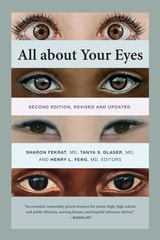
All about Your Eyes, Second Edition, revised and updated
Sharon Fekrat, Tanya S. Glaser, and Henry L. Feng, editors
Duke University Press, 2021
* explain eye anatomy and how healthy eyes work
* describe various eye diseases, including pink eye, cataract, glaucoma, age-related macular degeneration, and diabetic retinopathy
* provide up-to-date information on surgery
For each eye problem, the authors describe in simple, straightforward language:
* what it is
* the symptoms
* what, if anything, you can do to prevent it
* when to call the doctor
* diagnostic tests and treatment
* the likelihood of recovery
All about Your Eyes includes a glossary of technical terms and, following each entry, links to websites where further information may be found.
Contributors. Natalie A. Afshari, MD, Rosanna P. Bahadur, MD, Paramjit K. Bhullar, MD, Faith A. Birnbaum, MD, Cassandra C. Brooks, MD, Pratap Challa, MD, Melissa Mei-Hsia Chan, MBBS, Ravi Chandrashekhar, MD, MSEE, Nathan Cheung, OD, FAAO Claudia S. Cohen, MD, Vincent A. Deramo, MD, Cathy DiBernardo, RN, Laura B. Enyedi, MD, Sharon Fekrat, MD, Henry L. Feng, MD, Brenton D. Finklea, MD, Anna Ginter, MD, Tanya S. Glaser, MD, Michelle Sy Go, MD, MS, Mark Goerlitz-Jessen, MD, Herb Greenman, MD, Abhilash Guduru, MD, Preeya Gupta, MD, Renee Halberg, MSW, LCSW, S. Tammy Hsu, MD, Alessandro Iannaccone, MD, MS, FARVO, Charlene L. James, OD, Kim Jiramongkolchai, MD, Michael P. Kelly, FOPS, Muge R. Kesen, MD, Kirin Khan, MD, Wajiha Jurdi Kheir, MD, Jane S. Kim, MD, Jennifer Lira, MD, Katy C. Liu, MD, PhD, Ramiro S. Maldonado, MD, Ankur Mehra, MD, Priyatham S. Mettu, MD, Prithvi Mruthyunjaya, MD, MHS, Nisha Mukherjee, MD, Kenneth Neufeld, MD, Kristen Peterson, MD, James H. Powers, MD, S. Grace Prakalapakorn, MD, MPH, Michael Quist, MD, Leon Rafailov, MD, Roshni Ranjit-Reeves, MD, Nikolas Raufi, MD, William Raynor, BS, Cason Robbins, BS, Ananth Sastry, MD, Dianna L. Seldomridge, MD, MBA, Terry Semchyshyn, MD, Ann Shue, MD, Julia Song, MD, Brian Stagg, MD, Christopher Sun, MBBS, Anthony Therattil, BS, Daniel S.W. Ting, MBBS, Fay Jobe Tripp, MS, OTR/L, CLVT, CDRS, Obinna Umunakwe, MD, PhD, Lejla Vajzovic, MD, Susan M. Wakil, MD, C. Ellis Wisely, MD, MBA, Julie A. Woodward, MD

Alterity
Jean-Michel Oughourlian
Michigan State University Press, 2023
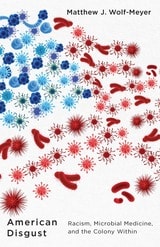
American Disgust
Racism, Microbial Medicine, and the Colony WithinMatthew J. Wolf-Meyer
University of Minnesota Press, 2024
Examining the racial underpinnings of food, microbial medicine, and disgust in America
American Disgust shows how perceptions of disgust and fears of contamination are rooted in the country’s history of colonialism and racism. Drawing on colonial, corporate, and medical archives, Matthew J. Wolf-Meyer argues that microbial medicine is closely entwined with changing cultural experiences of digestion, excrement, and disgust that are inextricably tied to the creation of whiteness.
Ranging from nineteenth-century colonial encounters with Native people to John Harvey Kellogg’s ideas around civilization and bowel movements to mid-twentieth-century diet and parenting advice books, Wolf-Meyer analyzes how embedded racist histories of digestion and disgust permeate contemporary debates around fecal microbial transplants and other bacteriotherapeutic treatments for gastrointestinal disease.
At its core, American Disgust wrestles with how changing cultural notions of digestion—what goes into the body and what comes out of it—create and impose racial categories motivated by feelings of disgust rooted in American settler-colonial racism. It shows how disgust is a changing, yet fundamental, aspect of American subjectivity and that engaging with it—personally, politically, and theoretically—opens up possibilities for conceptualizing health at the individual, societal, and planetary levels.
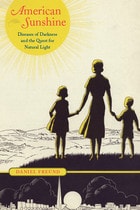
American Sunshine
Diseases of Darkness and the Quest for Natural LightDaniel Freund
University of Chicago Press, 2012
In the second half of the nineteenth century, American cities began to go dark. Hulking new buildings overspread blocks, pollution obscured the skies, and glass and smog screened out the health-giving rays of the sun. Doctors fed anxities about these new conditions with claims about a rising tide of the "diseases of darkness," especially rickets and tuberculosis.
In American Sunshine, Daniel Freund tracks the obsession with sunlight from those bleak days into the twentieth century. Before long, social reformers, medical professionals, scientists, and a growing nudist movement proffered remedies for America’s new dark age. Architects, city planners, and politicians made access to sunlight central to public housing and public health. and entrepreneurs, dairymen, and tourism boosters transformed the pursuit of sunlight and its effects into a commodity. Within this historical context, Freund sheds light on important questions about the commodification of health and nature and makes an original contribution to the histories of cities, consumerism, the environment, and medicine.
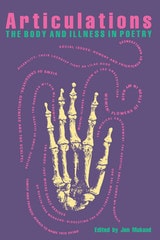
Articulations
The Body and Illness in PoetryJon Mukand
University of Iowa Press, 1994
In 1987 poet and physician Jon Mukand published Sutured Words, a volume of contemporary poems to help patients, their families and friends, and all health care professionals embrace the complexity of healing, illness, and death. Robert Coles called the collection “a wonderful source of inspiration and instruction for any of us who are trying to figure out what our work means”; Norman Cousins was impressed by the “discernment and high quality of the selections.” Now, in Articulations, Mukand adds more than a hundred new poems to the strongest poems from Sutured Words to give us a lyrical, enlightened understanding of the human dimensions of suffering and illness

Assessment of Chronic Pain Patients with the MMPI-2
Laura S. Keller
University of Minnesota Press, 1991