53 books match the query 'Dynamics' and 3 start with a

cover of A Concise Field Guide to Post-Communist Regimes: Actors, Institutions, and Dynamics

A Concise Field Guide to Post-Communist Regimes

Actors, Institutions, and Dynamics

Bálint Madlovics

Central European University Press, 2022

While the literature of hybrid regimes has given up the presumption that post-communist countries must democratize, its language and concepts still mostly relate to Western democracies. Magyar and Madlovics strongly argue for a vocabulary and grammar tailored to the specifics of the region. In 120 theses they unfold a conceptual framework with (1) a typology of post-communist regimes and (2) a detailed presentation of ideal-type actors and the political, economic, and social phenomena in these regimes. The book is a more digestible companion to the 800-page The Anatomy of Post-Communist Regimes (CEU Press, 2020), which was a detailed theoretical study with plenty of empirical illustrations.

Each of the 120 theses contains a statement and its concise discussion supported by illustrative tables, figures, and QR-codes that connect the interested reader to the more detailed analysis in the Anatomy. In a condensed variety, this book has kept the holistic approach of the Anatomy and treats the spheres of political, market, and communal action as parts of a single, coherent whole. The endeavor to synthesize a vast range of ideas does not, however, result in a too complicated text. On the contrary, freed from the implicit presumptions of democracy theory, the new terminology yields a readily usable toolkit of unambiguous means of expression to speak about post-communism.

[more]
cover of Alaska Politics and Public Policy: The Dynamics of Beliefs, Institutions, Personalities, and Power

Alaska Politics and Public Policy

The Dynamics of Beliefs, Institutions, Personalities, and Power

Edited by Clive S. Thomas, with Laura Savatgy and Kristina Klimovich

University of Alaska Press, 2016

Politics in Alaska have changed significantly since the last major book on the subject was published more than twenty years ago, with the rise and fall of Sarah Palin and the rise and fall of oil prices being but two of the many developments to alter the political landscape.

This book, the most comprehensive on the subject to date, focuses on the question of how beliefs, institutions, personalities, and power interact to shape Alaska politics and public policy. Drawing on these interactions, the contributors explain how and why certain issues get dealt with successfully and others unsuccessfully, and why some issues are taken up quickly while others are not addressed at all. This comprehensive guide to the political climate of Alaska will be essential to anyone studying the politics of America’s largest—and in some ways most unusual—state.
[more]
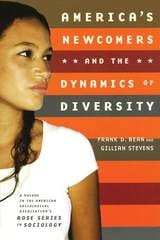
cover of America's Newcomers and the Dynamics of Diversity

America's Newcomers and the Dynamics of Diversity

Frank D. Bean

Russell Sage Foundation, 2003

The attacks of September 11, 2001, facilitated by easy entry and lax immigration controls, cast into bold relief the importance and contradictions of U.S. immigration policy. Will we have to restrict immigration for fear of future terrorist attacks? On a broader scale, can the country's sense of national identity be maintained in the face of the cultural diversity that today's immigrants bring? How will the resulting demographic, social, and economic changes affect U.S. residents? As the debate about immigration policy heats up, it has become more critical than ever to examine immigration's role in our society. With a comprehensive social scientific assessment of immigration over the past thirty years, America's Newcomers and the Dynamics of Diversity provides the clearest picture to date of how immigration has actually affected the United States, while refuting common misconceptions and predicting how it might affect us in the future. Frank Bean and Gillian Stevens show how, on the whole, immigration has been beneficial for the United States. Although about one million immigrants arrive each year, the job market has expanded sufficiently to absorb them without driving down wages significantly or preventing the native-born population from finding jobs. Immigration has not led to welfare dependency among immigrants, nor does evidence indicate that welfare is a magnet for immigrants. With the exception of unauthorized Mexican and Central American immigrants, studies show that most other immigrant groups have attained sufficient earnings and job mobility to move into the economic mainstream. Many Asian and Latino immigrants have established ethnic networks while maintaining their native cultural practices in the pursuit of that goal. While this phenomenon has led many people to believe that today's immigrants are slow to enter mainstream society, Bean and Stevens show that intermarriage and English language proficiency among these groups are just as high—if not higher—as among prior waves of European immigrants. America's Newcomers and the Dynamics of Diversity concludes by showing that the increased racial and ethnic diversity caused by immigration may be helping to blur the racial divide in the United States, transforming the country from a biracial to multi-ethnic and multi-racial society. Replacing myth with fact, America's Newcomers and the Dynamics of Diversity contains a wealth of information and belongs on the bookshelves of policymakers, pundits, scholars, students, and anyone who is concerned about the changing face of the United States. A Volume in the American Sociological Association's Rose Series in Sociology
[more]