Results by title
304 books match the query 'Entertainment & Performing Arts' and 37 start with a

A Biographical Dictionary of Actors, Volume 1, Abaco to Belfille
Actresses, Musicians, Dancers, Managers, and Other Stage Personnel in London, 1660-1800Philip H. Highfill, Jr., Kalman A. Burnim, and Edward A. Langhans
Southern Illinois University Press, 1973
Tobe completed in 12volumes, this monumental work here begins publication with the first two volumes—Abaco to Bertie and Bertin to Byzard. When completed, it is expected that the biographical dictionary will include information on more than 8,500 individuals.
Hundreds of printed sources have been searched for this project, and dozens of repositories combed, and the names of personnel listed have been filtered through parish registers whenever possible. From published and unpublished sources, from wills, archives of professional societies and guilds, from records of colleges, universities, and clubs, and from the contributions of selfless scholars, the authors have here assembled material which illuminates theatrical and musical activity in London in the 1660–1800 period.
The information here amassed will doubtless be augmented by other specialists in Restoration and eighteenth-century theatre and drama, but it is not likely that the number of persons now known surely or conjectured finally to have been connected with theatrical enterprise in this period will ever be increased considerably. Certainly, the contributions made here add immeasurably to existing knowledge, and in a number of instances correct standard histories or reference works.
The accompanying illustrations, estimated to be some 1,400 likenesses—at least one picture of each subject for whom a portrait exists—may prove to be a useful feature of the Work. The authors have gone beyond embellishment of the text, and have attempted to list all original portraits any knowledge of which is now recoverable, and have tried to ascertain the present location of portraits in every medium.
A Biographical Dictionary of Actors, Volume 10, M'Intosh to Nash
Actresses, Musicians, Dancers, Managers, and Other Stage Personnel in London, 1660-1800Philip H. Highfill, Jr.
Southern Illinois University Press, 1984
Those featured in Volume 10 include Margaret Martyr, a singer, actress, and dancer whose “conjugal virtues were often impeached,” according to the July 1792Thespian Magazine. The Dictionary describes this least constant of lovers as “of middling height, with a figure well-proportioned for breeches parts. [Her] black-haired, black-eyed beauty and clear soprano made her an immediate popular success in merry maids and tuneful minxes, the piquant and the pert, for a quarter century.”
A Biographical Dictionary of Actors, Volume 12, Pinner to Rizzo
Actresses, Musicians, Dancers, Managers, and Other Stage Personnel in London, 1660-1800Philip H. Highfill, Jr., Kalman A. Burnim, and Edward A. Langhans
Southern Illinois University Press, 1987
A Biographical Dictionary of Actors, Volume 13, Roach to H. Siddons
Actresses, Musicians, Dancers, Managers, and Other Stage Personnel in London, 1660-1800Philip H. Highfill, Jr., Kalman A. Burnim, and Edward A. Langhans
Southern Illinois University Press, 1991
Like the works already published, these latest volumes of the Biographical Dictionary deal with theatre people of every ilk, ranging from dressers and one-performance actors to trumpeter John Shore (inventor of the tuning fork) and the incomparable Sarah Siddons.
Also prominent is Susanna Rowson, a novelist, actress, and early female playwright. Although born into a British military family, Rowson often wrote plays that dealt with patriotic American themes and spent much of her career on the American stage.
The theatrical jewel of these volumes is the "divine Sarah" Siddons: "She raised the tragedy to the skies," wrote William Hazlitt, and "embodied to our imagination the fables of mythology, of the heroic and dignified mortals of elder time." She endured much tragedy herself, including a crippling debilitating illness and the deaths of five of her seven children. Siddons played major roles in both comedy and tragedy, not the least of which was a performance as Hamlet.
A Biographical Dictionary of Actors, Volume 14, S. Siddons to Thynne
Actresses, Musicians, Dancers, Managers, and Other Stage Personnel in London, 1660-1800Philip H. Highfill, Jr., Kalman A. Burnim, and Edward A. Langhans
Southern Illinois University Press, 1991
Like the works already published, these latest volumes of the Biographical Dictionary deal with theatre people of every ilk, ranging from dressers and one-performance actors to trumpeter John Shore (inventor of the tuning fork) and the incomparable Sarah Siddons.
Also prominent is Susanna Rowson, a novelist, actress, and early female playwright. Although born into a British military family, Rowson often wrote plays that dealt with patriotic American themes and spent much of her career on the American stage.
The theatrical jewel of these volumes is the "divine Sarah" Siddons: "She raised the tragedy to the skies," wrote William Hazlitt, and "embodied to our imagination the fables of mythology, of the heroic and dignified mortals of elder time." She endured much tragedy herself, including a crippling debilitating illness and the deaths of five of her seven children. Siddons played major roles in both comedy and tragedy, not the least of which was a performance as Hamlet.
A Biographical Dictionary of Actors, Volume 15, Tibbett to M. West
Actresses, Musicians, Dancers, Managers, and Other Stage Personnel in London, 1660-1800Philip H. Highfill, Jr., Kalman A. Burnim, and Edward A. Langhans
Southern Illinois University Press, 1993
A major project begun in 1973 reaches its conclusion with the publication of volumes 15 and 16 of the Biographical Dictionary, a series considered "a reference work of the first order" by Theatre and Performing Arts Collections.
Among performers highlighted in these last volumes is Catherine Tofts, a gifted singer whose popular acclaim was captured in lines by Samuel Phillips: "How are we pleas’d when beauteous Tofts appears, / To steal our Souls through our attentive Ears?’ / Ravish’d we listen to th’ inchanting Song, / And catch the falling Accents from her Tongue." The first singer of English birth to master the form of Italian opera, Tofts frequently won leading roles over native Italian singers. Her salary—£400 to £500 a season—was one of the highest in the theatre. Her popularity declined, however, as her demands for payment increased—a situation captured in an epigram Alexander Pope may have penned: "So bright is thy beauty, so charming thy song, / As had drawn both the beasts and their Orpheus along; /But such is thy avarice, and such is thy pride, / That the beasts must have starved, and the poets have died."
John Vanbrugh, whose play The Relapse is ranked as one of the best comedies of the Restoration period, became a subordinate crown architect under Sir Christopher Wren in 1702. In 1703, Vanbrugh began plans for the Queen’s Theatre in the Haymarket, an enterprise endorsed by the Kit Cat Club (of which Vanbrugh was a member). Even though his lavish design was acoustically defective, restructuring helped correct the problem and the theatre eventually became the exclusive center for opera in London.
A Biographical Dictionary of Actors, Volume 16, W. West to Zwingman
Actresses, Musicians, Dancers, Managers, and Other Stage Personnel in London, 1660-1800Philip H. Highfill, Jr., Kalman A. Burnim, and Edward A. Langhans
Southern Illinois University Press, 1993
A major project begun in 1973 reaches its conclusion with the publication of volumes 15 and 16 of the Biographical Dictionary, a series considered "a reference work of the first order" by Theatre and Performing Arts Collections.
Among performers highlighted in these last volumes is Catherine Tofts, a gifted singer whose popular acclaim was captured in lines by Samuel Phillips: "How are we pleas’d when beauteous Tofts appears, / To steal our Souls through our attentive Ears?’ / Ravish’d we listen to th’ inchanting Song, / And catch the falling Accents from her Tongue." The first singer of English birth to master the form of Italian opera, Tofts frequently won leading roles over native Italian singers. Her salary—£400 to £500 a season—was one of the highest in the theatre. Her popularity declined, however, as her demands for payment increased—a situation captured in an epigram Alexander Pope may have penned: "So bright is thy beauty, so charming thy song, / As had drawn both the beasts and their Orpheus along; /But such is thy avarice, and such is thy pride, / That the beasts must have starved, and the poets have died."
John Vanbrugh, whose play The Relapse is ranked as one of the best comedies of the Restoration period, became a subordinate crown architect under Sir Christopher Wren in 1702. In 1703, Vanbrugh began plans for the Queen’s Theatre in the Haymarket, an enterprise endorsed by the Kit Cat Club (of which Vanbrugh was a member). Even though his lavish design was acoustically defective, restructuring helped correct the problem and the theatre eventually became the exclusive center for opera in London.
A Biographical Dictionary of Actors, Volume 2, Belfort to Byzand
Actresses, Musicians, Dancers, Managers, and Other Stage Personnel in London, 1660-1800Philip H. Highfill, Jr., Kalman A. Burnim, and Edward A. Langhans
Southern Illinois University Press, 1973
Tobe completed in 12volumes, this monumental work here begins publication with the first two volumes—Abaco to Bertie and Bertin to Byzard. When completed, it is expected that the biographical dictionary will include information on more than 8,500 individuals.
Hundreds of printed sources have been searched for this project, and dozens of repositories combed, and the names of personnel listed have been filtered through parish registers whenever possible. From published and unpublished sources, from wills, archives of professional societies and guilds, from records of colleges, universities, and clubs, and from the contributions of selfless scholars, the authors have here assembled material which illuminates theatrical and musical activity in London in the 1660–1800 period.
The information here amassed will doubtless be augmented by other specialists in Restoration and eighteenth-century theatre and drama, but it is not likely that the number of persons now known surely or conjectured finally to have been connected with theatrical enterprise in this period will ever be increased considerably. Certainly, the contributions made here add immeasurably to existing knowledge, and in a number of instances correct standard histories or reference works.
The accompanying illustrations, estimated to be some 1,400 likenesses—at least one picture of each subject for whom a portrait exists—may prove to be a useful feature of the Work. The authors have gone beyond embellishment of the text, and have attempted to list all original portraits any knowledge of which is now recoverable, and have tried to ascertain the present location of portraits in every medium.
A Biographical Dictionary of Actors, Volume 3, Cabanel to Cory
Actresses, Musicians, Dancers, Managers, and Other Stage Personnel in London, 1660-1800Philip H. Highfill, Jr., Kalman A. Burnim, and Edward A. Langhans
Southern Illinois University Press, 1975
Volumes three and four of this monumental work include full entries for all such illustrious names as those of the Cibbers—Colley, Theophilus, and Susanna Maria—Kitty Clive, and Charlotte Charke, George Colman, the Elder, and the Younger, William Davenant, and De Loutherboug. But here also are full entries for dozens of important secondary figures and of minor ones whose stories have never been told, as well as a census (and at least a few recoverable facts) for even the most inconsiderable performers and servants of the theatres.
As in the previous volumes in this distinguished series, the accompanying illustrations include at least one picture of each subject for whom a portrait exists.
A Biographical Dictionary of Actors, Volume 4, Corye to Dynion
Actresses, Musicians, Dancers, Managers, and Other Stage Personnel in London, 1660-1800Philip H. Highfill, Jr., Kalman A. Burnim, and Edward A. Langhans
Southern Illinois University Press, 1975
Volumes three and four of this monumental work include full entries for all such illustrious names as those of the Cibbers—Colley, Theophilus, and Susanna Maria—Kitty Clive, and Charlotte Charke, George Colman, the Elder, and the Younger, William Davenant, and De Loutherboug. But here also are full entries for dozens of important secondary figures and of minor ones whose stories have never been told, as well as a census (and at least a few recoverable facts) for even the most inconsiderable performers and servants of the theatres.
As in the previous volumes in this distinguished series, the accompanying illustrations include at least one picture of each subject for whom a portrait exists.
A Biographical Dictionary of Actors, Volume 5, Eagan to Garrett
Actresses, Musicians, Dancers, Managers, and Other Stage Personnel in London, 1660-1800Philip H. Highfill, Jr., Kalman A. Burnim, and Edward A. Langhans
Southern Illinois University Press, 1978
In contrast to each other, Volume 5 is a sociological portrait of mostly little people in their tragic and comic efforts to achieve fame on the London stage during the Restoration and eighteenth century, whereas Volume 6 is dominated by the glamour of David Garrick, Nell Gwyn, and Joseph Grimaldi, the celebrated clown. Some 250 portraits individualize the great and small of the theatres of London.
A Biographical Dictionary of Actors, Volume 6, Garrick to Gyngell
Actresses, Musicians, Dancers, Managers, and Other Stage Personnel in London 1660-1800Philip H. Highfill, Jr., Kalman A. Burnim, and Edward A. Langhans
Southern Illinois University Press, 1978
In contrast to each other, Volume 5 is a sociological portrait of mostly little people in their tragic and comic efforts to achieve fame on the London stage during the Restoration and eighteenth century, whereas Volume 6 is dominated by the glamour of David Garrick, Nell Gwyn, and Joseph Grimaldi, the celebrated clown. Some 250 portraits individualize the great and small of the theatres of London.
A Biographical Dictionary of Actors, Volume 7, Habgood to Houbert
Actresses, Musicians, Dancers, Managers, and Other Stage Personnel in London, 1660-1800Philip H. Highfill, Jr., Kalman A. Burnim, and Edward A. Langhans
Southern Illinois University Press, 1982
Volume 7 includes such notables as the composers Handel and Haydn and the alluring actress Elizabeth Hartley.
A Biographical Dictionary of Actors, Volume 8, Hough to Keyse
Actresses, Musicians, Dancers, Managers, and Other Stage Personnel in London, 1660-1800Philip H. Highfill, Jr., Kalman A. Burnim, and Edward A. Langhans
Southern Illinois University Press, 1982
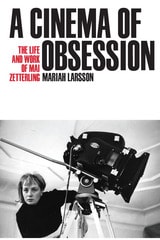
A Cinema of Obsession
The Life and Work of Mai ZetterlingMariah Larsson
University of Wisconsin Press, 2020
Critics have compared her work to that of Ingmar Bergman, Luis Buñuel, and Federico Fellini, but Zetterling had a distinct style—alternately radical and reactionary—that straddled the gendered divide between high art and mass culture. Tackling themes of sexuality, isolation, and creativity, her documentaries, short and feature films, and television works are visually striking. Her oeuvre provoked controversy and scandal through her sensational representations of reproduction and motherhood.
Mariah Larsson provides a lively and authoritative take on Zetterling's legacy and complicated position within film and women's history. A Cinema of Obsession provides necessary perspective on how the breadth of an artist's collected works keeps gatekeepers from recognizing their achievements, and questions why we still distinguish between national and global visual cultures and the big and small screens in the #MeToo era.
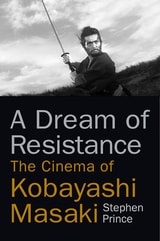
A Dream of Resistance
The Cinema of Kobayashi MasakiPrince, Stephen
Rutgers University Press, 2017
A Dream of Resistance is the first book in English to explore Kobayashi’s entire career, from the early films he made at Shochiku studio, to internationally-acclaimed masterpieces like The Human Condition, Harakiri, and Samurai Rebellion, and on to his final work for NHK Television. Closely examining how Kobayashi’s upbringing and intellectual history shaped the values of his work, Stephen Prince illuminates the political and religious dimensions of Kobayashi’s films, interpreting them as a prayer for peace in troubled times. Prince draws from a wealth of rare archives, including previously untranslated interviews, material that Kobayashi wrote about his films, and even the young director’s wartime diary. The result is an unprecedented portrait of this singular filmmaker.
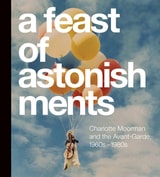
A Feast of Astonishments
Charlotte Moorman and the Avant-Garde, 1960s-1980sEdited by Lisa Graziose Corrin and Corrine Granof
Northwestern University Press, 2015
Charlotte Moorman was a bold, barrier-breaking musician and performance artist and a tireless champion of experimental art, whose avant-garde festivals in New York City brought new art forms to a broad public. To date, recognition of Moorman has been limited mostly to her collaborations with other artists, including composer John Cage and pioneering multimedia artist Nam June Paik, and to her 1967 performance of Paik’s "Opera Sextronique," for which she became known as the "topless cellist" after being arrested on indecency charges. A Feast of Astonishments looks deeper to portray Moorman as a leading international figure in her own right.
With more than 150 color images and essays by art historians, curators, and musicologists, this catalog will offer a fresh perspective and complement an exhibition that opens at Northwestern University’s Mary and Leigh Block Museum of Art in January 2016 before traveling to New York University’s Grey Art Gallery in Manhattan and the Museum der Moderne in Salzburg, Austria. The exhibition will feature original sculptures, photographs, video, props and costumes, annotated music scores, archival materials, film clips, and audio recordings, many drawn from the Charlotte Moorman Archive at the Charles Deering McCormick Library of Special Collections, Northwestern University Library. The exhibition is a partnership between the Block Museum and the Northwestern University Libraries.
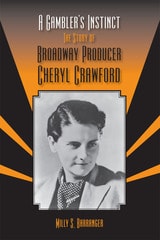
A Gambler’s Instinct
The Story of Broadway Producer Cheryl CrawfordMilly S. Barranger
Southern Illinois University Press, 2010
Broadway producer Cheryl Crawford (1902–1986) declared in her 1977 autobiography, “The theatre has been my life.” Crawford was notoriously circumspect about her private life, and only now, with Milly S. Barranger’s insightful biography, is her full story revealed.
A major Broadway producer in an era when women producers were exceedingly rare, Crawford found unprecedented success with the plays of Tennessee Williams, including The Rose Tattoo and Sweet Bird of Youth, but her enduring legend is as a musical producer, having brought Kurt Weill’s One Touch of Venus, Lerner and Loewe’s Brigadoon and Paint Your Wagon to the stage. Her commercial success, though, was balanced with the founding of studios that would enable actors to explore their art outside the strictures of commercial theater. She cofounded the Group Theatre with Harold Clurman and Lee Strasberg, the American Repertory Theatre with Margaret Webster and Eva Le Gallienne, and the Actors Studio with Elia Kazan and Robert Lewis, but her idealism was constantly frustrated by unfulfilled artistic promises from her male counterparts and by the chronic shortage of funding for the nonprofit enterprises.
As Barranger traces Crawford’s career as an independent producer, she tells the parallel story of American theater in the mid-twentieth century, making A Gambler’s Instinct both an enjoyable and informative biography of a remarkable woman and an important addition to the literature of the modern theater.
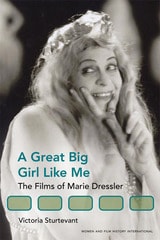
A Great Big Girl Like Me
The Films of Marie DresslerVictoria Sturtevant
University of Illinois Press, 2008
This premier analysis of her body of work explores how Dressler refocused the generic frame of her films beyond the shallow problems of the rich and beautiful, instead dignifying the marginalized, the elderly, women, and the poor. Sturtevant inteprets the meanings of Dressler's body through different genres, venues, and historical periods by looking at her vaudeville career, her transgressive representation of an "unruly" yet sexual body in Emma and Christopher Bean, ideas of the body politic in the films Politics and Prosperity, and Dressler as a mythic body in Min and Bill and Tugboat Annie.
A Key to the World
Victor Abbou
Gallaudet University Press, 2021
Published by Eyes Editions.
Includes links to two hours of video in International Sign.

A Key to the World
Victor Abbou
Gallaudet University Press, 2021
Published by Eyes Editions.
Includes links to two hours of video in International Sign.
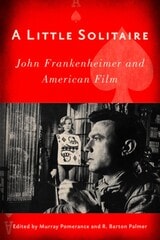
A Little Solitaire
John Frankenheimer and American FilmPomerance, Murray
Rutgers University Press, 2011
Think about some commercially successful film masterpieces--The Manchurian Candidate. Seven Days in May. Seconds. Then consider some lesser known, yet equally compelling cinematic achievements--The Fixer. The Gypsy Moths. Path to War. These triumphs are the work of the best known and most highly regarded Hollywood director to emerge from live TV drama in the 1950s--five-time Emmy-award-winner John Frankenheimer.
Although Frankenheimer was a pioneer in the genre of political thrillers who embraced the antimodernist critique of contemporary society, some of his later films did not receive the attention they deserved. Many claimed that at a midpoint in his career he had lost his touch. World-renowned film scholars put this myth to rest in A Little Solitaire, which offers the only multidisciplinary critical account of Frankenheimer's oeuvre. Especially emphasized is his deep and passionate engagement with national politics and the irrepressible need of human beings to assert their rights and individuality in the face of organizations that would reduce them to silence and anonymity.
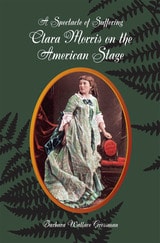
A Spectacle of Suffering
Clara Morris on the American StageBarbara Wallace Grossman
Southern Illinois University Press, 2009
Once called "America's greatest actress," renowned for the passion and power of her performances, Clara Morris (1847-1925) has been largely forgotten. A Spectacle of Suffering: Clara Morris on the American Stage is the first full-length study of the actress's importance as a feminist in the late nineteenth and early twentieth centuries. Detailing her daunting health problems and the changing tastes in entertainment that led to her retirement from the stage, Barbara Wallace Grossman explores Morris's dramatic reinvention as an author. During a second robust career, she published hundreds of newspaper and magazine articles and nine books—six works of fiction and three memoirs.
Grossman draws on the fifty-four-volume diary that Morris kept from 1868 until 1924, as well as on the manuscript fragments and notes of journalist George T. MacAdam, who died in 1929 before completing the actress's biography. Grossman provides a dramatic account of Morris's life and work from her troubled early years, through an unhappy marriage, morphine addiction, and invalidism, to the challenges of touring, the decline of her artistic reputation, and the demands of the writing career she pursued so tenaciously. A Spectacle of Suffering reveals how Morris, even after experiencing blindness and the loss of her home, livelihood, and family, did not succumb to despair and found comfort in the small pleasures of her circumscribed life.
A Spectacle of Suffering recovers an important figure in American theatre and ensures that Morris will be remembered not simply as an actress but as a respected writer and beloved public figure, admired for her courage in dealing with adversity. The book, which is enhanced by twenty-four illustrations, is the only published biography of Clara Morris. It is as much a tribute to the power of the human spirit as it is an effective means of exploring American theatre and society in the Gilded Age.
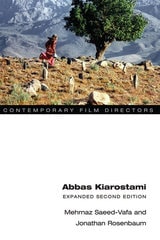
Abbas Kiarostami
Expanded Second EditionMehrnaz Saeed-Vafa and Jonathan Rosenbaum
University of Illinois Press, 2018
In this expanded second edition, award-winning Iranian filmmaker Mehrnaz Saeed-Vafa and film critic Jonathan Rosenbaum renew their illuminating cross-cultural dialogue on Kiarostami's work. The pair chart the filmmaker's late-in-life turn toward art galleries, museums, still photography, and installations. They also bring their distinct but complementary perspectives to a new conversation on the experimental film Shirin. Finally, Rosenbaum offers an essay on watching Kiarostami at home while Saeed-Vafa conducts a deeply personal interview with the director on his career and his final feature, Like Someone in Love.
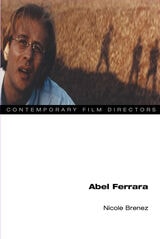
Abel Ferrara
Nicole Brenez. Translated from the French by Adrian Martin
University of Illinois Press, 2006
Nicole Brenez argues for Abel Ferrara’s place in a line of grand inventors who have blurred distinctions between industry and avant-garde film, including Orson Welles, Monte Hellman, and Nicholas Ray. Rather than merely reworking genre film, Brenez understands Ferrara’s oeuvre as formulating new archetypes that depict the evil of the modern world. Focusing as much on the human figure as on elements of storytelling, she argues that films such as Bad Lieutenant express this evil through visionary characters struggling against the inadmissible (inadmissible behavior, morality, images, and narratives).
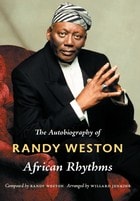
African Rhythms
The Autobiography of Randy WestonRandy Weston
Duke University Press, 2010
Africa is at the core of Weston’s music and spirituality. He has traversed the continent on a continuous quest to learn about its musical traditions, produced its first major jazz festival, and lived for years in Morocco, where he opened a popular jazz club, the African Rhythms Club, in Tangier. Weston’s narrative is replete with tales of the people he has met and befriended, and with whom he has worked. He describes his unique partnerships with Langston Hughes, the musician and arranger Melba Liston, and the jazz scholar Marshall Stearns, as well as his friendships and collaborations with Duke Ellington, Dizzy Gillespie, Coleman Hawkins, Thelonious Monk, Billy Strayhorn, Max Roach, Charlie Parker, Miles Davis, the novelist Paul Bowles, the Cuban percussionist Candido Camero, the Ghanaian jazz artist Kofi Ghanaba, the Gnawa musicians of Morocco, and many others. With African Rhythms, an international jazz virtuoso continues to create cultural history.
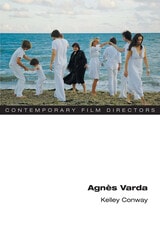
Agnes Varda
Kelley Conway
University of Illinois Press, 2015
Albert Maysles
Joe McElhaney
University of Illinois Press, 2008
Alejandro González Iñárritu
Celestino Deleyto and Maria del Mar Azcona
University of Illinois Press, 2010
American Tragedian
The Life of Edwin BoothDaniel J. Watermeier
University of Missouri Press, 2015
Daniel J. Watermeier has, through decades of tireless research paired with his own sharp insight, put together the most complete Edwin Booth biography to date. Drawing on a wealth of archival materials and contemporary theatrical scholarship, American Tragedian: The Life of Edwin Booth gives more attention than previous biographies to Booth’s apprentice and journeyman years; his rise in antebellum America to stardom with a new, acclaimed style of acting; his work as an innovative theater builder and theatrical producer; his several foreign tours; and his nationwide tours in the late 1880s. It also addresses Booth’s critical reception in dozens of cities in America and abroad and situates his professional activities within the events and trends of the time.
As interesting as it is informative, Watermeier’s book offers an in-depth look at the triumphal career and tumultuous life of one of the American stage’s most celebrated figures.
American Twilight
The Cinema of Tobe HooperBy Kristopher Woofter and Will Dodson
University of Texas Press, 2021
A master of gritty horror, Tobe Hooper captured on-screen an America in constant crisis and upended myths of prosperity to reveal the country’s internal decay.
Tobe Hooper's productions, which often trespassed upon the safety of the family unit, cast a critical eye toward an America in crisis. Often dismissed by scholars and critics as a one-hit wonder thanks to his 1974 horror classic The Texas Chain Saw Massacre, Hooper nevertheless was instrumental in the development of a robust and deeply political horror genre from the 1960s until his death in 2017. In American Twilight, the authors assert that the director was an auteur whose works featured complex monsters and disrupted America’s sacrosanct perceptions of prosperity and domestic security.
American Twilight focuses on the skepticism toward American institutions and media and the articulation of uncanny spaces so integral to Hooper’s vast array of feature and documentary films, made-for-television movies, television episodes, and music videos. From Egg Shells (1969) to Poltergeist (1982), Djinn (2013), and even Billy Idol’s music video for “Dancing with Myself” (1985), Tobe Hooper provided a singular directorial vision that investigated masculine anxiety and subverted the idea of American exceptionalism.
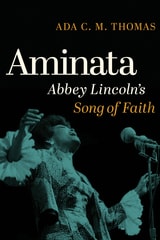
Aminata
Abbey Lincoln’s Song of FaithAda C.M. Thomas
Rutgers University Press, 2026
Abbey Lincoln (1930–2010), one of the greatest jazz vocalists of the twentieth century, was also an acclaimed composer, poet, playwright, actress, and activist and a towering figure within the African American intellectual tradition. Through constant reinvention, she resisted easy stereotyping and helped open a space for Black women artists to invoke their whole selves. Here, with meticulous research and insightful analysis, Ada C. M. Thomas contemplates Lincoln’s music alongside her poetry, plays, and reflections, revealing a multifaceted artist whose philosophical inquiries resonate deeply with the Black experience.
Thomas places Lincoln's albums in the context of both the female jazz and blues singers who influenced her and the male composers she collaborated with, including John Coltrane, Thelonious Monk, and Max Roach. Highlighting Lincoln’s central position within a vibrant global community of Black artists, activists, and writers, it also puts her work into conversation with that of contemporaries and close friends like Maya Angelou, Miriam Makeba, and Toni Morrison. Above all, it traces Lincoln’s extraordinary spiritual and intellectual journey, from her early life in Michigan to her rebirth in the 1970s as Aminata Moseka, meaning “faithful goddess of love,” and her ultimate resurgence in the 1990s as a critically acclaimed jazz artist and composer. With reverence and rigor, Thomas invites readers to rediscover Abbey Lincoln and embrace the transformative power of her words.
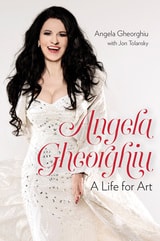
Angela Gheorghiu
A Life for ArtAngela Gheorghiu
University Press of New England, 2018
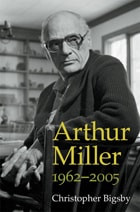
Arthur Miller
1962-2005Christopher Bigsby
University of Michigan Press, 2013
Christopher Bigsby's masterful two-volume biography of Arthur Miller sheds new light on one of the twentieth century's most acclaimed literary figures. Plays such as Death of a Salesman, A View from the Bridge, and The Crucible brought Miller an international following, and events such as his refusal to provide information to the House Un-American Activities Committee and his marriage to Marilyn Monroe kept him in the public eye. The second half of his life, the focus of this volume, proved no less fascinating. In 1962, Monroe died, and he married photographer Inge Morath, a relationship that transformed him as a writer and as a person. His activism in support of political and social causes only increased during the period, including criticism of U.S. foreign policy in Vietnam and contemporary conflicts in the Middle East. In this period of his life, he also became renowned for his work in support of dissident writers in Russia, Czechoslovakia, China, and elsewhere.
The second volume of this magisterial biography offers a compelling narrative of a singular American life, a life story enriched by the biographer's uncommon access to Miller and his unpublished papers while researching this book. The result is an authoritative biography that provides illuminating detail and invaluable insights into the Miller the artist and Miller the man.
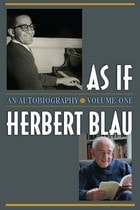
As If
An AutobiographyHerbert Blau
University of Michigan Press, 2012
As If: An Autobiography traces the complex life and career of director, scholar, and theorist Herbert Blau, one of the most innovative voices in the American theater. From his earliest years on the streets of Brooklyn, with gang wars there, to the often embattled, now-legendary Actor's Workshop of San Francisco, the powerfully told story of Blau's first four decades is also a social history, moving from the Great Depression to the cold war, with fallout from "the balance of terror" on what he once described in an incendiary manifesto as The Impossible Theater.
Blau has always forged his own path, from his activist resistance to the McCarthy witch hunts to his emergence as a revolutionary director whose work included the controversial years at The Workshop, which introduced American audiences to major playwrights of the European avant-garde, including Brecht, Beckett, Genet, and Pinter. There is also an account here of that notorious production of Waiting for Godot at the maximum-security prison at San Quentin, which became the insignia of the Theater of the Absurd.
Blau went on from The Workshop to become codirector of the Repertory Theater of Lincoln Center, and then founding provost of California Institute of the Arts, where he developed and became artistic director of the experimental group KRAKEN. Currently Byron W. and Alice L. Lockwood Professor of the Humanities at the University of Washington, Blau has been visionary in the passage from theater to theory, and his many influential and award-winning books include The Dubious Spectacle: Extremities of Theater, 1976–2000; Sails of the Herring Fleet: Essays on Beckett; Nothing in Itself: Complexions of Fashion; To All Appearances: Ideology and Performance; The Audience; The Eye of Prey: Subversions of the Postmodern; and Take Up the Bodies: Theater at the Vanishing Point.
This richly evocative book includes never-before-published photographs of the author, his family and friends, collaborators in the theater, and theater productions.
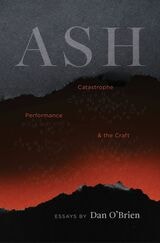
Ash
Catastrophe, Performance, & the CraftDan O'Brien
Acre Books, 2027
In this collection of essays, an acclaimed poet and playwright searches for meaning amid catastrophe.
The twenty candid essays in Ash: Catastrophe, Performance, & the Craft are the culmination of a ten-year project by acclaimed poet and playwright Dan O’Brien. Divided into three parts, this volume—portions of which originally appeared in The New York Times, Esquire, and The Times Literary Supplement—combines the deeply personal with the artistic and professional, coalescing around the experience of trauma (physical, mental, moral) and the challenges presented by catastrophe and its aftermath.
In the title essay, O'Brien links the smoke and debris of the Los Angeles wildfires to the toxic legacy of September 11, tracing the lasting repercussions of collective disaster. In “Dear Brother,” he revisits a sibling’s suicide attempt and the family silences that shaped both his life and his writing. Elsewhere, in reflections on documentary theater, political violence, and a long collaboration with Pulitzer Prize–winning war reporter Paul Watson, he weighs the responsibility and the cost of bearing witness to suffering.
Running through the book, and indeed through O’Brien’s career as poet, playwright, essayist, and memoirist, is a search for meaning in the midst of calamity, whether it results from terrorism, from conflagration, from cancer, or from victimhood and abuse. Written over a decade marked by devastating illness, profound cultural upheaval, and hard-won hope, Ash is both an intimate record of survival and a searching meditation on the resilience and reinvention to be found in the creative act.
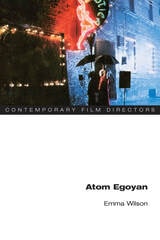
Atom Egoyan
Emma Wilson
University of Illinois Press, 2009
In this study, Emma Wilson closely analyzes the range of Egoyan's films and their visual textures, emotional control, and perverse beauty. Offering a full-scale chronological overview of Egoyan's work on films up to and including Where the Truth Lies, Wilson shows the persistence and development of certain structures and themes in Egoyan's cinema: questions of exile and nostalgia, trauma and healing, the family and sexuality. While drawing on ideas about intercultural cinema, Wilson also sets Egoyan's films in the context of contemporary Canadian cinema and European art-house cinema. Egoyan's own comments on his films thread throughout Wilson's analyses, and the book features a recent interview with the director.