Results by title
177 books match the query 'Equality' and 11 start with a
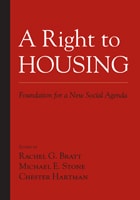
A Right to Housing
Foundation for a New Social AgendaRachel Bratt
Temple University Press, 2006
The contributors to A Right to Housing consider the key issues related to America's housing crisis, including income inequality and insecurity, segregation and discrimination, the rights of the elderly, as well as legislative and judicial responses to homelessness. The book offers a detailed examination of how access to adequate housing is directly related to economic security.
With essays by leading activists and scholars, this book presents a powerful and compelling analysis of the persistent inability of the U.S. to meet many of its citizens' housing needs, and a comprehensive proposal for progressive change.
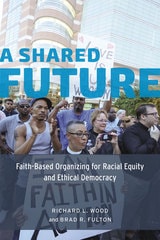
A Shared Future
Faith-Based Organizing for Racial Equity and Ethical DemocracyRichard L. Wood and Brad R. Fulton
University of Chicago Press, 2015
In A Shared Future, Richard L. Wood and Brad R. Fulton draw on a new national study of community organizing coalitions and in-depth interviews of key leaders in this field to show how faith-based organizing is creatively navigating the competing aspirations of America’s universalist and multiculturalist democratic ideals, even as it confronts three demons bedeviling American politics: economic inequality, federal policy paralysis, and racial inequity. With a broad view of the entire field and a distinct empirical focus on the PICO National Network, Wood and Fulton’s analysis illuminates the tensions, struggles, and deep rewards that come with pursuing racial equity within a social change organization and in society. Ultimately, A Shared Future offers a vision for how we might build a future that embodies the ethical democracy of the best American dreams.
An interview of the authors on the subject of faith leaders organizing for justice (Peace Talks Radio, copyright Good Radio Shows, Inc.) can be heard at this link: https://beta.prx.org/stories/190030
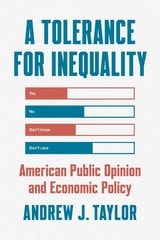
A Tolerance for Inequality
American Public Opinion and Economic PolicyAndrew J. Taylor
University of Chicago Press, 2025
A nuanced reassessment of US democratic responsiveness and public opinion on economic policy that explores the real reasons government does not do more to mitigate inequality.
Many believe that the United States’ growing economic inequality is the result of a political system that has been captured by wealthy elites. But is economic capture actually the problem? In A Tolerance for Inequality, Andrew J. Taylor examines this question from multiple angles, drawing on public opinion data and analyses of representation in Congress. Taylor finds that economic policy outcomes are more reflective of public opinion than the common wisdom suggests.
Broadly, less-affluent Americans’ policy preferences are not meaningfully different from the preferences of other Americans, and Washington is responsive to these preferences. Although politicians are more affluent, on average, than most Americans, this does not prevent them from representing the economic views of their poorer constituents. Today’s Democratic Party is more interested in regulation and supplying public goods than redistributing wealth downwards, and political reforms designed to provide more equal outcomes are largely misguided. In short, Americans get the kind of economy they at least say they want.
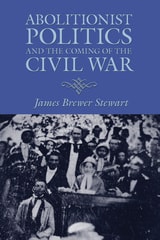
Abolitionist Politics and the Coming of the Civil War
James Brewer Stewart
University of Massachusetts Press, 2008
Before the Civil War, slaveholders made themselves into the most powerful, most deeply rooted, and best organized private interest group within the United States. Not only did slavery represent the national economy's second largest capital investment, exceeded only by investment in real estate, but guarantees of its perpetuation were studded throughout the U.S. Constitution. The vast majority of white Americans, in North and South, accepted the institution, and pro-slavery presidents and congressmen consistently promoted its interests.
In Abolitionist Politics and the Coming of the Civil War, James Brewer Stewart explains how a small group of radical activists, the abolitionist movement, played a pivotal role in turning American politics against this formidable system. He examines what influence the movement had in creating the political crises that led to civil war and evaluates the extent to which a small number of zealous reformers made a truly significant political difference when demanding that their nation face up to its most excruciating moral problem. In making these assessments, Stewart addresses a series of more specific questions: What were the abolitionists actually up against when seeking the overthrow of slavery and white supremacy? What motivated and sustained them during their long and difficult struggles? What larger historical contexts (religious, social, economic, cultural, and political) influenced their choices and determined their behavior? What roles did extraordinary leaders play in shaping the movement, and what were the contributions of abolitionism's unheralded “foot soldiers”? What factors ultimately determined, for better or worse, the abolitionists' impact on American politics and the realization of their equalitarian goals?
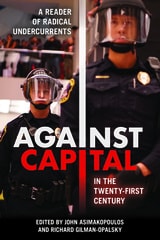
Against Capital in the Twenty-First Century
A Reader of Radical UndercurrentsJohn Asimakopoulos
Temple University Press, 2018
The problems of capitalism have been studied from Karl Marx to Thomas Piketty. The latter has recently confirmed that the system of capital is deeply bound up in ever-growing inequality without challenging the continuance of that system. Against Capital in the Twenty-First Century presents a diversity of analyses and visions opposed to the idea that capital should have yet another century to govern human and non-human resources in the interest of profit and accumulation. The editors and contributors to this timely volume present alternatives to the whole liberal litany of administered economies, tax policy recommendations, and half-measures. They undermine and reject the logic of capital, and the foregone conclusion that the twenty-first century should be given over to capital just as the previous two centuries were.
Providing a deep critique of capitalism, based on assessment from a wide range of cultural, social, political, and ecological thinking, Against Capital in the Twenty-First Century insists that transformative, revolutionary, and abolitionist responses to capital are even more necessary in the twenty-first century than they ever were.
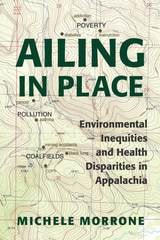
Ailing in Place
Environmental Inequities and Health Disparities in AppalachiaMichele Morrone
Ohio University Press, 2020
In Ailing in Place, Michele Morrone explores the relationship between environmental conditions in Appalachia and health outcomes that are too often ascribed to individual choices only. She applies quantitative data to observations from environmental health professionals to frame the ways in which the environment, as a social determinant of health, leads to health disparities in Appalachian communities. These examples—these stories of place—trace the impacts of water quality, waste disposal, and natural resource extraction on the health and quality of life of Appalachian people.
Public health is inextricably linked to place. Environmental conditions such as contaminated water, unsafe food, and polluted air are as important as culture, community, and landscape in characterizing a place and determining the health outcomes of the people who live there. In some places, the state of the environment is a consequence of historical activities related to natural resources and cultural practices. In others, political decisions to achieve short-term economic objectives are made with little consideration of long-term public health consequences.
America's Inequality Trap
Nathan J. Kelly
University of Chicago Press, 2019
Nathan J. Kelly argues that a key reason for this is that rising concentrations of wealth create a politics that makes reducing economic inequality more difficult. Kelly convincingly shows that, when a small fraction of the people control most of the economic resources, they also hold a disproportionate amount of political power, hurtling us toward a self-perpetuating plutocracy, or an “inequality trap.” Among other things, the rich support a broad political campaign that convinces voters that policies to reduce inequality are unwise and not in the average voter’s interest, regardless of the real economic impact. They also take advantage of interest groups they generously support to influence Congress and the president, as well as state governments, in ways that stop or slow down reform. One of the key implications of this book is that social policies designed to combat inequality should work hand-in-hand with political reforms that enhance democratic governance and efforts to fight racism, and a coordinated effort on all of these fronts will be needed to reverse the decades-long trend.

Animals and Inequality in the Ancient World
Benjamin S. Arbuckle
University Press of Colorado, 2014
The authors provide a global range of case studies from both New and Old World archaeology—a royal Aztec dog burial, the monumental horse tombs of Central Asia, and the ceremonial macaw cages of ancient Mexico among them. They explore the complex relationships between people and animals in social, economic, political, and ritual contexts, incorporating animal remains from archaeological sites with artifacts, texts, and iconography to develop their interpretations.
Animals and Inequality in the Ancient World presents new data and interpretations that reveal the role of animals, their products, and their symbolism in structuring social inequalities in the ancient world. The volume will be of interest to archaeologists, especially zooarchaeologists, and classical scholars of pre-modern civilizations and societies.
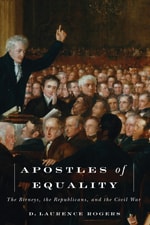
Apostles of Equality
The Birneys, the Republicans, and the Civil WarD. Laurence Rogers
Michigan State University Press, 2011
The first biographical account of the life of James Gillespie Birney in more than fifty years, this fabulously insightful history illuminates and elevates an all-but-forgotten figure whose political career contributed mightily to the American political fabric. Birney was a southern-born politician at the heart of the antislavery movement, with two southern-born sons who were major generals involved in key Union Army activities, including the leadership of the black troops. The interaction of the Birneys with historical figures (Abraham Lincoln, Harriet Beecher Stowe, and Henry Clay) highlights the significance of the family’s activities in politics and war. D. Laurence Rogers offers a unique historiography of the abolition movement, the Civil War, and Reconstruction through the experiences of one family navigating momentous developments from the founding of the Republic until the late 19th century.

Atlanta Paradox
David L. Sjoquist
Russell Sage Foundation, 2000
Awakening to Equality
A Young White Pastor at the Dawn of Civil RightsKarl E. Lutze
University of Missouri Press, 2006