Results by title
230 books match the query 'Ethnicity' and 10 start with a
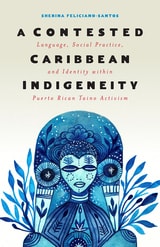
A Contested Caribbean Indigeneity
Language, Social Practice, and Identity within Puerto Rican Taíno ActivismSherina Feliciano-Santos
Rutgers University Press, 2021
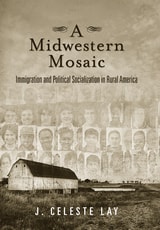
A Midwestern Mosaic
Immigration and Political Socialization in Rural AmericaJ. Celeste Lay
Temple University Press, 2012
Drawn by low-skilled work and the safety and security of rural life, increasing numbers of families from Latin America and Southeast Asia have migrated to the American heartland. In the path-breaking book A Midwestern Mosaic, J. Celeste Lay examines the effects of political socialization on native white youth growing up in small towns.
Lay studies five Iowa towns to investigate how the political attitudes and inclinations of native adolescents change as a result of rapid ethnic diversification. Using surveys and interviews, she discovers that native adolescents adapt very well to foreign-born citizens, and that over time, gaps diminish between diverse populations and youth in all-white/Anglo towns in regard to tolerance, political knowledge, efficacy, and school participation.
A Midwestern Mosaic looks at the next generation to show how exposure to ethnic and cultural diversity during formative years can shape political behavior and will influence politics in the future.
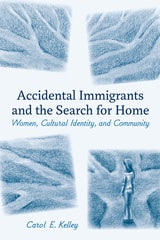
Accidental Immigrants and the Search for Home
Women, Cultural Identity, and CommunityCarol E. Kelley
Temple University Press, 2013
The intimate stories of these "accidental" immigrants broaden conventional notions of home. From a Maori woman who moves to Norway to the daughter of an Iranian diplomat now living in France, Kelley weaves together these stories of the personal and emotional effects of immigration with interdisciplinary discussions drawn from anthropology and psychology. Ultimately, she reveals how the lifelong process of immigration affects each woman's sense of identity and belonging and contributes to better understanding today's globalized society.
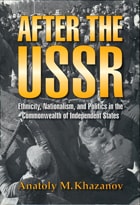
After the USSR
Ethnicity, Nationalism, and Politics in the Commonwealth of Independent StatesAnatoly M. Khazanov
University of Wisconsin Press, 1996
A world-renowned anthropologist, Anatoly M. Khazanov offers a witty, insightful, and cautionary analysis of ethnic nationalism and its pivotal role in the collapse of the Soviet empire.
“Khazanov’s encyclopedic knowledge of the history and culture of post-Soviet societies, combined with field research there since the 1960s, informs the case studies with a singular authoritative voice. This volume is destined to be an absolutely necessary reference for the understanding of ethnic relations and the politics of minorities in the ex-USSR into the next century.”—Leonard Plotnicov, editor of Ethnology
First Paperback Edition
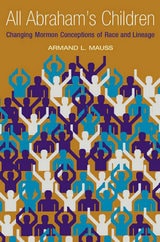
All Abraham's Children
Changing Mormon Conceptions of Race and LineageArmand L. Mauss
University of Illinois Press, 2003
Mauss describes a complex process of the broadening of these self-defined lineages during the last part of the twentieth century as the modern Mormon church continued its world-wide expansion through massive missionary work.
Mauss contends that Mormon constructions of racial identity have not necessarily affected actual behavior negatively and that in some cases Mormons have shown greater tolerance than other groups in the American mainstream.
Employing a broad intellectual historical analysis to identify shifts in LDS behavior over time, All Abraham’s Children is an important commentary on current models of Mormon historiography.

American Ethnic History
Themes and PerspectivesMcDonald, Jason J
Rutgers University Press, 2007
Chapters explore a range of topics, including how different ethnic groups arrived in the United States—whether through violence and coercion or willing immigration; the peculiar identification of Native Americans as “ethnic,” despite the fact that they are indigenous to the land; whether the American public’s attitudes toward and treatment of difference has been consistent with the nation’s professed egalitarian ideals; and how factors such as language, religion, class, gender, and intermarriage play in either strengthening or weakening ethnic identity and group solidarity.
An engaging and critical look at a term that remains stubbornly ambiguous in both scholarly discussion and the vernacular, this book makes an important contribution to the ongoing debates about “difference” in American society.
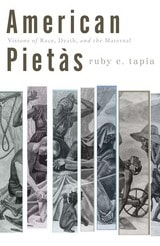
American Pietàs
Visions of Race, Death, and the MaternalRuby C. Tapia
University of Minnesota Press, 2010
Tapia explores the implications of this argument for racialized productions of death and the maternal in the context of specific cultural moments: the commemoration of Princess Diana in U.S. magazines; the intertext of Toni Morrison’s and Hollywood’s Beloved; the social and cultural death in teen pregnancy, imaged and regulated in California’s Partnership for Responsible Parenting campaigns; and popular constructions of the “Widows of 9/11” in print and televisual journalism.
Taken together, these various visual media texts function in American Pietàs as cultural artifacts and as visual nodes in a larger network of racialized productions of maternal bodies in contexts of national death and remembering. To engage this network is to ask how and toward what end the racial project of the nation imbues some maternal bodies with resurrecting power and leaves others for dead. In the spaces between these different maternities, says Tapia, U.S. citizen-subjects are born—and reborn.

An Other Tongue
Nation and Ethnicity in the Linguistic BorderlandsAlfred Arteaga
Duke University Press, 1994
The Chicanos, the U.S./Mexico borderland polyglots whose sense of history, nationality, and race is as mixed as their language, are the book's prime example. But the authors recognize that border zones, like diasporas and post-colonial relations, occur globally, and their discussion of hybrid or mestizo identities ranges from the United States to the Caribbean to South Asia to Ireland. Drawing on personal experience, readings of poetry and fiction, and cultural theory, the authors detail the politics of being human through the mediation of language. What does "shadow" mean to the Native American Indian, or diaspora to the East Indian immigrant? How does British colonialism yet affect Irish and Indian nationalist literary production? Why is the split between Eastern and Western European language use necessarily schizophrenic? So much of our sense of difference today is constructed as we speak, and An Other Tongue speaks with eloquence to this phenomenon and will be of great interest to those concerned with the discourse of post-colonial studies, critical theory, and the remapping of world literature.
Contributors. Norma Alarcón, Alfred Arteaga, Juan Bruce-Novoa, Cordelia Chávez Candelaria, Michael G. Cooke, Edmundo Desnoes, Eugene C. Eoyang, David Lloyd, Lydie Moudileno, Jean-Luc Nancy, Tejaswini Niranjana, Ada Savin, Gayatri Chakravorty Spivak, Michael Smith, Tzvetan Todorov, Luis A. Torres, Gerald Vizenor
Another Arabesque
Syrian-Lebanese Ethnicity in Neoliberal BrazilJohn Tofik Karam
Temple University Press, 2006
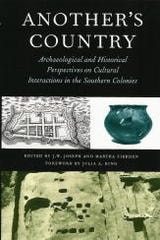
Another's Country
Archaeological and Historical Perspectives on Cultural Interactions in the Southern ColoniesEdited by J.W. Joseph and Martha Zierden
University of Alabama Press, 2001
The 18th-century South was a true melting pot, bringing together colonists from England, France, Germany, Ireland, Switzerland, and other locations, in addition to African slaves—all of whom shared in the experiences of adapting to a new environment and interacting with American Indians. The shared process of immigration, adaptation, and creolization resulted in a rich and diverse historic mosaic of cultures.
The cultural encounters of these groups of settlers would ultimately define the meaning of life in the nineteenth-century South. The much-studied plantation society of that era and the Confederacy that sprang from it have become the enduring identities of the South. A full understanding of southern history is not possible, however, without first understanding the intermingling and interactions of the region’s eighteenth-century settlers. In the essays collected here, some of the South’s leading historical archaeologists examine various aspects of the colonial experience, attempting to understand how cultural identity was expressed, why cultural diversity was eventually replaced by a common identity, and how the various cultures intermeshed.
Written in accessible language, this book will be valuable to archaeologists and non-archaeologists alike. Cultural, architectural, and military historians, cultural anthropologists, geographers, genealogists, and others interested in the cultural legacy of the South will find much of value in this book.