Results by title
60 books match the query 'Europe, Central' and 5 start with a
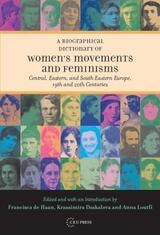
A Biographical Dictionary of Women's Movements and Feminisms
Central, Eastern, and South Eastern Europe, 19th and 20th CenturiesAnna Loutfi
Central European University Press, 2006
This Biographical Dictionary describes the lives, works and aspirations of more than 150 women and men who were active in, or part of, women’s movements and feminisms in Central, Eastern and South Eastern Europe. Thus, it challenges the widely held belief that there was no historical feminism in this part of Europe. These innovative and often moving biographical portraits not only show that feminists existed here, but also that they were widespread and diverse, and included Romanian princesses, Serbian philosophers and peasants, Latvian and Slovakian novelists, Albanian teachers, Hungarian Christian social workers and activists of the Catholic women’s movement, Austrian factory workers, Bulgarian feminist scientists and socialist feminists, Russian radicals, philanthropists, militant suffragists and Bolshevik activists, prominent writers and philosophers of the Ottoman era, as well as Turkish republican leftist political activists and nationalists, internationally recognized Greek feminist leaders, Estonian pharmacologists and science historians, Slovenian ‘literary feminists,’ Czech avant-garde painters, Ukrainian feminist scholars, Polish and Czech Senate Members, and many more. Their stories together constitute a rich tapestry of feminist activity and redress a serious imbalance in the historiography of women’s movements and feminisms.
[more]
Administrative Law in Central and Eastern Europe
Denis J. Galligan
Central European University Press, 1998
Following the constitutional and political reforms in Central and Eastern Europe of the last decade, the time has now come for the whole-scale reform of public administration and the creation of a professional civil service. What is needed is a clear sense of the objectives to be achieved by the administration; and the provision of adequate resources to perform the tasks of public administration. In addition, and perhaps most importantly of all, there must be a sound legal basis for public administration. Recognizing these realities, this book examines administrative law and administrative institutions in Central and Eastern Europe. In a series of case studies, discussing each country in the region in turn, it looks at the ways in which a range of administrative decisions are reached and at how the citizens affected by them are treated. The material for each of the fourteen chapters was collected by a person or persons native to the respective country.
[more]
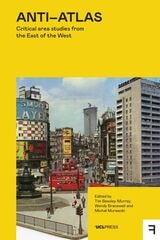
Anti-Atlas
Critical Area Studies from the East of the WestEdited by Tim Beasley-Murray, Wendy Bracewell, and Michal Murawski
University College London, 2025
Where is "the East of the West"? This provocative collection confronts the assumptions behind how we divide the world into knowable regions.
Anti-Atlas uses the upheavals of Eastern Europe as a lens through which to rethink the politics of area studies. This collection unsettles traditional hierarchies, questioning how knowledge is produced, who controls it, and how we divide the world into “areas.”
Consisting of an eclectic mix of scholars from Europe, the UK, and North America, the book experiments with diverse genres—from academic essays and autobiographical reflections to travel guides and data visualizations. Through this innovative approach, the editors propose a manifesto for area studies to be more critical and reflexive; to be undisciplined and deeply engaged with local perspectives.
By dismantling the assumptions embedded in atlases and disciplinary boundaries, Anti-Atlas invites readers to think differently about how we construct and categorize the world. Of particular interest to scholars of area studies and critical theory, this work reassesses what it means to study places in an era of geopolitical rupture.
[more]
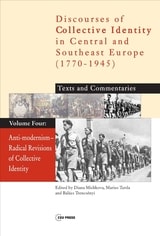
Anti-modernism
Radical Revisions of Collective IdentityAhmet Ersoy
Central European University Press, 2014
The last volume of the Discourses of Collective Identity in Central and Southeast Europe 1770–1945 series presents 46 texts under the heading of "antimodernism". In a dynamic relationship with modernism, from the 1880s to the 1940s, and especially during the interwar period, the antimodernist political discourse in the region offered complex ideological constructions of national identification. These texts rejected the linear vision of progress and instead offered alternative models of temporality, such as the cyclical one as well as various narratives of decline. This shift was closely connected to the rejection of liberal democratic institutionalism, and the preference for organicist models of social existence, emphasizing the role of the elites (and charismatic leaders) shaping the whole body politic. Along these lines, antimodernist authors also formulated alternative visions of symbolic geography: rejecting the symbolic hierarchies that focused on the normativity of Western European models, they stressed the cultural and political autarchy of their own national community, which in some cases was also coupled with the reevaluation of the Orient. At the same time, this antimodernist turn should not be confused with rightwing radicalism—in fact, the dialogue with the modernist tradition was often very subtle and the anthology also contains texts which offered a criticism of 'modern' totalitarianism in an antimodernist key.
[more]
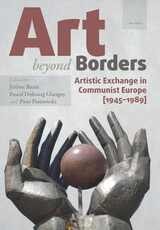
Art beyond Borders
Artistic Exchange in Communist Europe (1945-1989)Jérôme Bazin
Central European University Press, 2016
This book presents and analyzes artistic interactions both within the Soviet bloc and with the West between 1945 and 1989. During the Cold War the exchange of artistic ideas and products united Europe’s avant-garde in a most remarkable way. Despite the Iron Curtain and national and political borders there existed a constant flow of artists, artworks, artistic ideas and practices. The geographic borders of these exchanges have yet to be clearly defined. How were networks, centers, peripheries (local, national and international), scales, and distances constructed? How did (neo)avant-garde tendencies relate with officially sanctioned socialist realism? The literature on the art of Eastern Europe provides a great deal of factual knowledge about a vast cultural space, but mostly through the prism of stereotypes and national preoccupations. By discussing artworks, studying the writings on art, observing artistic evolution and artists’ strategies, as well as the influence of political authorities, art dealers and art critics, the essays in Art beyond Borders compose a transnational history of arts in the Soviet satellite countries in the post war period.
[more]