Results by title
85 books match the query 'Experience' and 6 start with a
A Process Model
Eugene T. Gendlin; Foreword by Robert A. Parker
Northwestern University Press, 2018
A Process Model, Gendlin’s magnum opus, offers no less than a new alternative to the dualism of mind and body. Beginning with living process, the body’s simultaneous interaction and identity with its environment, Gendlin systematically derives nonreductive concepts that offer novel and rigorous ways to think from within lived precision. In this way terms such as body, environment, time, space, behavior, language, culture, situation, and more can be understood with both great force and great subtlety.
Gendlin’s project is relevant to discussions not only in philosophy but in other fields in which life process is central—including biology, environmental management, environmental humanities, and ecopsychology. It provides a genuinely new philosophical approach to complex societal challenges and environmental issues.
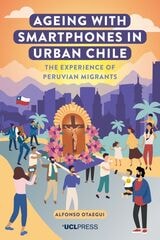
Ageing with Smartphones in Urban Chile
The Experience of Peruvian MigrantsAlfonso Otaegui
University College London, 2023
What does it mean to be aging in Chile as a migrant? Drawing on extensive ethnographic fieldwork, Ageing with Smartphones in Urban Chile analyzes the experience of aging for Peruvian migrants aged around sixty who have lived in Chile for more than twenty years. Their lives, we discover, are informed by a series of experiences of being ‘in between’. They live between two countries, two generations, and two different stages in life, between giving care and not wanting care, and between a continuing legacy and not transmitting legacy. By focusing on the entanglement of aging, migration, and technology, this book is an ethnographic contribution to an unexplored subject in the vast literature on migration studies in Chile.
Alma Mater
Design and Experience in the Women's Colleges from Their Nineteenth-Century Beginnings to the 1930sHelen Lefkowitz Horowitz
University of Massachusetts Press, 1993
An examination of the founding and development of the Seven Sisters colleges—Mount Holyoke, Vassar, Wellesley, Smith, Radcliffe, Bryn Mawr, and Barnard—Alma Mater focuses on the ideas behind their establishment and the colleges' architectural, academic, and social histories, as well as those of their twentieth-century successors—Sarah Lawrence, Bennington, and Scripps.
Anaesthetics of Existence
Essays on Experience at the EdgeCressida J. Heyes
Duke University Press, 2020
“Experience” is a thoroughly political category, a social and historical product not authored by any individual. At the same time, “the personal is political,” and one's own lived experience is an important epistemic resource. In Anaesthetics of Existence Cressida J. Heyes reconciles these two positions, drawing on examples of things that happen to us but are nonetheless excluded from experience. If for Foucault an “aesthetics of existence” was a project of making one's life a work of art, Heyes's “anaesthetics of existence” describes antiprojects that are tacitly excluded from life—but should be brought back in. Drawing on critical phenomenology, genealogy, and feminist theory, Heyes shows how and why experience has edges, and she analyzes phenomena that press against those edges. Essays on sexual violence against unconscious victims, the temporality of drug use, and childbirth as a limit-experience build a politics of experience while showcasing Heyes's much-needed new philosophical method.
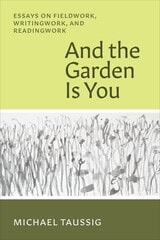
And the Garden Is You
Essays on Fieldwork, Writingwork, and ReadingworkMichael Taussig
University of Chicago Press, 2024
Michael Taussig’s work is known for its critical insights and bold, experimental style. In the eleven essays in this new collection, Taussig reflects on the act of writing itself, demonstrating its importance for anthropological practice and calling for the discipline to keep experiential knowledge from being extinguished as fieldnotes become scholarship.
Setting out to show how this can be done, And the Garden Is You exemplifies a form of exploratory writing that preserves the spontaneity of notes scribbled down in haste. In these essays, the author’s reflections take us from his childhood in Sydney to trips to Afghanistan, Colombia, Finland, Italy, Turkey, and Syria. Along the way, Taussig explores themes of fabulation and provocation that are central to his life’s work, in addition to the thinkers dearest to him—Bataille, Benjamin, Burroughs, and Nietzsche, among others. This collection is vintage Taussig, bound to interest longtime readers and newcomers alike.
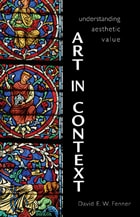
Art in Context
Understanding Aesthetic ValueDavid E. W. Fenner
Ohio University Press, 2008
Art in Context is a systematic, historically situated, and historically evidenced attempt to demonstrate the importance of considering contexts that will, in the vast majority of cases, increase the aesthetic experience. While focusing on distance, detachment, aestheticism, art for art’s sake, and formalism can at times be instructive and interesting, such approaches risk missing the larger and often central issue of the piece.
Based on the findings of philosophers and critics, and on artwork throughout
history, Art in Context provides a solid foundation for understanding and valuing a work of art in perspective as well as within the particular world in which it exists.