Results by title
147 books match the query 'Freedom' and 12 start with a
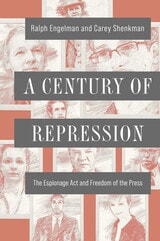
A Century of Repression
The Espionage Act and Freedom of the PressRalph Engelman and Carey Shenkman
University of Illinois Press, 2022
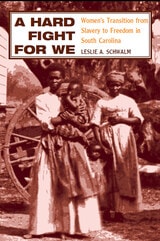
A Hard Fight for We
Women's Transition from Slavery to Freedom in South CarolinaLeslie A. Schwalm
University of Illinois Press, 1997
African-American women fought for their freedom with courage and vigor during and after the Civil War. Leslie Schwalm explores the vital roles of enslaved and formerly enslaved women on the rice plantations of lowcountry South Carolina, both in antebellum plantation life and in the wartime collapse of slavery. From there, she chronicles their efforts as freedwomen to recover from the impact of the war while redefining their lives and labor.
Freedwomen asserted their own ideas of what freedom meant and insisted on important changes in the work they performed both for white employers and in their own homes. As Schwalm shows, these women rejected the most unpleasant or demeaning tasks, guarded the prerogatives they gained under the South's slave economy, and defended their hard-won freedoms against unwanted intervention by Northern whites and the efforts of former owners to restore slavery's social and economic relations during Reconstruction. A bold challenge to entrenched notions, A Hard Fight for We places African American women at the center of the South's transition from a slave society.
A Martian Muse
Further Essays on Identity, Politics, and the Freedom of PoetryReginald Shepherd
University of Michigan Press, 2010
Those who have read Orpheus in the Bronx, Reginald Shepherd's previous collection of essays about the act of creating poetry, and those who take on the task, can immediately understand why it was a national finalist for a prestigious National Book Critics Circle Award. Shepherd was candid and disarming, practical and funny, able to mix thoughts about the Transformers with meditations on the realities of growing up poor.
This is Reginald Shepherd's final opportunity to speak his mind about the craft he loved, the art of using words to express the soul and the wit of every person's experience. Edited by Shepherd's longtime partner and intellectual confidant, Robert Philen, A Martian Muse stands as a final monument to a master in the craft, but is also a readable, important work in its own right.
"Reginald Shepherd died September 10, 2008, after a hard struggle with cancer. While he had completed the essays presented here and had selected them from his available essays to form a collection, he didn't have time to organize the presentation of the essays within the collection.
"The task of editing this collection has been a daunting challenge as I struggle to live up to the level of intellectual engagement, clarity, and coherence that Reginald always expected. While daunting, it has also been a labor of love and a compulsion for me, based on the many years I spent with him as a partner, friend, lover, intellectual companion, and sharer of common passions."
---Robert Philen, from the Introduction
Reginald Shepherd was the editor of The Iowa Anthology of New American Poetries and Lyric Postmodernisms: An Anthology of Contemporary Innovative Poetries and the author of five books of poetry. He was a finalist for the 2009 National Book Critics Circle Award and was the recipient of grants from the NEA, the Illinois Arts Council, the Saltonstall Foundation, the Florida Arts Council, and the Vogelstein Foundation, among many other awards and honors.

Access with Attitude
An Advocate’s Guide to Freedom of Information in OhioDavid Marburger
Ohio University Press, 2011
For those who find themselves in a battle for public records, Access with Attitude: An Advocate’s Guide to Freedom of Information in Ohio is an indispensable weapon. First Amendment lawyer David Marburger and investigative journalist Karl Idsvoog have written a simply worded, practical guide on how to take full advantage of Ohio’s so-called Sunshine Laws.
Journalists, law firms, labor unions, private investigators, genealogists, realty companies, banks, insurers—anyone who regularly needs access to publicly held information—will find this comprehensive and contentious guide to be invaluable. Marburger, who drafted many of the provisions that Ohio adopted in its open records law, and coauthor Idsvoog have been fighting for broader access to public records their entire careers. They offer field-tested tips on how to avoid “no,” and advise readers on legal strategies if their requests for information go unmet. Step by step, they show how to avoid delays and make the law work.
Whether you’re a citizen, a nonprofit organization, a journalist, or an attorney going after public records, Access with Attitude is an essential resource.
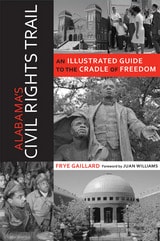
Alabama's Civil Rights Trail
An Illustrated Guide to the Cradle of FreedomFrye Gaillard
University of Alabama Press, 2009
Alabama’s great civil rights events in a compact and accessible narrative, paired with a practical guide to Alabama’s preserved civil rights sites and monuments
No other state has embraced and preserved its civil rights history more thoroughly than Alabama. Nor is there a place where that history is richer. Alabama’s Civil Rights Trail tells of Alabama’s great civil rights events, as well as its lesser-known moments, in a compact and accessible narrative, paired with a practical guide to Alabama’s preserved civil rights sites and monuments.
In this history of Alabama’s civil rights movement, Cradle of Freedom (University of Alabama Press, 2004), Frye Gaillard contends that Alabama played the lead role in a historic movement that made all citizens of the nation, black and white, more free. This book, geared toward the casual traveler and the serious student alike, showcases in a vividly illustrated and compelling manner, valuable and rich details. It provides a user-friendly, graphic tool for the growing number of travelers, students, and civil rights pilgrims who visit the state annually.
The story of the civil rights movement in Alabama is told city by city, region by region, and town by town, with entries on Montgomery, Birmingham, Selma, Tuscaloosa, Tuskegee, and Mobile, as well as chapters on the Black Belt and the Alabama hill country. Smaller but important locales such as Greensboro, Monroeville, and Scottsboro are included, as are more obscure sites like Hale County’s Safe House Black History Museum and the birthplace of the Black Panther Party in Lowndes County.

Alexis de Tocqueville
Threats to Freedom in DemocracyMichael Hereth
Duke University Press, 1986
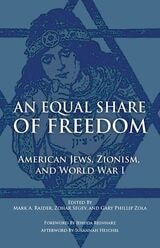
An Equal Share of Freedom
American Jews, Zionism, and World War IEdited by Mark Raider, Zohar Segev, and Gary Phillip Zola
University of Minnesota Press, 2024
An Equal Share of Freedom sheds new light on several important and interrelated dimensions of American, Jewish, and world history in the World War I era. Paying close attention to the Balfour Declaration as a hub around which to explore the period’s unfolding and turbulent social, cultural, and political developments, this collection of essays covers a diverse range of topics including Jewish doughboys, Zionist women authors, and political elites such as Golda Meir and Woodrow Wilson. The volume demonstrates the complex nature of Jewish ethnonational consciousness in the American setting and the impact of Zionism on US wartime and postwar activity.
The essays in this volume overturn timeworn assumptions that have long shaped the fields of American history and modern Jewish history. Taken as a whole, they demonstrate the war’s profound impact on American Jewish life and the transformation of American Jewry’s relationship with wider American society. These essays also illustrate the centrality of Zionism to the American Jewish experience and the extent to which American Jewry’s national consciousness and the future direction of the Zionist project were forged in the crucible of the Great War. An Equal Share of Freedom is the first volume in the Jacob Rader Marcus Series on the American Jewish Experience. In this series, Raider, Segev, and Zola highlight the myriad possibilities for expanding and deepening scholarly understanding of American Jews and the shared history of American society and the Jewish people in the twentieth century, starting with a look at World War I.
Aquinas and Sartre
On Freedom, Personal Identity, and the Possibility of HappinessStephen Wang
Catholic University of America Press, 2009
Art and Freedom
E. E. Sleinis
University of Illinois Press, 2002
What does a life with art offer that a life without art does not? Art and Freedom asserts that the fundamental point of the enterprise of art is the creation and delivery of values that are not singularly available in the nonart world.
E. E. Sleinis discusses visual art, literature, music, theater, and other art forms, arguing that as art both liberates and provides new points of focus and awareness, the art enterprise depends on a positive freeing from the nonart world, rather than on mere addition to it.
Art and Freedom introduces a novel classificatory system for representation, expression, and formalist theories of art. Sleinis argues that a characteristic defect of contemporary theories of art is their neglect of the issue of value. Challenging these reductive, formalist notions of art, he emphasizes the potential, and the need, for art to evolve and make progress in ways comparable to the sciences, albeit on a very different model.
A smart blend of incisive commentary and illuminating philosophy, Art and Freedom provides a useful context for transforming a sometimes baffling medium into a means of fostering personal growth and creating and sharing values.
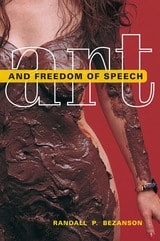
Art and Freedom of Speech
Randall P. Bezanson
University of Illinois Press, 2009
This book analyzes the broad range of Supreme Court cases that concern the protection of art and free speech under the First Amendment. Finding that debates about free expression (whether in speech or art) swirl around sex and cultural blasphemy, Randall P. Bezanson tracks and interprets the Court's decisions on film, nude dancing, music, painting, and other visual expressions.
Showing how the Court has dealt with judgments of art, quality, meaning, and how to distinguish types of speech and expression, Bezanson explores issues as diverse as homosexuality in the Boy Scouts, gay and lesbian parade floats, 2 Live Crew's alleged copyright infringement, National Endowment for the Arts grants and diversity, dangerous art, and screenings of the film Carnal Knowledge. In considering the transformative meaning of art, the importance of community judgments, and the definition of speech in Court rulings, Bezanson focuses on the fundamental questions underlying the discussion of art as protected free speech: What are the boundaries of art? What are the limits on the government's role as supporter and "patron" of the arts? And what role, if any, may core social values of decency, respect, and equality play in limiting the production or distribution of art?
Accessibly written and evocatively argued, Art and Freedom of Speech explores these questions and concludes with the argument that, for legal purposes, art should be absolutely free under the First Amendment--in fact, even more free than other forms of speech.
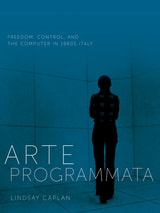
Arte Programmata
Freedom, Control, and the Computer in 1960s ItalyLindsay Caplan
University of Minnesota Press, 2022
Tracing the evolution of the Italian avant-garde’s pioneering experiments with art and technology and their subversion of freedom and control
In postwar Italy, a group of visionary artists used emergent computer technologies as both tools of artistic production and a means to reconceptualize the dynamic interrelation between individual freedom and collectivity. Working contrary to assumptions that the rigid, structural nature of programming limits subjectivity, this book traces the multifaceted practices of these groundbreaking artists and their conviction that technology could provide the conditions for a liberated social life.
Situating their developments within the context of the Cold War and the ensuing crisis among the Italian left, Arte Programmata describes how Italy’s distinctive political climate fueled the group’s engagement with computers, cybernetics, and information theory. Creating a broad range of immersive environments, kinetic sculptures, domestic home goods, and other multimedia art and design works, artists such as Bruno Munari, Enzo Mari, and others looked to the conceptual frameworks provided by this new technology to envision a way out of the ideological impasses of the age.
Showcasing the ingenuity of Italy’s earliest computer-based art, this study highlights its distinguishing characteristics while also exploring concurrent developments across the globe. Centered on the relationships between art, technology, and politics, Arte Programmata considers an important antecedent to the digital age.
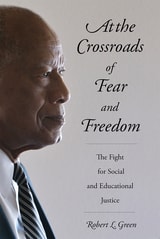
At the Crossroads of Fear and Freedom
The Fight for Social and Educational JusticeRobert L. Green
Michigan State University Press, 2016
This memoir relates previously untold stories about major Civil Rights campaigns that helped put an end to voting rights violations and Jim Crow education; explains how Green has helped urban school districts improve academic achievement levels; and explains why this history should inform our choices as we attempt to reform and improve American education. Green’s quest began when he helped the Kennedy Administration resolve a catastrophic education-related impasse and has continued through his service as one of the participants at an Obama administration summit on a current academic crisis.
It is commonly said that education is the new Civil Rights battlefield. Green’s memoir, At the Crossroads of Fear and Freedom: The Fight for Social and Educational Justice, helps us understand that educational equity has always been a central objective of the Civil Rights movement.