Results by title
167 books match the query 'Gardening' and 13 start with a
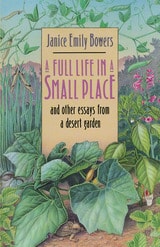
A Full Life in a Small Place and Other Essays from a Desert Garden
Janice Emily Bowers
University of Arizona Press, 1993
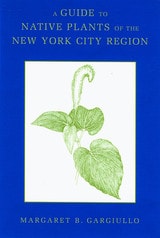
A Guide to Native Plants of the New York City Region
Gargiullo, Margaret B
Rutgers University Press, 2010
One of the most serious threats to indigenous plants is the introduction of invasive non-native species by landscapers after new developments are built. In this unique guide, ecologist Margaret B. Gargiullo presents a detailed look at the full scope of flora that is native to this region and available for propagation. Geared specifically for landscape architects, designers, land managers, and restorationists, this book offers practical advice on how to increase the amount of indigenous flora growing in the mepolitan area, and in some cases, to reintroduce plants that have completely disappeared.
More than one hundred line drawings of plants and their specific habitats, ranging from forests to beaches, help readers visualize the full potential for landscaping in the area. A separate entry for each plant also provides detailed information on size, flower color, blooming time, and its possible uses in wetland mitigation, erosion control, and natural area restoration. Some plants are also highlighted for their ability to thrive in areas that are typically considered inhospitable to greenery.
Easily searchable by plant type or habitat, this guide is an essential reference for everyone concerned with the region's natural plant life. Since most of the plants can also be grown well beyond the New York City metropolitan area, this book will also be useful for project managers doing restoration work in most of southern New England and the mid-Atlantic region, including Pennsylvania, Delaware, and Maryland.
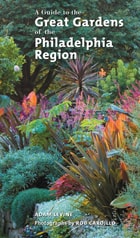
A Guide to the Great Gardens of the Philadelphia Region
Adam Levine
Temple University Press, 2007
As the horticultural epicenter of the United States, Philadelphia and the surrounding towns, suburbs, and countryside are blessed with more public gardens in a concentrated area than almost any other region in the world. Stretching from Trenton, New Jersey through Philadelphia and down to Newark, Delaware, this area (often called the Delaware Valley) offers more horticultural riches than a visitor can possibly see even in a coupl of weeks of hectic garden-hopping.
In A GUIDE TO THE GREAT GARDENS OF THE PHILADELPHIA REGION you will find:
Detailed coverage of almost 100 gardens
Maps to indicate where area gardens are in relation to each other to plan day trip itineraries
Key information about each major garden, including hours, fees, time needed for a tour, history, acreage, and special features
Over a dozen gardens that have never before been featured in any garden guidebook
Arranged by interest, to help guide readers to gardens that will most meet their needs
Notations about historical houses, cafes/restaurants, gift shops, and chidren's features at each major garden
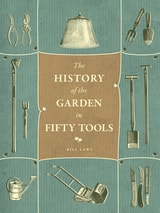
A History of the Garden in Fifty Tools
Bill Laws
University of Chicago Press, 2014
As Laws reveals, gardening tools have coevolved with human society, and the story of these fifty individual tools presents an innovative history of humans and the garden over time. Laws takes us back to the Neolithic age, when the microlith, the first “all-in-one” tool was invented. Consisting of a small sharp stone blade that was set into a handle made of wood, bone, or antler, it was a small spade that could be used to dig, clip, and cut plant material. We find out that wheelbarrows originated in China in the second century BC, and their basic form has not changed much since. He also describes how early images of a pruning knife appear in Roman art, in the form of a scythe that could cut through herbs, vegetables, fruits, and nuts and was believed to be able to tell the gardener when and what to harvest.
Organized into five thematic chapters relating to different types of gardens: the flower garden, the kitchen garden, the orchard, the lawn, and ornamental gardens, the book includes a mix of horticulture and history, in addition to stories featuring well-known characters—we learn about Henry David Thoreau’s favorite hoe, for example. A History of the Garden in Fifty Tools will be a beautiful gift for any home gardener and a reassuring reminder that gardeners have always struggled with the same quandaries.
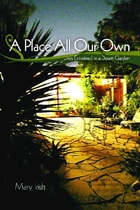
A Place All Our Own
Lives Entwined in a Desert GardenMary Irish
University of Arizona Press, 2012
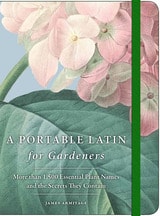
A Portable Latin for Gardeners
More than 1,500 Essential Plant Names and the Secrets They ContainJames Armitage
University of Chicago Press, 2017
A Portable Latin for Gardeners is the perfect quick reference for working in the garden, shopping for plants, or doing botanical research—and no prior knowledge of Latin is required. The 1,500 terms are grouped by categories, making it easy to describe color, size, form, habitat, scent, taste, and time. Gardeners will make new connections and discoveries in a way standard alphabetical lists simply don’t allow. Alternately, gardeners who want to look up a particular term can jump right into the alphabetical index. Each entry includes the different forms of the term, a basic pronunciation guide, the definition, and an example plant species.
Rich botanical illustrations make this guide as beautiful as it is useful, while a durable flexi-bound cover means the book can withstand both days in the garden and evenings on the nightstand.
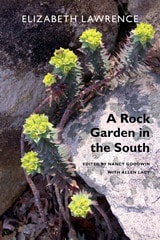
A Rock Garden in the South
Elizabeth A. Lawrence
Duke University Press, 1990
Lawrence, in her usual exquisite prose, deals with the full range of rock gardening topics in this work. She addresses the unique problem of cultivating rock gardens in the South, where the growing season is prolonged and humidity and heat are not conducive to such planting. She describes her own experiences in making a rock garden, with excellent advice on placing stones, constructing steps, ordering plants, and making cuttings.
At the same time, what she writes about here is in large part of interest to gardeners everywhere and for gardens with or without rocks. As always, she thoroughly discusses the plants she has tried—recommending bulbs and other perennials of all sorts, annuals, and woody plants—with poetic descriptions of the plants themselves as well as specific and useful cultural advice. A Rock Garden in the South includes an encyclopedia of plants alphabetized by genus and species and divided into two parts: wood and non-woody plants.
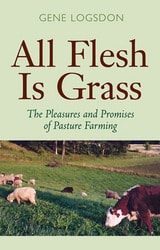
All Flesh Is Grass
The Pleasures and Promises of Pasture FarmingGene Logsdon
Ohio University Press, 2004
Amidst Mad Cow scares and consumer concerns about how farm animals are bred, fed, and raised, many farmers and homesteaders are rediscovering the traditional practice of pastoral farming. Grasses, clovers, and forbs are the natural diet of cattle, horses, and sheep, and are vital supplements for hogs, chickens, and turkeys. Consumers increasingly seek the health benefits of meat from animals raised in green paddocks instead of in muddy feedlots.
In All Flesh Is Grass: The Pleasures and Promises of Pasture Farming, Gene Logsdon explains that well-managed pastures are nutritious and palatable—virtual salads for livestock. Leafy pastures also hold the soil, foster biodiversity, and create lovely landscapes. Grass farming might be the solution for a stressed agricultural system based on an industrial model and propped up by federal subsidies.
In his clear and conversational style, Logsdon explains historically effective practices and new techniques. His warm, informative profiles of successful grass farmers offer inspiration and ideas. His narrative is enriched by his own experience as a “contrary farmer” on his artisan-scale farm near Upper Sandusky, Ohio.
All Flesh Is Grass will have broad appeal to the sustainable commercial farmer, the home-food producer, and all consumers who care about their food.
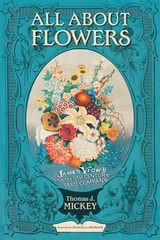
All about Flowers
James Vick's Nineteenth-Century Seed CompanyThomas J. Mickey
Ohio University Press, 2021
A nineteenth-century entrepreneur’s bold, innovative marketing helped transform flower gardens into one of America’s favorite hobbies.
“There is much that is hard and productive of sorrow in this sin-plagued world of ours; and, had we no flowers, I believe existence would be hard to be borne.” So states a customer’s 1881 letter—one of thousands James Vick regularly received. Vick’s business, selling flower seeds through the mail, wasn’t unique, but it was wildly successful because he understood better than his rivals how to engage customers’ emotions. He sold the love of flowers along with the flower seeds.
Vick was genuinely passionate about floriculture, but he also pioneered what we now describe as integrated marketing. He spent a mind-boggling $100,000 per year on advertising (mostly to women, his target demographic); he courted newspaper editors for free publicity; his educational guides presaged today’s content marketing; he recruited social influencers to popularize neighborhood gardening clubs; and he developed a visually rich communication and branding strategy to build customer loyalty and inflect their purchasing needs with purchasing desire.
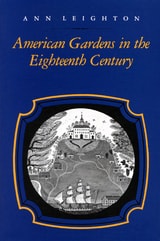
American Gardens in the Eighteenth Century
"For Use or for Delight"Ann Leighton
University of Massachusetts Press, 1976
American Gardens in the Eighteenth Century is the second of three authoritative volumes of garden history by Ann Leighton. This entertaining book focuses on eighteenth-century gardens and gardening. Leighton's material for the book was drawn from letters, journals, invoices, and books of men and women who were interested in the plants of the New and Old World. Throughout the book are illustrations and descriptive listings of native and new plants that were cultivated during the eighteenth century.
Companion volumes by Ann Leighton
Early American Gardens “For Meate or Medicine”
American Gardens of the Nineteenth Century “For Comfort and Affluence”
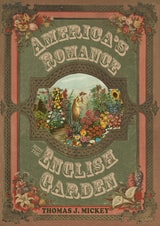
America’s Romance with the English Garden
Thomas J. Mickey
Ohio University Press, 2013
Named one of “the year’s best gardening books” by The Spectator (UK, Nov. 2014)
The 1890s saw a revolution in advertising. Cheap paper, faster printing, rural mail delivery, railroad shipping, and chromolithography combined to pave the way for the first modern, mass-produced catalogs. The most prominent of these, reaching American households by the thousands, were seed and nursery catalogs with beautiful pictures of middle-class homes surrounded by sprawling lawns, exotic plants, and the latest garden accessories—in other words, the quintessential English-style garden.
America’s Romance with the English Garden is the story of tastemakers and homemakers, of savvy businessmen and a growing American middle class eager to buy their products. It’s also the story of the beginnings of the modern garden industry, which seduced the masses with its images and fixed the English garden in the mind of the American consumer. Seed and nursery catalogs delivered aspirational images to front doorsteps from California to Maine, and the English garden became the look of America.
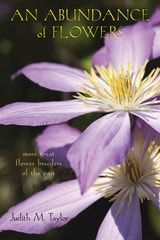
An Abundance of Flowers
More Great Flower Breeders of the PastJudith M. Taylor
Ohio University Press, 2018
Walk into any nursery, florist, or supermarket, and you’ll encounter displays of dozens of gorgeous flowers, from chrysanthemums to orchids. At one time these fanciful blooms were the rare trophies of the rich and influential—even the carnation, today thought of as one of the humblest cut flowers. Every blossom we take for granted now is the product of painstaking and imaginative planning, breeding, horticultural ingenuity, and sometimes chance. The personalities of the breeders, from an Indiana farmer to Admiral Lord Gambier’s gardener, were as various and compelling as the beauty they conjured from skilled hybridization.
In Visions of Loveliness: Great Flower Breeders of the Past, Judith Taylor wrote engagingly about the vivid history and characters behind eighteen types of popular flowers. In this companion volume she uncovers information about another eight familiar flowers: poinsettias, chrysanthemums, gladioli, pansies, carnations, water lilies, clematis, and penstemons.
Taylor has tapped into an enormous trove of stories about extraordinary people with vision and skill who added to our enjoyment piece by piece, starting about 150 years ago. This beautifully illustrated book will please flower enthusiasts, gardeners, and history buffs alike.
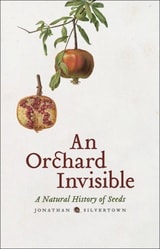
An Orchard Invisible
A Natural History of SeedsJonathan Silvertown
University of Chicago Press, 2009
The story of seeds, in a nutshell, is a tale of evolution. From the tiny sesame that we sprinkle on our bagels to the forty-five-pound double coconut borne by the coco de mer tree, seeds are a perpetual reminder of the complexity and diversity of life on earth. With An Orchard Invisible, Jonathan Silvertown presents the oft-ignored seed with the natural history it deserves, one nearly as varied and surprising as the earth’s flora itself.
Beginning with the evolution of the first seed plant from fernlike ancestors more than 360 million years ago, Silvertown carries his tale through epochs and around the globe. In a clear and engaging style, he delves into the science of seeds: How and why do some lie dormant for years on end? How did seeds evolve? The wide variety of uses that humans have developed for seeds of all sorts also receives a fascinating look, studded with examples, including foods, oils, perfumes, and pharmaceuticals. An able guide with an eye for the unusual, Silvertown is happy to take readers on unexpected—but always interesting—tangents, from Lyme disease to human color vision to the Salem witch trials. But he never lets us forget that the driving force behind the story of seeds—its theme, even—is evolution, with its irrepressible habit of stumbling upon new solutions to the challenges of life.
"I have great faith in a seed," Thoreau wrote. "Convince me that you have a seed there, and I am prepared to expect wonders." Written with a scientist’s knowledge and a gardener’s delight, An Orchard Invisible offers those wonders in a package that will be irresistible to science buffs and green thumbs alike.