Results by title
153 books match the query 'Genres' and 17 start with a
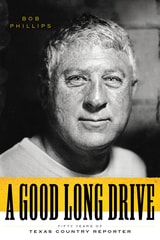
A Good Long Drive
Fifty Years of Texas Country ReporterBob Phillips
University of Texas Press, 2021
In 2021, Texas Country Reporter celebrates its fiftieth season on the air. Broadcast every week on stations across Texas, it focuses on “ordinary people doing extraordinary things.” And at the center of it is Bob Phillips, the show’s creator and host—an erstwhile poor kid from Dallas who ended up with a job that allowed him to rub elbows with sports figures, entertainers, and politicians but who preferred to spend his time on the back roads, listening to less-famous Texans tell their stories.
In this memoir, Phillips tells his own story, from his early days as a reporter and his initial pitch for the show while a student at SMU to his ongoing work at the longest-running independently produced TV show in American television history. As we travel with Phillips on his journey, we meet Willie Nelson and former Dallas Cowboys coach Tom Landry; reflect on memorable, unusual, and challenging show segments; experience the behind-the-scenes drama that goes on in local television; witness the launching of an annual festival; and discover the unbelievable allure of Texas, its culture, and, especially, its people. Spanning generations, A Good Long Drive is proof that life’s journey really is a destination unto itself.
A History of Horror
Wheeler Winston Dixon
Rutgers University Press, 2010
Arranged by decades, with outliers and franchise films overlapping some years, this one-stop sourcebook unearths the historical origins of characters such as Dracula, Frankenstein, and the Wolfman and their various incarnations in film from the silent era to comedic sequels. A History of Horror explores how the horror film fits into the Hollywood studio system and how its enormous success in American and European culture expanded globally over time.
Dixon examines key periods in the horror film-in which the basic precepts of the genre were established, then banished into conveniently reliable and malleable forms, and then, after collapsing into parody, rose again and again to create new levels of intensity and menace. A History of Horror, supported by rare stills from classic films, brings over fifty timeless horror films into frightfully clear focus, zooms in on today's top horror Web sites, and champions the stars, directors, and subgenres that make the horror film so exciting and popular with contemporary audiences.
A History of Horror, 2nd Edition
Wheeler Winston Dixon
Rutgers University Press, 2023
Ever since horror leapt from popular fiction to the silver screen in the late 1890s, viewers have experienced fear and pleasure in exquisite combination. Wheeler Winston Dixon's fully revised and updated A History of Horror is still the only book to offer a comprehensive survey of this ever-popular film genre.
Arranged by decades, with outliers and franchise films overlapping some years, this one-stop sourcebook unearths the historical origins of characters such as Dracula, Frankenstein, and the Wolfman and their various incarnations in film from the silent era to comedic sequels. In covering the last decade, this new edition includes coverage of the resurgence of the genre, covering the swath of new groundbreaking horror films directed by women, Black and queer horror films, and a new international wave in body horror films.
A History of Horror explores how the horror film fits into the Hollywood studio system, how the distribution and exhibition of horror films have changed in a post-COVID world, and how its enormous success in American and European culture expanded globally over time.
Dixon examines key periods in the horror film-in which the basic precepts of the genre were established, then banished into conveniently reliable and malleable forms, and then, after collapsing into parody, rose again and again to create new levels of intensity and menace. A History of Horror, supported by rare stills from classic films, brings over sixty timeless horror films into frightfully clear focus, zooms in on today's top horror Web sites, and champions the stars, directors, and subgenres that make the horror film so exciting and popular with contemporary audiences.
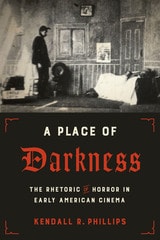
A Place of Darkness
The Rhetoric of Horror in Early American CinemaBy Kendall R. Phillips
University of Texas Press, 2018
Horror is one of the most enduringly popular genres in cinema. The term “horror film” was coined in 1931 between the premiere of Dracula and the release of Frankenstein, but monsters, ghosts, demons, and supernatural and horrific themes have been popular with American audiences since the emergence of novelty kinematographic attractions in the late 1890s. A Place of Darkness illuminates the prehistory of the horror genre by tracing the way horrific elements and stories were portrayed in films prior to the introduction of the term “horror film.”
Using a rhetorical approach that examines not only early films but also the promotional materials for them and critical responses to them, Kendall R. Phillips argues that the portrayal of horrific elements was enmeshed in broader social tensions around the emergence of American identity and, in turn, American cinema. He shows how early cinema linked monsters, ghosts, witches, and magicians with Old World superstitions and beliefs, in contrast to an American way of thinking that was pragmatic, reasonable, scientific, and progressive. Throughout the teens and twenties, Phillips finds, supernatural elements were almost always explained away as some hysterical mistake, humorous prank, or nefarious plot. The Great Depression of the 1930s, however, constituted a substantial upheaval in the system of American certainty and opened a space for the reemergence of Old World gothic within American popular discourse in the form of the horror genre, which has terrified and thrilled fans ever since.
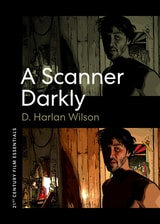
A Scanner Darkly
D. Harlan Wilson
University of Texas Press, 0
An in-depth analysis of Richard Linklater’s film adaptation of the semi-autobiographical Philip K. Dick novel, examining the film’s importance in the history of science fiction cinema.
From Blade Runner and Minority Report to The Man in the High Castle, the works of Philip K. Dick have been fertile ground for screen adaptation. Among the most visually and intellectually compelling, however, is the release that has received the least attention: Richard Linklater’s A Scanner Darkly.
In this revelatory work of criticism, scholar-novelist D. Harlan Wilson burrows deep inside Linklater’s meditation on identity and surveillance, addiction and the instability of perception. A Scanner Darkly features groundbreaking use of rotoscopy—filming live-action scenes, then drawing over the footage to animate it. Wilson argues that the technique captures the splintered consciousness of Dick’s protagonist and extends this psychological disintegration beyond the world on screen, inviting viewers into a fractured sense of self. More broadly, Wilson places the film in conversation with Linklater’s oeuvre, the history of science fiction cinema, and contemporary debates about technology, identity, and surveillance. A Scanner Darkly—the novel, the film, and now the critical interpretation—yields powerful insight into the forms of social control that define our era of digital selfhood, algorithmic monitoring, and artificial intelligence.
Adventures in Shondaland
Identity Politics and the Power of RepresentationGriffin, Rachel Alicia
Rutgers University Press, 2018
Shonda Rhimes is one of the most powerful players in contemporary American network television. Beginning with her break-out hit series Grey’s Anatomy, she has successfully debuted Private Practice, Scandal, How to Get Away with Murder, The Catch, For The People, and Station 19. Rhimes’s work is attentive to identity politics, “post-” identity politics, power, and representation, addressing innumerable societal issues. Rhimes intentionally addresses these issues with diverse characters and story lines that center, for example, on interracial friendships and relationships, LGBTIQ relationships and parenting, the impact of disability on familial and work dynamics, and complex representations of womanhood. This volume serves as a means to theorize Rhimes’s contributions and influence by inspiring provocative conversations about television as a deeply politicized institution and exploring how Rhimes fits into the implications of twenty-first century television.

African Animation
History, Culture, and IndustryBoukary Sawadogo
Rutgers University Press, 2027
Against the backdrop of the rising interest in African stories in mainstream media, African Animation looks at a more than century-old animation practice that remains largely unknown. Carefully organized, this book offers a comprehensive treatment that canvases animation from all over the continent, analyzing its history, socio-political contexts, artistic and technological development, visual cultures, and economic market conditions. African animation also contributes to the broader landscape of animation studies: how does our view of the history of animation change when we add an African perspective to the otherwise dominating perspectives of Hollywood, Japanese, and Korean animation? What does animation look and feel like in other parts of the world? African animation has always been there; this book helps us pay attention to it. This is a must-read for those interested in African animation, including artists, industry insiders, and fans.
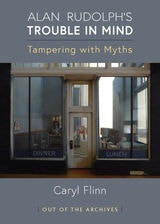
Alan Rudolph's Trouble in Mind
Tampering with MythsCaryl Flinn
University of Michigan Press, 2023
Despite a career spanning over forty years, filmmaker Alan Rudolph has flown largely under the radar of independent film scholars and enthusiasts, often remembered as Robert Altman’s protégé. Through a reading of his 1985 film Trouble in Mind, Caryl Flinn demonstrates that Rudolph is long overdue for critical re-evaluation.
Exploring Trouble in Mind’s influence on indie filmmaking, Rudolph’s dream-like style, and the external political influences of the Reagan era, Flinn effectively conveys the originality of Rudolph’s work through this multifaceted film. Utilizing archival materials and interviews with Rudolph himself and his collaborators, Flinn argues for this career-defining film’s relevance to American independent cinema and the decade of the 1980s. Amply illustrated with frame enlargements and set photographs, this book uncovers new production stories and reception contexts of a film that Flinn argues deserves a place in the limelight.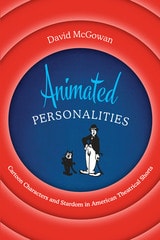
Animated Personalities
Cartoon Characters and Stardom in American Theatrical ShortsBy David McGowan
University of Texas Press, 2019
A CHOICE Outstanding Academic Title, 2019
Mickey Mouse, Betty Boop, Donald Duck, Bugs Bunny, Felix the Cat, and other beloved cartoon characters have entertained media audiences for almost a century, outliving the human stars who were once their contemporaries in studio-era Hollywood. In Animated Personalities, David McGowan asserts that iconic American theatrical short cartoon characters should be legitimately regarded as stars, equal to their live-action counterparts, not only because they have enjoyed long careers, but also because their star personas have been created and marketed in ways also used for cinematic celebrities.
Drawing on detailed archival research, McGowan analyzes how Hollywood studios constructed and manipulated the star personas of the animated characters they owned. He shows how cartoon actors frequently kept pace with their human counterparts, granting “interviews,” allowing “candid” photographs, endorsing products, and generally behaving as actual actors did—for example, Donald Duck served his country during World War II, and Mickey Mouse was even embroiled in scandal. Challenging the notion that studios needed actors with physical bodies and real off-screen lives to create stars, McGowan demonstrates that media texts have successfully articulated an off-screen existence for animated characters. Following cartoon stars from silent movies to contemporary film and television, this groundbreaking book broadens the scope of star studies to include animation, concluding with provocative questions about the nature of stardom in an age of digitally enhanced filmmaking technologies.
Animating Film Theory
Karen Beckman, ed.
Duke University Press, 2014
Contributors. Karen Beckman, Suzanne Buchan, Scott Bukatman, Alan Cholodenko, Yuriko Furuhata, Alexander R. Galloway, Oliver Gaycken, Bishnupriya Ghosh, Tom Gunning, Andrew R. Johnston, Hervé Joubert-Laurencin, Gertrud Koch, Thomas LaMarre, Christopher P. Lehman, Esther Leslie, John MacKay, Mihaela Mihailova, Marc Steinberg, Tess Takahashi
Animation
Curtis, Scott
Rutgers University Press, 2019
Anime's Identity
Performativity and Form beyond JapanStevie Suan
University of Minnesota Press, 2021
A formal approach to anime rethinks globalization and transnationality under neoliberalism
Anime has become synonymous with Japanese culture, but its global reach raises a perplexing question—what happens when anime is produced outside of Japan? Who actually makes anime, and how can this help us rethink notions of cultural production? In Anime’s Identity, Stevie Suan examines how anime’s recognizable media-form—no matter where it is produced—reflects the problematics of globalization. The result is an incisive look at not only anime but also the tensions of transnationality.
Far from valorizing the individualistic “originality” so often touted in national creative industries, anime reveals an alternate type of creativity based in repetition and variation. In exploring this alternative creativity and its accompanying aesthetics, Suan examines anime from fresh angles, including considerations of how anime operates like a brand of media, the intricacies of anime production occurring across national borders, inquiries into the selfhood involved in anime’s character acting, and analyses of various anime works that present differing modes of transnationality.
Anime’s Identity deftly merges theories from media studies and performance studies, introducing innovative formal concepts that connect anime to questions of dislocation on a global scale, creating a transformative new lens for analyzing popular media.
Anime's Knowledge Cultures
Geek, Otaku, ZhaiJinying Li
University of Minnesota Press, 2024
Unlocking the technosocial implications of global geek cultures
Why has anime, a “low-tech” medium from last century, suddenly become the cultural “new cool” in the information age? Through the lens of anime and its transnational fandom, Jinying Li explores the meanings and logics of “geekdom” as one of the most significant sociocultural groups of our time. In Anime’s Knowledge Cultures, Li shifts the center of global geography in knowledge culture from the computer boys in Silicon Valley to the anime fandom in East Asia.
Drawing from film studies, animation studies, media theories, fan studies, and area studies, she provides broad cultural and theoretical explanations of anime’s appeal to a new body of tech-savvy knowledge workers and consumers commonly known as geeks, otaku, or zhai. Examining the forms, techniques, and aesthetics of anime, as well as the organization, practices, and sensibilities of its fandom, Anime’s Knowledge Cultures is at once a theorization of anime as a media environment as well as a historical and cultural study of transnational geekdom as a knowledge culture. Li analyzes anime culture beyond the national and subcultural frameworks of Japan or Japanese otaku, instead theorizing anime’s transnational, transmedial network as the epitome of the postindustrial knowledge culture of global geekdom.
By interrogating the connection between the anime boom and global geekdom, Li reshapes how we understand the meanings and significance of anime culture in relation to changing social and technological environments.
Apocalypse Cinema
Stephen Prince
Rutgers University Press, 2021
This book provides a lively overview of apocalypse cinema, including alien invasions, nuclear annihilation, asteroid collisions, climate change, and terrifying plagues. Covering pivotal films from the silent era to the present day, including Metropolis, Invasion of the Body Snatchers, Dr. Strangelove, Contagion, and Avengers: Endgame, Stephen Prince explores how these dark visions are rooted in religious and prophetic traditions, and he considers how our love for apocalypse cinema is tied to fundamental existential questions and anxieties that never go out of fashion.
Arrival
David Roche
University of Texas Press, 2024
A study of Denis Villeneuve’s genre-transcendent film.
In Denis Villeneuve’s Arrival (2016), scientists must decipher the language of and peacefully communicate with aliens who have landed on Earth before the world’s military attacks. In this first book-length study of the film, scholar David Roche argues that it is one of the most important films of this century, and the most brilliant science fiction film since Blade Runner. Roche posits Arrival as a blockbuster with artistic ambitions—an argument supported by the film’s several Academy Award nominations—and looks closely at how the film engages with theoretical questions posed by contemporary film studies and philosophy alike. Each section explores a central aspect of the film: its status as an auteur adaptation; its relation to the science fiction genre; its themes of communication on narrative and meta-narrative levels; its aesthetics of time and space; and the political and ethical questions it raises. Ultimately, Roche declares Arrival a unique, multifaceted experience in the world of hard science fiction films, placing it in context with works like 2001: A Space Odyssey, Close Encounters of the Third Kind, and Contact while also examining how it bridges the gap between genre and art house cinema.
Asexual Erotics
Intimate Readings of Compulsory SexualityEla Przybylo
The Ohio State University Press, 2019
Through a wide-ranging analysis of pivotal queer, feminist, and anti-racist movements; television and film; art and photography; and fiction, nonfiction, and theoretical texts, each chapter explores asexual erotics and demonstrates how asexuality has been vital to the formulation of intimate ways of knowing and being. Asexual Erotics assembles a compendium of asexual possibilities that speaks against the centralization of sex and sexuality, asking that we consider the ways in which compulsory sexuality is detrimental not only to asexual and nonsexual people but to all.
Assembly Lines
Montage in Postwar French FilmIvan Cerecina
University of Minnesota Press, 2026
A bold new understanding of montage and French cinematic history
Amid the tumult of change that swept through French society in the wake of World War II, a trio of visionary filmmakers sought to make meaning of the chaos by revitalizing a common method: montage. Revealing Nicole Védrès, Alain Resnais, and Chris Marker as more than just groundbreaking auteurs, Ivan Cerecina shows how their collective infusion of montage with avant-garde aesthetics renewed the art of cinema while helping France reckon with its past and imagine its future.
Assembly Lines challenges a dominant story of postwar French film, championed by critics at important film journals like Cahiers du cinéma, that has generally centered realist film aesthetics. Working against this tendency, Cerecina shows how Védrès, Resnais, and Marker revitalized montage as a technique in response to the crises of the times, using it to process the ravages of the recent past, expose hidden connections, and uncover signs of coming catastrophe. Wedding insightful analyses of films and French cultural history with writings from lesser-heard voices like André Malraux, Jacques Brunius, and Henri Langlois, Assembly Lines illuminates obscured networks of critics, filmmakers, and historians to reshape our conception of French film and documentary. Meanwhile, Cerecina’s in-depth archival research unearths vital documents, including correspondence and production notes on Védrès’s Paris 1900 and Resnais’s Night and Fog.
More than a cinematic retrospective, Cerecina’s investigation of montage is also a call to action today as contemporary crises prompt reevaluation of our cultural histories. Assembly Lines exemplifies a powerful, future-oriented practice of historical reflection with implications that go well beyond the study of film.
Retail e-book files for this title are screen-reader friendly with images accompanied by short alt text and/or extended descriptions.