Results by title
115 books match the query 'Hungary' and 8 start with a
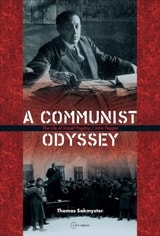
A Communist Odyssey
The life of József Pogány/John PepperThomas Sakmyster
Central European University Press, 2012
A group of Central European communists, most of them Hungarians, in the interwar period served the world communist movement as international cadres of the Comintern, the Moscow-based Communist International. As an important member of this cohort, József Pogány played a major role in the Hungarian Soviet Republic of 1919, the "March Action" in Germany in 1921, and, under the name of John Pepper, in the development of the American Communist Party of the 1920s. During the 1920s he was an important official in the Comintern apparatus and undertook missions on three continents. A prolific writer and effective organizer, he was one of the most flamboyant and controversial communists of his era. Some of his comrades praised him as "the Hungarian Christopher Columbus." Others, like Trotsky, called him a "political parasite."This study is based on newly available primary sources from Hungary, Russia, and the United States; it is the first ever written about this colorful and well-travelled Hungarian communist. Examines Pogány's development as a socialist and communist, the influence of his Jewish origins on his career, the reasons for his remarkable success in the United States, and the circumstances that led to his arrest and execution in the Stalinist terror.
[more]
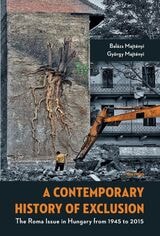
A Contemporary History of Exclusion
The Roma Issue in Hungary from 1945 to 2015György Majtényi
Central European University Press, 2016
The volume presents the changing situation of the Roma in the second half of the 20th century and examines the politics of the Hungarian state regarding minorities by analyzing legal regulations, policy documents, archival sources and sociological surveys. In the first phase analyzed (1945-61), the authors show the efforts of forced assimilation by the communist state. The second phase (1961-89) began with the party resolution denying nationality status to the Roma. Gypsy culture was equivalent with culture of poverty that must be eliminated. Forced assimilation through labor activities continued. The Roma adapted to new conditions and yet kept their distinct identity. From the 1970s, Roma intellectuals began an emancipatory movement, and its legacy is felt until this day. Although the third phase (1989-2010) brought about freedoms and rights for the Roma, with large sums spent on various Roma-related programs, the situation on the ground nevertheless did not improve. Segregation and marginalization continues, and it is rampant. The authors powerfully conclude: while Roma became part of the political community, they are still not part of the national one. Subjects: Romanies—Hungary. Romanies—Hungary—Social conditions. Marginality, Social—Hungary. Romanies—Legal status, laws, etc.—Hungary. Minorities—Government policy—Hungary. Hungary—Ethnic relations. Hungary—Social policy.
[more]
A House Divided
Orthodoxy and Schism in Nineteenth-Century Central European JewryJacob Katz
University Press of New England, 2005
Eminent social historian Jacob Katz examines the rise and transformation of Jewish communal leadership in Central Europe. It is a story of fragmentation and polarization that sheds light on the tensions within the 19th-century Jewish community in Central Europe as it struggled to respond to the promises and perils of modernization.
[more]
A Little Hungarian Pornography
Peter Esterhazy
Northwestern University Press, 1997
An extraordinary montage of sex and politics, Péter Esterházy's innovative novel can be seen to prefigure the liberation of Eastern Europe. Written under what the author calls "small, Hungarian, pornographic circumstances," A Little Hungarian Pornography exists in a context of official falsehood and misinformation, of lies of the body, the soul, and the state, perpetuated in the duality of language.
In a state where the lack of democracy was called socialist democracy, economic chaos a socialist economy, and revolution an anti-revolution, the notion of speech and obscenity becomes equally distorted and skewed. Under these circumstances, the author considers the shackles inherent in the vocabulary of oppression and contrasts this with the freedom of the body in sex. A kaleidoscopic digression on perversion and politics, A Little Hungarian Pornography is both satire and critique, trifle and tract, and further support for Esterházy's status as one of the best writers in Europe today.
In a state where the lack of democracy was called socialist democracy, economic chaos a socialist economy, and revolution an anti-revolution, the notion of speech and obscenity becomes equally distorted and skewed. Under these circumstances, the author considers the shackles inherent in the vocabulary of oppression and contrasts this with the freedom of the body in sex. A kaleidoscopic digression on perversion and politics, A Little Hungarian Pornography is both satire and critique, trifle and tract, and further support for Esterházy's status as one of the best writers in Europe today.
[more]
A Society Transformed
Hungary in Time-Space PerspectiveRichard Rose
Central European University Press, 1999
In the past half-century every Central and East European society has been twice subject to transformation. Initially, Hungary was transformed by communist-style modernization, increasing industry, expanding secondary education and improving health. The second shock was the collapse of the communist regime and the introduction of democratic institutions and a market economy. How much or how little impact has institutional change had on the lives of ordinary people? Drawing on detailed surveys, highlighted in tables and figures, the authors identify long-term changes in Hungary from the late 1940s to the late 1980s and provide an in-depth analysis of the impact of the collapse of the communist system in the 1990s. They also compare long-term and shor-term change in Hungary with trends in other Central and Eastern European countries.
[more]
A Task for Sisyphus
Why Europe’s Roma Policies FailIulius Rostas
Central European University Press, 2020
Despite an increasing number of EU and government initiatives in their favor, the situation of Roma in Europe has only worsened. This book explores the many miscalculations, misconceptions, and blunders that have led to this failure. Looking at Hungary, the Czech Republic, and Romania, Rostas shows how policy makers in each country have mishandled already confused EU policy, from failing to define “Roma” to not having a way to evaluate their own progress. Rostas further argues that the alleged successes of these policies were actually the product of poor information and sometimes outright deception. Examining perennial topics among Roma like school segregation and political representation, the author shows how often the so-called success of Roma policies can be fallacious and simply pave the way for further problems. Rostas maintains that when the EU’s Framework for Roma program comes to an end in 2020, there must be a fundamental shift in policy for there to be any real improvement for Roma. Policy makers will have to address Roma issues not only in terms of poverty and social exclusion but also in terms of the particular nature of Romani ethnic identity. This shift requires reconceiving Roma as a “politically insular minority” and rearranging the power dynamics of local government to ensure that when the new era of Roma policy begins Roma themselves will have a voice in its formulation.
[more]

Agnes Heller
A Moralist in the Vortex of HistoryJohn Grumley
Pluto Press, 2005
Agnes Heller is one of the leading thinkers to come out of the tradition of critical theory. Her awesome intellectual range and output includes ethics, philosophical anthropology, political philosophy and a theory of modernity and its culture.
Hungarian by birth, she was one of the best known dissident Marxists in central Europe in the 1960's and 1970's. Since her forced immigration she has held visiting lectureships all over the world and has been the Hannah Arendt Professor of Philosophy at the New School in New York for the last twenty years.
This introduction to her thought is ideal for all students of philosophy, political theory and sociology. Grumley explores Heller's early work, elaborating her relation to Lukacs and the evolution of her own version of Marxism. He examines the subsequent break with Marxism and the initial development of an alternative radical philosophy. Finally, he explains and assesses her mature reflective post-modernism, a perspective that is both sceptical and utopian, that upholds a critical humanist perspective just as it critiques contemporary democratic culture.
[more]
Anonymus and Master Roger
Martyn Rady
Central European University Press, 2010
Contains two very different narratives; both are for the first time presented in an updated Latin text with an annotated English translation.An anonymous notary of King Bela of Hungary wrote a Latin Gesta Hungarorum (ca. 1200/10), a literary composition about the mythical origins of the Hungarians and their conquest of the Carpathian Basin. Anonymus tried to (re)construct the events and protagonists—including ethnic groups—of several centuries before from the names of places, rivers, and mountains of his time, assuming that these retained the memory of times past. One of his major "inventions" was the inclusion of Attila the Hun into the Hungarian royal genealogy, a feature later developed into the myth of Hun-Hungarian continuity.The Epistle to the Sorrowful Lament upon the Destruction of the Kingdom of Hungary by the Tartars of Master Roger includes an eyewitness account of the Mongol invasion in 1241–2, beginning with an analysis of the political conditions under King Bela IV and ending with the king's return to the devastated country.
[more]