Results by title
200 books match the query 'Indians of Mexico' and 15 start with a
A Fuego y Sangre
Early Zapotec Imperialism in the Cuicatlán Cañada, OaxacaElsa M. Redmond
University of Michigan Press, 1983
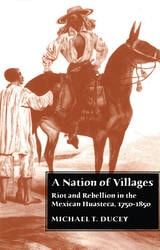
A Nation of Villages
Riot and Rebellion in the Mexican Huasteca, 1750-1850Michael T. Ducey
University of Arizona Press, 2004
He asks not just why villagers revolted but how their discontent fit into the political drama of early national Mexico. Ducey shows how the war offered opportunities for villagers to settle scores with members of the local elite as peasants discovered new ways of imagining the state. They were far from being the isolated traditionalists who occasionally rebelled against political or economic change described in older scholarship. At least until the 1848-1850 Caste War, political disputes were more important than land.
This region’s peasants were both remarkably diverse and politically astute. Villagers adapted colonial political culture and later republican ideas to fashion local institutions that fit their own needs. Over the course of a hundred years, peasant tactics and political discourse evolved in a constant dialogue with the changing political climate, shifting from rhetorical statements of loyalty to the king to proclamations of federalism and their rights as citizens. A Nation of Villages ably demonstrates that rural villagers were more aware of elite ideologies than urban rulers were of the villagers’ political ideas. This long-term analysis of one region illuminates how rural people helped shape the republican state.
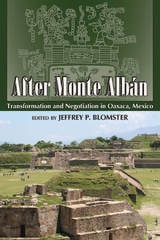
After Monte Albán
Transformation and Negotiation in Oaxaca, MexicoJeffrey P. Blomster
University Press of Colorado, 2016
Contributors synthesize these regional transformations and continuities in the lower Rio Verde Valley, the Valley of Oaxaca, and the Mixteca Alta. They provide data from material culture, architecture, codices, ethnohistoric documents, and ceramics, including a revised ceramic chronology from the Late Classic to the end of the Postclassic that will be crucial to future investigations. After Monte Albán establishes Postclassic Oaxaca's central place in the study of Mesoamerican antiquity.
Contributors include Jeffrey P. Blomster, Bruce E. Byland, Gerardo Gutierrez, Byron Ellsworth Hamann, Arthur A. Joyce, Stacie M. King, Michael D. Lind, Robert Markens, Cira Martínez López, Michel R. Oudijk, and Marcus Winter.
Agricultural Intensification and Prehistoric Health in the Valley of Oaxaca, Mexico
Denise C. Hodges
University of Michigan Press, 1989
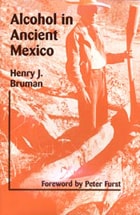
Alcohol in Ancient Mexico
Henry Bruman
University of Utah Press, 2000
Alcohol in Ancient Mexico reconstructs the variety and extent of distillation traditions in the ancient cultures of Mexico, describing in detail the various plants and processes used to make such beverages, their prevalence, and their significance for local culture.
The art of distillation arrived in Mexico with the Spaniards in the sixteenth century. However, well before that time, native skills and available resources had contributed to a well-developed tradition of intoxicating beverages, many of which are still produced and consumed.
In the 1930’s Henry Bruman visited various Mexican and Central American Indian tribes to reconstruct the variety and extent of these ancient traditions. He discerned five distinct areas defined by the culturally most significant beverages, all superimposed over the great mescal wine region. Within these five areas he noted wine made from cactus, cactus fruit, cornstalks, and mesquite pods; beer from sprouted maize; and fermented sap from pulque agaves.
Outside the mescal region he observed widespread consumption in the Yucatan of a wine made from fermented honey and balché bark, plus lesser-known beverages in other regions. He also observed the frequent inclusion in the fermentation process of alkaloid-bearing ingredients such as peyote and tobacco, plants whose roots or bark contain saponins—which act as cardiac poisons—and even poisons from certain toads.
Alcohol in Ancient Mexico also considers the relative absence of alcoholic drink in the southwestern United States, the introduction of sills following the Spanish conquest, and possible sources for the introduction of coconut wine.
Previously unpublished, the research presented here retains its relevance today, and the photographs offer a fascinating glimpse at a traditional world that has now almost vanished.
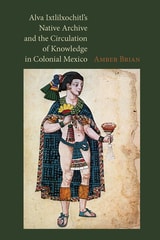
Alva Ixtlilxochitl's Native Archive and the Circulation of Knowledge in Colonial Mexico
Amber Brian
Vanderbilt University Press, 2016
Born between 1568 and 1580, Alva Ixtlilxochitl was a direct descendant of Ixtlilxochitl I and Ixtlilxochitl II, who had been rulers of Texcoco, one of the major city-states in pre-Conquest Mesoamerica. After a distinguished education and introduction into the life of the empire of New Spain in Mexico, Ixtlilxochitl was employed by the viceroy to write histories of the indigenous peoples in Mexico. Engaging with this history and delving deep into the resultant archives of this life's work, Amber Brian addresses the question of how knowledge and history came to be crafted in this era.
Brian takes the reader through not only the history of the archives itself, but explores how its inheritors played as crucial a role in shaping this indigenous history as the author. The archive helped inspire an emerging nationalism at a crucial juncture in Latin American history, as Creoles and indigenous peoples appropriated the history to give rise to a belief in Mexican exceptionalism. This belief, ultimately, shaped the modern state and impacted the course of history in the Americas. Without the work of Ixtlilxochitl, that history would look very different today.
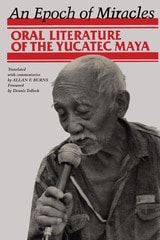
An Epoch of Miracles
Oral Literature of the Yucatec MayaTranslated with Commentaries by Allan F. Burns
University of Texas Press, 1983
“Mr. Allan Burns, I am here to tell you an example, the example of the Hunchbacks.” So said Paulino Yamá, traditionalist and storyteller, to Allan Burns, anthropologist and linguist, as he began one story that found its way into this book.
Paulino Yamá was just one of several master storytellers from the Yucatán Peninsula of Mexico from whom Burns learned not only the Mayan language but also the style and performance of myths, stories, riddles, prayers, and other forms of speech of their people. The result is An Epoch of Miracles, a wonderfully readable yet thoroughly scholarly set of translations from the oral literature of the Yucatec Maya, an important New World tradition never before systematically described.
An Epoch of Miracles brings us over thirty-five long narratives of things large, small, strange, and “regular” and as many delightful short pieces, such as bird lore, riddles, and definitions of anteaters, rainbows, and other commonplaces of the Mayan world. Here are profound narratives of the Feathered Serpent, the mighty Rain God Chac and his helpers, and the mysterious cult of the Speaking Cross. But because these are modern, “Petroleum Age” Maya, here too are a discussion with Cuba’s Fidel Castro and a greeting to former president Richard Nixon.
All pieces are translated ethnopoetically; examples of several genres are presented bilingually. An especially valuable feature is the indication of performance style, such as pauses and voice quality, given with each piece.
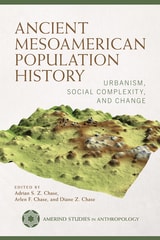
Ancient Mesoamerican Population History
Urbanism, Social Complexity, and ChangeAdrian S. Z. Chase, Arlen F. Chase, and Diane Z. Chase
University of Arizona Press, 2024
Establishing ancient population numbers and determining how they were distributed across a landscape over time constitute two of the most pressing problems in archaeology. Accurate population data is crucial for modeling, interpreting, and understanding the past. Now, advances in both archaeology and technology have changed the way that such approximations can be achieved.
Including research from both highland central Mexico and the tropical lowlands of the Maya and Olmec areas, this book reexamines the demography in ancient Mesoamerica. Contributors present methods for determining population estimates, field methods for settlement pattern studies to obtain demographic data, and new technologies such as LiDAR (light detecting and ranging) that have expanded views of the ground in forested areas. Contributions to this book provide a view of ancient landscape use and modification that was not possible in the twentieth century. This important new work provides new understandings of Mesoamerican urbanism, development, and changes over time.
Contributors
Traci Ardren
M. Charlotte Arnauld
Bárbara Arroyo
Luke Auld-Thomas
Marcello A. Canuto
Adrian S. Z. Chase
Arlen F. Chase
Diane Z. Chase
Elyse D. Z. Chase
Javier Estrada
Gary M. Feinman
L. J. Gorenflo
Julien Hiquet
Scott R. Hutson
Gerardo Jiménez Delgado
Eva Lemonnier
Rodrigo Liendo Stuardo
José Lobo
Javier López Mejía
Michael L. Loughlin
Deborah L. Nichols
Christopher A. Pool
Ian G. Robertson
Jeremy A. Sabloff
Travis W. Stanton
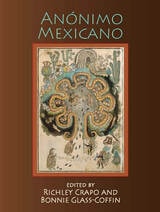
Anonimo Mexicano
Richley Crapo and Bonnie Glass-Coffin
Utah State University Press, 2005
Archaeological Settlement Pattern Data from the Chalco, Xochimilco, Ixtapalapa, Texcoco and Zumpango Regions, Mexico
Jeffrey R. Parsons, Keith W. Kintigh, and Susan A. Gregg
University of Michigan Press, 1983
Archaeology and Identity on the Pacific Coast and Southern Highlands of Mesoamerica
Edited by Claudia García-Des Lauriers and Michael W. Love
University of Utah Press, 2016
The Pacific coast and southern highlands of Chiapas and Guatemala is a region significant to debates about the origins of social complexity, interaction, and colonialism. The area, however, has received uneven attention and much of what we know is largely restricted to the Preclassic period. This theoretically eclectic volume presents greater temporal coverage, is geographically unified, and engages some of the most important questions of each period through a discussion of the archaeology of identity.
Chapters range from traditional assessments of identity to discussion of practice and relational personhood; all share a concern for how archaeology and ethnohistory provide opportunities and challenges in the reconstruction of identities. The region is one with a multifaceted history of interactions between local populations and those from other parts of Mesoamerica. Linguistic diversity, landscape, and artistic representations have added to the complexities of understanding identity formation here. Rather than providing a unified voice on the issues, Archaeology and Identity on the Pacific Coast and Southern Highlands of Mesoamerica is a dialogue presented through case studies, one that will hopefully encourage future research in this complex and little understood region of Mesoamerica.
Archaeology without Borders
Contact, Commerce, and Change in the U.S. Southwest and Northwestern MexicoMaxine E. McBrinn
University Press of Colorado, 2008
Contributors examining early agriculture offer models for understanding the transition to agriculture, explore relationships between the spread of agriculture and Uto-Aztecan migrations, and present data from Arizona, New Mexico, and Chihuahua. Contributors focusing on social identity discuss migration, enculturation, social boundaries, and ethnic identities. They draw on case studies that include diverse artifact classes - rock art, lithics, architecture, murals, ceramics, cordage, sandals, baskets, faunal remains, and oral histories. Mexican scholars present data from Chihuahua, Durango, Zacatecas, Michoacan, Coahuila, and Nuevo Leon. They address topics including Spanish-indigenous conflicts, archaeological history, cultural landscapes, and interactions among Mesoamerica, northern Mexico, and the U.S. Southwest.
Laurie D. Webster is a visiting scholar in the Department of Anthropology at the University of Arizona. Maxine E. McBrinn is a postdoctoral research scientist at the Field Museum in Chicago. Proceedings of the 2004 Southwest Symposium. Contributors include Karen R. Adams, M. Nicolás Caretta, Patricia Carot, John Carpenter, Jeffery Clark, Linda S. Cordell, William E. Doolittle, Suzanne L. Eckert, Gayle J. Fritz, Eduardo Gamboa Carrera, Leticia González Arratia, Arturo Guevara Sánchez, Robert J. Hard, Kelly Hays-Gilpin, Marie-Areti Hers, Amber L. Johnson, Steven A. LeBlanc, Patrick Lyons, Jonathan B. Mabry, A. C. MacWilliams, Federico Mancera, Maxine E. McBrinn, Francisco Mendiola Galván, William L. Merrill, Martha Monzón Flores, Scott G. Ortman, John R. Roney, Guadalupe Sanchez de Carpenter, Moisés Valadez Moreno, Bradley J. Vierra, Laurie D. Webster, and Phil C. Weigand.
Archaeometallurgy in Mesoamerica
Current Approaches and New PerspectivesAaron N. Shugar
University Press of Colorado, 2013
The chapters are organized following the cyclical nature of metals--beginning with extracting and mining ore, moving to smelting and casting of finished objects, and ending with recycling and deterioration back to the original state once the object is no longer in use. Data obtained from archaeological investigations, ethnohistoric sources, ethnographic studies, along with materials science analyses, are brought to bear on questions related to the integration of metallurgy into local and regional economies, the sacred connotations of copper objects, metallurgy as specialized crafting, and the nature of mining, alloy technology, and metal fabrication.
Aztec Antichrist
Performing the Apocalypse in Early Colonial MexicoBen Leeming
University Press of Colorado, 2022
Discovered in the archives of the Hispanic Society of America in New York inside a notebook of miscellaneous Nahuatl-Christian texts written almost entirely by an Indigenous writer named Fabían de Aquino, the plays are filled with references to human sacrifice, bloodletting, ritual divination, and other religious practices declared “idolatrous” at a time when ecclesiastical authorities actively sought to suppress writing about Indigenous religion. These are Indigenous plays for an Indigenous audience that reveal how Nahuas made sense of Christianity and helped form its colonial image—the title figure is a powerful Indigenous being, an “Aztec Antichrist,” who violently opposes the evangelizing efforts of the church and seeks to draw converted Nahuas back to the religious practices of their ancestors. These practices include devotion to Nahua deities such as Tlaloc, Quetzalcoatl, and Tezcatlipoca who, in one of the most striking moves made by Aquino, are cast as characters in the plays.
Along with the translations, Leeming provides context and analysis highlighting these rare and fascinating examples of early Indigenous American literature that offer a window into the complexity of Nahua interactions with Christianity in the early colonial period. The work is extremely valuable to all students and scholars of Latin American religion, colonialism, Indigenous history, and early modern history and theater.
Aztec City-States
Mary G. Hodge
University of Michigan Press, 1984